Morocco has no digital nomad visa. Most visitors, including holders of US, British, Canadian, Australian and EU passports, are let in visa-free for 90 days, and remote workers paid from abroad rely on that allowance. Going past it is an offence under Law 02-03, Morocco's law on foreigners, which means a fine and often a court appearance before you are allowed to fly out. Longer stays need either an extension from the police, which is slow and far from certain, or a carte de séjour residence card, which takes months and asks for an address, a bank account and proof of income. Because Morocco lies outside Schengen, though, time here lets a Schengen allowance recover, which makes it a natural partner to a stay in Spain.
The Atlantic coast leads. Agadir, Essaouira and Taghazout combine mild winters with low rents, Agadir is a short flight from much of Western Europe, and Taghazout has the closest thing in Morocco to a resident nomad crowd. The imperial cities of Marrakech, Fes, Meknès and Rabat bring the medinas and the food, along with summer heat and, in the old quarters, patchy internet. Casablanca is the business capital and the best-connected place to work. In the north, Tangier, Tétouan and Chefchaouen sit within reach of Spain, Ifrane is a cool mountain town centred on an English-language university, and the desert south, Ouarzazate, Aït Ben Haddou and Merzouga, is superb to visit but a hard place to hold down a job.
Three practical things shape a working month. Moroccan clocks sit at GMT+1 almost all year, level with Paris in winter and with London in summer, then fall back an hour during Ramadan, so recurring calls move twice a year. The dirham cannot legally be bought abroad, so you change or withdraw money on arrival, and cash still rules in the medinas. And French, not English, is the language of landlords, offices and shops almost everywhere outside the tourist trade.
This list orders every Moroccan city we cover by overall Nomad Score, the composite of 13 rated categories including cost, climate, internet, safety and visa access. Ties are common here, and where cities finish level the order between them means nothing. Monthly costs for Essaouira, Marrakech, Tangier, Casablanca and Rabat are built from Numbeo data; the other ten are our own estimates. Explore the numbers yourself on the comparison tool or browse all 999 city guides.
At a glance
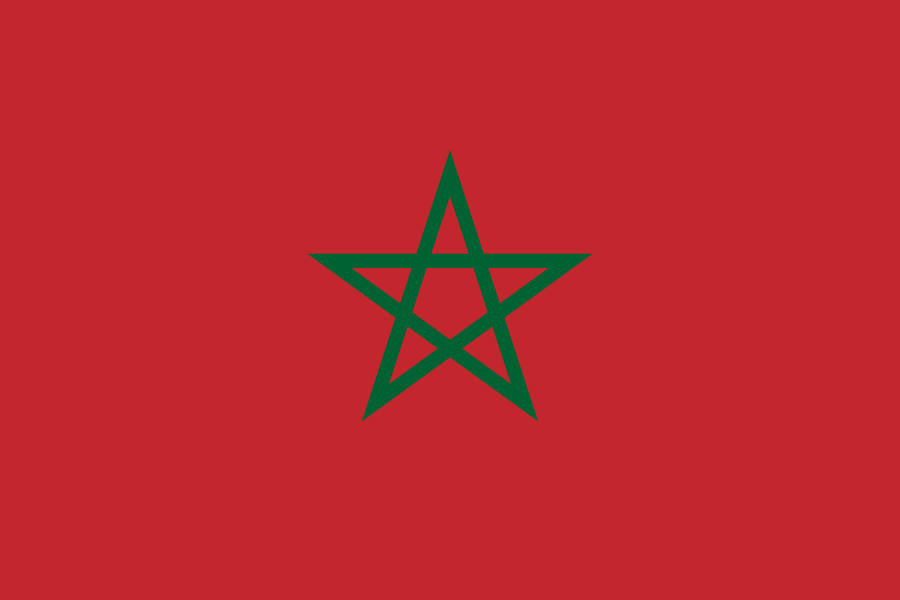 Agadir
January highs of 21C, a long town beach and modern flats, for an estimated $900 a month. Taghazout's surf and coworking are half an hour up the coast.
Best valueEssaouiraA walled seaside medina with a real coworking space and summers kept cool by the Atlantic wind, for $640 a month.
Best nomad communityTaghazoutMorocco's closest thing to a year-round remote-work crowd, gathered around coworking spaces with their own fibre and a famous right-hand point break.
What to weigh before you book
Settle the internet question before the rent. Casablanca, the Guéliz district of Marrakech and the coworking spaces in Taghazout and Essaouira have dependable fibre; medina riads, village guesthouses and desert lodges often do not, so test a connection before paying for a month and keep a Maroc Telecom SIM as backup. Heat is the second filter: July highs reach 38C in Marrakech and 42C in Merzouga, while Essaouira and Agadir stay mild and Ifrane, up in the Middle Atlas, is where Moroccans from the lowland cities go to cool off. Ouarzazate, Aït Ben Haddou and Merzouga suit a week or two rather than a season, and ten of these monthly costs are our estimates rather than measured data. Border officers notice chains of back-to-back entries, and since April 2026 a quick hop to Ceuta or Melilla also registers you in the EU Entry/Exit System and spends Schengen days. For the month-by-month weather in each city, see the comfort index.
The ranking
-
1
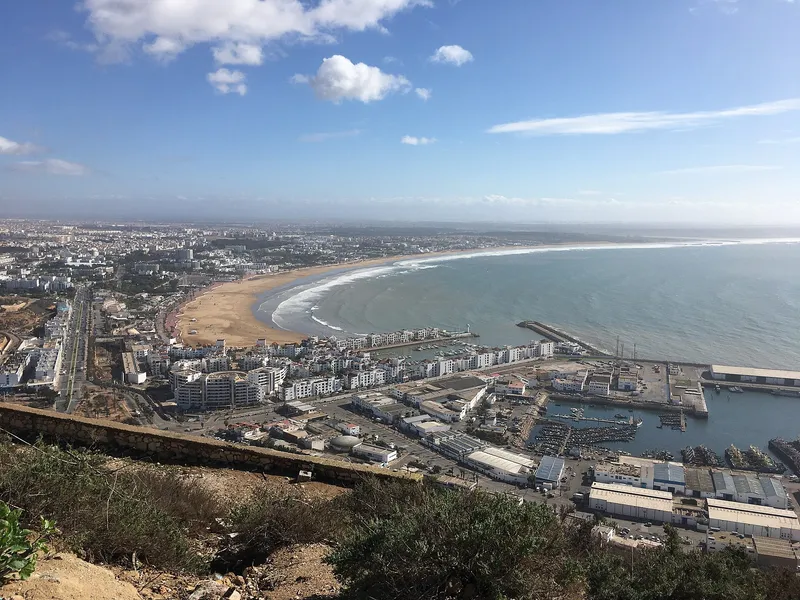 Nomad Score 7.6$900/moSafety 8WiFi 6Value 7
After the 1960 earthquake levelled it, Agadir was rebuilt from scratch, which explains both its weakness and its strength: there is almost no old town, but the flats are modern, the streets are flat and the beach promenade runs unbroken from the marina to Founty. Winter is the draw, with January highs of 21C and little rain, and the city is far calmer than Marrakech. We estimate $900 a month. Coworking is thin in town, so remote workers who want a desk and company head 20 kilometres north to Taghazout. The sea stays cold all year.
-
2
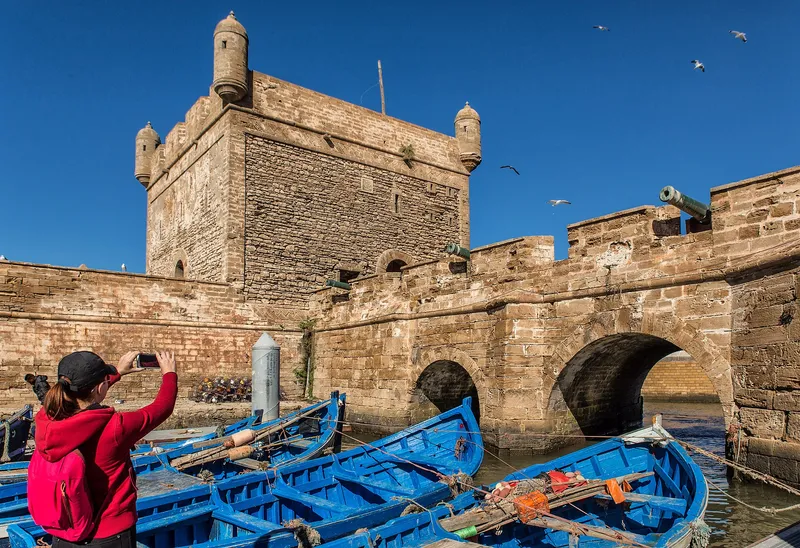 Nomad Score 6.7$640/moSafety 7WiFi 4Value 8
Ask anyone who has lived in Essaouira and the wind comes up first: it blows hardest from June to August, which delights kitesurfers and holds August highs at 22C while Marrakech bakes. Inside the Portuguese ramparts lies a small, car-free medina of artists, fish grills and cafes, and Noqta Space supplies the most serious coworking desk, with fibre and a coliving side. At $640 a month it is the cheapest place on this list. Cafe internet is unreliable, the town goes quiet early, and most people arrive on a three-hour coach from Marrakech.
-
3
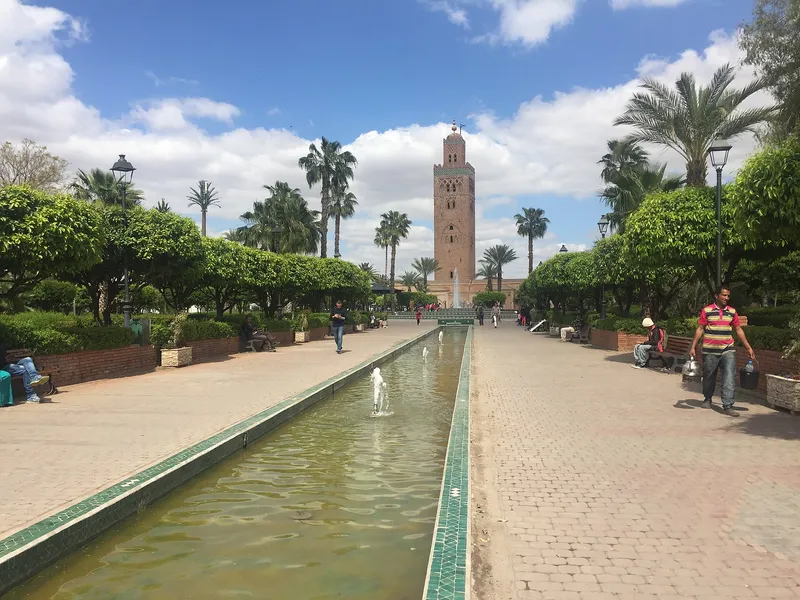 Nomad Score 6.1$810/moSafety 5WiFi 5Value 8
Pick your half of Marrakech before you pick a flat. Guéliz, the French-built new town, has fibre as standard, polished coworking at L'Blassa and a cafe, Kechmara, that works as the local nomad office; the medina has the riads, the souks and the nightly spectacle of Jemaa el-Fna, but internet that varies from house to house. Living here costs $810 a month. Persistent hustling around the old city wears people down in their first weeks, and July highs of 38C keep everyone indoors at midday, so spring and autumn are the months to come.
-
4
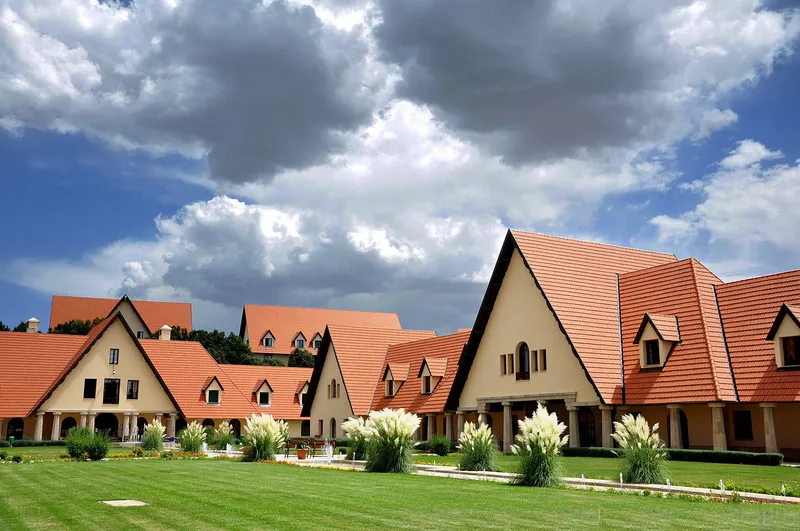 Nomad Score 6.1$800/moSafety 8WiFi 6Value 7
Pitched roofs, cedar forest and winter snow give Ifrane, laid out by the French in the 1930s, the look of an Alpine resort. Al Akhawayn University teaches in English, so cafes are used to laptops and English goes further here than almost anywhere in Morocco. Our estimate is $800 a month. Winter gas heating comes on top and can add $80 to $150. July highs of 30C make it a refuge from the lowland heat, but there is no coworking, no nomad scene, and the town empties when the university term ends.
-
5
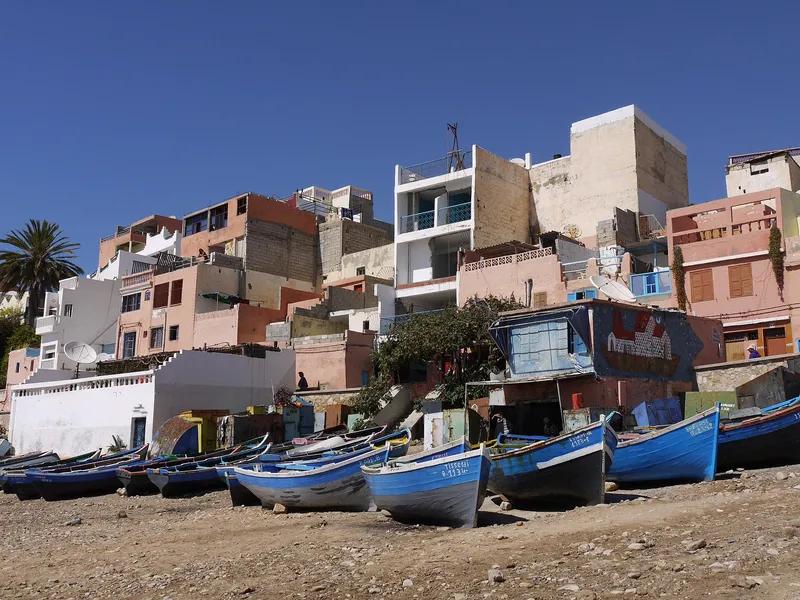 Nomad Score 6$1,100/moSafety 7WiFi 4Value 9
Here the surf sets the rent. Waves are best from roughly October to April, which is when European remote workers arrive and landlords raise prices, the reverse of the Mediterranean pattern. In return Taghazout has the nearest thing Morocco has to a year-round nomad community, centred on SunDesk and Coworksurf, both on fibre, while flat and cafe connections in the village drop at busy times. Our estimate of $1,100 a month makes it the priciest base on this list, though Tamraght and Aourir nearby cost less. Food choice is narrow, nightlife minimal, and this is a small, conservative place.
-
6
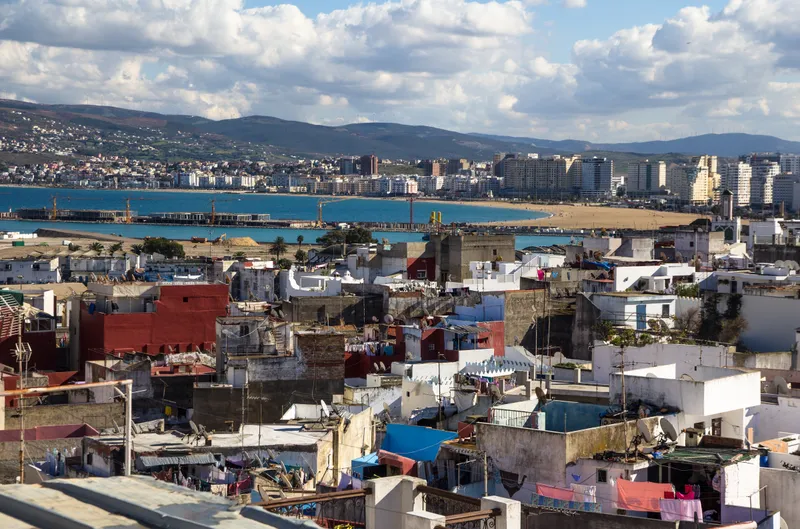 Nomad Score 6$890/moSafety 6WiFi 6Value 6
From the kasbah walls you can see Spain, and the link across the Strait shapes life in Tangier: fast ferries reach Tarifa in about an hour, and the high-speed Al Boraq train runs south to Rabat and Casablanca. Most remote workers settle in the Ville Nouvelle around Boulevard Pasteur, where the coworking spaces and steadier connections are. Expect $890 a month. The city's decades as an international zone still show in its cafes, Café Hafa above the Strait among them. English is scarce, so French or Spanish helps, and the summer levante can halt the ferries for a day.
-
7
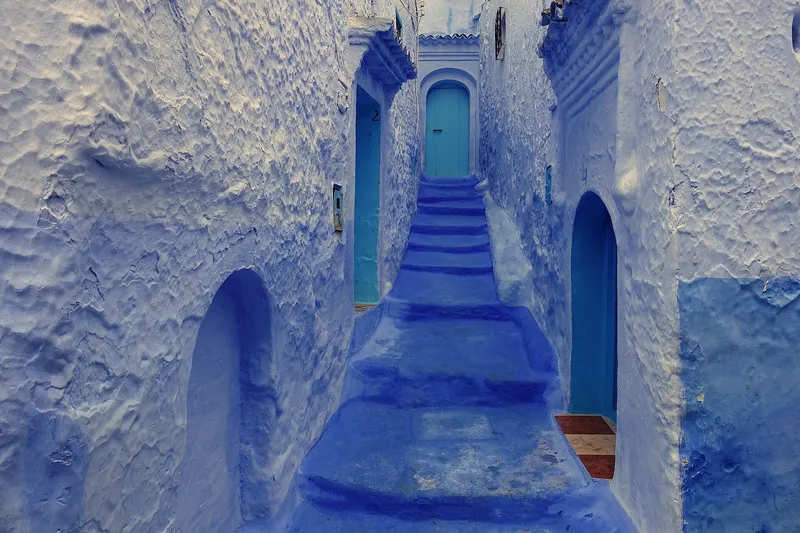 Nomad Score 5.6$1,000/moSafety 8WiFi 4Value 9
Most visitors photograph the blue lanes for an afternoon and leave; staying longer means learning how slow medina internet gets in the evening. There is no coworking space, Café Clock is the most familiar place to sit with a laptop, and a Maroc Telecom SIM is the backup that actually works in the Rif. Allow $1,000 a month, our estimate. The hiking above Ras el-Maa and the quiet after the day-trippers go are the reward. Winters are cold and wet, with 218mm of rain in December, and old riads rarely heat well. The nearest airport is in Tangier, a long bus ride away.
-
8
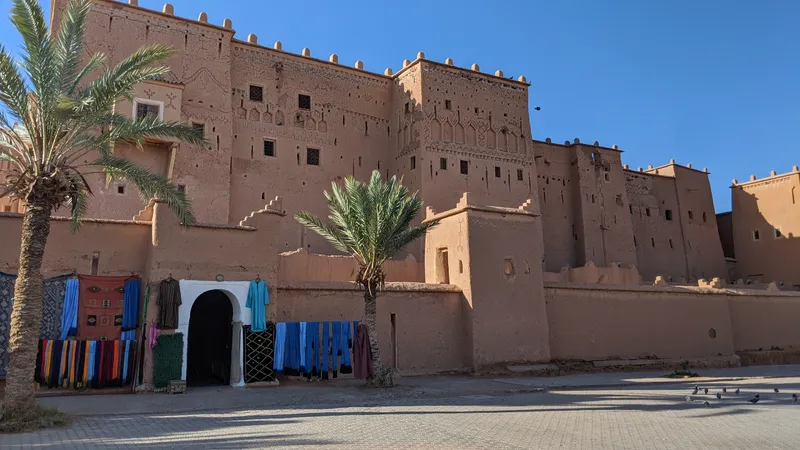 Nomad Score 5.6$700/moSafety 7WiFi 5Value 7
Film crews have used the stony desert around Ouarzazate as a ready-made set for decades, which is why the town has two studios and the nickname Ouallywood. Daily life is cheap and low on hassle: we put it at $700 a month, cafes along Avenue Mohammed V tolerate a laptop for a couple of hours, and the hotels serving production crews tend to have the strongest connections. There is no coworking, though, and video-heavy work is a gamble. July highs reach 39C while January nights drop to 2C, and Marrakech is four hours away over the Tizi n'Tichka pass.
-
9
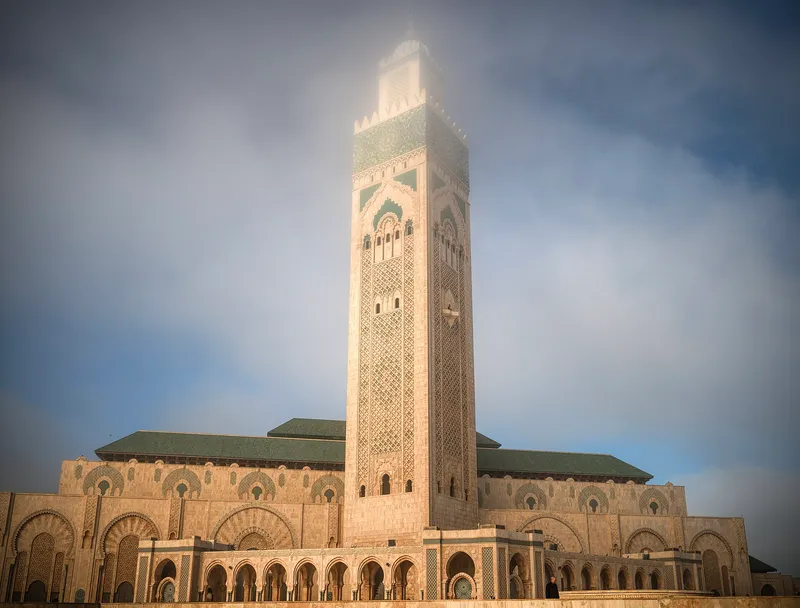 Nomad Score 5.2$1,000/moSafety 5WiFi 5Value 8
If your work depends on a stable connection, Casablanca has the strongest setup in Morocco, and that is most of the case for it. Coworking ranges from Commons in the Twin Center to New Work Lab in Gauthier, central flats get fibre, a direct train links the main international airport with the city, and the hospitals are the country's best. All of that comes for $1,000 a month. The price is traffic, dirty air on still days, districts to avoid after dark and a daily life conducted in French and Darija. The Atlantic keeps it mild all year.
-
10
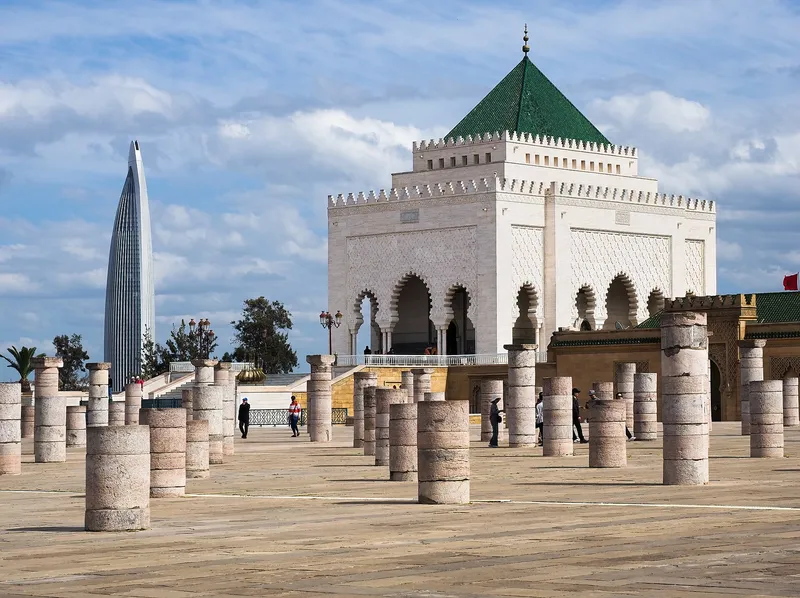 Nomad Score 5.2$830/moSafety 6WiFi 5Value 8
As capitals go, this one is unusually easy to live in. Rabat is among the safest cities in Morocco, its tram crosses the river to Salé, and Agdal, the embassy district, holds the cafes and coworking spaces, Coworkinn among them, where remote workers end up. The whitewashed Kasbah of the Udayas sits above the Atlantic within walking distance of the centre. You can live well on $830 a month here, and sea air holds July highs to 27C. Expect few foreigners, little nightlife and French as the working language, and use Casablanca, 45 minutes by train, for most international flights.
-
11
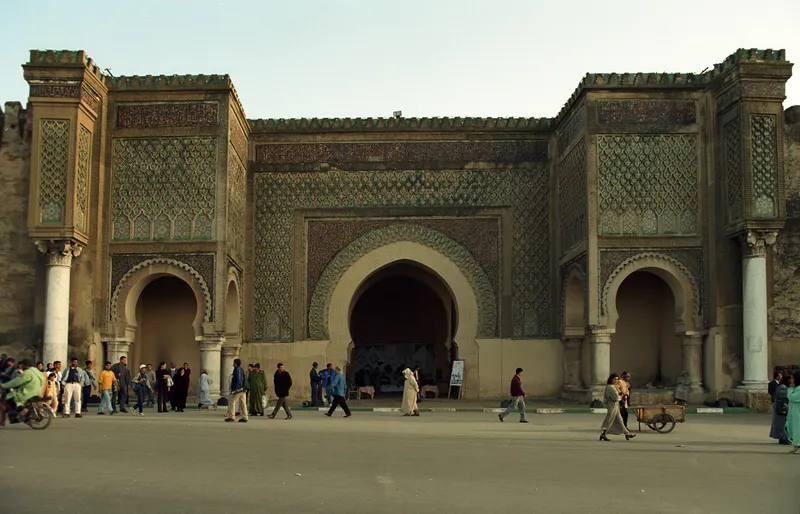 Nomad Score 5.2$800/moSafety 6WiFi 6Value 6
On a weekday you can walk for long stretches of Moulay Ismail's seventeenth-century imperial city, its granaries, stables and kilometres of wall, without meeting anyone. Meknès is calmer and cheaper than Fes, an hour away by train, and the Roman ruins of Volubilis make an easy day out. Our estimate of $800 a month covers a modest flat and plenty of market food. Work happens in the cafes of the colonial-era new town, across the valley from the medina, since coworking barely exists. The plain around the city is wine country, and French does the job English does elsewhere.
-
12
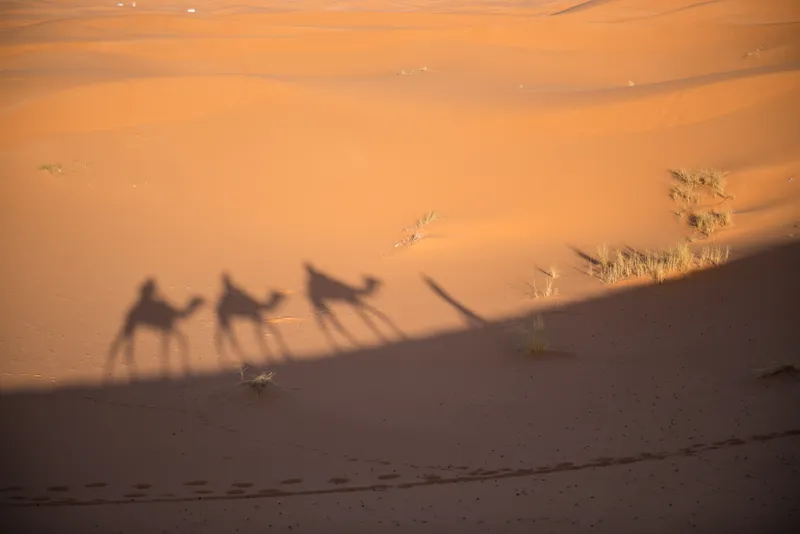 Nomad Score 5.2$800/moSafety 8WiFi 4Value 7
Treat Merzouga as a reward for finishing a project rather than a place to start one. Erg Chebbi's orange dunes rise straight behind the village, Gnaoua musicians play in nearby Khamlia and the night sky is extraordinary, but lodge wifi is slow and shared, so a mobile SIM bought in Rissani or Erfoud becomes your main connection. Living costs are low, an estimated $800 a month. Getting here usually means an overnight coach from Fes of about eight hours. July highs reach 42C, which makes summer dangerous in the dunes; come in spring or autumn and stay days, not months.
-
13
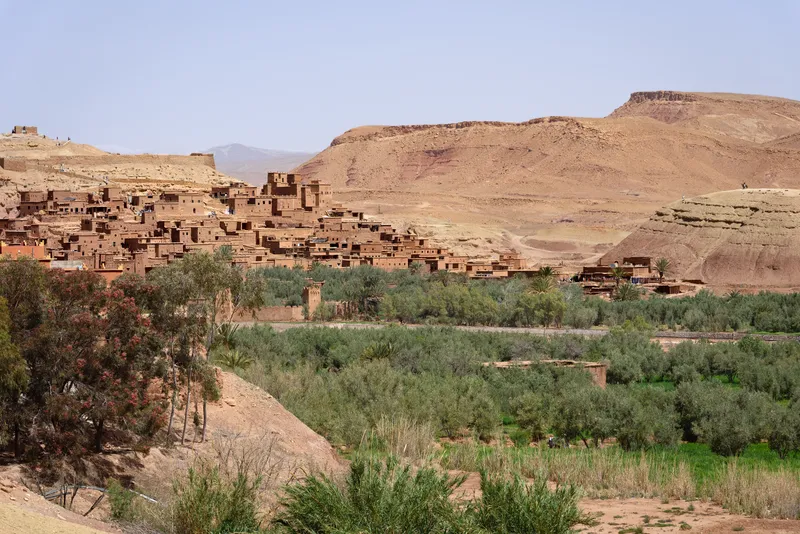 Nomad Score 5.2$700/moSafety 8WiFi 4Value 7
Just a few families remain inside the packed-earth walls of this UNESCO-listed ksar, whose towers have served as a film set many times over. Some upper lanes are still under repair after the 2023 High Atlas earthquake. As a work base it is weak: wifi is basic, there is no coworking, cash is essential because the nearest dependable ATMs are in Ouarzazate, and that town, half an hour away, is where any serious online day has to happen. Costs are low, $700 a month on our estimate. In winter, snow can close the road over the Tizi n'Tichka pass from Marrakech.
-
14
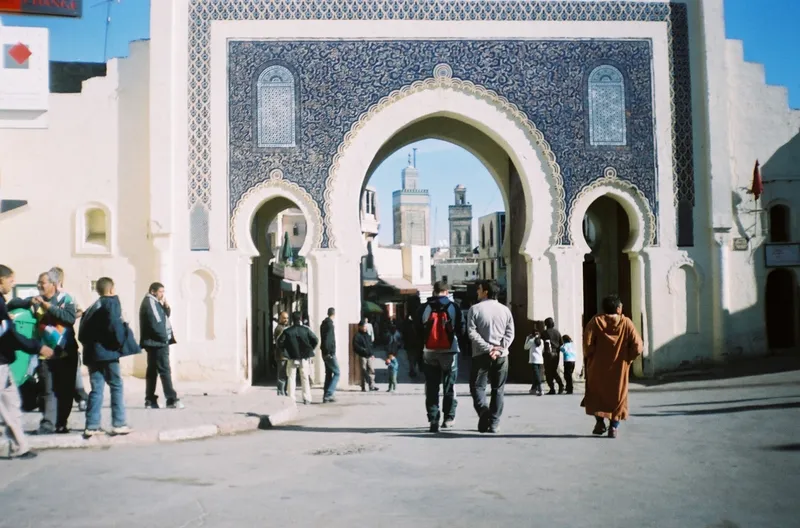 Nomad Score 5$950/moSafety 6WiFi 5Value 7
The first fortnight in Fes is hard work: thousands of unsigned lanes, no vehicles, and a steady supply of unofficial guides who can tell you are new. People who last a month report that the city then turns, the touts start to recognise them and the medina begins to make sense, and few places are better to walk in. The figure we use is $950 a month, an estimate. For working, the French-built Ville Nouvelle has the fibre, supermarkets and cafes the old city lacks, and trains run to Rabat, Casablanca, Tangier and Marrakech. July highs reach 35C, and riad rooms are cold in January.
-
15
 Nomad Score 4.9$700/moSafety 6WiFi 5Value 7
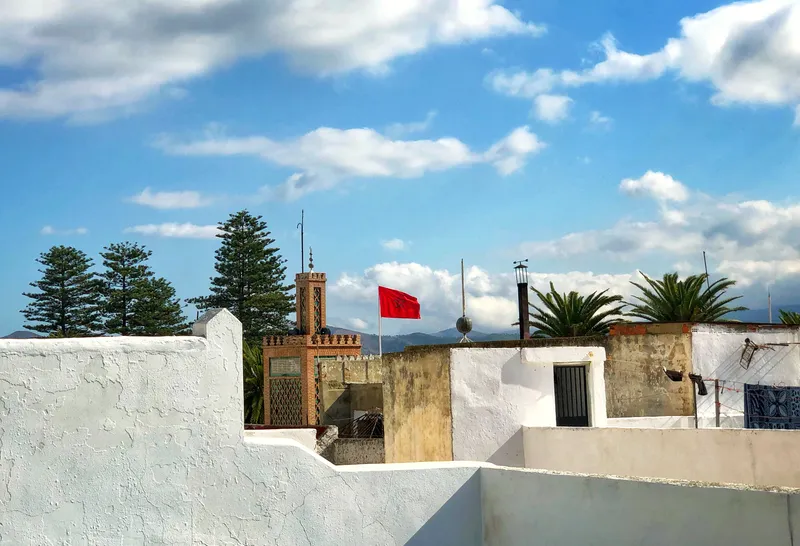
Muslim and Jewish refugees from Granada rebuilt Tétouan in the late fifteenth century, and its medina survives as one of the most complete Andalusian town plans in North Africa. Remote workers live in the Ensanche, the Spanish-era quarter of wide boulevards and Art Deco facades, where the cafes are full of university students. At an estimated $700 a month, it is among the cheapest bases here. There is no coworking, wifi varies by cafe, and Spanish or French matters more than English. The beaches at Martil and M'diq are a short taxi ride away, and a small airport flies to Madrid and Málaga.
A year in Morocco can follow the weather: winter on the Atlantic in Agadir, Taghazout or Essaouira, spring and autumn in the imperial cities or on a short trip to the dunes, and the hottest weeks in Ifrane or back on the coast. What it cannot do is run on tourist entries indefinitely, so anyone planning more than a season should start the carte de séjour early rather than lean on back-to-back border runs. To compare Morocco with the rest of the continent, see our Africa ranking.
Frequently asked questions
Does Morocco have a digital nomad visa?
No. Holders of EU, British, American, Canadian, Australian and many other passports get 90 days without a visa, and remote workers paid from abroad use that entry. Beyond it, the options are an extension from the police, which is slow and uncertain, or a carte de séjour, which asks for an address, a bank account and proof of income and takes months to issue.
What happens if I overstay in Morocco?
Overstaying is an offence under Law 02-03, the law governing foreigners' entry and stay, not an administrative slip. It carries fines from roughly $200 to $2,000, and people who overstay are commonly taken to court before they are allowed to fly out. Officers also notice chains of back-to-back stays, and some long-stayers have been refused entry or given a shorter period.
Do days in Morocco count toward the Schengen 90 days?
No. Morocco is outside the Schengen area, so a month here lets a Schengen allowance recover. The crossing back is recorded, though: since April 2026 the ferry port at Tarifa and the land borders into Ceuta and Melilla register non-EU travellers in the EU Entry/Exit System. A day trip to Ceuta for a fresh Moroccan stamp therefore opens a Schengen record and uses Schengen days.
Which Moroccan city is best for reliable internet?
Casablanca, which has the most coworking spaces in the country and fibre in central apartments. Marrakech's Guéliz district comes close, and Taghazout's coworking spaces have their own fibre lines even though the village connections around them drop. Medina houses, mountain villages and desert lodges are the weak spots, so test a connection before you commit.
How is this ranking calculated?
Each Moroccan city in our index is sorted by its overall Nomad Score, which brings together the 13 categories we rate, cost, climate, internet, safety and visa access among them. Cities on the same overall score appear in no particular order: Marrakech and Ifrane, Taghazout and Tangier, Chefchaouen and Ouarzazate, and Casablanca, Rabat, Meknès, Merzouga and Aït Ben Haddou. Five monthly costs come from Numbeo data and the other ten are our own estimates.