Cost of Living in Agadir
Where this figure comes from. No cost survey covers Agadir, so the $900 a month above is our own estimate rather than a measurement. On 416 of our 999 city guides the figure is built from a published Numbeo basket, a one-bedroom rent in the centre plus one person's monthly costs without rent, converted to USD; this city is not one of them. How we source everything.
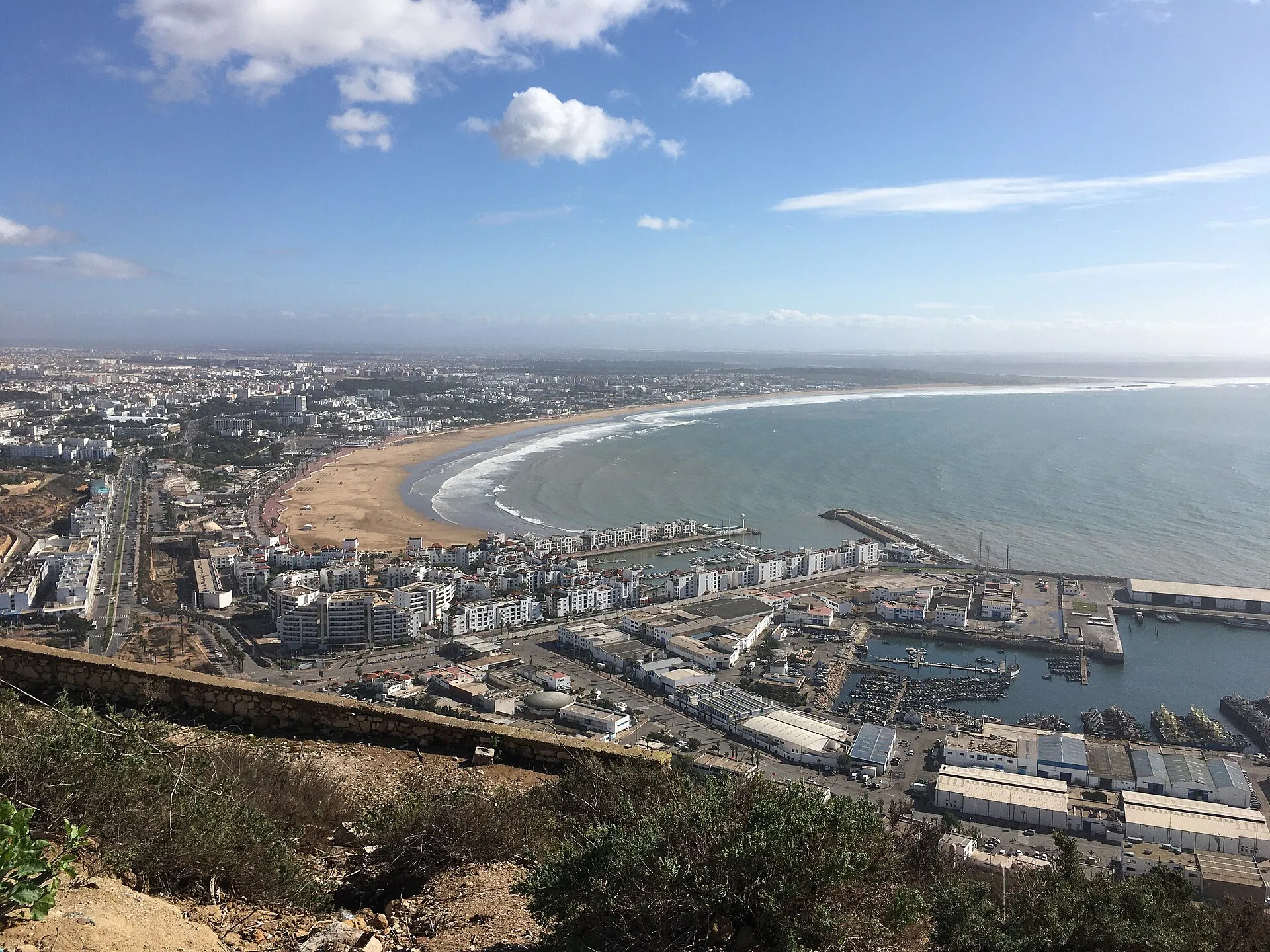
Agadir runs comfortably at $900 a month for one person and can be done for less outside high season. A furnished one-bedroom apartment in the city centre, Talborjt or the Founty and Marina districts costs $350 to $600 monthly on a longer lease, with beachfront and marina units at the top of that range and long winter bookings negotiable. Groceries plus regular eating out cost $180 to $280: a tagine or grilled fish lunch at a local place is $4 to $7, souk produce is cheap, and a marina restaurant dinner is $15 to $25. A Maroc Telecom, Orange or Inwi SIM with a big data bundle costs $10 to $20. Coworking runs $80 to $150 a month. Utilities are $40 to $80, with winter heating rarely needed. Transport is $30 to $60. Value is good, and Agadir undercuts Essaouira, Marrakech and the Canary Islands for a beach base. An earthquake levelled the town in 1960 and killed a third of its people, and everything standing here was built after that, which is why the housing stock is modern, low and unromantic, and why rents run below the old imperial cities. The trade-off is that almost nothing here is older than living memory.
Where to Work in Agadir
Agadir is not Morocco's coworking capital, so expectations should be calibrated: Marrakech, Casablanca and Taghazout have deeper supply. Within the city, base yourself in Founty near the beach for calm modern apartments, in the centre near Boulevard Hassan II for convenience, or at the Marina for cafes and restaurants. Talborjt is cheaper and more local. A handful of coworking spaces operate in the centre and near Founty, and Sun Desk in Taghazout, roughly 20 kilometres north, remains the anchor of the region's remote-work scene, pairing a proper coworking floor with the surf village lifestyle; many nomads simply base in Taghazout or Tamraght instead. Cafes along the beach promenade and in the marina are workable off-peak but noisy and often without power sockets. Newer buildings have fibre, and 4G and 5G coverage is strong. Power is stable; the real caveat is thin coworking supply and seasonal crowding. The fishing port lands more sardines than almost anywhere on earth and the processing plants behind it are the largest employer in the region, which is why the city keeps working through the months the beach empties. Agriculture on the plain inland is the other half, growing winter vegetables for European supermarkets, and the greenhouses stretch for kilometres along the road north.
Getting Around Agadir
Central Agadir is flat and walkable, with a long beach promenade linking the marina to Founty, so daily life often needs no vehicle at all. Petits taxis are orange, metered and cheap: most in-city rides cost $1 to $3, and drivers usually do run the meter, though confirming it before setting off avoids arguments. Careem operates in Morocco and Heetch has a presence in the larger cities, but coverage in Agadir is patchier than in Casablanca, so metered taxis remain the practical default. Local Alsa buses cover the city and the coast road cheaply, including a useful route north toward Taghazout for around $1. Grands taxis are shared, faster and better for intercity hops. Al Massira airport lies about 25 kilometres inland, roughly 30 minutes by taxi at $15 to $25, with a cheaper bus option. Long-distance CTM and Supratours coaches connect to Marrakech in three hours. A car helps for surf and mountain trips only.
Sorting transport? Book an airport transfer, or compare car rental on Auto Europe and QEEQ.
Visas for Agadir
Morocco grants visa-free entry of up to 90 days to citizens of the EU, UK, US, Canada, Australia and New Zealand, with no application, no fee and no pre-registration required; a passport valid for the stay and an onward or return ticket are the practical requirements. The 90 days is per entry rather than a rolling allowance, which is why many long-stayers do a short exit to Spain, the Canary Islands or Portugal and re-enter for another 90 days, a routine that generally works but is at immigration's discretion and can attract questions if repeated often. Formal extensions inside Morocco are possible through the local police prefecture but are slow, poorly documented and frequently refused, so most people fly out instead. There is no Moroccan digital nomad visa. Anyone intending to stay beyond 90 days legitimately needs a residence permit, the carte de sejour, which requires local sponsorship, proof of income and considerable paperwork.
Best Time to Visit Agadir
Agadir claims roughly 300 sunny days a year and the climate is the main selling point: mild, dry and stable. Winter, from November to March, is the standout window, with daytime highs of 20 to 23 Celsius, cool nights around 10, and only occasional rain; this is when European long-stayers arrive and when apartment demand peaks. Spring, March to May, is close to ideal, with warm days and green hinterland. Summer runs June to September at 26 to 30 Celsius on the coast, tempered by Atlantic breeze and cool sea, making it far more bearable than Marrakech, which regularly exceeds 40; the exception is a chergui, a hot desert wind that briefly pushes temperatures into the high thirties. The Atlantic stays cold year round, around 17 to 21 Celsius. Ramadan, in the first months of the year through the late 2020s, quiets daytime cafes and shifts restaurant hours, though tourist areas adapt.
Pros and Cons of Agadir
Agadir offers a rare combination: reliable winter sun, a long sandy beach, a modern grid-planned city rebuilt after the 1960 earthquake, low prices, good fibre, two-to-four hour flights to most of Western Europe and a GMT timezone that matches London in winter and sits one to two hours behind central Europe. Surf breaks at Taghazout and Tamraght sit half an hour away, the Anti-Atlas and Paradise Valley are close, and the city is calmer, cleaner and far less hassle-prone than Marrakech. The trade-offs start with character: Agadir is functional rather than beautiful, with little historic fabric and a package-tourism feel along the beachfront. The nomad community is small and concentrated in Taghazout rather than the city. Coworking options are limited, alcohol is restricted to hotels and licensed venues, the ocean is cold and often rough, French or Arabic is needed away from tourist zones, and administrative processes are opaque and slow.
Who Agadir Is For
Agadir fits the European remote worker escaping winter who wants sun, cheap rent and a short flight home, and who values calm and routine over cultural intensity. It suits surfers using the city as a comfortable base for the Taghazout coast, budget-conscious workers who want beach living without Southeast Asian flight times, and anyone working European hours who benefits from being in the same timezone band. Families find it easy, safe and well supplied with supermarkets and apartments. It is the wrong choice for someone chasing Morocco's cultural depth, who should look at Fes, Marrakech or Essaouira, and for nomads who need a large peer network, coworking density and a busy events calendar. Anyone who wants warm swimming water, real nightlife or a walkable historic old town will find Agadir underwhelming and should treat it as a base rather than a destination.