Greece sits inside the Schengen area, which shapes every stay here. Most visitors from outside the EU get 90 days in any 180, counted across the whole zone rather than per country, so a fortnight in Berlin in spring comes off your Greek summer. Since April 2026 the EU Entry/Exit System has recorded a face scan and fingerprints at Greece's external borders in place of a passport stamp, which means the count now keeps itself. For a longer stay, Greece issues a digital nomad national long-stay visa to non-EU remote workers paid from outside the country, applied for at a Greek consulate, with an income floor of about $4,030 a month after tax. See how it compares with other nomad visas.
Islands take most of the top half of the list, and the two that lead it, Paros and Naxos, do so because they keep working in winter: real resident populations, farms, schools and shops that do not close in October. Crete appears twice, as the city of Chania and as the island as a whole. Athens has the most coworking and the deepest culture in the country but comes tenth, held back by its price, summer heat and city air. The mainland towns, Ioannina, Nafplio, Meteora, Monemvasia and Patras, are cheaper and far more Greek-speaking.
Two things catch people out early. No landlord will sign and no utility will connect you without an AFM, the Greek tax number, so get it first. And on the islands, year-round leases are scarce, because a summer holiday let earns an owner far more than a winter tenant; the time to negotiate is October, not June.
This page takes every Greek city in our index and orders it by overall Nomad Score, the composite of the 13 categories we rate each city on, among them cost, climate, internet, safety, food and visa access. Crete is rated both as the city of Chania and as an island, so it appears twice. Monthly costs for Chania, Rhodes, Corfu, Athens, Thessaloniki and Patras are built from Numbeo data; the other eight are our own estimates. Explore the numbers yourself on the comparison tool or browse all 999 city guides.
At a glance
 Paros
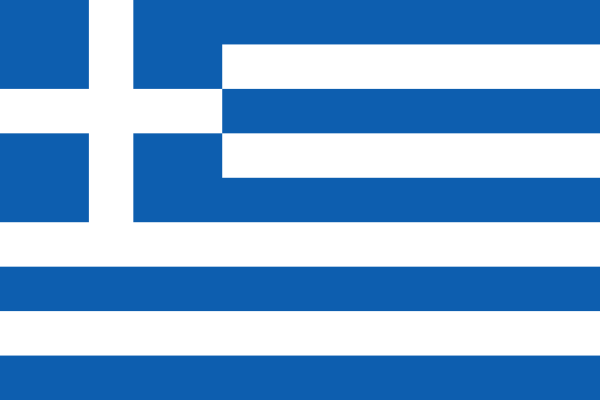
ParosOne of very few Cyclades islands with a small remote-work community, and a port town that stays open all winter. The fast boat to the mainland takes about three and a half hours.
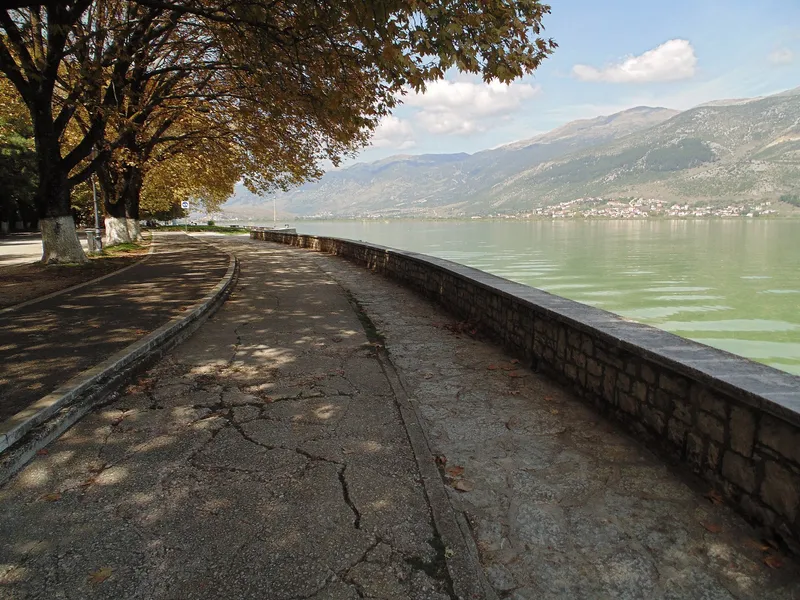
Best value cityIoanninaA lakeside university town with an intact Ottoman quarter and the Vikos gorge an hour away, for $1,050 a month. Bring a warm coat for winter.
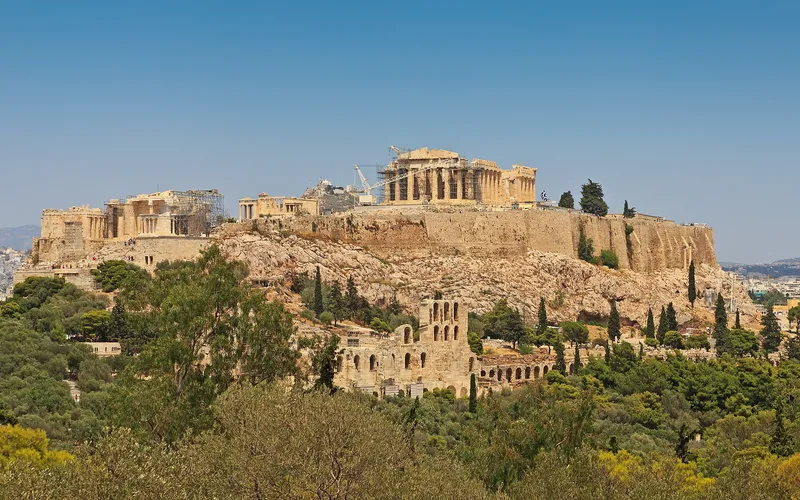
Best for coworking and cultureAthensThe Acropolis, the big museums, the widest choice of coworking in Greece and cheap flights to the islands, for $1,520 a month.
What to weigh before you book
The calendar decides more than the ranking does. On the islands, July and August bring the meltemi wind, full ferries and peak rents, while from November most resort villages close and storms can cancel sailings for days; the islands that stay alive in winter are those with a resident economy, which means Naxos, Paros, Corfu town and the cities of Crete, not Santorini. Inland the problem flips: Ioannina and Meteora have cold, wet winters with heating bought by the tanker, and summer highs of 35C in Athens and Nafplio make air conditioning essential. Healthcare beyond a local health centre usually means Athens, which matters more on Monemvasia or an island than in Thessaloniki. Island internet depends on the building rather than the town, and most of these monthly costs are our estimates rather than measured data. For the month-by-month weather in each city, use the comfort index.
The ranking
-
1
 Nomad Score 9.1$1,450/moSafety 9WiFi 7Value 6
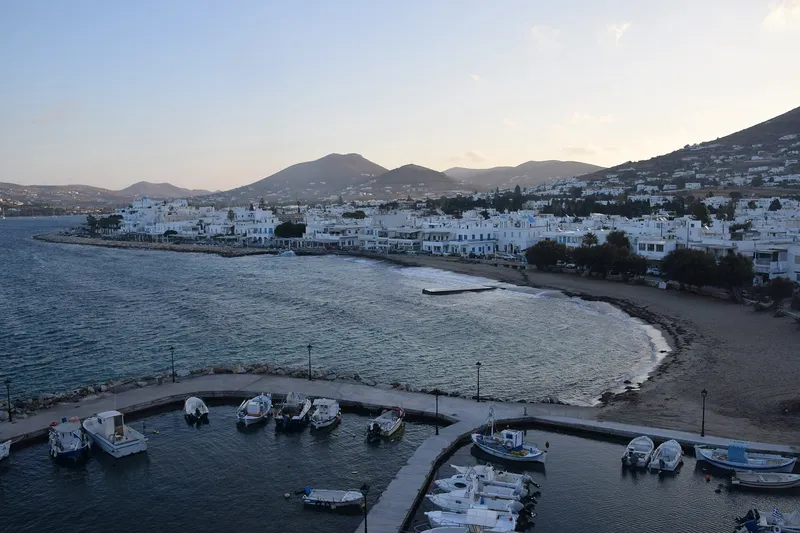
Unusually for the Cyclades, Paros draws remote workers as well as holidaymakers, with at least one seasonal coworking space and laptop-friendly cafes in Parikia and Naoussa. Parikia keeps its banks, health centre and supermarkets open all winter, and the fast boats to Athens take roughly three and a half hours. Island life here runs to $1,450 a month. Year-round leases are scarce because summer lets pay owners far more, so October is the month to negotiate one; line speeds depend entirely on the address, and winter storms can take the power out for hours.
-
2
 Nomad Score 8.7$1,400/moSafety 9WiFi 6Value 6
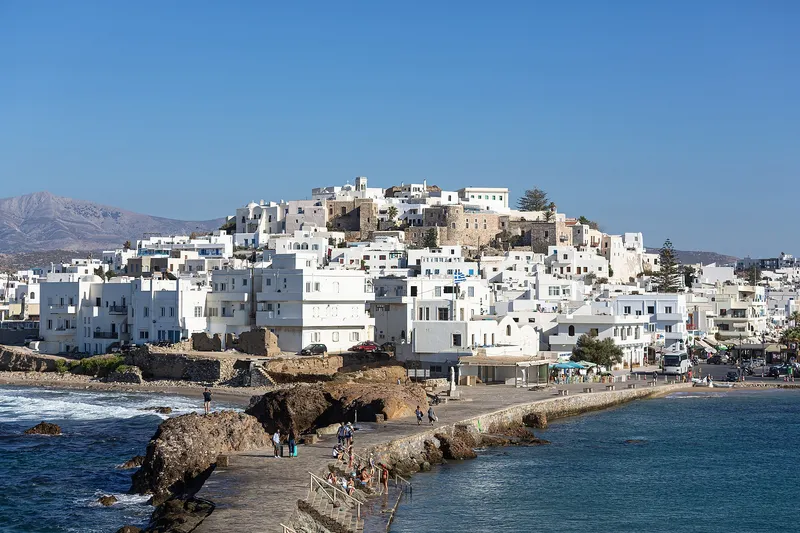
A farming economy keeps Naxos open in winter. Around 18,000 people live here all year, the school and the shops keep going, and the potatoes, cheese and citrus on sale are grown on the island, which is why the tavernas are so good. Chora climbs from the harbour to a Venetian kastro, and the west-coast beaches run for kilometres without filling up. Expect a month to cost $1,400. Without a coworking space you work from cafes or your flat, winter can feel isolating, and a north wind cancels sailings at a few hours' notice.
-
3
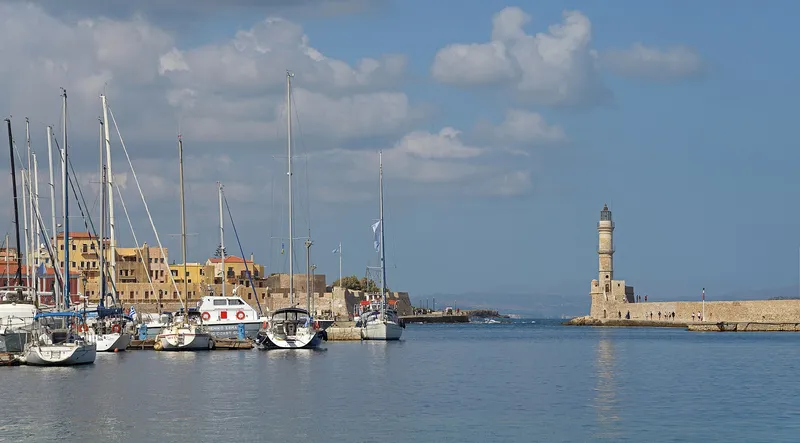 Nomad Score 8.2$1,380/moSafety 8WiFi 5Value 6
The Venetian harbour gets the photographs, but what makes Chania work is Workhub, the city's first coworking space, near the old town at about $332 a month, with events that make other remote workers easy to meet. The car-free lanes cover daily life on foot, KTEL coaches reach the beaches and gorges, and in summer the airport takes direct flights from Britain. Daily life adds up to $1,380 a month. Long lets dry up from May to September as owners switch to holiday rentals, so the smart move is to arrive in winter and sign a lease that runs through the summer.
-
4
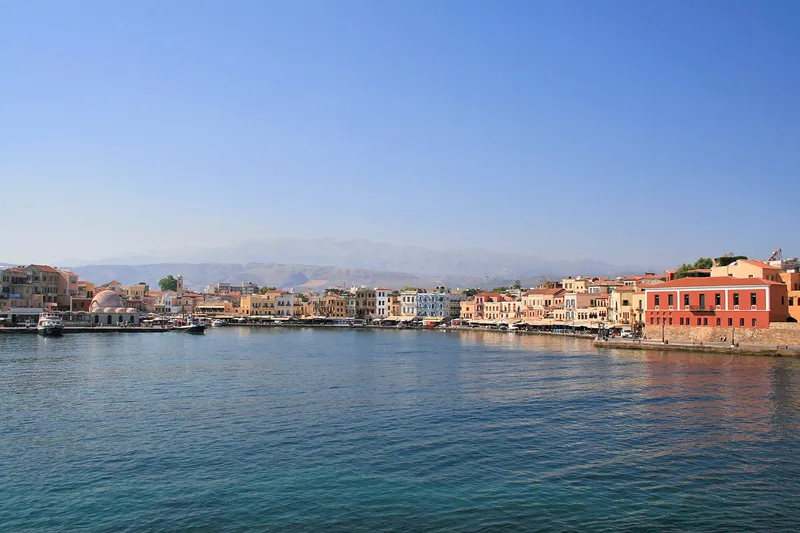 Nomad Score 8$2,200/moSafety 8WiFi 5Value 6
Taken as a whole island, Crete really means choosing between its two cities. Heraklion has the larger airport with more year-round routes, fibre in apartments and a coworking space, COMEET, at about $215 a month, and it carries on through winter better than Chania. Our figure for the island is $2,200 a month, second only to Santorini on this list. Gorges, beaches and mountain villages are all within a day trip, but a car is close to essential for them, and in July and August landlords switch to tourist pricing that can double or triple a rent.
-
5
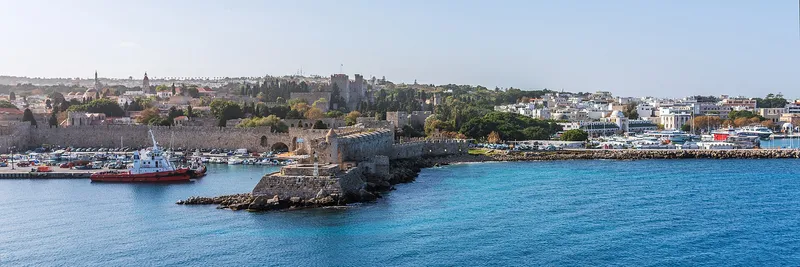 Nomad Score 8$1,460/moSafety 8WiFi 5Value 7
Medieval walls, the Palace of the Grand Master and car-free lanes make the old town the obvious draw, though working life sits in the new town outside the walls. Rhodes Project there charges about $290 a month for a desk with fibre and a garden patio, and English is spoken widely around town. Plan on $1,460 a month. Annual leases are rare because landlords prefer April to October contracts, buses run infrequently outside summer, and winter scales back most of the tourist trade. Marmaris, on the Turkish coast, is about an hour away by catamaran.
-
6
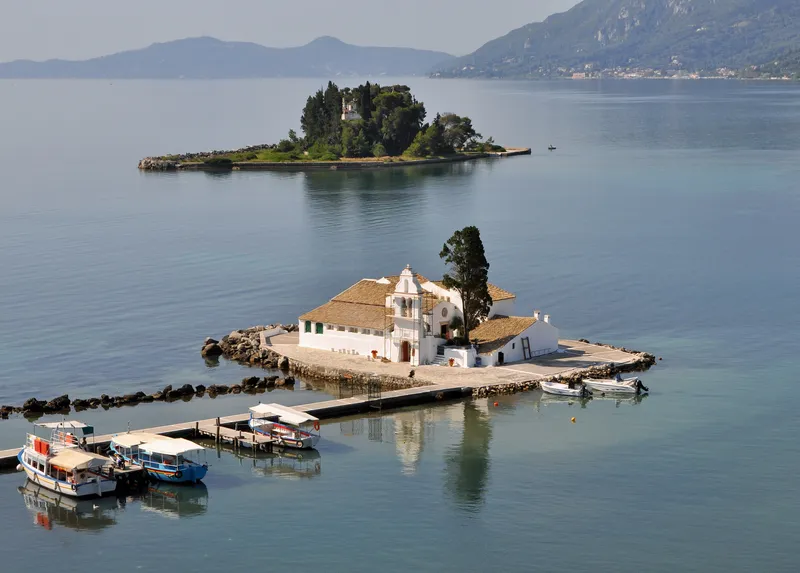 Nomad Score 8$1,350/moSafety 8WiFi 6Value 6
Greener and far wetter than the Aegean islands, with November rain of 188 mm, Corfu is the Ionian option. Its Venetian old town, a UNESCO site of lanes, two fortresses and the Liston arcade, stays open all year while resort strips such as Kavos and Sidari shut from November to April, and the airport sits right beside town. Count on $1,350 a month. Coworking is limited, so most people work from home on fibre that is good in town and patchy in the villages, and a lease signed in October often ends in spring, when owners want the summer back.
-
7
 Nomad Score 8$1,050/moSafety 8WiFi 7Value 7
Neither island nor capital, Ioannina is a working lakeside city whose 20,000 university students keep it busy all year. The Kastro, a walled Ottoman quarter with two mosques, sits on the shore of Lake Pamvotida, cafes along the promenade expect you to stay for hours, and the Vikos gorge and the Zagori villages are an hour away. At $1,050 it is the second-cheapest month in Greece on this list. The catch arrives in winter: January lows of 0C, heavy rain, heating oil delivered by tanker, and a working life conducted almost entirely in Greek.
-
8
 Nomad Score 7.6$3,300/moSafety 9WiFi 5Value 4
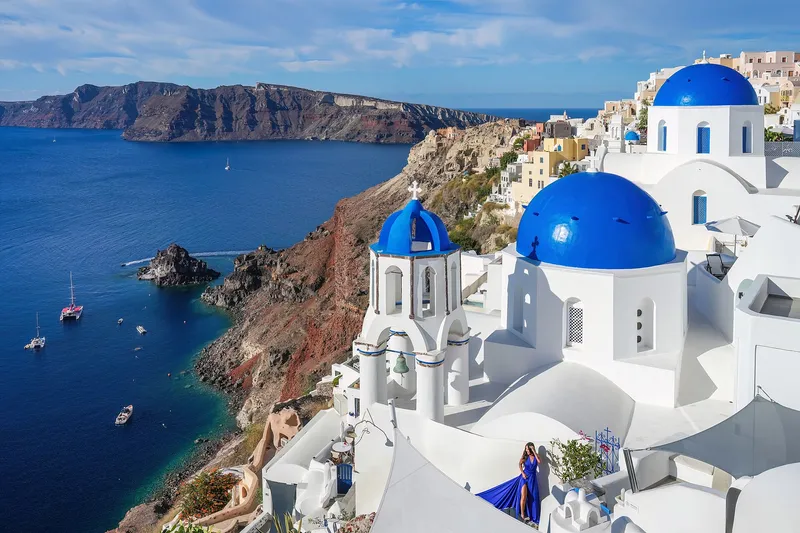
Budget is the first conversation about Santorini, which at $3,300 a month costs more than double every other base on this list except Crete. Even in shoulder season, a studio in Fira or Oia runs $1,380 to $2,070, though the inland villages of Karterados, Messaria and Pyrgos cut that considerably. Coworking barely exists, homes on the caldera edge can have poor signal, and from November to March most hotels, restaurants and cafes close. What the money buys is the caldera itself, best in May or September, for a memorable month rather than a long base.
-
9
 Nomad Score 7.6$1,300/moSafety 8WiFi 6Value 6
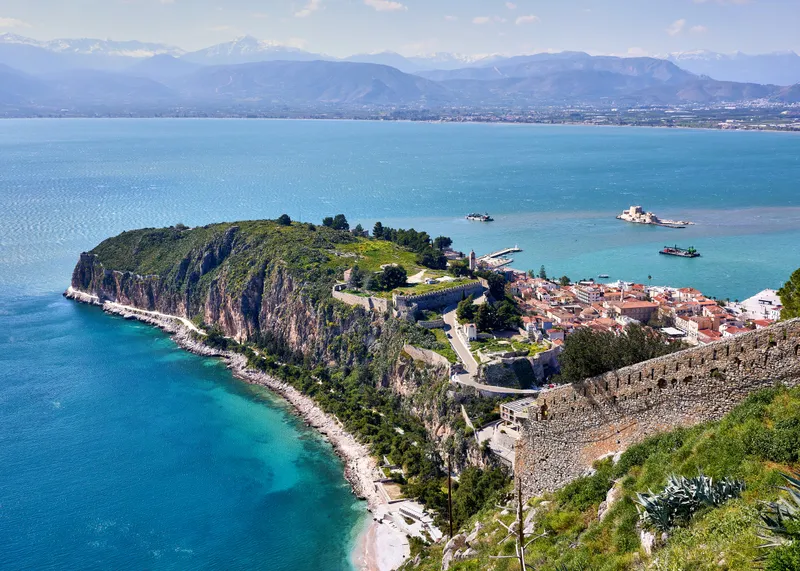
Before Athens took over in 1834, Nafplio was the capital of modern Greece, and its marble lanes, neoclassical mansions and Venetian bastions still feel lived in rather than restored for visitors. Athens is two hours by road, and Mycenae and Epidaurus are close enough for an afternoon. Budget $1,300 a month. Real coworking is missing, so ask whether a flat has fibre or an old copper line before signing, and plan errands around shops that close for the afternoon. July highs of 35C on the Argolid plain make air conditioning non-negotiable.
-
10
 Nomad Score 7.4$1,520/moSafety 6WiFi 6Value 5
The capital is where Greek remote work has real infrastructure. Impact Hub in Psyrri and Vios near Omonia sell hot desks for roughly $175 to $195 a month, and specialty cafes in Psyrri and Pangrati are used to a full day on one table. Around that sit the Acropolis, world-class museums, a metro that links the centre neatly and cheap flights to the islands and the Balkans, all for $1,520 a month. August highs of 35C, noise and poor summer air in the centre weigh against it, and short-term flats often come with weak broadband.
-
11
 Nomad Score 7.4$1,100/moSafety 8WiFi 6Value 7
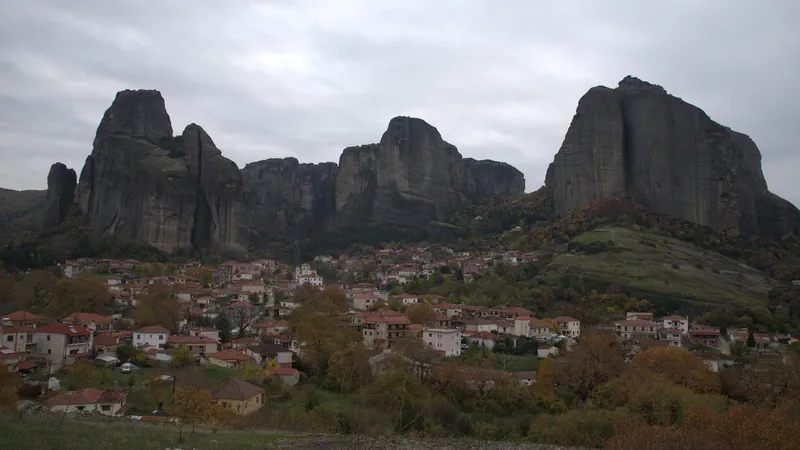
Monasteries built five centuries ago on top of sandstone pillars are the reason to come, and you live below them in Kalambaka or the quieter village of Kastraki, with hiking and climbing routes starting at the edge of town. Trains run from Kalambaka to Athens, fibre reaches many buildings, and the month costs $1,100. You will find no coworking, signal drops behind the rocks, and many cafes shut out of season. With no beach, no nightlife and no university, the place gives most of what it has within a month or so.
-
12
 Nomad Score 6.9$1,400/moSafety 6WiFi 7Value 6
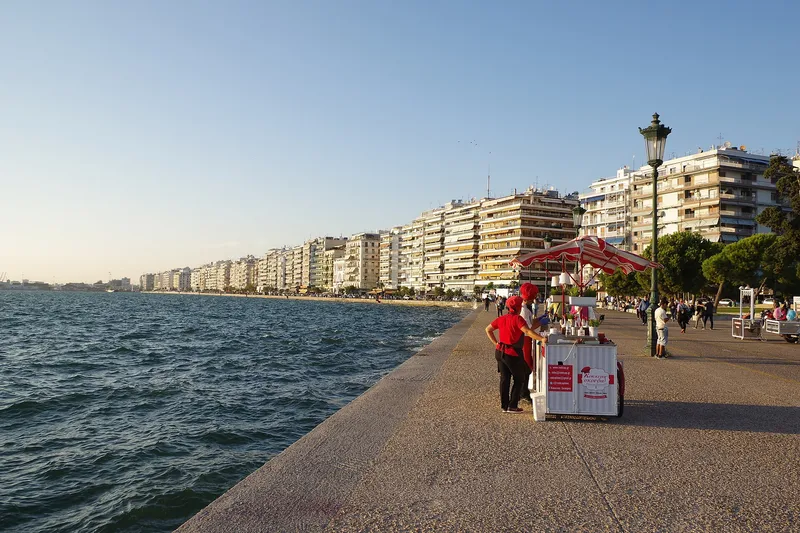
Food is the headline in Greece's second city, from the Modiano and Kapani markets to the mezedopoleia of Ladadika, while Byzantine walls and Ottoman houses climb the hill of Ano Poli above. The metro that opened in late 2024 made getting around easy, at about $0.50 a ride. Osmosis offers round-the-clock coworking for around $230 a month plus VAT, and the cafe scene is friendly to laptops. Life here costs $1,400 a month. Summers are humid, January lows reach 2C, the airport still needs a bus, and bureaucracy without Greek is slow.
-
13
 Nomad Score 6.9$1,000/moSafety 8WiFi 6Value 6
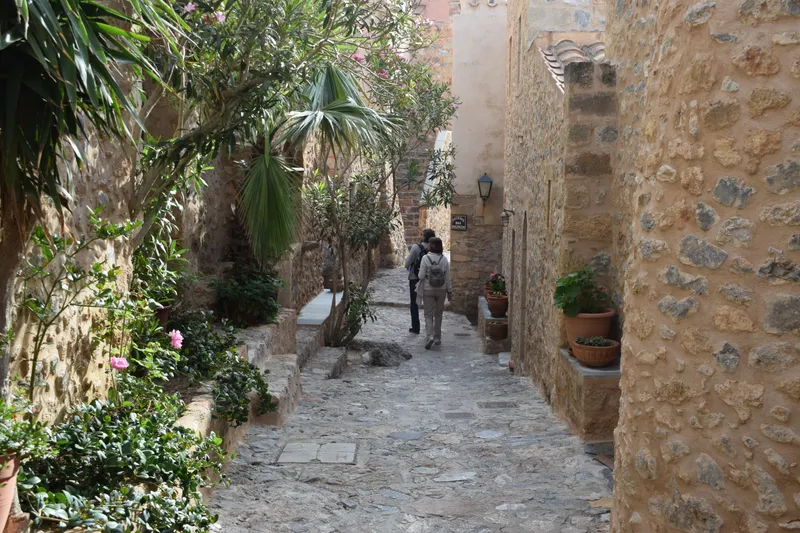
One gate leads into the walled lower town, which is what the name Monemvasia means, and beyond it everything is stone lanes, arches and steps with no cars at all. Gefyra, across the causeway on the mainland, has the supermarket, the pharmacy and cheaper studios, and is where a longer stay makes sense. At $1,000 a month it is the cheapest base in Greece on this list. Coworking and a nomad community are both absent, buses to Sparta and Athens are infrequent, and the airports at Kalamata and Athens are both a long drive.
-
14
 Nomad Score 6.5$1,150/moSafety 7WiFi 7Value 7
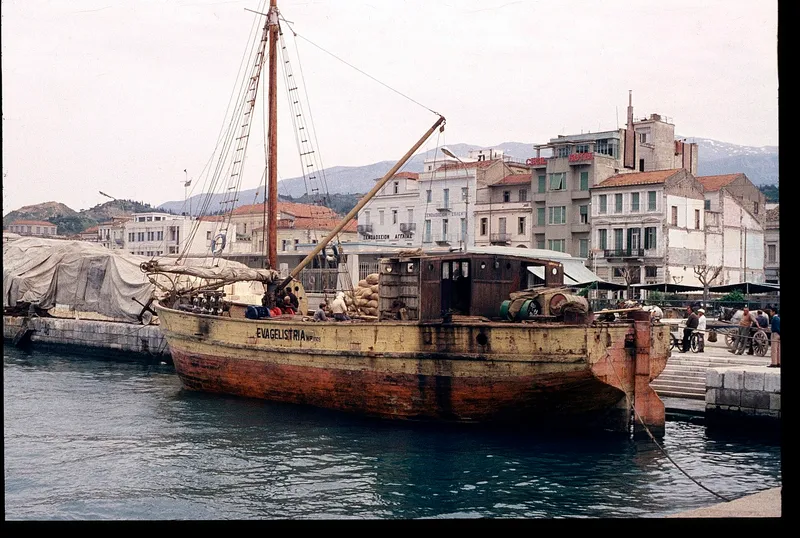
Greece's third city is a working port first: ferries sail from the centre to Ancona, Bari, Brindisi and Venice, putting Italy a boat ride away. Around 30,000 university students keep rents low and fill the bars around Psila Alonia. The university technology park supports a little coworking, at $90 to $150 a month. The month comes to $1,150. Much of the centre is plain postwar concrete, winters are soaking, with 188 mm falling in January alone, rail service to Athens has long been cut back, and English thins out beyond the campus. Its carnival, the biggest in Greece, runs from January to Clean Monday.
A pattern that works well in Greece is to arrive in October, sign a lease on an island that stays open, such as Naxos, Paros or Chania, and spend the quiet months working while rents are low, then move to the mainland or Thessaloniki once the summer lets begin. Without the long-stay visa, that plan has to fit inside 90 Schengen days, which the Entry/Exit System now counts at the border. Anyone weighing Greece against its neighbours can set these cities beside the rest of the continent on our Europe ranking.
Frequently asked questions
Can I stay in Greece longer than 90 days as a remote worker?
Yes, with the Greek digital nomad visa, a national long-stay visa for non-EU citizens who work for employers or clients outside Greece. It is applied for at a Greek consulate and asks for income of about $4,030 a month after tax, plus health insurance and a clean record. Without it, you are limited to 90 days in any 180 across the whole Schengen area.
How does the Entry/Exit System affect a stay in Greece?
Since April 2026, Greece's external borders record non-EU travellers' faces and fingerprints in the EU Entry/Exit System instead of stamping passports, so the 90-day Schengen count is tracked automatically. You are enrolled wherever you first enter the Schengen area, which for most people means Athens airport or an island airport with direct flights from outside the zone. Ferries between Greek islands involve no further check.
Which Greek islands stay open in winter?
Naxos and Paros keep functioning towns through winter because they have resident populations, farms and schools, and Corfu town and the cities of Crete stay open too. Santorini largely shuts from November to March, and resort strips on most islands close. Expect fewer ferries and occasional cancellations in winter storms everywhere.
What is the cheapest base in Greece on this list?
Monemvasia, at $1,000 a month, followed by Ioannina at $1,050. Meteora comes next at $1,100. Of the larger cities, Patras is the cheapest at $1,150. Santorini is by far the most expensive at $3,300.
How is this ranking calculated?
Every Greek city in our index is ordered by its overall Nomad Score, a composite of the 13 categories we rate, from cost and climate to internet, safety and visa access. Crete counts twice, as Chania and as the whole island. Costs for six cities come from Numbeo data and the other eight are our own estimates, which every city page labels.