Cost of Living in Meknès
Where this figure comes from. No cost survey covers Meknès, so the $800 a month above is our own estimate rather than a measurement. On 416 of our 999 city guides the figure is built from a published Numbeo basket, a one-bedroom rent in the centre plus one person's monthly costs without rent, converted to USD; this city is not one of them. How we source everything.
Meknès is one of Morocco's more affordable imperial cities, generally cheaper than nearby Fez and noticeably kinder to the wallet than Marrakesh or coastal hubs. A comfortable single nomad can expect to spend roughly 700 to 1,000 US dollars a month, covering a modest furnished flat, plentiful street food and market produce, local transport and a SIM with data. Rent is the biggest lever: the Ville Nouvelle costs more than the medina, and long stays negotiated directly with landlords beat nightly platforms. The following figures are editorial estimates, not fixed prices, and shift with season, neighbourhood and your bargaining. A local industry shapes prices here in a way no other Moroccan city's does. This is the centre of the country's wine region, with the vineyards on the plain north of town, and a bottle of decent local wine costs a fraction of what the same thing costs in a tourist city, which is worth knowing in a country where alcohol is otherwise expensive and awkward to buy. The other lever is time: an owner offered four months in January will quote something entirely different from the nightly rate on a booking site, and nobody here expects the first number to be the last.
- Furnished one-bedroom flat, monthly: roughly 250 to 450 US dollars depending on area and length of stay.
- Local meal or tagine at a small eatery: a few US dollars; market fruit and veg are very cheap.
- Cafe coffee or mint tea: around one US dollar, with generous sit-and-work time included.
- Local SIM with a data bundle: a handful of US dollars monthly from Maroc Telecom, Orange or inwi.
Where to Work in Meknès
Meknès is not a coworking capital, so most remote workers build a routine around cafes and their own flat. The Ville Nouvelle, or Hamria, has the widest choice of modern cafes with reliable seating, plug sockets and steadier connections, making it the practical daytime base. Fibre and 4G reach much of the city, though speeds vary and a mobile hotspot is a sensible backup for calls. Dedicated coworking spaces are scarce and come and go. For focus, choose a furnished flat with a proper desk. The split between the two halves of this city matters more for a working day than the wifi does. The French-built new town is on a grid, has pavements, cafes with tables and a bank, and is where anything administrative happens; the medina across the valley has none of those and is where the interest is. The usual pattern is a desk on one side and evenings on the other, twenty minutes apart with a river between. Choose which side to sleep on deliberately, because doing that crossing four times a day gets old.
Getting Around Meknès
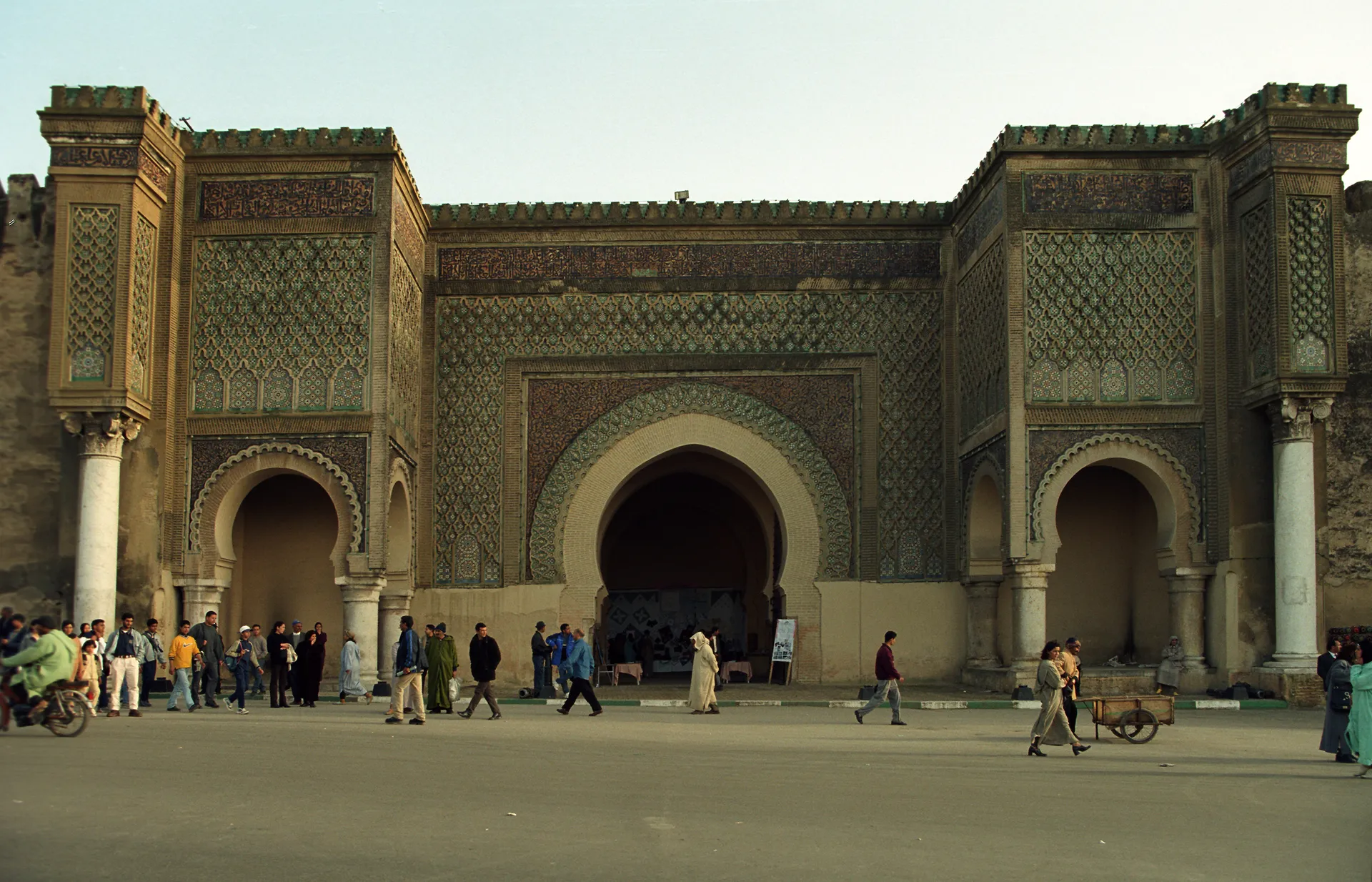
Meknès is compact and walkable, especially the medina, where lanes are too narrow for cars and exploring on foot is the whole point. Petit taxis are cheap and everywhere; agree the fare or insist on the meter before setting off. City buses run but are less intuitive for short-stay visitors. The city sits on the ONCF railway, giving fast, comfortable and inexpensive trains to Fez in about an hour, plus Rabat and Casablanca, which makes weekend trips easy. Grands taxis and buses serve nearby Volubilis and Moulay Idriss. Within the imperial city and around Place El Hedim, walking remains the simplest and most rewarding way to get about. The day trip everybody makes comes with two notes. The Roman site an hour north and the hill town beside it are usually done together, and a shared taxi from the rank costs a fraction of a tour if you are willing to wait for it to fill or to pay for the empty seats. Go early; the site is exposed and there is no shade on it. Closer in, the imperial quarter south of the main square is enormous, walled and mostly empty, which makes it the best walk in the city and the one visitors skip because it is not on the way to anything.
Sorting transport? Book an airport transfer, or compare car rental on Auto Europe and QEEQ.
Visas for Meknès
Entry rules are set nationally by Morocco, not by Meknès. Many nationalities, including citizens of the UK, the EU, the US, Canada, Australia and others, may enter visa-free for up to 90 days for tourism, which covers most short and medium stays. You typically receive a stamp on arrival at the airport or land border. Morocco has no dedicated digital-nomad visa at the time of writing, so longer stays usually mean a border run or applying for an extension or residence permit locally, which can be bureaucratic. Keep your passport valid well beyond your planned departure. A practical point that follows from the wine: alcohol is legal and sold, but the rules around it are narrower than a visitor expects. It is not served in most restaurants, the licensed shops keep limited hours and close for the whole of the fasting month, and carrying a bottle through the medina is a discourtesy rather than an offence. Knowing where the line sits matters more than the law does. On the paperwork itself, a long-stay renter here will be asked for a passport copy by the landlord for the local police record, which is routine and worth having ready.
Best Time to Visit Meknès
Meknès has a semi-arid climate with hot, dry summers and cool, wetter winters. Spring, from roughly March to May, is the sweet spot: warm days, green surrounding countryside and comfortable conditions for wandering the medina and day-tripping to Volubilis. Autumn, around September to November, is similarly pleasant once the summer heat eases. Midsummer can be genuinely hot, so plan sightseeing for mornings and evenings and value any flat with good shade or air conditioning. Winters are mild by European standards but chilly at night, and heating in cheaper flats is often limited. For the best balance of weather, prices and atmosphere, aim for the shoulder seasons. The harvest is the local date worth knowing, and it is not the one on the tourist calendar. The vineyards north of the city pick through late summer and early autumn, and several estates open for tastings then, which is the one time this region does something a visitor cannot do anywhere else in the country. Rain is the other thing to time around: the plain here is farmland, and a wet winter turns the tracks out to the Roman site to mud, so a February day trip wants a driver who knows the route rather than a map.
Pros and Cons of Meknès
Meknès rewards nomads who want authentic Morocco without the crowds and hustle of the headline cities. It is quieter, cheaper and more relaxed than Fez, yet packed with imperial-era grandeur and ideally placed for Volubilis and Moulay Idriss. The trade-off is a thinner expat and remote-work scene, limited English and fewer polished nomad amenities. Weigh these honestly against your priorities before committing to a longer stay. What the summary leaves out is the scale of the imperial city, which is the actual reason to choose here over its more famous neighbour. The ruler who made this his capital in the seventeenth century built walls running many kilometres, gates the size of buildings, granaries with vaulted halls big enough to lose yourself in and stables said to have held thousands of horses. Most of it is empty, unrestored and free to walk through, and on a weekday you will have long stretches of it to yourself. Hardly anywhere offers that, and certainly not the city an hour up the road, where the equivalent monuments have queues. The trade is everything else: fewer places to eat well, almost no other foreigners, and a city that makes no effort at all to perform for visitors, which some people come for and others cannot forgive.
- Pros: low cost of living; rich history and UNESCO medina; fewer tourists and touts than Fez; excellent rail links; superb base for Volubilis and Moulay Idriss.
- Cons: small nomad community; limited coworking and patchy internet; little English spoken; hot summers; quieter nightlife and fewer international comforts.
Who Meknès Is For
Meknès suits the independent, culturally curious nomad who prizes authenticity, low costs and a slower pace over ready-made community and buzzing nightlife. It is ideal if you enjoy history, market life and exploring on foot, are comfortable getting by with French or basic Arabic, and can work happily from cafes and your own flat without leaning on coworking spaces or a large expat crowd. History buffs and photographers will love the imperial architecture and nearby Roman ruins. It is a weaker fit for those who need a big social scene, dependable high-speed internet or a lively bar culture. Come for depth and calm, not for a party. The obvious comparison is with the bigger imperial city an hour away, and the honest answer is that most people should see that one and live in this one. It is cheaper, calmer, has pavements and a functioning new town, and the train between them runs hourly and takes under an hour, so you lose nothing. Three months is a sensible first stay. And if only one language is going to get learned, make it the colonial one, because that is what every shop, office and landlord conversation here runs on.