Cost of Living in Essaouira
Real market data
Source: Numbeo · September 2026
$640/moSolo nomad1-bed centre + living costs
$830/moCoupleshared 1-bed + costs
$590/moLean / localcheaper area + costs
- 1-bed rent, city centre$400DH3,750
- 1-bed rent, outside centre$350DH3,250
- Monthly costs excl. rent (1 person)$240DH2,256
- Meal, inexpensive restaurant$5DH45
Prices are from Numbeo (September 2026), converted to USD at $1 = DH9.36 (01 Aug 2026). The monthly living-costs figure is our transparent one-person basket, groceries, a few meals out, utilities, phone, internet, transport and essentials, priced from those figures. Solo adds central rent; couple and lean are estimates from the same numbers. The guide below quotes its own monthly range, which is a different measurement rather than a competing one: this table prices a defined basket at the figures above, while that range is a judgement about how somebody actually lives here.
Essaouira is one of Morocco's most affordable cities for remote workers, sitting roughly 10-20% cheaper than Marrakech. Here is a realistic monthly breakdown:
- Rent, medina (Derb/Medina riad room or small apartment): $265-480
- Rent, outside medina (Quartier des Dunes or residential outskirts): $190-320
- Groceries (self-catering, local markets): $96-150
- Eating out (mix of local restaurants and cafes): $160-265
- Coworking hot-desk (monthly): $145-200 at Noqta Space; drop-in daily rates run about $8.50
- Local transport (petit taxis, occasional bus): $16-27
- SIM card with data (Maroc Telecom or inwi): $11-16
Total monthly range: roughly $750-1,180 depending on your accommodation choice and how often you eat out. Eating mainly at hole-in-the-wall local spots ($5.50-8.50 per meal) keeps costs on the lower end; the medina has enough good food that it is easy to let restaurant spending creep up.
Where to Work
Essaouira's coworking infrastructure is thin but functional. The standout dedicated space is Noqta Space, a purpose-built coworking and coliving venue near the Bab Marrakech side of the medina. It offers fiber-backed WiFi with two routers, quiet work rooms, open seating, and terrace space. Rates are transparent: $8.50 per day, around $145 per month for a nomadic open desk. It is open Monday through Saturday, 9am to 8pm, and closes Sundays.
WELKAM Home and Coworking, located outside the medina walls, seats around ten people in a quieter apartment-style setup. It appeals to those who want distance from the medina bustle.
Mama Lova operates as a cafe-coworking hybrid by day, with patio and rooftop seating, though the three-hour package pricing (which includes a meal) makes it more of an occasional treat than a daily desk.
Cafe work is common and mostly welcomed. L'Atelier Cafe Boutique consistently gets the top marks for working: reliable WiFi, power outlets, calm atmosphere, good coffee. Hostel La Smala has a rooftop with ocean views, plug sockets, and decent WiFi. Most cafes in the medina offer WiFi, but signal strength and stability vary. For video calls and anything upload-heavy, a dedicated coworking space is the safer bet.
Mobile data (4G) covers the city well. Maroc Telecom and inwi both offer solid coverage. Pick up a local SIM at any phone shop for around $3-4.50, then top up data as needed. A mobile hotspot from a local SIM is a practical backup plan on cafe WiFi days.
Getting Around
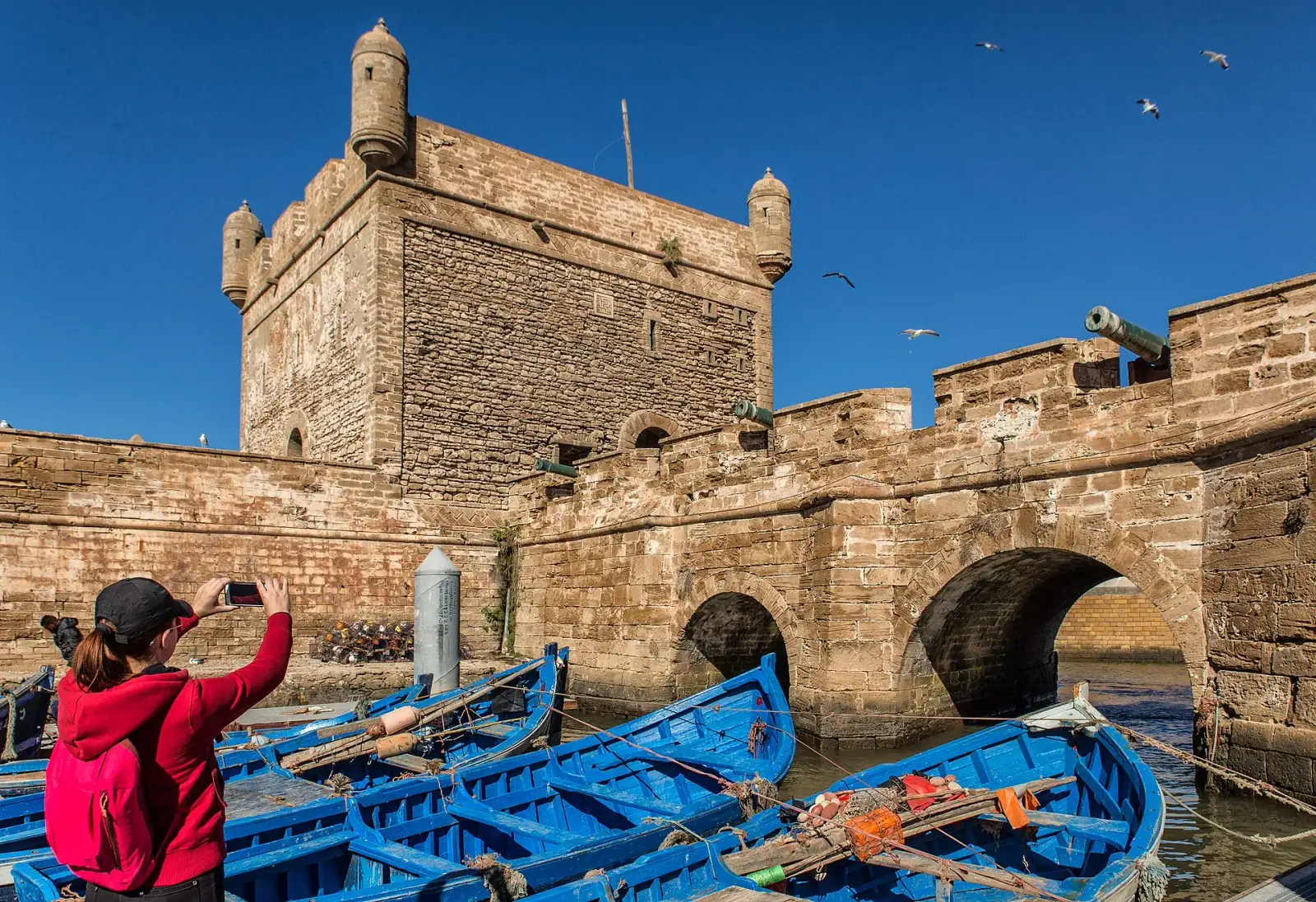
Essaouira's medina is small and almost entirely walkable. You can cross it on foot in about fifteen minutes, and no cars are allowed inside the old walls. This makes daily life pleasantly car-free, though it also means anything heavy (groceries from the supermarket, luggage on arrival) involves a walk.
Petit taxis handle rides within the city for $0.50-2. Agree on the fare before you get in, especially for longer trips to the beach roundabout or outlying neighborhoods. There is no Uber or Bolt operating here.
Getting to and from Essaouira: The city has its own airport, Essaouira-Mogador (ESU), located about 17km from the medina. A taxi from arrivals to the medina costs a fixed $16. Scheduled flights connect to Casablanca and some European cities, though frequency is limited. More commonly, nomads arrive by bus: CTM and Supratours run comfortable coach services from Marrakech (roughly 3 hours, $9.50-12), Agadir, and Casablanca. Buses drop off near the medina entrance, a short taxi ride from your accommodation.
Sorting transport? Book an airport transfer, or compare car rental on Auto Europe and QEEQ.
Visas and Staying Long-Term
Citizens of most Western countries, including EU member states, the United States, Canada, the UK, and Australia, can enter Morocco visa-free for up to 90 days. You do not need to declare remote work or obtain any special permit to work online for a foreign employer during this period.
There is no dedicated digital nomad visa for Morocco as of mid-2026, and no credible reports suggest one is imminent. If you want to stay beyond 90 days, you can request a 90-day extension at the nearest police station before your initial period expires. For longer residency, a carte de sejour (residency card) is required, which involves applying for a long-stay visa through a Moroccan consulate before you travel.
Best Time to Visit
Essaouira's Atlantic position keeps temperatures mild year-round. Summer highs rarely exceed 23-24 degrees Celsius (73-75F), which is unusually cool for Morocco, but the trade-off is persistent wind. June through August is the windiest stretch, which is ideal for kitesurfers but less comfortable if you want to sit on the beach or work with your laptop outdoors. Afternoons in particular can feel relentless.
April through June and September through October are the sweet spots for remote workers. Temperatures are comfortable (18-22C), winds are manageable, rainfall is low, and crowds are thinner than in peak summer. The light is excellent and the medina feels lively without being overwhelmed by tourists.
November through March brings cooler temperatures (12-18C), occasional rain, and very few tourists. It is quiet, cheap, and atmospheric, but you will want layers and the wind can still be biting. If you run on a tight schedule and need reliable outdoor time, spring and autumn are the right call.
Pros and Cons
Pros
- Genuinely affordable: one of the cheapest viable nomad bases in the Mediterranean/Atlantic region
- Very safe, including for solo female travelers, with low petty crime relative to larger Moroccan cities
- Walkable, car-free medina with a calm, creative atmosphere
- Mild summers cooled by Atlantic breezes, no sweltering heat
- Strong cafe culture with several reliable laptop-friendly spots
- Excellent food scene, particularly fresh seafood, for the price
- Good 4G mobile coverage; coworking with fiber available at Noqta Space
- Easy to meet other nomads and creative expats: the town punches above its size for community
Cons
- Wind is relentless from June to August and unpredictable year-round: plan outdoor work accordingly
- Limited dedicated coworking infrastructure compared to Marrakech or Agadir
- No Uber or reliable ride-hailing; taxis require negotiation
- Slower nightlife and limited entertainment options: it is a town that closes early
- Internet in cafes is inconsistent; rely on a local SIM or Noqta Space for reliable upload speeds
- No direct, frequent international flight connections: most arrivals route through Marrakech or Casablanca
- Medina alleyways and lack of signage can disorient new arrivals for the first few days
Who Essaouira Is Best For
Essaouira suits remote workers who want a slow, distraction-free base. If your work is mostly asynchronous, you are disciplined about deep work, and you do not need a busy social calendar to stay motivated, this city rewards you with low costs, fresh air, and genuine character. It is a good fit for writers, designers, developers, and anyone who thrives when the pace drops.
Artists, surfers, and anyone drawn to a creative, bohemian Atlantic vibe will feel immediately at home. The international community is small but welcoming, and you will find fellow nomads at Noqta Space and in the better cafes within a few days.
Essaouira is less suited to people who need fast, reliable connectivity everywhere they go, who rely on nightlife and social events to recharge, or who want the convenience of a modern city with delivery apps and coworking floors on every block. If you need frequent video calls and bandwidth-heavy work, budget extra time to find the right spot. And if you are the type who needs constant stimulation, the quiet medina evenings will feel like a trap rather than a feature.