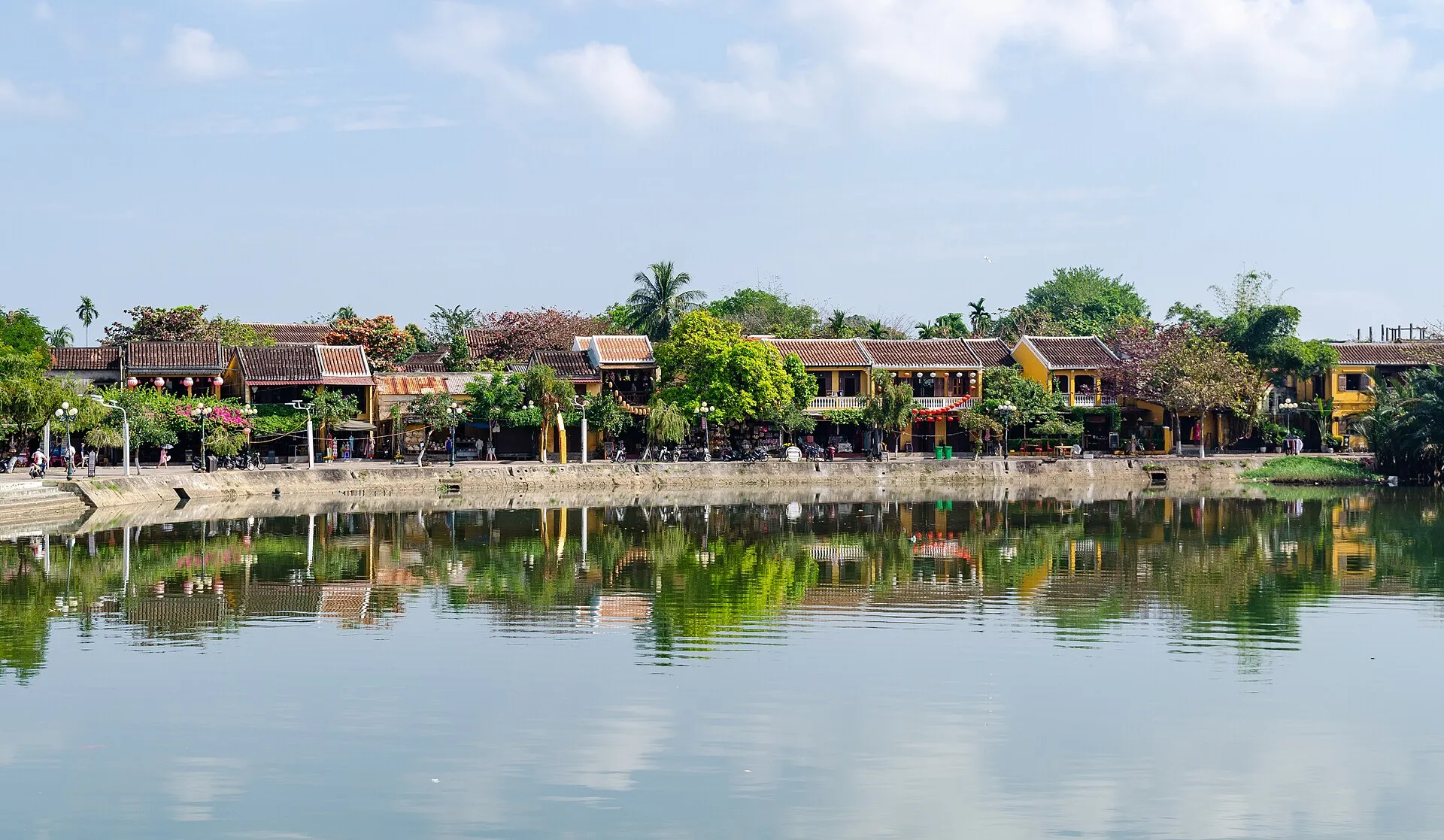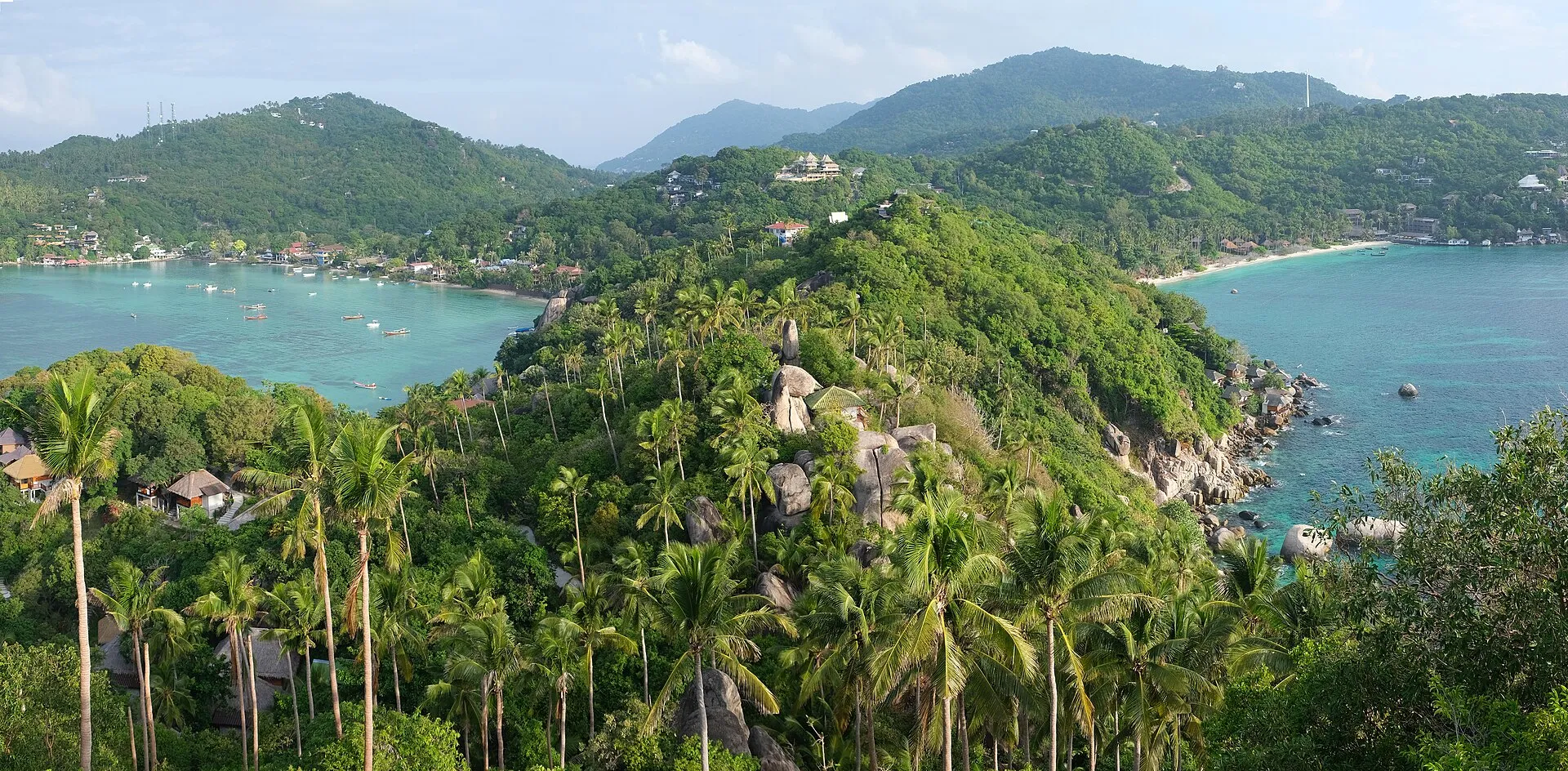
Thailand has been the center of gravity for Southeast Asian nomad life for over a decade, and the numbers still hold up. Rents run low, street food is world-class, and the new five-year DTV visa finally gives remote workers a clean long-stay path instead of endless border runs. A full month in Chiang Rai costs $550; even Bangkok sits at $1,150.
The country splits into three moods. The mountainous north around Chiang Mai and Chiang Rai is cheap, cool in winter and packed with cafés. Bangkok delivers big-city infrastructure, a perfect 10 for food and a deep expat community. The Andaman and Gulf coasts, Phuket, Krabi, Koh Tao, Koh Samui and Koh Phangan, trade convenience for beaches and diving.
This ranking sorts fifteen Thai cities and islands by overall Nomad Score, so you can weigh cost, wifi, safety and lifestyle against the tradeoffs that actually matter to your setup.
Cities are ranked by their overall Nomad Score among the Thai destinations we rate. Explore the numbers yourself on the comparison tool or browse all 999 city guides.
At a glance
 Koh Tao
Top Nomad Score at 8.0, with a perfect 10 for nature and a 9 for climate on a small dive island, at $1,000 a month.
BEST VALUEChiang MaiA 7.8 Nomad Score for $840 a month, with a perfect 10 for community and Asia's densest café-coworking scene.
BEST CITY BASEBangkokA perfect 10 for food, the best wifi in this ranking (8) and a 9 for community, at $1,150 a month.
What to weigh before you book
The DTV (Destination Thailand Visa) is the biggest recent change for remote workers. It grants a five-year multiple-entry stamp with 180-day stays per entry, extendable once, and accepts remote employment or freelance income rather than requiring a Thai employer. It does not grant tax residency by itself, and rules are still being interpreted at the border, so carry your paperwork. Older tourist and education visa routes still work but involve far more churn.
Seasons shape where you land. The northern burning season from roughly February to April tanks air quality: Chiang Mai scores just 3 for air, and Pai and Chiang Rai suffer too. The islands flip the calendar, with the Andaman coast (Phuket, Krabi, Khao Lak) wettest from May to October and the Gulf (Koh Samui, Koh Phangan) heaviest in November. Wifi is strong in cities and reliable coworking hubs but drops to a 4 or 5 on smaller islands and in towns like Pai, so line up a backup SIM.
The ranking
-
1
 Nomad Score 8$1,000/moSafety 7WiFi 6Value 7
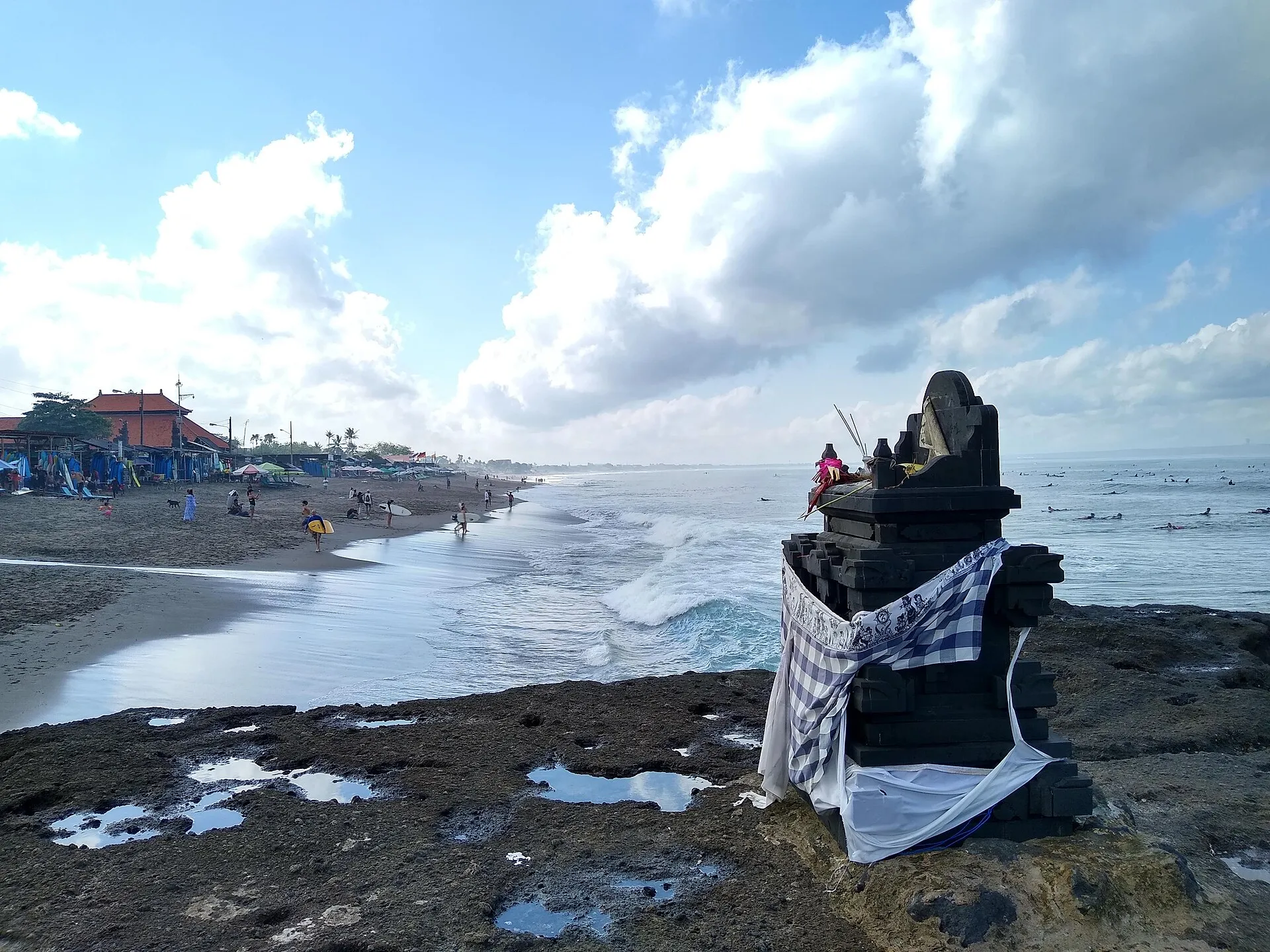
The world's busiest dive-certification island, small enough to circle by scooter and stacked with beach cafes that tolerate all-day laptops.
-
2
 Nomad Score 7.8$840/moSafety 8WiFi 7Value 7
The original Asian nomad hub sits second with a 7.8 Nomad Score, just behind Koh Tao. Its perfect 10 for community is unmatched anywhere in Thailand, backed by the region's densest cluster of coworking cafés, an 8 for food and an 8 for safety. Monthly costs sit at $840, among the lowest on this list, and the old-city moat, temples and nearby mountains keep it more livable than a big capital. The honest catch is air: Chiang Mai scores a brutal 3 for air quality, and the February-to-April burning season fills the valley with smoke worth escaping.
-
3
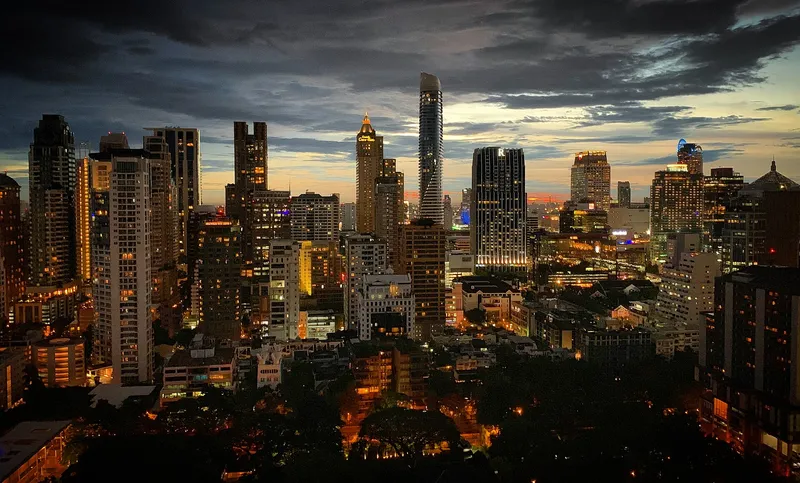 Nomad Score 7.6$1,150/moSafety 8WiFi 9Value 6
Thailand's capital scores 7.4 and is the country's infrastructure anchor. Food earns a perfect 10, culture a 9, community a 9 and wifi an 8, the best connectivity in this ranking. Skytrain, hospitals, malls and endless coworking make it frictionless. At $1,150 a month, it costs more than Chiang Mai but is still cheap for a megacity. The costs are environmental: air quality sits at 3, climate at a sweaty 4, and the relentless heat, traffic and noise wear some people down over a long stay.
-
4
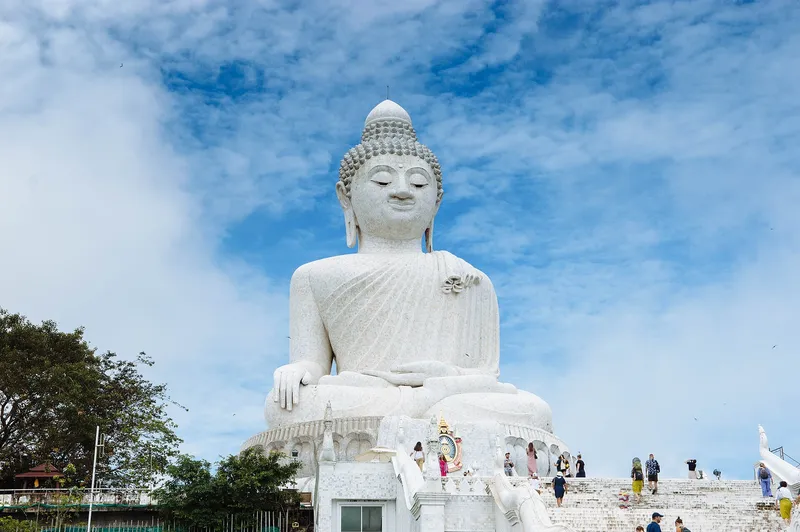 Nomad Score 7.4$1,170/moSafety 6WiFi 6Value 6
Phuket is the second-strongest island base at 7.2, after Koh Tao, largely because it functions like a small city. Nature scores a 9, nightlife an 8, and an international airport plus decent English (a 7) make it the most connected island in Thailand. A growing nomad community rates a 7. The price is the price: cost scores a 5, the lowest here, even though the monthly bill is a moderate $1,170. Wifi is a middling 6, and the Andaman rainy season from May to October can flood beach plans.
-
5
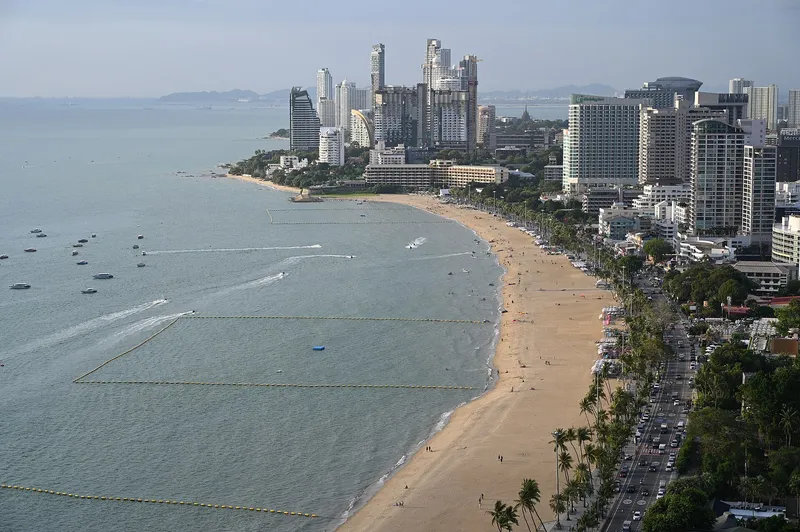 Nomad Score 7.2$920/moSafety 6WiFi 7Value 8
Pattaya lands fifth on a 7.2 Nomad Score, and the number surprises people who only know its nightlife reputation. Beyond the bars sit cheap beachfront condos, an 8 for cost at $920 a month, an 8 for climate and easy weekend access to Bangkok. Nightlife scores a 9. The tradeoff is culture, rated just 4: this is a built-for-tourists resort strip, not a place for temples and tradition, and the community score of 6 reflects a transient, uneven crowd.
-
6
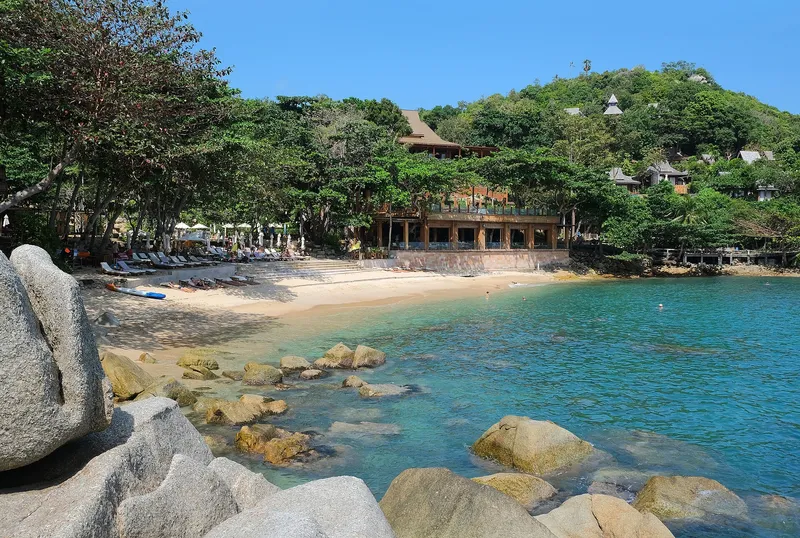 Nomad Score 7.1$940/moSafety 7WiFi 5Value 7
Better known for full moon parties, Koh Phangan has quietly become a wellness and nomad island, scoring 7.1. Its 9 for nature, 8 for nightlife, 8 for community and a strong 8 for air quality draw a crowd of yogis and remote workers to the north of the island. At $940 a month it undercuts Koh Tao and the other big islands. The practical weak spot is wifi at just 5, plus a 5 for food and a 4 for cleanliness, so it suits people who prioritize retreats and beaches over reliable heads-down work.
-
7
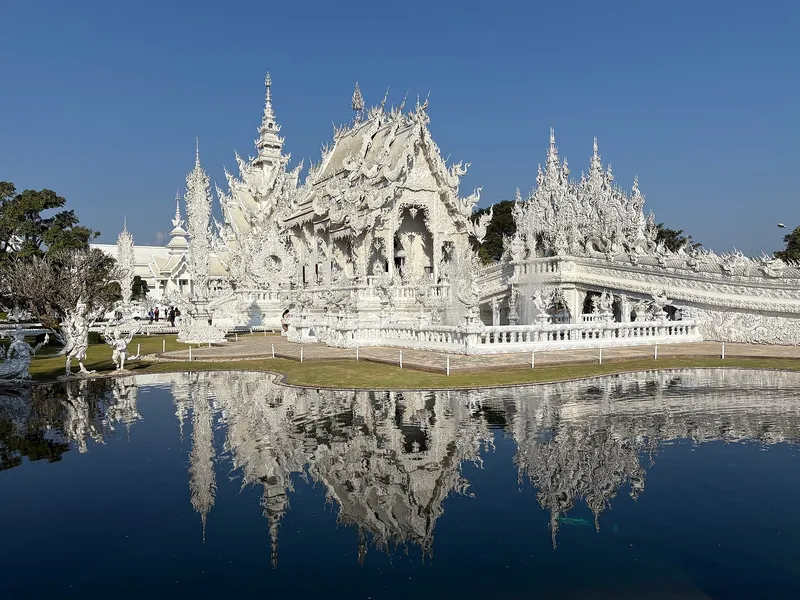 Nomad Score 7.1$550/moSafety 8WiFi 6Value 8
Chiang Rai scores 7.1 at $550 a month, the cheapest base on this list, with an 8 on cost. It is the north's quieter, more artistic counterpart, with a 9 for nature, an 8 for culture and cleaner air than Chiang Mai at most of the year. Safety rates an 8. The catch is isolation: community scores just 4 and English only 4, so you will find fewer nomads and need more Thai to get by day to day.
-
8
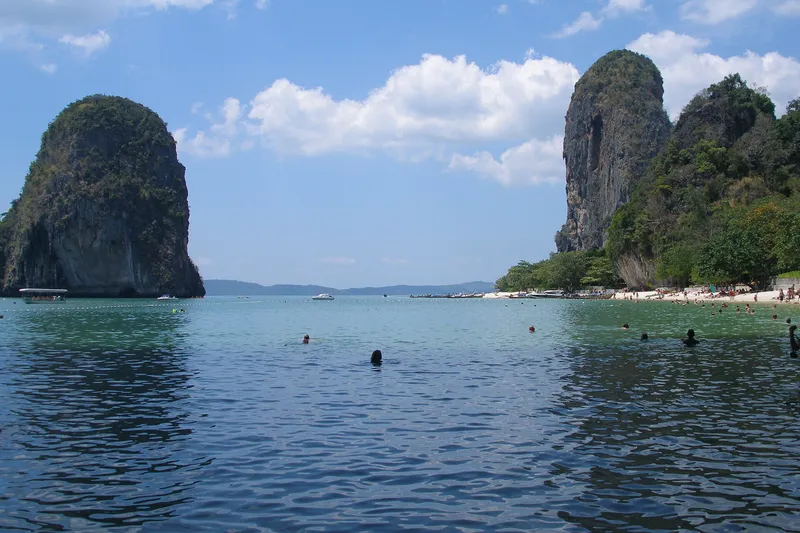 Nomad Score 6.7$1,700/moSafety 8WiFi 5Value 7
Krabi scores 6.7 and shares the best scenery in this ranking with Koh Tao, a perfect 10 for nature thanks to Railay's limestone cliffs, island-hopping and some of Asia's finest rock climbing. Safety rates an 8 and cost a 7 at $1,700 a month, on the same Andaman coast as Phuket. The limits are practical: wifi scores just 5, community a 6 and nightlife a 5, and it leans more toward adventure travelers passing through than a settled base for long remote-work stretches.
-
9
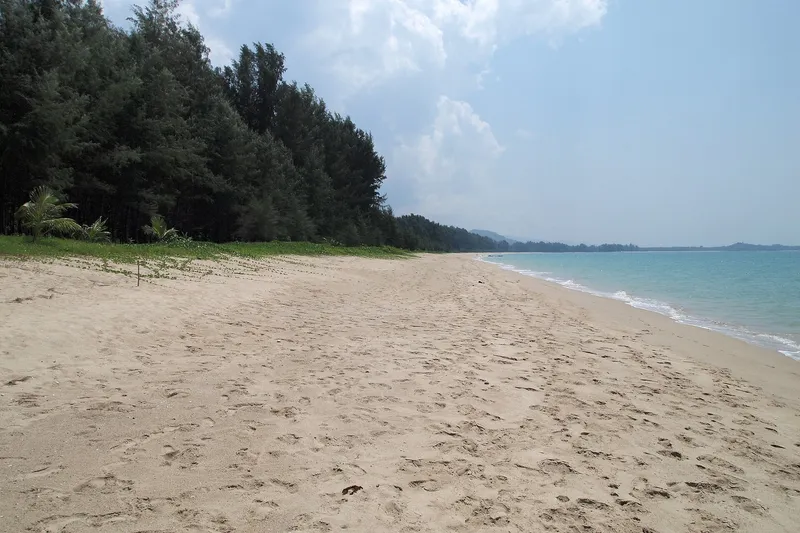 Nomad Score 6.5$1,030/moSafety 8WiFi 5Value 8
Khao Lak trades nightlife for calm, landing at 6.5 with a jungle-backed coastline north of Phuket. It scores a 9 for nature, an 8 for climate, an 8 for air quality and an 8 for cost at $1,030 a month, and it is the gateway to world-class Similan Islands diving. This is emphatically not a social scene: community scores a 3, English a 4 and nightlife a 3, so it works best for divers, couples and families who want quiet over connection.
-
10
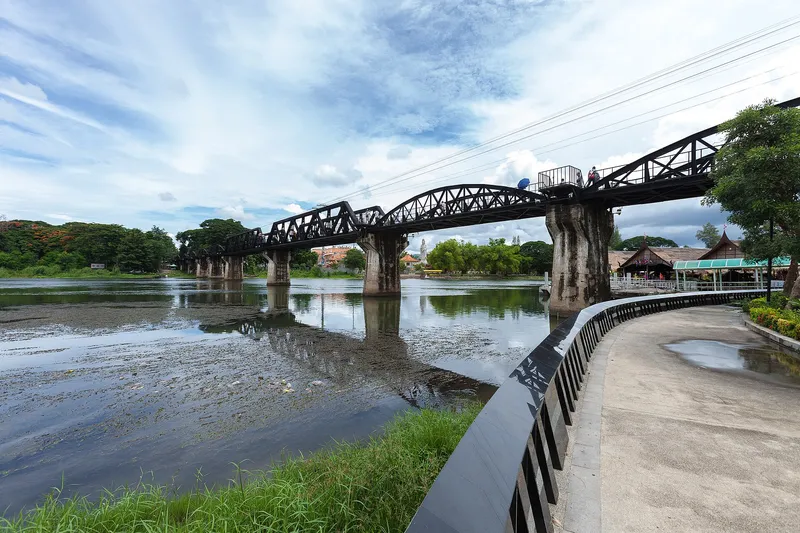 Nomad Score 6.5$1,000/moSafety 8WiFi 5Value 9
Kanchanaburi runs $1,000 a month for a 9 on cost, and it still scores 6.5 overall. West of Bangkok, it pairs WWII history and the River Kwai with a 9 for nature: jungle waterfalls, elephant sanctuaries and national parks. Safety rates an 8 and climate an 8. The reason it is not higher is people: community scores a 2 and English a 3, the lowest here, so it is a solitary, budget-first choice rather than a place to meet other nomads.
-
11
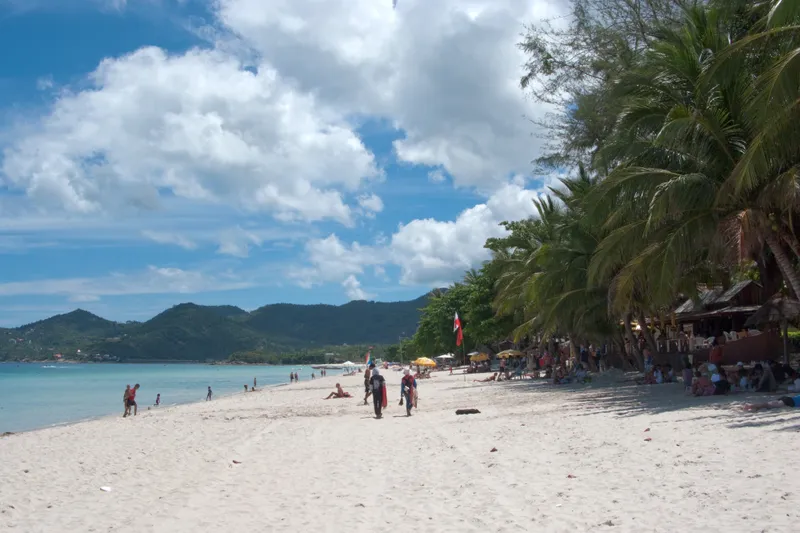 Nomad Score 6.3$1,230/moSafety 7WiFi 6Value 6
Koh Samui rounds out the Gulf islands at 6.3, a polished, coconut-palm resort island with an airport and steady wellness scene. Nature scores an 8, and most categories sit in a comfortable middle: wifi, cost, community, English and nightlife all land at 6. Expect about $1,230 a month. There is no glaring flaw, but no standout either, and the Gulf rainy season peaks heavily in November. It suits nomads who want island comfort with fewer rough edges than Phangan or Krabi.
-
12
 Nomad Score 6$1,200/moSafety 8WiFi 4Value 9
Pai is the north's mountain hippie town, scoring 6.0, and it is one of the most relaxed spots in Thailand at $1,200 a month, with a 9 for cost. Nature rates a 9 with hot springs, waterfalls and hairpin mountain roads, and safety an 8. It is a place to slow down, not to grind: wifi scores just 4, the lowest here, cleanliness a 4, and the same northern burning season drags air quality to a 5. Treat it as a scenic recharge rather than a productivity base.
-
13
 Nomad Score 5.8$700/moSafety 7WiFi 6Value 8
The ruined former capital of Siam, a river island scattered with crumbling temple spires and a Buddha head cradled in tree roots.
-
14
 Nomad Score 5.8$650/moSafety 7WiFi 7Value 9
Isaan's biggest city, with a red lotus lake and Laos an hour up the road.
-
15
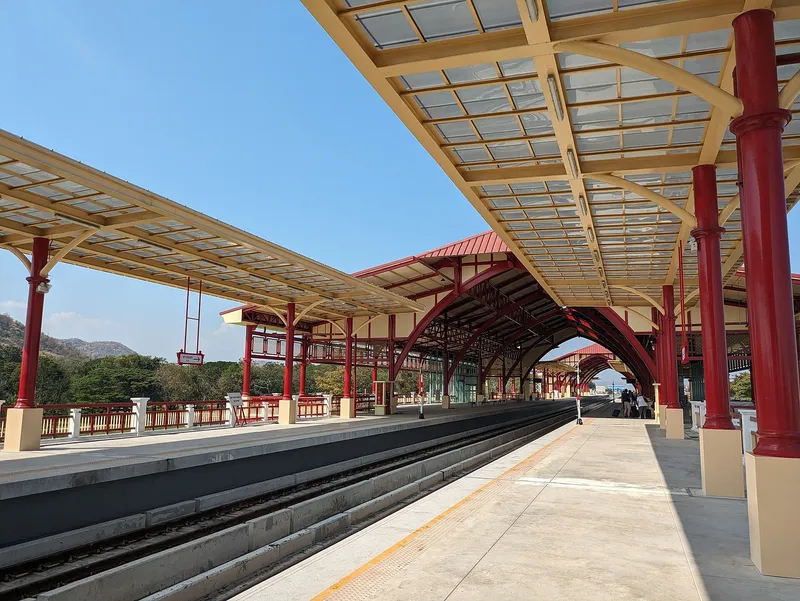 Nomad Score 5.2$910/moSafety 8WiFi 6Value 7
Hua Hin closes the ranking at 5.2, Thailand's royal beach town and a longtime favorite of retirees more than remote workers. Safety scores an 8, and at $910 a month it is genuinely affordable. Wifi is a workable 6, better than most beach spots. But the energy is quiet: community rates a 5, nightlife a 4, culture a 4 and climate a 5. It is calm, safe and cheap, which suits a certain nomad, but the low community score signals a thin peer scene.
Thailand rewards matching the city to your work style rather than chasing a single winner. If community and café productivity drive you, Chiang Mai's 7.8 is the obvious anchor; if you want a city with perfect food and the best wifi, Bangkok delivers; and if beaches are non-negotiable, Phuket and Krabi balance nature against cost differently. Use the compare tool to line up two or three of these side by side on Nomad Score, budget and all thirteen categories before you book a long stay.
Not sure whether the mountains, the megacity or the islands fit you best? Run the Nomad Taste Wheel to weight the factors you actually care about, air quality, nightlife, cost, community, and see which Thai base rises to the top for your priorities. Then narrow the shortlist on /compare and pick your first month.
Frequently asked questions
What is the best digital nomad city in Thailand?
Koh Tao ranks first with an 8.0 Nomad Score, built on a perfect 10 for nature and a 9 for climate at $1,000 a month, though its wifi is a middling 6. For a working base with a real scene, Chiang Mai is close behind at 7.8: it combines the highest community score in the country (a perfect 10), Asia's densest cluster of coworking cafés, strong food and safety, and a low cost of $840 a month. Its main drawback is the February-to-April burning season, when air quality drops sharply.
What is the cheapest place to be a digital nomad in Thailand?
Chiang Rai is the cheapest base on this list at $550 a month, followed by Udon Thani at $650, Ayutthaya at $700 and Chiang Mai at $840. Chiang Mai is the best value of the four, pairing that price with a 7.8 Nomad Score and a perfect 10 for community. The coast costs more, topping out at $1,700 in Krabi.
How does the Thailand DTV visa work?
The Destination Thailand Visa (DTV) is a five-year, multiple-entry visa aimed at remote workers, freelancers and those joining Thai activities like Muay Thai or cooking courses. It allows stays of up to 180 days per entry, extendable once for another 180 days. It accepts foreign remote income rather than a Thai employer, but it does not automatically make you a tax resident, so keep your financial documents on hand.
Is Chiang Mai or Bangkok better for nomads?
Chiang Mai (7.8) edges out Bangkok (7.4) overall. Chiang Mai wins on community, cost and a slower pace, making it ideal for focused remote work. Bangkok wins on infrastructure: a perfect 10 for food, an 8 for wifi, a 9 for culture and better transport and healthcare. Choose Chiang Mai for value and calm, Bangkok for big-city energy and connectivity.
How is this Thailand ranking calculated?
Cities are ranked by their overall Nomad Score, a composite that weighs thirteen categories including cost, wifi, safety, food, community, climate, nature and air quality. Only the Thai destinations we rate are included, so the list reflects relative strength within Thailand rather than a global comparison.