Since 2023 Croatia has belonged to the Schengen area and the eurozone alike. Prices are therefore in euros, and a non-EU visitor's 90 days in any 180 are shared with every other Schengen country. Since April 2026 the EU Entry/Exit System has kept that tally by itself, taking a face scan and fingerprints at the outer border where a passport stamp used to go. Remote workers who want longer can apply for Croatia's digital nomad residence permit, which lasts up to 18 months for anyone paid by employers or clients outside the country. The income floor is two and a half times the national average net salary, about $4,170 a month, and the foreign earnings go untaxed in Croatia, a combination few other nomad visas offer.
Nine of the twelve sit on the Adriatic, and the stretch of coast decides the character. Dalmatia, running from Zadar through Šibenik, Trogir and Split to Hvar and Dubrovnik, has the stone old towns, the island ferries and the heaviest summer crowds. Istria, home to Pula and Rovinj, is greener, closer to Italy and known for truffles and wine. Rijeka, on the Kvarner gulf, is a working port rather than a resort. Inland, Zagreb is the capital and the country's best-equipped place to work, Plitvice Lakes is a national park rather than a town, and Osijek sits on the eastern plain near Hungary and Serbia.
Two pieces of paperwork catch people out. Every landlord, bank and phone company will ask for an OIB, the personal identification number, so get one first. For the permit, the police certificate from home needs an apostille from the issuing country, and because the application asks for a registered Croatian address, you will normally sign a lease before you hold the permit.
We take every Croatian city in our index and sort it by overall Nomad Score, a single figure built from the 13 categories we rate, among them cost, climate, internet, safety and visa access. Three groups finish level: Pula, Zadar and Hvar; Rovinj and Rijeka; and Zagreb and Šibenik. Within each group the order is not a ranking. Monthly costs for Split, Dubrovnik, Pula, Zadar, Rovinj, Zagreb and Osijek come from Numbeo data; the other five are our own estimates. Explore the numbers yourself on the comparison tool or browse all 999 city guides.
At a glance
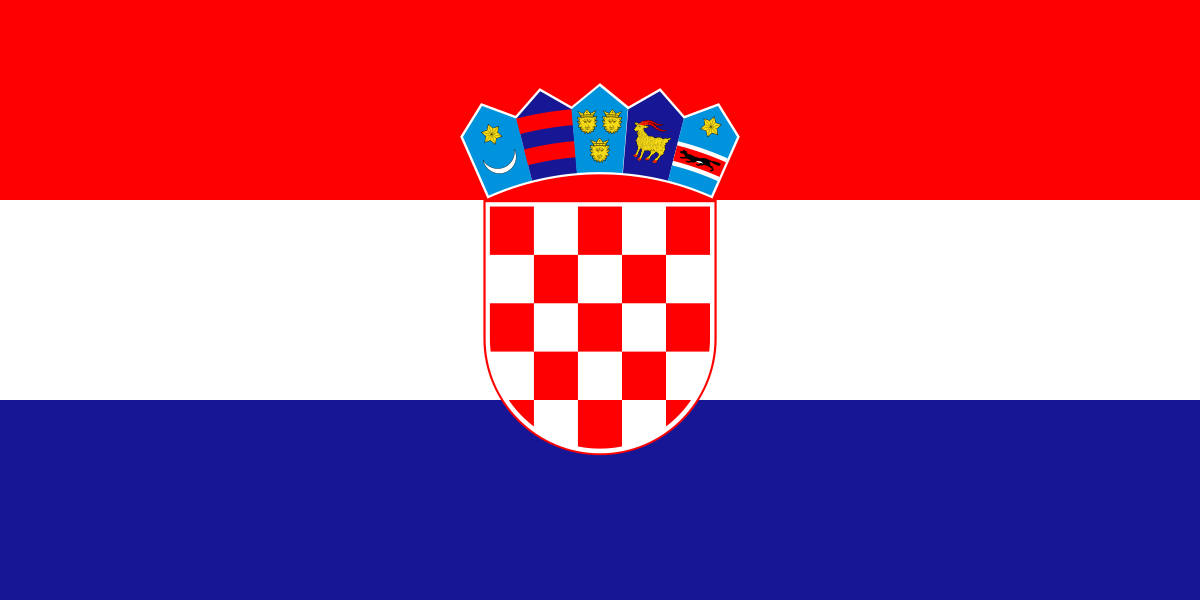 Split
SplitThe widest coworking choice on the Croatian coast, island ferries from the harbour and an old town inside a Roman palace, for $1,820 a month.
Best for a year-round leaseRijekaA port and university city whose rents hold steady through summer and whose cafes stay busy in winter, at an estimated $1,300 a month.
Best value on the coastŠibenikTwo World Heritage sites, the Krka waterfalls nearby and far smaller crowds than Split, for an estimated $1,000 a month.
What to weigh before you book
On this coast the calendar matters as much as the city. From May to September owners earn far more from holiday lets, so long leases turn scarce and expensive, and a winter contract may end the moment the season starts. From November much of Hvar, Rovinj, Trogir and Pula closes, and the south gets wet: Dubrovnik averages 434mm of rain in November. Zagreb, Rijeka and Osijek keep the same rents and services all year, which is why they make the better winter bases. Coworking outside Split and Zagreb is thin, often one space or none, so a flat with a fibre line and a proper desk matters more than any list of cafes. The nomad permit also has an end date built in: it cannot be renewed back to back, a new application needs six months away first, and the time on it earns no credit toward permanent residence. For the month-by-month weather in each city, use the comfort index.
The ranking
-
1
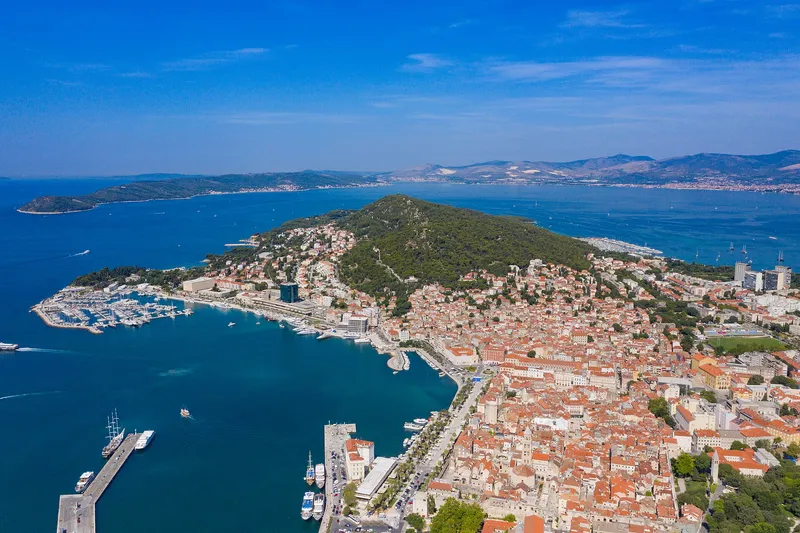 Nomad Score 8.7$1,820/moSafety 8WiFi 6Value 6
People still rent flats inside Diocletian's Palace, above the bars in a Roman emperor's retirement home, and that mix of monument and working town is what Split does best. It has more coworking than anywhere else on the Croatian coast, from The Works to the plant-filled Re.Split, and the harbour sends ferries to Hvar, Brač and Vis. Expect to spend $1,820 a month. Housing is the hard part: from May to September owners prefer tourists, so a lease signed in October can come with a request to leave, or to pay more, once summer returns.
-
2
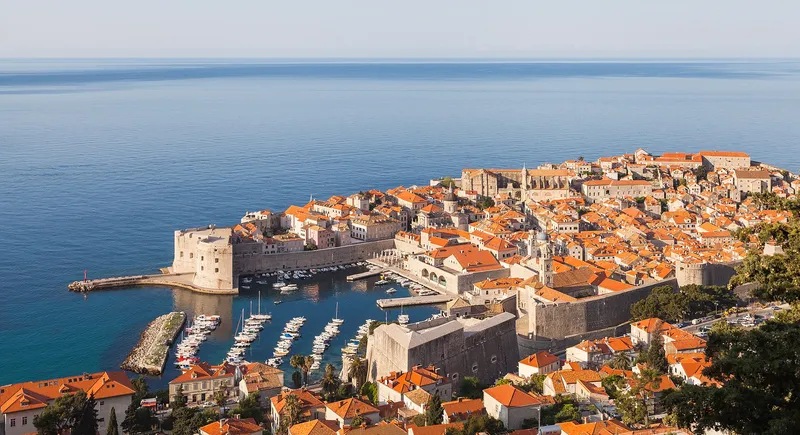 Nomad Score 8.3$2,250/moSafety 9WiFi 6Value 4
Few towns on the Adriatic are as safe or as handsome, and few make a working week as awkward. The walled old town is all stone steps and cruise-ship crowds in summer, its cafes are not set up for laptops, and the main independent coworking space sits down by the ferry port in Gruž, where daily life is calmer and cheaper anyway. At $2,250 a month this is the priciest base in the country. Spring and early autumn are lovely; winter is half shuttered, and November brings an average 434mm of rain, the wettest month on this list.
-
3
 Nomad Score 8$1,440/moSafety 9WiFi 6Value 7
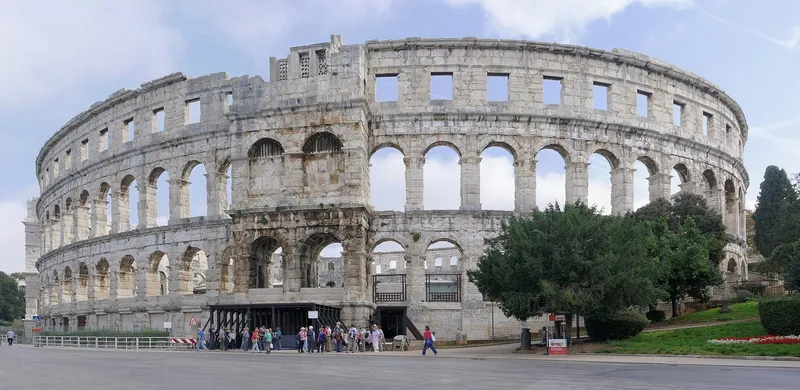
Summer concerts still fill the Roman amphitheatre, and the Istrian table, with its truffles, cured ham and local wine, gives a daily reason to stay. Pula undercuts Split and Dubrovnik for much the same coastal life at $1,440 a month. Work happens at Coworking Office Pula, run by the regional development agency, or at Klub Kotač, a free and sometimes noisy community room inside the Rojc social centre. Neither adds up to a nomad scene, and from November to April much of the town closes. Rail links are poor, so travel mostly means buses or the small airport outside town.
-
4
 Nomad Score 8$1,660/moSafety 9WiFi 6Value 6
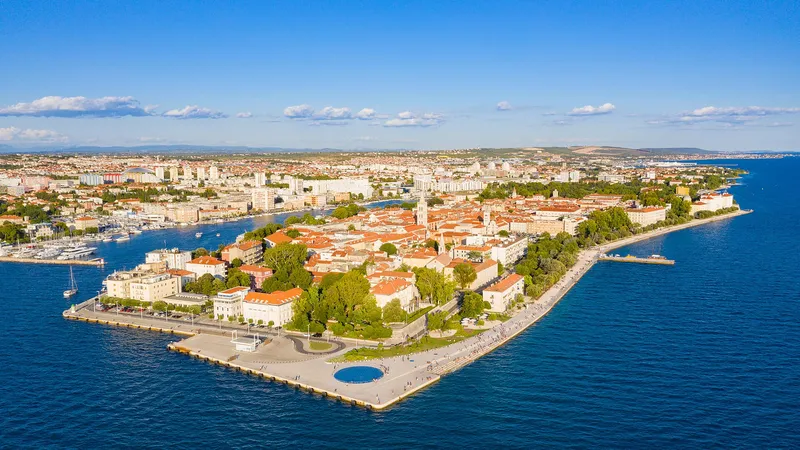
Sunset is a daily event on the Zadar waterfront, where the Sea Organ plays with the waves and people gather at the Greeting to the Sun. The old town is a flat, walkable peninsula, cafes accept a laptop as long as you keep ordering, and COIN provides a proper coworking floor, though only on weekdays during office hours. In Borik, the Digital Nomad Valley bundles housing and desks for permit holders. Life here costs $1,660 a month, less than Split. Winter brings the bora wind, shuttered restaurants and fewer island ferries, and social life gets very thin.
-
5
 Nomad Score 8$1,300/moSafety 8WiFi 7Value 6
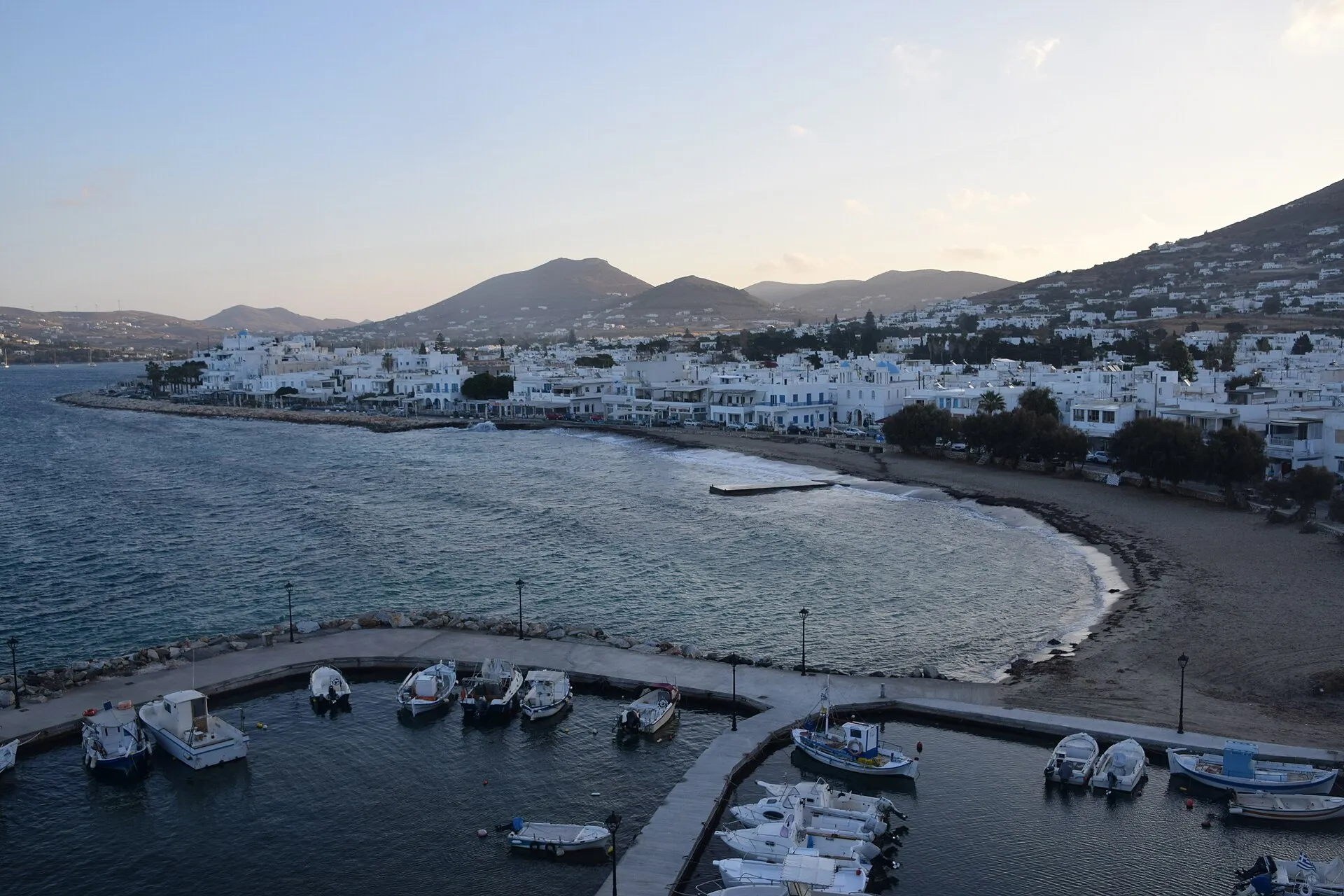
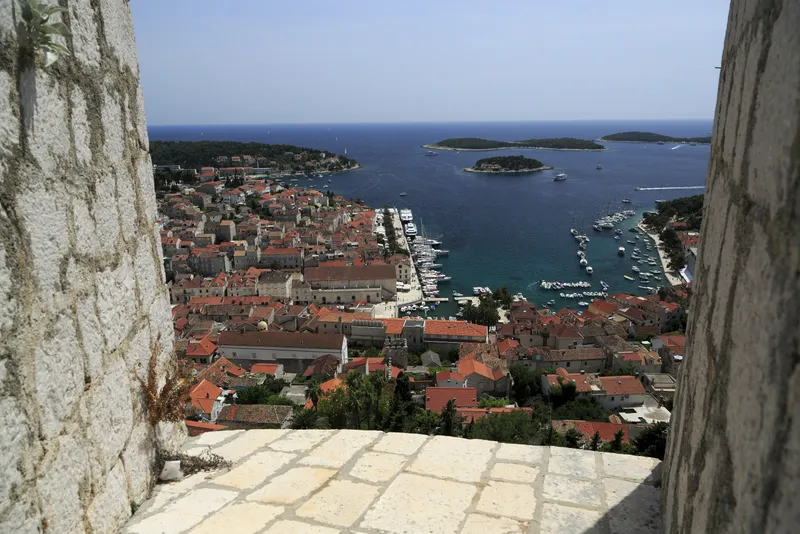
The catamaran from Split takes about an hour, and what it delivers you to depends entirely on the month. In July and August Hvar Town means yachts, packed terraces and party crowds, reined in by fines for wandering the town in swimwear; in winter much of it shuts and the ferry timetable shrinks. Between those extremes, a car-free marble town with reliable internet and no coworking at all is a calm place to work. We estimate $1,300 a month, though a winter lease in Jelsa, on the north coast, usually undercuts Hvar Town.
-
6
 Nomad Score 7.8$1,700/moSafety 9WiFi 6Value 6
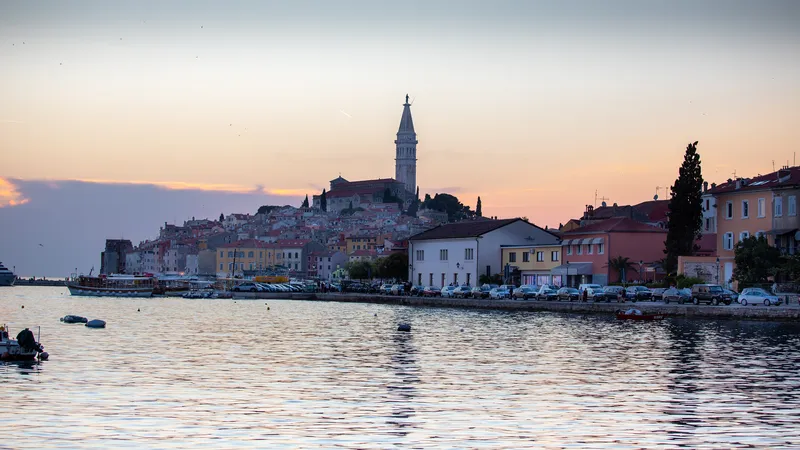
With roughly fourteen thousand residents, Rovinj is closer to a large village than a town, so everything is ten minutes away and nobody stays anonymous for long. Pastel houses climb a car-free peninsula to the church of St Euphemia, a pine-shaded path runs south to places to swim, and summer catamarans cross to Venice. It costs $1,700 a month. Working here means a desk at home: coworking is scarce, and in high season every cafe with a socket fills with holidaymakers by mid-morning. Winter brings the opposite problem, with most restaurants shut and the bura occasionally cutting the power.
-
7
 Nomad Score 7.8$1,300/moSafety 8WiFi 7Value 6
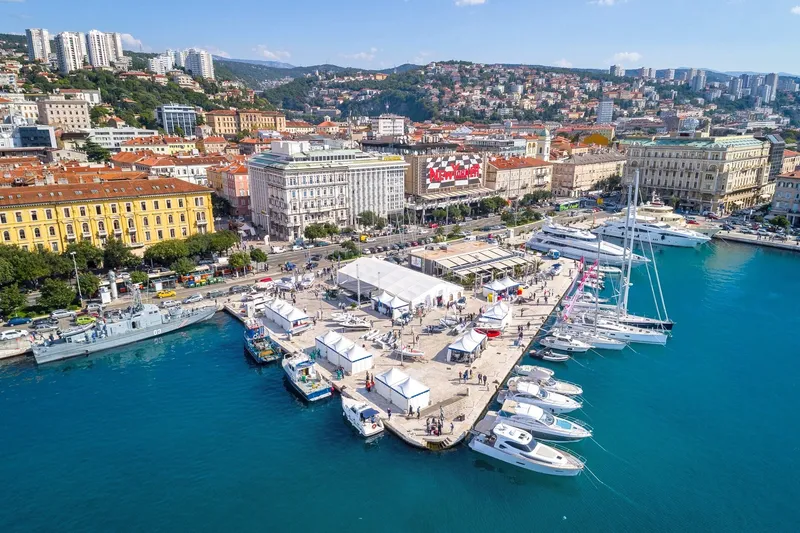
Rijeka runs on its port and its university rather than on visitors, and for a long stay that is the whole argument. Leases come on ordinary terms and survive the summer, the cafes along the Korzo are as busy in February as in August, and the old Habsburg resort of Opatija is a short bus ride west. All in, our estimate is $1,300 a month. In return you accept a centre that is handsome but surroundings that are industrial, pebbly beaches you have to travel to, a small nomad crowd and the bura, a mountain wind that can blow for days.
-
8
 Nomad Score 7.4$1,830/moSafety 8WiFi 8Value 6
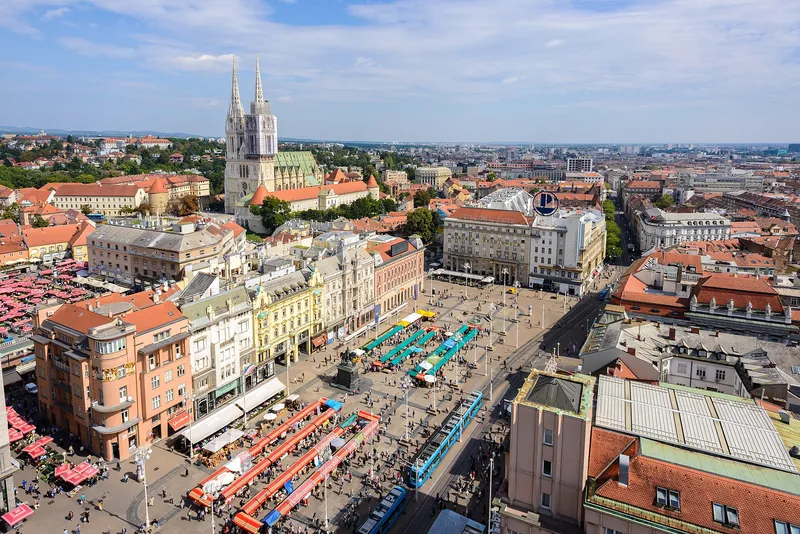
Of the twelve, this is the city built for a working routine rather than a holiday. Zagreb has the deepest coworking choice in Croatia, with HUB385, Impact Hub and WESPA Spaces, and a coffee culture in which an afternoon over one cup and a laptop raises no eyebrows. A reliable tram network covers the city, and the centre is walkable in twenty minutes. The cost is $1,830 a month. What you give up is the sea, two to three hours away by road, and any warmth from November to February, when January highs average 5C and the skies stay grey.
-
9
 Nomad Score 7.4$1,000/moSafety 8WiFi 7Value 6
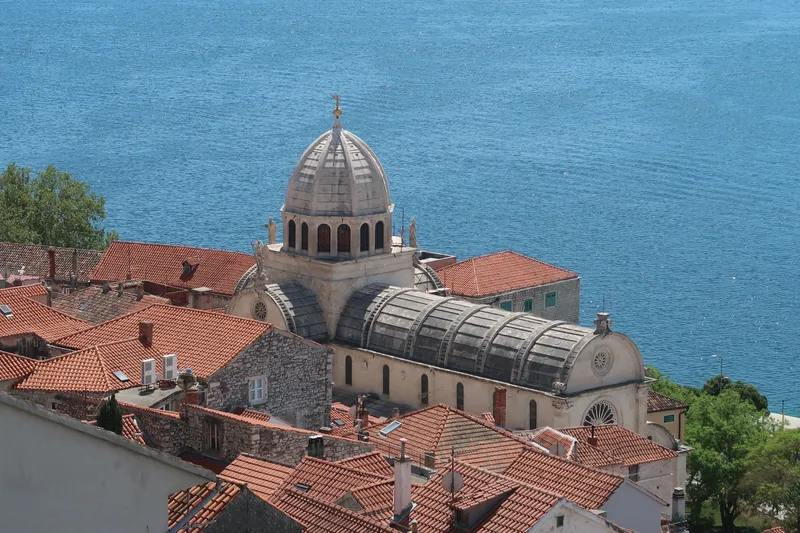
Two World Heritage listings sit in Šibenik, the stone Cathedral of St James and the St Nicholas Fortress guarding its channel, yet even August brings a fraction of Split's crowds. We put the cost at $1,000 a month, the joint lowest in Croatia on our list. The old town is a steep tangle of stairs, so a flat on the flatter seafront side suits daily work better. Krka's waterfalls are close, though swimming beneath them has been banned since 2021, and year-round ferries reach car-free Zlarin. The trade-off is a small community and little nightlife.
-
10
 Nomad Score 7.2$1,300/moSafety 8WiFi 6Value 6
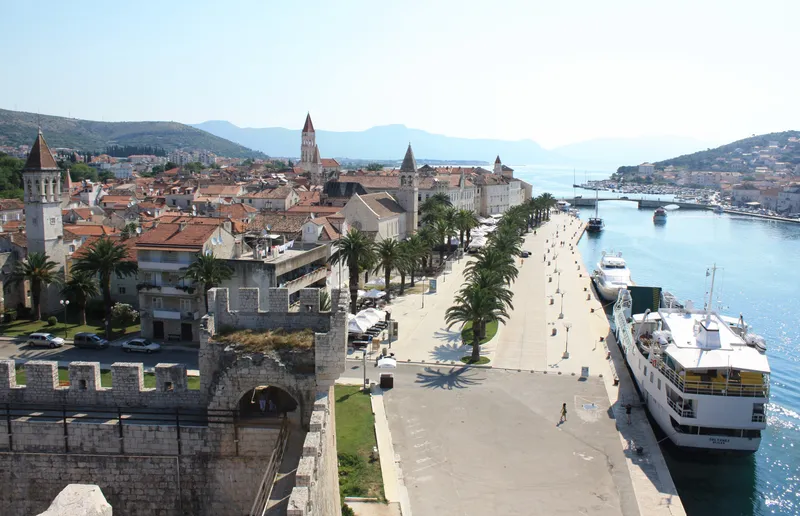
The airport that carries Split's name is actually nearer to Trogir, close enough that an early flight costs a short taxi ride rather than a night's sleep. The old town fills an islet a few hundred metres long, all marble lanes and Venetian palaces, and from June to September day-trip crowds pack it from mid-morning to late afternoon. Living across the bridge, on the mainland or on Čiovo, is quieter and cheaper. Our figure, an estimate, is $1,300 a month. There is no coworking, so a fibre line at home matters, and Split is half an hour away for anything more.
-
11
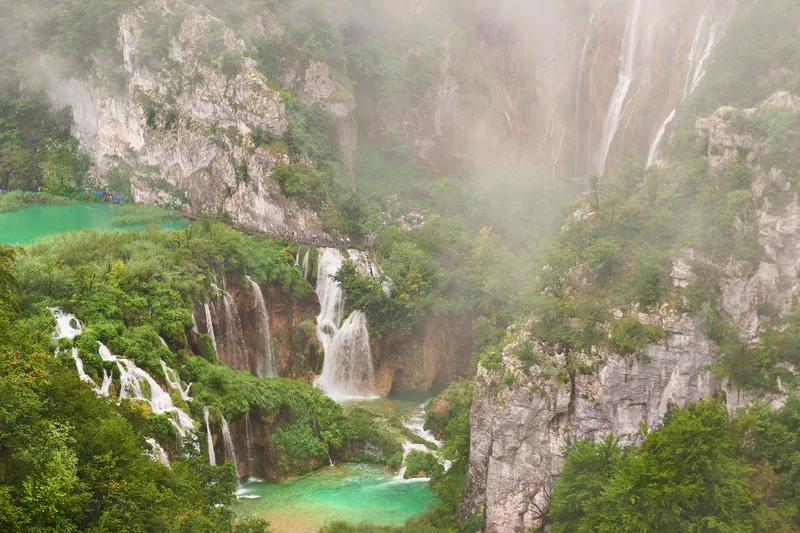 Nomad Score 6.7$1,000/moSafety 9WiFi 6Value 6
No town stands at Plitvice Lakes, only a national park ringed by guesthouse villages such as Mukinje, Jezerce and Korenica. A self-catering flat with a desk and decent wifi is the realistic setup, coworking does not exist, and without a car the area is hard to get around. Expect $1,000 a month on our estimate. The reward is sixteen terraced lakes on your doorstep, and winter is the cheap season to walk them, with a day ticket around $12 against roughly $47 in summer. January highs of 3C, though, cut the routes and stop the park's boats and trains.
-
12
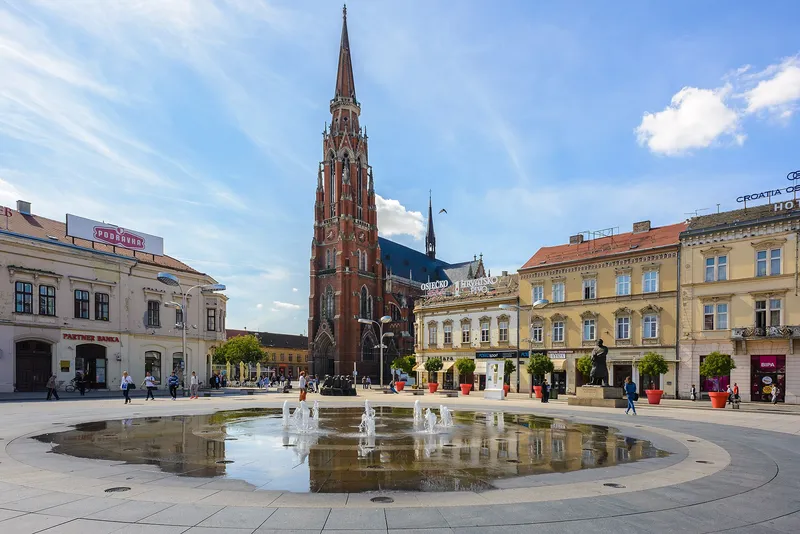 Nomad Score 6.5$1,330/moSafety 8WiFi 7Value 8
Far from the coast on the Pannonian plain, Osijek is an EU city where nobody is pricing for tourists. Its baroque fortress quarter, Tvrđa, now holds university faculties and most of the bars, the flat streets suit a bicycle, and Kopački Rit, a vast flooded forest where the Drava meets the Danube, begins a few kilometres north. Slavonian cooking, from kulen sausage to paprika-heavy river fish stew, is a tradition of its own. Budget $1,330 a month. Winters bring fog and poor air that can hang over the town for weeks, flights barely exist, and the sea is a long drive away.
A year in Croatia works best in two halves: the coast from April to October, when Split, Zadar and Istria are at their best, and a city that keeps going through winter for the dark months, Zagreb for coworking or Rijeka to stay by the sea. Anyone on the nomad permit should plan its end as carefully as its start, because the six-month gap before a fresh application means spending that time somewhere else. To set Croatia beside its neighbours, see the rest of our Europe ranking.
Frequently asked questions
Can I stay in Croatia longer than 90 days as a remote worker?
Yes, on the digital nomad residence permit, which is open to non-EU citizens working for employers or clients outside Croatia. It runs for up to 18 months. The income floor is about $4,170 a month, pegged at two and a half times the average net salary so that it moves with wages, and you also need health cover, a clean police record and a Croatian address. Foreign earnings are exempt from Croatian income tax while it runs, and once it ends a new application has to wait six months.
How does the EU Entry/Exit System affect a stay in Croatia?
Since April 2026, non-EU travellers entering the Schengen area are registered with a face scan and fingerprints instead of a stamp, so the 90-day count keeps itself. Croatia's external borders are its airports, for flights from outside Schengen, and its land crossings into Bosnia, Serbia and Montenegro; flights from Germany and ferries from Italy involve no check. Driving to Dubrovnik on the old coast road through Neum means leaving and re-entering Schengen at the Bosnian border, which the Pelješac bridge now lets you avoid.
Which Croatian cities work best in winter?
Zagreb, Rijeka and Osijek, because they are real cities whose rents, cafes and services do not depend on tourists. Zagreb has the most coworking, and Rijeka keeps you by the sea through mild but wet and windy months. Island and resort towns such as Hvar, Rovinj and Trogir largely shut from November, and Plitvice Lakes runs shorter routes with its boats and trains stopped.
What is the cheapest base in Croatia on this list?
Šibenik and Plitvice Lakes, both at $1,000 a month on our estimates. Hvar, Rijeka and Trogir follow at $1,300, and Osijek, at $1,330, is the cheapest whose cost is built from Numbeo data. Dubrovnik is the most expensive at $2,250 a month.
How is this ranking calculated?
Each Croatian city we cover is ordered by its overall Nomad Score, which combines our 13 rated categories, from cost and climate to internet, safety and visa access. Cities on the same overall score appear in no particular order, which applies to Pula, Zadar and Hvar, to Rovinj and Rijeka, and to Zagreb and Šibenik. Costs for seven cities come from Numbeo data and the other five are our own estimates, as each city page states.