Cost of Living in Rabat
Real market data
Source: Numbeo · August 2026
$830/moSolo nomad1-bed centre + living costs
$1,090/moCoupleshared 1-bed + costs
$600/moLean / localcheaper area + costs
- 1-bed rent, city centre$510DH4,818
- 1-bed rent, outside centre$280DH2,589
- Monthly costs excl. rent (1 person)$320DH2,984
- Meal, inexpensive restaurant$4DH40
- Monthly transit pass$27DH250
- Buy price, per m² (centre)$2,050DH19,170
Prices are from Numbeo (August 2026), converted to USD at $1 = DH9.36 (01 Aug 2026). The monthly living-costs figure is our transparent one-person basket, groceries, a few meals out, utilities, phone, internet, transport and essentials, priced from those figures. Solo adds central rent; couple and lean are estimates from the same numbers. The guide below quotes its own monthly range, which is a different measurement rather than a competing one: this table prices a defined basket at the figures above, while that range is a judgement about how somebody actually lives here.
Rabat is one of the more affordable capitals on the Atlantic coast of North Africa, though it costs more than Morocco's smaller cities. As a rough monthly budget for a solo remote worker:
- Rent, central neighborhoods (Agdal, Hassan): $480-640 for a furnished one-bedroom
- Rent, cheaper areas (Youssoufia, Akkari, outer Salé): $215-375
- Groceries: $105-160 cooking mostly at home
- Eating out: $3-7.50 at a local snack or cafe; $16-32 at a mid-range restaurant
- Coworking hot-desk: $85-160 per month
- Local transport (tram, bus, petit taxi): $32-64 depending on how much you walk
- Total realistic range: $855-1,390 per month, all in
A local SIM with data (Maroc Telecom or Orange) costs roughly $11-21 per month for a 20-30 GB plan. Utilities including electricity and water typically add $32-53 to rent in summer and more in winter if you use electric heating.
Where to Work
Rabat has a functional but not sprawling coworking scene. The best-known dedicated spaces include LA STATION in the Ocean neighborhood, which has fast fiber, a terrace, and round-the-clock access. Coworkinn in Agdal offers a quieter professional atmosphere and meeting rooms. Regus has multiple Rabat locations including Agdal and Hay Riad for more corporate needs.
Cafe work is viable but requires some trial and error. Connect Cafe in Agdal is consistently recommended for reliable WiFi and a comfortable setup. Edmonton Coffee House in the Yacoub El Mansour district is a specialty coffee shop with solid connectivity and a reputation among remote workers. Starbucks locations have decent WiFi but can get crowded. Many traditional Moroccan cafes do not have WiFi or will not welcome laptop workers for extended sessions.
Fixed broadband in Rabat is enough for calls and most remote work tasks. Mobile data on 4G is a reliable backup. In dedicated coworking spaces, speeds are generally fast and stable. In cafes, quality varies considerably, so test before committing to a long work session.
Getting Around
Rabat has a clean, air-conditioned tram system (Tramway de Rabat-Sale) that links central Rabat with the neighboring city of Sale across the Bou Regreg river. A single tram journey costs around $0.50. Petit taxis are small blue metered cars that cover short trips within city limits; the meter starts at roughly $0.50 and most central rides cost $1.50-3. Grand taxis handle longer routes or trips to the suburbs.
The city center, Agdal, Hassan, and the Medina are all walkable in good conditions. The terrain is mostly flat, and the corniche along the river is pleasant on foot. Cycling infrastructure is limited but improving.
Rabat-Sale Airport (RBA) is about 8 km from central Rabat. An express shuttle bus connects the airport to the train stations and city center. A grand taxi from the airport to central Rabat costs roughly $8.50-13. Train connections link Rabat to Casablanca in about 45 minutes, which opens up the larger international hub at Mohammed V Airport if needed.
Sorting transport? Book an airport transfer, or compare car rental on Auto Europe and QEEQ.
Visas and Staying Long-Term
Citizens of the US, UK, EU member states, Canada, and Australia can enter Morocco visa-free and stay up to 90 days. Most nationalities get their passport stamped on arrival with no prior arrangements needed.
Morocco has no digital nomad or remote-work visa, despite periodic talk of one. Staying past 90 days means applying for an extension at a local police station before the entry stamp runs out, or leaving the country.
For shorter stays, most nomads use the standard 90-day entry and then exit to Spain or Portugal before re-entering. Be aware that staying more than 183 days in a calendar year may trigger Moroccan tax residency rules.
Best Time to Visit
Rabat sits on the Atlantic coast, which keeps summers cooler than inland Morocco. July and August temperatures average 24-28 degrees Celsius (75-82 F) with almost no rain and sea breezes. This is comfortable compared to Marrakech or Fez, though the city becomes quieter as locals vacation.
The best months for remote work are March through June and September through November. Spring brings mild temperatures between 18-24 degrees Celsius, minimal rain after April, and a lively city atmosphere. Autumn is equally pleasant and less crowded with tourists. Winter (December through February) is the rainy season with temperatures dropping to 10-16 degrees Celsius in the evening, though it rarely gets cold enough to be disruptive. WiFi cafes and coworking spaces are busier and more useful in winter as outdoor work is less appealing.
Pros and Cons
- Pros:
- Among the safest cities in Morocco, with a visible police presence and low violent crime
- Lower cost of living than Casablanca with a more relaxed pace
- Atlantic coast location moderates summer heat
- Good intercity train links to Casablanca and Fez
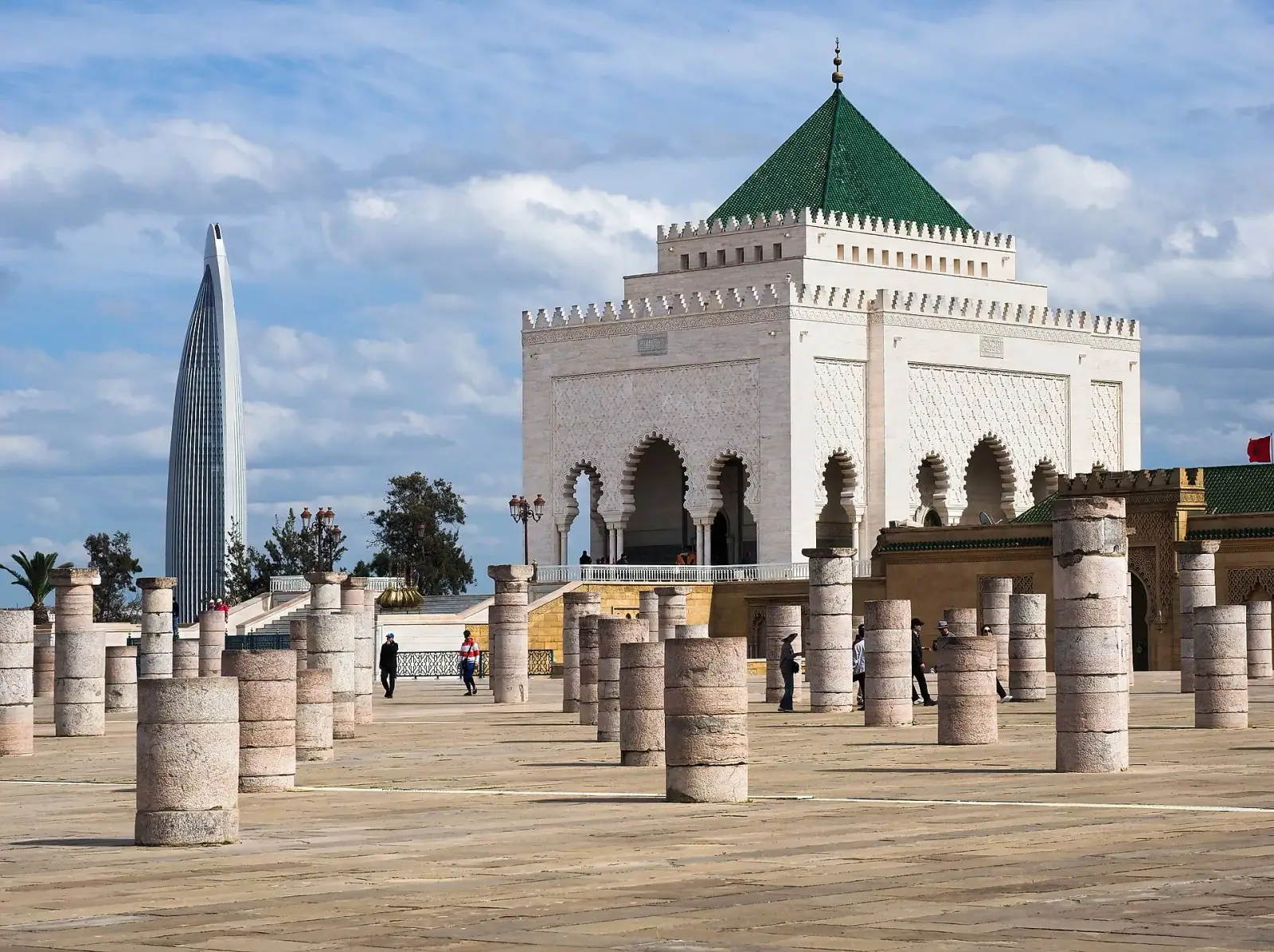
- Rich history: Kasbah of the Udayas, Hassan Tower, Chellah, UNESCO-listed Medina
- Functioning tram and public transport network
- University city with a young, educated local population
- Cons:
- Smaller and quieter than Casablanca; nightlife and social scenes are limited
- Coworking scene is modest compared to major European capitals
- Cafe WiFi is inconsistent and requires testing before settling in
- Visa situation for long stays lacks a clear, established process
- English is less widely spoken than in Marrakech; French and Darija are essential
- Harassment in the Medina and tourist areas, particularly for women traveling solo
- Limited direct flight options compared to Casablanca
Who Rabat Is Best For
Rabat suits nomads who want a calm, genuine Moroccan city without the tourist saturation of Marrakech. If you value safety, walkable neighborhoods, and a lower cost of living over a buzzing social scene, Rabat delivers well. It works especially well for people who speak some French, since day-to-day life becomes much easier with it. The city is a good fit for solo professionals on a medium-to-long stay who want to actually live in a neighborhood rather than pass through a tourist zone.
Skip Rabat if you need a large, active nomad community to plug into quickly, or if you are looking for consistent nightlife and a packed social calendar. It is also not the right base if you want major international flight connections, since Casablanca's Mohammed V Airport is much better served. Anyone who finds slow-paced, administrative cities dull will likely get restless here within a few weeks.