Cost of Living in Tangier
Real market data
Source: Numbeo · August 2026
$890/moSolo nomad1-bed centre + living costs
$1,210/moCoupleshared 1-bed + costs
$720/moLean / localcheaper area + costs
- 1-bed rent, city centre$500DH4,670
- 1-bed rent, outside centre$330DH3,100
- Monthly costs excl. rent (1 person)$390DH3,679
- Meal, inexpensive restaurant$5DH50
- Monthly transit pass$16DH150
- Buy price, per m² (centre)$1,820DH16,995
Prices are from Numbeo (August 2026), converted to USD at $1 = DH9.36 (01 Aug 2026). The monthly living-costs figure is our transparent one-person basket, groceries, a few meals out, utilities, phone, internet, transport and essentials, priced from those figures. Solo adds central rent; couple and lean are estimates from the same numbers.
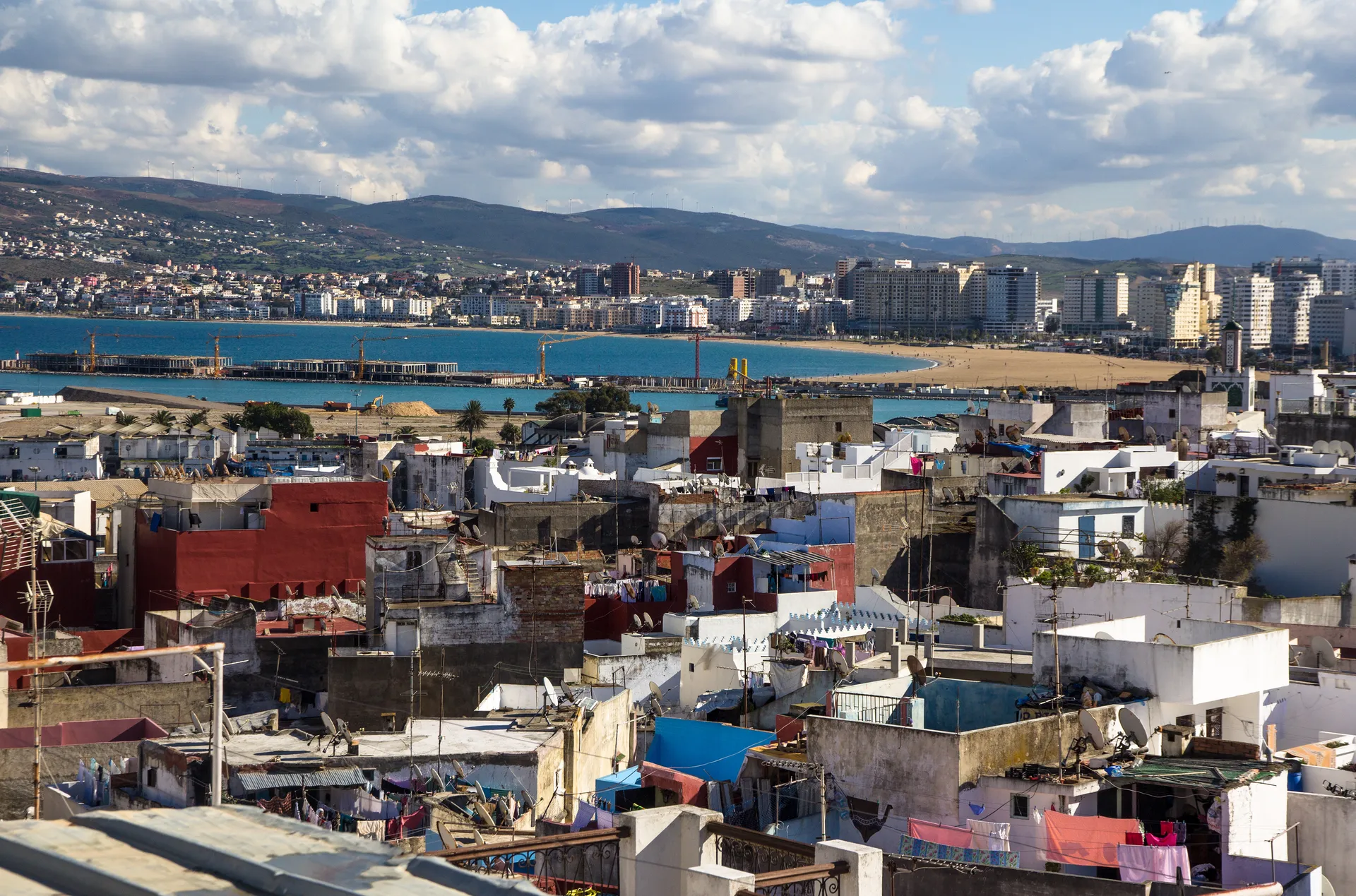
Tangier is one of the more affordable bases on the Mediterranean, and most nomads find a comfortable month costs roughly $800 to $1,100. Rent is the biggest variable: a modest furnished flat in the Ville Nouvelle or near Malabata sits at the lower end, while sea-view apartments and short-let studios push higher. Eating well is cheap, with fresh fish, produce and street food widely available, and cafe culture keeps daily spending low. Transport, mobile data and the occasional grand taxi add little. These figures are editorial estimates and vary with season, neighbourhood and lifestyle, so treat them as a planning guide rather than a fixed budget.
- Rent: around $350 to $600 for a furnished one-bedroom, higher for sea views or short lets.
- Food: roughly $200 to $300 a month, less if you cook and shop at local markets.
- Transport: petit and grand taxis are inexpensive; a monthly transport spend rarely tops $40.
- Extras: SIM data, cafes, coworking and outings typically add $100 to $200.
Where to Work in Tangier
Tangier's remote-work scene is smaller than Marrakech or Casablanca, but it is growing and the essentials are here. A handful of coworking spaces and business hubs cluster around the Ville Nouvelle and Boulevard Pasteur, offering desks, meeting rooms and reliable connections. Cafes are the everyday office for many, and the city has a deep cafe tradition, so finding a table with power and decent WiFi is easy. Many nomads simply work from their flat and treat cafes as a change of scene. Internet is generally solid in the modern districts, though older medina buildings can be patchy, so test the connection before committing to a longer stay. The clock is the detail that catches remote workers out. Morocco returned to GMT permanently on 20 September 2026, ending both GMT+1 and the Ramadan clock changes, so it now matches London in winter and runs an hour behind Madrid and Paris then, two hours behind in summer. For those weeks a standing 9 o'clock call with a client in Madrid moves to 8 in Tangier.
Getting Around Tangier
Tangier is compact and walkable, especially the medina, kasbah and the seafront corniche, where strolling is the natural pace. For longer hops, petit taxis (metered, turquoise) handle trips within the city cheaply, while shared grand taxis run set routes and reach nearby towns and Cap Spartel. The city is unusually well connected for its size: Ibn Battouta airport links to Europe and beyond, the Tanger Med port handles ferries to Spain, and the high-speed Al Boraq rail line whisks you to Rabat and Casablanca in a few hours. A car is rarely necessary in town, though it helps for exploring the coast and countryside at your own pace. The ports are easy to confuse. Only Algeciras and the longer routes use the big port roughly 40 km east, which means a bus or taxi first; fast ferries to Tarifa, about an hour across, leave from the city port beside the old medina. On the rails, the high-speed line south of Kenitra is being extended to Marrakech, with completion targeted for 2029, which would bring Marrakech within about 2 hours 40 minutes of Tangier.
Sorting transport? Book an airport transfer, or compare car rental on Auto Europe and QEEQ.
Visas for Tangier
Morocco makes short stays straightforward for many travellers. Citizens of numerous countries, including much of the EU, the UK, the US, Canada and Australia, can enter visa-free and stay up to 90 days, which suits a season of remote work comfortably. There is no dedicated digital-nomad visa at present, so most nomads use this tourist allowance. If you wish to stay longer, you can apply for a residence permit through the local authorities, which involves paperwork and proof of means. Tangier is also where many non-EU travellers sit out the other clock. Morocco lies outside the Schengen area, so days here do not count toward the ninety days in any 180 that Spain and its neighbours allow, and a month in Tangier lets that allowance recover. The trip back has changed, though: the fast ferry from the city port lands at Tarifa, an external Schengen border, where the EU's Entry/Exit System has registered non-EU arrivals biometrically since April 2026 and then totals their Schengen days by itself, so the arithmetic no longer depends on anyone reading stamps.
Best Time to Visit Tangier
Tangier enjoys a Mediterranean climate, and spring and autumn are the sweet spots. From April to June and again in September and October, days are warm and pleasant, the light is glorious and the crowds are thinner. Summer brings heat and busy beaches as domestic and European visitors arrive, so accommodation costs rise and the medina buzzes. Winters are mild but can be wet and windy, given the city's exposed position where the Atlantic meets the Mediterranean; the Strait is famous for its breezes. For a balance of good weather, reasonable prices and a relaxed atmosphere, aim for the shoulder seasons and pack a light layer for cooler evenings. The wind over the strait has a name worth knowing. The levante, an easterly that funnels between the Rif and southern Spain and blows most often from May to September, can halt the Tarifa ferries for a whole day, so a summer crossing should not be timed tightly against a flight on the other side. Between mid-June and mid-September the ports also carry Operation Marhaba, when millions of Moroccans living in Europe drive home across the strait and fill the ferries.
Pros and Cons of Tangier
Tangier rewards those who want an atmospheric, affordable base with one foot in Africa and one glancing towards Europe. Its cosmopolitan and artistic history, walled medina, sea views and superb transport links are genuine draws, and the cost of living stays gentle. The trade-offs are real too: the nomad community is still small, English is less widely spoken than French, Spanish or Arabic, and some visitors find the tourist areas persistent. Infrastructure in older quarters can lag behind the modern districts. Weigh what matters most to you, but for many the charm, connectivity and value comfortably outweigh the friction of settling in. The cosmopolitan reputation has a concrete source: from the 1920s until 1956 Tangier was an international zone governed jointly by foreign powers, which drew the writers, painters and smugglers who made its name, and Café Hafa, serving mint tea on terraces above the Strait since 1921, is the easiest place to sit inside what remains of that era.
- Pros: affordable living, strong transport links, rich culture and history, walkable centre, stunning coastal setting.
- Pros: mild Mediterranean climate, generous 90-day visa-free entry, cheap and fresh food.
- Cons: small nomad community, limited English, patchy WiFi in older buildings.
- Cons: summer crowds and heat, occasional hassle in tourist-heavy areas.
Who Tangier Is For
Tangier suits the independent, curious nomad who values character over convenience and does not need a ready-made expat scene. If you are drawn to layered history, cafe culture, sea air and easy access to both Europe and the rest of Morocco, it is a rewarding base. Writers, artists and slow travellers will feel echoes of the city's storied past, and budget-minded remote workers will stretch their money here. It is less ideal if you depend on a large, active nomad network, need flawless WiFi everywhere, or want everything in English. Come with patience, a little French or Spanish, and an appetite for exploration, and Tangier repays you generously.