Cost of Living in Ioannina
Where this figure comes from. No cost survey covers Ioannina, so the $1,050 a month above is our own estimate rather than a measurement. On 416 of our 999 city guides the figure is built from a published Numbeo basket, a one-bedroom rent in the centre plus one person's monthly costs without rent, converted to USD; this city is not one of them. How we source everything.
Budget roughly $1,050 a month as a solo remote worker in Ioannina, which is cheap for Greece and very cheap for a lakeside university city in the European Union. A one-bedroom apartment near the centre or the castle quarter runs about $350 to $500, and the student districts drop that to $280 to $400. Rents rise noticeably in September when the university intake arrives, so arriving in summer and signing early is worth doing. Groceries land around $220 to $280. A souvlaki lunch is $4 to $6, a taverna dinner with wine $15 to $22, and coffee, which in Greece is a two-hour institution rather than a drink, about $3.50. Utilities add $90 to $180, higher in the cold Epirus winter. Heating runs on oil delivered by tanker rather than on gas, and this part of the country sits in the coldest band for the state heating allowance, which tells you what a winter costs before anybody quotes a figure. A single tank filling is a three-figure sum in dollars. Ask which floor a flat is on, because a top floor under an uninsulated roof and a ground floor over an unheated basement are each expensive in their own way.
Where to Work in Ioannina
Ioannina's working infrastructure comes from the University of Ioannina and its 20,000 students rather than from any remote-work economy. There is a small coworking presence connected to the university's research and innovation activity, with desks in the region of $90 to $140 a month, but most people use cafes. The lakeside promenade and the streets inside the old castle walls have a dense supply of them, and Greek cafe culture actively expects you to occupy a table for hours over one frappe. Fixed-line internet is decent and improving, mobile data is cheap and reliable across the EU roaming area. The practical limitation is that almost nothing here is designed with foreign remote workers in mind, so expect Greek as the working language outside the university. Epirus sent more of its people abroad than almost any other part of the country, and a great deal of what stands in the villages around here was paid for from America a century ago, a history the schools and churches carry their donors' names to prove. The working economy today is the university, the hospital and public administration. Nothing here recruits from outside, and the professional world runs entirely in the national language.
Getting Around Ioannina
Ioannina is compact and flat around the lake, and the centre, the castle quarter and the lakefront are all comfortably walkable. A city bus network covers the outer districts and the university campus, with single tickets around $1.30. Most residents walk or cycle. The lake itself is the defining feature: a small ferry runs to the island of Nisi, where a cluster of monasteries and the house where Ali Pasha was killed sit among the reeds. Long-distance buses from the KTEL station connect to Athens in about five and a half hours and Thessaloniki in four, both on the excellent Egnatia motorway. Ioannina has a small airport with domestic flights to Athens. A car is the practical way into the Zagori villages and the Vikos gorge.
Sorting transport? Book an airport transfer, or compare car rental on Auto Europe and QEEQ.
Visas for Ioannina
Greece is in the European Union and the Schengen area, so EU and EEA citizens may live and work here with no formality beyond registering for a tax number and social security if they work locally. Most other Western passports get 90 days in any 180-day Schengen period. Greece introduced a digital nomad visa in 2021 for non-EU remote workers, requiring a minimum monthly income from foreign sources, health insurance and a clean record; it grants a year initially and can convert into a two-year residence permit. Greece also offers a 50 percent income tax exemption for seven years to qualifying new tax residents who relocate and commit to staying, which has drawn a fair number of returning Greeks and some foreigners. A social security number is separate from the tax number and is what actually opens the health system, and the two are issued by different offices that will each assume you already hold the other. Applications outside the capital are decided by a regional office with a pace of its own, and appointments are scarce enough that the wait runs to months. A notarised lease and a utility bill in your own name are the two documents everything else hangs on. Kakavia, under an hour away, is an Entry/Exit System border: days in Albania do not count.
Best Time to Visit Ioannina
May, June, September and October are the best months. Ioannina sits at 480 metres in the Epirus mountains, which makes its summers hotter and drier than the coast but its evenings genuinely cool, and the lake moderates the worst of it. July and August reach the mid thirties and the city empties as Greeks head for the sea. Autumn is long and beautiful, with the Pindus turning colour through October and November. Winter is the real surprise: Ioannina is one of the wettest and coldest cities in Greece, with snow, frequent rain and temperatures near freezing, and the nearby Zagori villages become a proper ski and mountain destination. The university term from October to May keeps the city awake through it. Fog off the lake is the local winter signature and can sit over the city for days while the mountains above stand in clear sun, which argues for a weekend up in the villages rather than down here. Late spring is when the gorge an hour north repays a visit, with the snowmelt still running and the high meadows in flower. Wood smoke settles in the basin on still nights and the air suffers for it.
Pros and Cons of Ioannina
Ioannina is one of the few Greek cities that is neither an island resort nor Athens, and that is its appeal: a real, working, lakeside university town with an Ottoman castle quarter, silversmithing traditions, and the Vikos gorge and Zagori villages an hour away. It is cheap, safe, walkable and green, and the food is excellent. It is remote by Greek standards, five hours from Athens, and the airport is tiny enough to notice. There is no international community to speak of and no nomad scene at all. Winters are genuinely cold and wet, which is not what most people picture when they think of Greece. English is common among students and much less so elsewhere, and the summer heat is real.
Who Ioannina Is For
The audience is anyone who wants Greece without the islands: mountains, a lake, a university town, and prices that leave room to save. Hikers and climbers have the Vikos gorge and the whole Pindus range within reach of the front door, and anybody on the Greek digital nomad visa spends meaningfully less here than Athens or Thessaloniki would ask for the same month. Solo workers and couples who organise their own time get the most out of it; nobody else will organise it for them. Beaches, guaranteed sun, an existing foreign community and easy international flights are all things this town does not have, and three of the four are a consequence of being inland. Thessaloniki, four hours away, is the obvious step up for those who want a bigger city while staying in northern Greece.
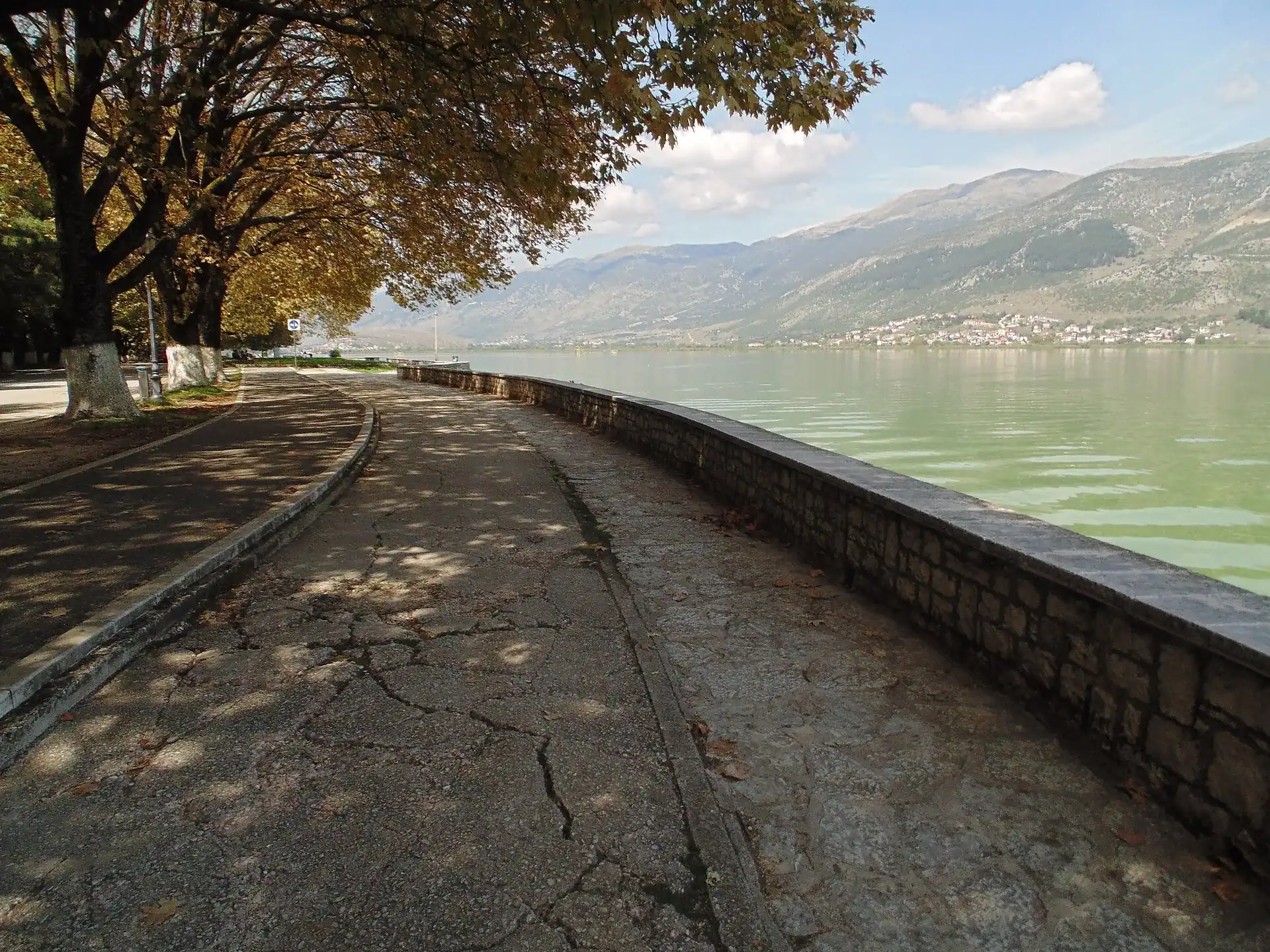 Photo: Itto Ogami / Wikimedia Commons (CC BY 3.0)