Cost of Living in Meteora
Where this figure comes from. No cost survey covers Meteora, so the $1,100 a month above is our own estimate rather than a measurement. On 416 of our 999 city guides the figure is built from a published Numbeo basket, a one-bedroom rent in the centre plus one person's monthly costs without rent, converted to USD; this city is not one of them. How we source everything.
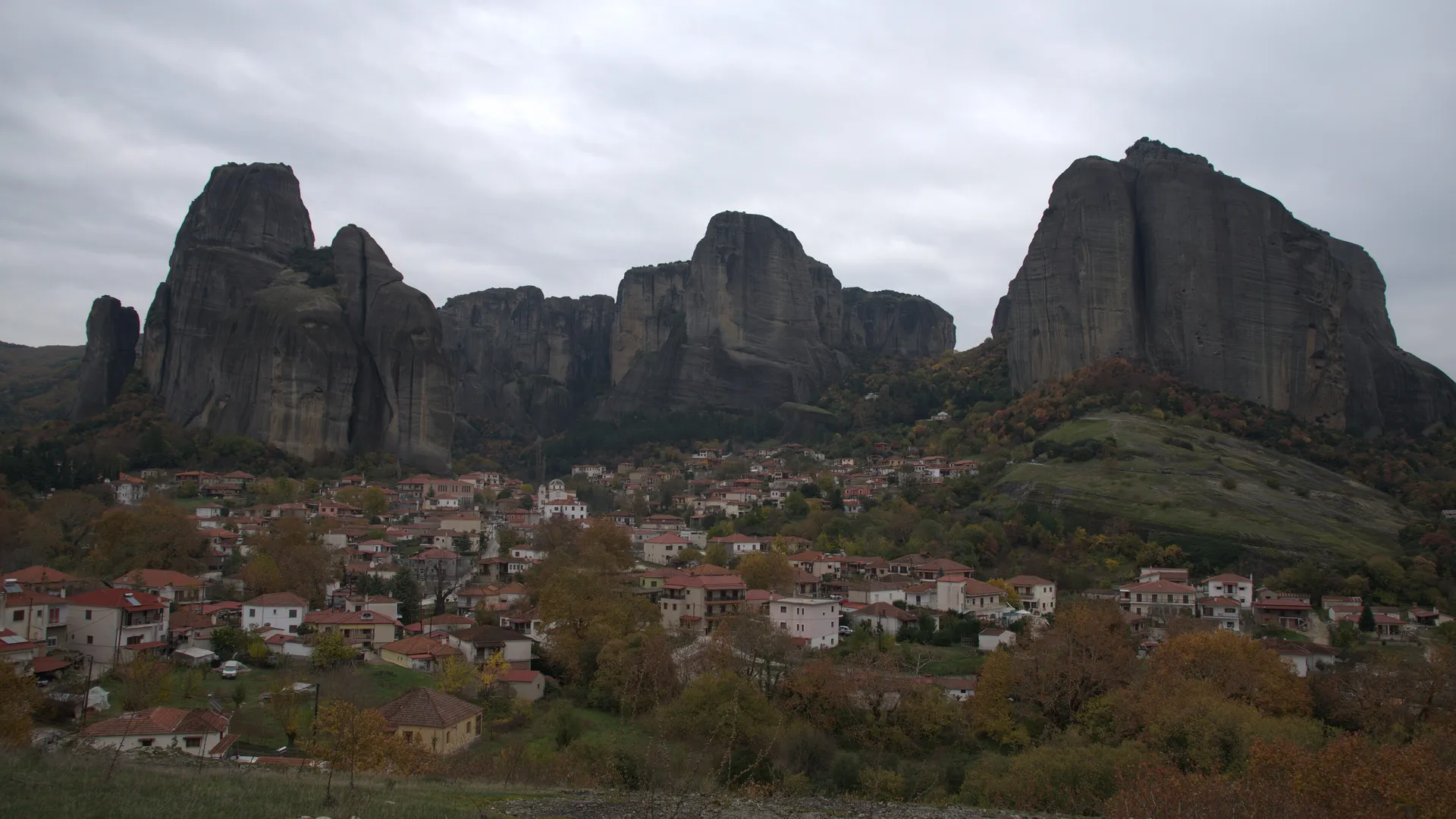
Meteora, lived from the towns of Kalambaka and Kastraki at the foot of the rocks, is affordable by Greek standards, well below the prices of Athens or the popular islands. A comfortable single-person budget runs roughly $900 to $1,400 a month. A furnished apartment in Kalambaka or Kastraki costs about $450 to $750, and hearty Greek meals are cheap and generous. These are our editorial estimates in US dollars, with rent the main variable. As an inland town rather than a tourist island, everyday living here offers good value in a genuinely spectacular setting. Heating is the bill that separates this place from the islands. The inland centre of the country gets properly cold winters, and most buildings run on oil delivered by tanker and bought by the tank, so a winter month can cost noticeably more than a summer one for the same flat. Ask what the heating is and who pays for it. The other assumption worth checking is the car: the town is walkable but the region is not, and a hire car for a week costs about what a fortnight of food does.
- Furnished apartment in Kalambaka or Kastraki: roughly $450 to $750 a month
- Taverna meal with local wine: roughly $12 to $20
- Greek coffee or frappe at a cafe: a couple of dollars
- Train to Athens or Thessaloniki: a few dollars
Where to Work in Meteora
Meteora is a small town geared to tourism and pilgrimage rather than remote work, but the basics are in place. Home internet in Kalambaka and Kastraki is decent, with fibre in many buildings handling calls, though checking a specific rental's connection is wise. There is no coworking scene; most remote workers use home or cafes. A Cosmote, Vodafone or Nova SIM adds reliable mobile data. Meteora shares Greece's Eastern European time zone, giving comfortable overlap with the rest of Europe. For a quiet, scenic base, the connectivity is adequate for most remote work, if without a community of fellow nomads. A few practicalities. Mobile signal drops behind the pillars, which matters if your habit is to take calls on a walk, and the monasteries themselves have no reception at all and would not want you using it if they did. In the towns, the coach traffic runs through the middle of the day and the streets are silent by nine in the evening, so the two ends of the day are the workable ones and the afternoon is the awkward stretch. Out of season a good share of the cafes shut, which narrows the options to the flat and one or two places.
Getting Around Meteora
The twin towns of Kalambaka and Kastraki beneath the rocks are small and walkable, and the whole area is best explored on foot and by trail. Hiking paths wind up between the pillars to the monasteries, a wonderful way to see them, while a local bus and taxis serve those who prefer to ride up. A car or scooter helps for flexibility and for exploring the wider Thessaly region. Kalambaka has a train station with direct services to Athens and connections to Thessaloniki, making it easy to reach Meteora car-free and to take trips to the big cities. The monasteries each close on a different day of the week and the pattern changes between summer and winter, so check before walking up rather than arriving at a locked gate after an hour's climb. There is a dress code and it is enforced: covered shoulders for everyone and a long skirt for women, with wraps lent at the door. The trails between them are old monks' paths, unfenced in places and genuinely exposed, which is fine in dry weather and less so in rain or high wind. Only a few buses a day make the climb.
Sorting transport? Book an airport transfer, or compare car rental on Auto Europe and QEEQ.
Visas for Meteora
Meteora is in Greece and the Schengen Area, so most non-EU visitors can stay visa-free for up to 90 days in any 180-day period, while EU and EEA citizens face no limits. For a longer stay, Greece offers a Digital Nomad Visa for remote workers who can show a minimum monthly income, currently around $4,030, granting a year with the option to extend and bring family. Mind the Schengen 90-day limit if entering visa-free. Something the income threshold does not tell you: the country offers a substantial income tax reduction to people who move their tax residence here and commit to staying several years, aimed at attracting exactly this kind of worker. It is not automatic and it is not available to everyone, but for anyone considering a multi-year move it changes the arithmetic more than the rent does. The permit application also requires health insurance valid locally and, for a family, evidence of additional income per dependant, both of which are easy to arrange and easy to forget until the appointment. Overland travellers from North Macedonia enter Schengen at Evzonoi, the main crossing north of Thessaloniki, where Greek officers register your prints and photo in the Entry/Exit System; the train on from Thessaloniki to Kalambaka involves no further check.
Best Time to Visit Meteora
Meteora sits inland in central Greece, so it has a more continental climate than the coast, with hot summers and cold winters. The best times to visit are spring, from April to June, and autumn, from September to October, when the weather is warm and pleasant, the surrounding hills are green or golden, and the light on the rocks is beautiful for hiking and photography. Summer is hot and busy with day-trippers, while winter is cold and quiet, with the monasteries occasionally wreathed in atmospheric mist and cloud. Aim for the shoulder seasons for comfort and softer crowds. The summers here are the hot inland kind rather than the sea-cooled kind, and forty degrees on the plain is not unusual in July, which makes a midday climb genuinely unwise. The compensation arrives in winter: on a cold morning after rain, cloud settles in the valleys and the monasteries appear to float above it, which is the image that draws photographers and happens far more often between November and March than at any other time. Sunset at the popular viewpoints draws a crowd every evening in season; walk ten minutes further and you will have a rock to yourself.
Pros and Cons of Meteora
Meteora offers a truly awe-inspiring setting with the limits of a small inland town. The limits are worth naming precisely, because they are not the usual small-town ones. There are two towns here of a few thousand people each, both of which exist to serve the rocks, and once you have walked every trail and visited all six working monasteries, which takes perhaps three weeks, the place has given you what it has. There is no beach, no nightlife, no university, no scene and no second act. What sits against that is a landscape with no real equivalent anywhere: sandstone pillars three hundred metres high with monasteries built on top of them five centuries ago, still occupied, in a valley you can walk out into every morning before anyone else is awake. If the answer to how long you would want that is a month, this is close to perfect. If the answer is a year, be honest about what the other eleven months would contain.
- Pros: one of the world's most dramatic landscapes of rock pillars topped by ancient monasteries, superb hiking and world-class rock climbing, genuine safety, good and affordable Greek food, low costs by Greek standards, and easy train links to Athens and Thessaloniki.
- Cons: a small town with limited amenities, no nomad community and little coworking, heavy day-tripper tourism at the monasteries, a quiet nightlife, hot summers and cold winters, and distance from the sea and big cities.
Who Meteora Is For
Meteora is for the nature-and-culture nomad who wants to wake up beneath one of the planet's most extraordinary landscapes and fill their free time with hiking, climbing and monastery visits. Outdoor lovers, photographers and anyone moved by dramatic scenery and living Orthodox heritage will find it unforgettable, and the low costs and train links make it a practical base for exploring central Greece. It works best as a scenic, quieter base for those happy with their own company or a partner rather than a social scene. It is a weaker fit for those wanting beaches, nightlife or a large nomad community. Base yourself in Kastraki, lace up your boots, and let the rocks amaze you daily. Treat it as a chapter of a longer trip rather than a destination in itself. Three to six weeks here, with a hire car for part of it, gets you the rocks, the trails and the villages of the range behind them, and leaves you wanting another season rather than relieved to go. The train makes both big cities easy weekends. Anyone who climbs should know the rock here is a serious international venue with hundreds of bolted routes, which is a reason on its own to stay longer.