Cost of Living in Paros
Where this figure comes from. No cost survey covers Paros, so the $1,450 a month above is our own estimate rather than a measurement. On 416 of our 999 city guides the figure is built from a published Numbeo basket, a one-bedroom rent in the centre plus one person's monthly costs without rent, converted to USD; this city is not one of them. How we source everything.
Budget roughly $1,450 a month as a solo remote worker on Paros, which sits below Mykonos and Santorini while offering more of an actual island. A one-bedroom apartment in Parikia or Naoussa runs about $520 to $780 on a long winter lease, and this is the central fact of island economics: summer short-lets earn owners far more, so year-round contracts are scarce and are best negotiated from October. Inland villages such as Lefkes are cheaper. Groceries land around $290 to $370, with a premium on anything shipped in. A taverna dinner is $18 to $28, coffee about $3.50, and the fast ferry to Athens $45 to $70 depending on the boat. An AFM, the Greek tax number, comes before a lease, a utility account or a bank account, and it is obtained at the tax office with a passport and an address. Utilities are billed in arrears and the bills arrive irregularly, which catches out anyone budgeting by the month. Anything large bought on the mainland arrives as ferry freight and the shipping is a real cost, which is why islanders replace appliances rather than move them and why furnished flats are the norm rather than the exception.
Where to Work in Paros
Paros has a small but real remote-work presence, unusual among the Cyclades, with at least one coworking space operating seasonally and a scattering of cafes in Parikia and Naoussa that are used to laptops. Rates where coworking exists run roughly $150 to $250 a month. The practical question is the connection: fixed-line speeds in the two main towns are adequate and in the inland villages can be poor, so testing a specific property before signing is essential rather than cautious. Mobile 4G coverage is good across the island and EU roaming makes it cheap, so most people keep a data plan as a fallback for calls. The working population halves between October and May, and the businesses that stay open through the winter are the ones run by families who live here rather than by operators who arrive for a season. That is the difference between an island that closes and one that does not. Storms take the power out for hours at a time in winter, and anyone whose work cannot absorb that keeps a battery and a data plan instead of assuming the line will hold.
Getting Around Paros
Parikia and Naoussa are both walkable, and their old quarters are whitewashed lanes closed to cars. Between them and to the beaches you need transport: a bus network links the main settlements frequently in summer and sparsely in winter, and most residents rent a scooter, a quad or a small car. A car is close to essential from November to March. The port at Parikia is the island's link to everything, with fast ferries to Athens in about three and a half hours, conventional ones in five, and frequent connections across the Cyclades, which makes Paros one of the better-connected islands. There is a small airport with flights to Athens.
Sorting transport? Book an airport transfer, or compare car rental on Auto Europe and QEEQ.
Visas for Paros
Greece is in the European Union and the Schengen area, so EU and EEA citizens may live and work on Paros without restriction, and most other Western passports get 90 days in any 180. The Greek digital nomad visa, in place since 2021, is the usual longer route for non-EU remote workers: it requires a minimum monthly income from foreign sources, health insurance and a clean record, grants a year and can convert into a two-year residence permit. Greece also offers a 50 percent income tax exemption for seven years to qualifying new tax residents who relocate and commit to staying. Island bureaucracy is slower than Athens and conducted in Greek, so a local accountant earns their fee. Residence business for this group of islands is handled regionally rather than locally, so an appointment usually means a ferry to Syros and a day gone, which is better planned around than discovered. Renewals are filed before expiry and the receipt itself works as proof of status while a decision is pending, which is what lets people travel in the meantime. Everything is submitted on paper and in the local language. Flying direct from Britain to Mykonos or Santorini puts the Entry/Exit System enrolment there; the onward ferry to Parikia involves no further check.
Best Time to Visit Paros
May, June, September and early October are the best months on Paros: warm sea, long days, open tavernas and none of the August pressure. July and August are hot, busy and expensive, and the meltemi wind blows hard through them, which the windsurfers and kitesurfers at Golden Beach and Pounda consider the entire point and everyone else finds wearing. What distinguishes Paros from its smaller neighbours is that it does not close: a resident population of around 14,000, a working agricultural economy and a year-round school mean open shops and a functioning town through the winter, which is mild at around 15 degrees, wet and windy, with ferries occasionally cancelled for days. Greek Easter, which usually falls after the Western one, is the first busy week of the year and the moment the island reopens: tavernas shut all winter put their tables out that weekend. The meltemi can hold the fast boats in port for a day or two in August, which matters far more to anyone with a flight to catch than to anyone lying on a beach. Sea temperature peaks in September rather than August, which is why the swimmers prefer the later month.
Pros and Cons of Paros
Paros is the Cyclades island that works year-round and has, unusually, attracted a small remote-work community rather than only holidaymakers. It is cheaper than Mykonos and Santorini, better connected by ferry than most of the group, and big enough to have marble villages, beaches on every coast and a mountain in the middle. Parikia and Naoussa are genuinely lovely without being film sets. Island life sets the limits here: the ferry timetable is the lifeline and bad weather cancels it, anything beyond a health centre means a flight to Athens, and the internet depends entirely on the address. Year-round rentals are hard to find and August prices are punishing.
Who Paros Is For
Living on an island rather than holidaying on one, with a community small enough to know and not large enough to lean on. It rewards swimmers, windsurfers, cyclists and anyone who cooks. Somebody holding Greece's digital nomad visa who found Santorini expensive and staged will recognise what this island offers instead. The condition attached is a stay long enough to secure a winter lease, rather than paying a summer let rate all year round. Guaranteed high-speed internet and frequent international flights are not on offer, there is no professional network to join, and by February most of the island has gone quiet. Athens is three and a half hours away by fast ferry and answers all of those. Arriving in October and signing before the season turns is the move that decides the whole year, since the same flat costs several times more from June and may not be available at all. Anyone who wants the island at its best should stay through a winter first and judge it then.
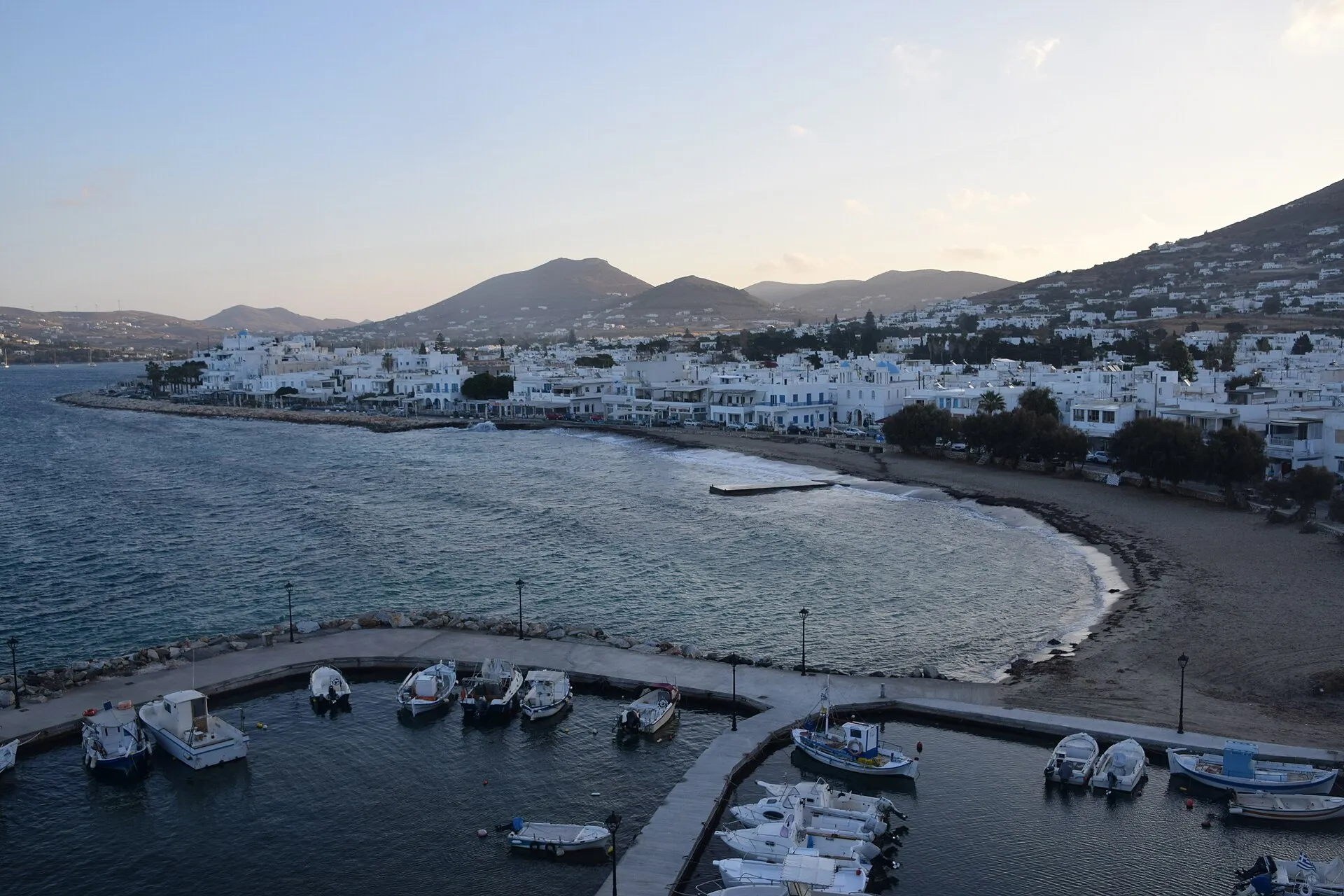 Photo: Jean Housen / Wikimedia Commons (CC BY-SA 4.0)