Cost of Living in Naxos
Where this figure comes from. No cost survey covers Naxos, so the $1,400 a month above is our own estimate rather than a measurement. On 416 of our 999 city guides the figure is built from a published Numbeo basket, a one-bedroom rent in the centre plus one person's monthly costs without rent, converted to USD; this city is not one of them. How we source everything.
Budget roughly $1,400 a month as a solo remote worker on Naxos, which sits comfortably below Mykonos and Santorini while offering more actual island. A one-bedroom apartment in Chora runs about $500 to $750 on a long winter lease, but this is the central financial fact of island life: summer short-lets earn owners far more, so year-round contracts are scarce and best negotiated from October. Village rentals inland are cheaper. Groceries land around $280 to $360, with a premium on anything shipped in and a discount on what the island grows, which on Naxos is a great deal: potatoes, cheese, citrus and meat. A taverna dinner is $18 to $28, coffee $3.50, and the ferry to Athens $40 to $70. The reduced tax rate the islands once enjoyed was abolished during the bailout years and never came back, so nothing here is cheaper for being on an island and a good deal is dearer for the freight. Moving a household in means paying for a van on a ferry, charged by length, which is why people arrive with less than they intended. Fuel and building materials carry the clearest premium, while the island's own food carries none at all.
Where to Work in Naxos
Naxos has no coworking space in the sense a city dweller would recognise, and anyone coming here works from their accommodation or from cafes. Chora has a reasonable supply of the latter along the waterfront and up in the Bourgos, and they are relaxed about long stays outside the August crush. The practical issue is connectivity: fixed-line speeds in Chora are adequate and in the inland villages can be poor, so checking the actual connection before signing anything is essential rather than cautious. Mobile 4G coverage is good across most of the island and many residents keep a data plan as a fallback for calls. Greek EU roaming makes that cheap. Power cuts are occasional but not rare in winter storms. The island mined emery for centuries, the abrasive that sharpened the industrial world, under a state monopoly that only wound down in living memory, and the aerial ropeway that carried it down to the sea still stands rusting across the hills above the eastern villages. Marble is quarried here too. Neither employs many people now, but they explain why the inland villages are substantial towns rather than hamlets, and why the roads up there are better than the terrain deserves.
Getting Around Naxos
Chora is walkable and largely pedestrian in its old quarter, a maze of whitewashed lanes climbing to the Venetian kastro. Beyond it, Naxos is the largest of the Cyclades and you need transport: a bus network links Chora to the main beaches and the larger inland villages such as Filoti and Apiranthos, running frequently in summer and sparsely in winter. Most residents rent a scooter, a quad or a small car, and a car is close to essential from November to March. The port is the island's link to everything: fast ferries reach Athens in three and a half hours and conventional ones in five, with connections across the Cyclades. There is a small airport with flights to Athens, mostly seasonal. Bus tickets are bought at a kiosk before boarding rather than from the driver, which catches out everyone on their first attempt and means losing a bus for the sake of a queue. The harbour is exposed to the north, so a strong wind cancels sailings in any season and the decision comes a few hours ahead, which is why nobody here books a flight from the mainland for the morning after a crossing.
Sorting transport? Book an airport transfer, or compare car rental on Auto Europe and QEEQ.
Visas for Naxos
Greece is in the European Union and the Schengen area, so EU and EEA citizens may live and work on Naxos without restriction. Most other Western passports get 90 days in any 180-day Schengen period, which is the constraint that shapes most non-EU stays here. The Greek digital nomad visa, introduced in 2021, is the usual longer route: it requires a minimum monthly income earned from outside Greece, health insurance and a clean record, grants a year and can convert to a two-year residence permit. Greece's 50 percent income tax break for qualifying new tax residents applies here as anywhere in the country. Island bureaucracy is slower than Athens and generally conducted in Greek, so a local accountant is worth the fee. Neither the port nor the airport on Naxos is an external Schengen border, so non-EU visitors are enrolled in the Entry/Exit System wherever they first entered the zone, usually the main airport on the mainland, and hopping between islands afterwards adds nothing to the record while every day still counts.
Best Time to Visit Naxos
May, June, September and early October are the best months on Naxos: warm sea, long days, open tavernas and none of the August pressure. July and August are hot, busy and expensive, and the meltemi wind blows hard through them, which windsurfers at Mikri Vigla consider the whole point and everyone else finds tiring. What sets Naxos apart from its neighbours is that it does not close: it has a real agricultural economy and a resident population of around 18,000, so unlike Santorini or Ios there are open shops, a working school and a functioning town through the winter. Winter is mild, around 15 degrees, wet and windy, with ferries occasionally cancelled for days at a time. Citron is grown here and distilled into a liqueur made almost nowhere else, and the harvest and the distilling run through the cold months when there is nothing else to watch. Orthodox Easter falls on its own calendar and does not always match the western one, and it is the point in spring when the island fills with returning families rather than with visitors, which is a different and better sort of crowd. Book a room for that week early.
Pros and Cons of Naxos
Naxos is the Cyclades island that works year-round: big enough to have mountains, farms and a dozen villages, cheap enough to live on, and populated enough not to shut in October. The beaches on the west coast run for kilometres and are rarely full, the food is the best in the island group because the island grows it, and Chora is genuinely beautiful without being a film set. It is an island before it is anything else: ferries are the lifeline and weather cancels them, medical care beyond a health centre means flying to Athens, and internet quality varies sharply by address. Year-round rentals are hard to find and summer prices are punishing. There is no nomad community and winter is quiet to the point of isolation.
Who Naxos Is For
Island life rather than an island holiday is the distinction that matters here, and it takes the discipline to work without an office or a community to structure the week. It rewards swimmers, hikers, windsurfers and cooks. Couples do well, and so does the Greek digital nomad visa holder who looked at Santorini prices and wanted somewhere both cheaper and more real. What decides it is staying long enough to find a proper year-round lease. Reliable high-speed internet as a non-negotiable, frequent international travel and a professional network are all poor bets here, and February is a lonely month on any Cycladic island. Athens is three and a half hours away by fast ferry and answers all of those.
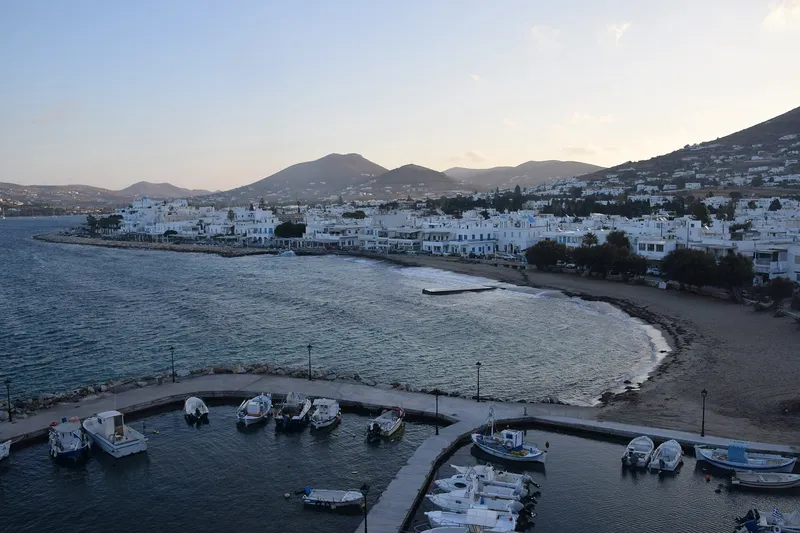
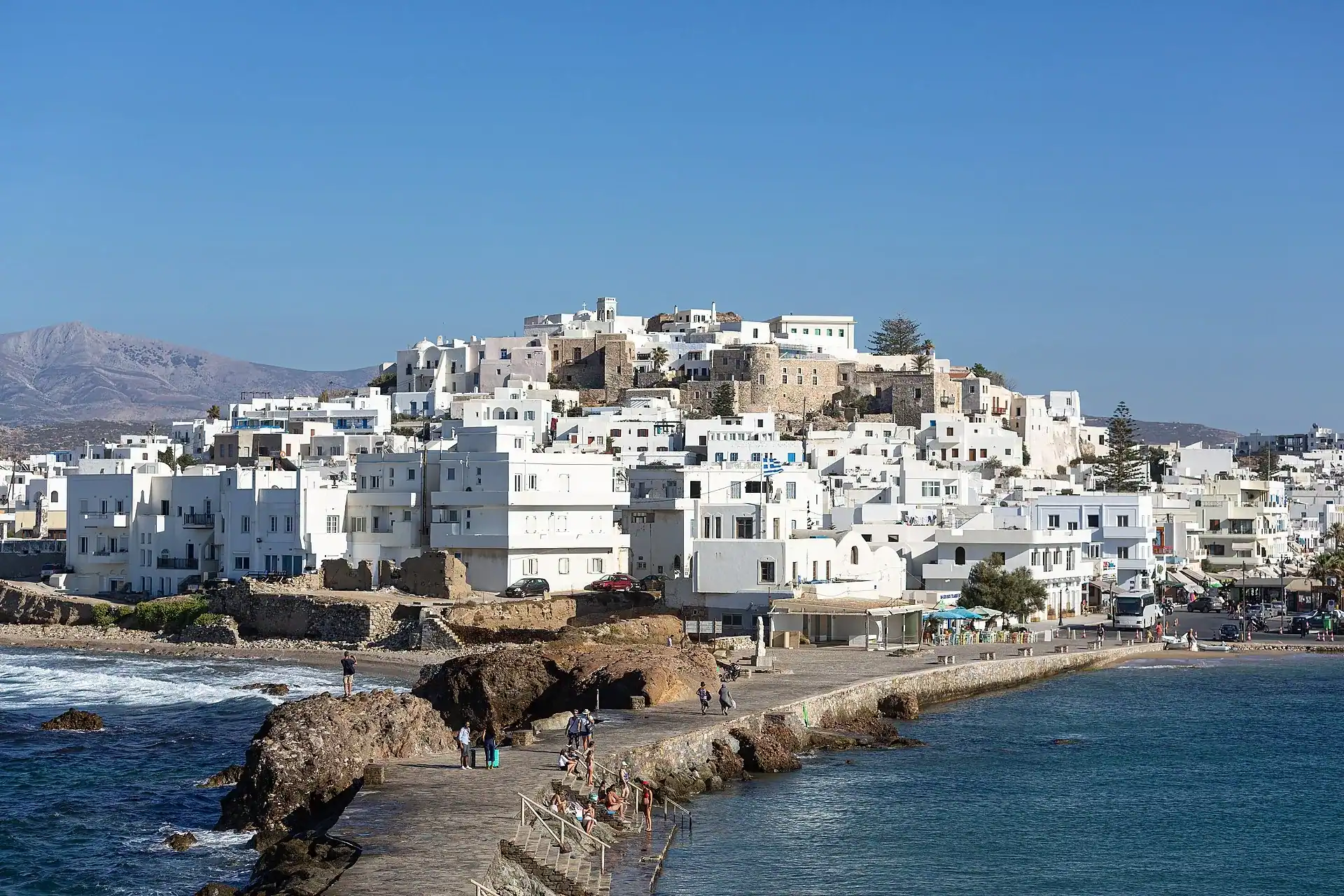 Photo: Manfred Werner (Tsui) / Wikimedia Commons (CC BY-SA 4.0)