Cost of Living in Patras
Real market data
Source: Numbeo · September 2026
$1,150/moSolo nomad1-bed centre + living costs
$1,660/moCoupleshared 1-bed + costs
$1,070/moLean / localcheaper area + costs
- 1-bed rent, city centre$500€435
- 1-bed rent, outside centre$420€369
- Monthly costs excl. rent (1 person)$650€561
- Meal, inexpensive restaurant$12€10
- Monthly transit pass$63€55
- Buy price, per m² (centre)$2,100€1,825
Prices are from Numbeo (September 2026), converted to USD at $1 = €0.87 (01 Aug 2026). The monthly living-costs figure is our transparent one-person basket, groceries, a few meals out, utilities, phone, internet, transport and essentials, priced from those figures. Solo adds central rent; couple and lean are estimates from the same numbers.
Budget roughly $1,150 a month as a solo remote worker in Patras, which makes Greece's third city one of the cheapest urban bases in the eurozone. A one-bedroom apartment near the centre or up towards the university runs about $500, and the outer districts drop that to about $420. The student population of around 30,000 keeps the small-flat market liquid and tightens it every September. Groceries land around $220 to $280. A souvlaki lunch is $4 to $6, a taverna dinner with wine $14 to $20, and a frappe on the square about $3.50 for as long as you want the table. A monthly transit pass is roughly $63. Utilities add $90 to $170. The building levies a monthly charge of its own for the stairwell, the lift and, in older blocks, the central boiler, collected by whoever manages the block rather than by the landlord. Where that boiler runs on oil, the hours it fires are settled by a vote of the owners, so a tenant has no say in how warm the flat gets and no way to stop paying for it. Electricity bills carry several levies collected for other bodies, which is why the total so rarely matches the units used.
Where to Work in Patras
Patras has a modest coworking presence tied to the University of Patras and its technology park, which is one of the larger research clusters in Greece, with desks at roughly $90 to $150 a month. Most people work from home or from the cafes on Riga Feraiou and around Psila Alonia square, where Greek cafe culture positively expects you to occupy a table for hours. Greek fixed-line internet has improved considerably and fibre is available in much of the city; mobile data is cheap across the EU roaming area. English is common among students and in the shipping and university worlds and thinner elsewhere. Anyone invoicing from inside the country as a freelancer pays a fixed monthly social contribution that does not move with income, which makes a quiet month expensive and is the first thing an accountant will explain. The port keeps a layer of agency, customs and logistics work that has nothing to do with the university and employs a different half of the city. The currant trade made this place wealthy in the nineteenth century, and the merchant houses along the upper streets are what that money built. The shipping agents still work to ferry timetables rather than to office hours, and the quayside is busiest at the times an office is not.
Getting Around Patras
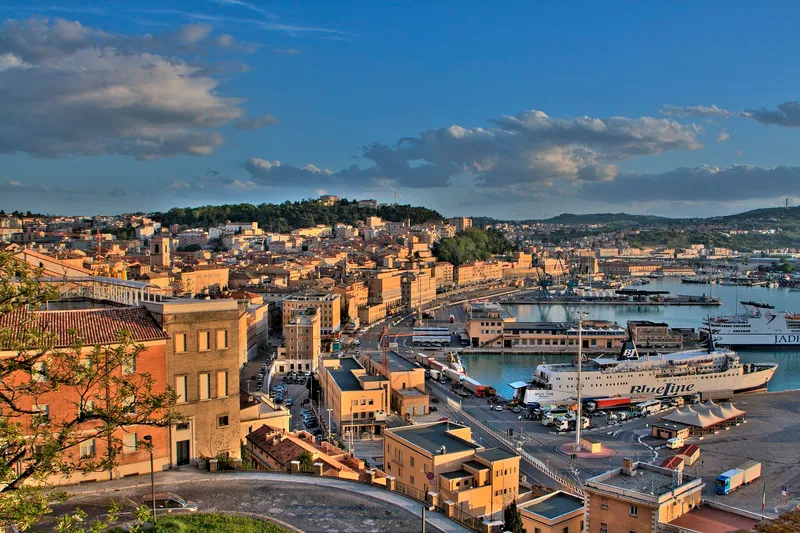
Patras is built on a slope between the harbour and the old upper town, and the flat lower grid is comfortably walkable while anything towards the castle is a climb. City buses cover the rest, with a monthly pass around $63. The port is the point of the city: ferries cross to Ancona, Bari, Brindisi and Venice, which makes Italy genuinely close and gives Patras a Mediterranean crossroads feel that inland Greek cities lack. The Rio-Antirrio bridge carries the road north to Epirus. Athens is about two and a half hours by bus on the motorway; the railway to Athens has been curtailed for years and is not the practical option. The nearest airport is Araxos, small and seasonal.
Sorting transport? Book an airport transfer, or compare car rental on Auto Europe and QEEQ.
Visas for Patras
Greece is in the European Union and the Schengen area. EU and EEA citizens may live and work here freely; most other Western passports get 90 days in any 180. The Greek digital nomad visa, available since 2021, grants a year to non-EU remote workers who can show a minimum monthly income from foreign sources, along with health insurance and a clean record, and converts into a two-year residence permit. Greece's 50 percent income tax exemption for seven years applies to qualifying new tax residents who relocate and commit to staying, which has drawn returning Greeks and some foreigners. Bureaucracy is real and conducted in Greek; an accountant is a sensible expense. Retirees can elect a flat seven percent rate on pension money drawn from abroad, and a separate lump-sum regime exists for very wealthy arrivals who put a qualifying amount into the country, each with conditions of its own that an accountant should walk through before anybody commits. A tax number and a social security number are needed before a lease or a bank account, and both are obtained in person with a translated passport. Appointments at the immigration office are scarce enough that people engage a lawyer simply to secure one. The Italian ferries sail inside Schengen, so no Entry/Exit System check awaits on the Patras quay.
Best Time to Visit Patras
April to June and September to October are the best months in Patras: warm, bright and comfortable, with the university in session and the seafront terraces busy. Summer is hot, into the mid thirties in July and August, and the city thins as people head for the beaches along the Achaea coast and across to the islands. Winter is mild by continental standards, around 12 to 15 degrees, but it is genuinely wet: the western Peloponnese catches the weather off the Ionian and Patras is one of the rainier Greek cities. The Patras Carnival, running from January to Clean Monday, is the largest in Greece and the single most distinctive thing in the city's year. The mountains behind the city hold snow through the cold months and a narrow gauge rack railway climbs into them from the coast, which turns a wet winter weekend into something worth doing rather than something to sit out. The rain arrives in long soaking spells rather than short storms, and a flat without proper heating will feel it. Olive picking runs through the same weeks and the roads inland fill with nets and ladders, which is the clearest sign of the season turning.
Pros and Cons of Patras
Patras is a real working Greek city rather than a resort: a university, a technology park, a major port with ferries to Italy, and the largest carnival in the country. It is cheap for the eurozone, the food is excellent, and the beaches of the Achaea coast and the mountains of Kalavryta are both close. It is not conventionally pretty, and much of the centre is undistinguished postwar concrete laid over a handsome nineteenth-century street plan. Winters are wet. The rail link to Athens is broken and the nearest useful airport is Athens, two and a half hours away. There is no nomad community, and English runs out quickly outside the university.
Who Patras Is For
Greece without the islands and without Athens prices, in a working port city that makes no effort to court visitors. A cheap eurozone base under Greece's digital nomad visa is what brings most people to the city at all. Italy is an overnight ferry away, which is a stranger and more useful fact than it sounds, and the whole Peloponnese lies inside an hour or two of driving in every direction from here. Nobody here will build a week for you, so solo workers and couples used to doing that themselves get on best. No foreign community has taken root, the nearest useful airport is in Athens, this side of the country takes the winter rain, and the centre is a working port rather than a picture.
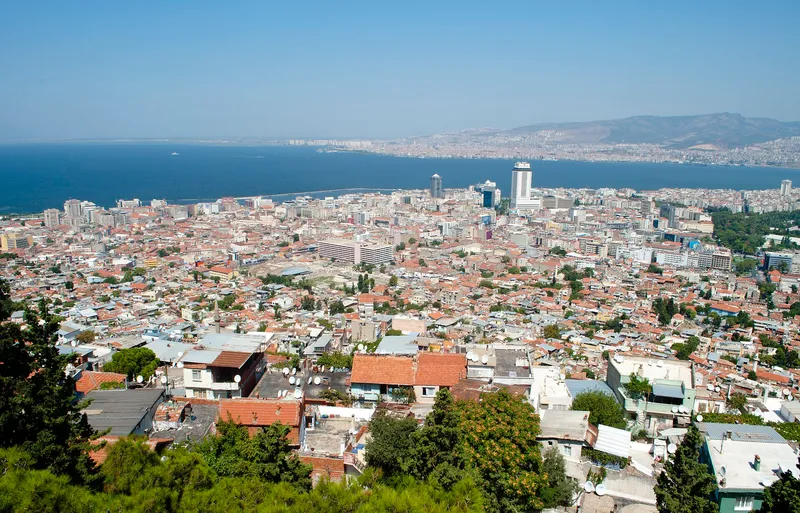
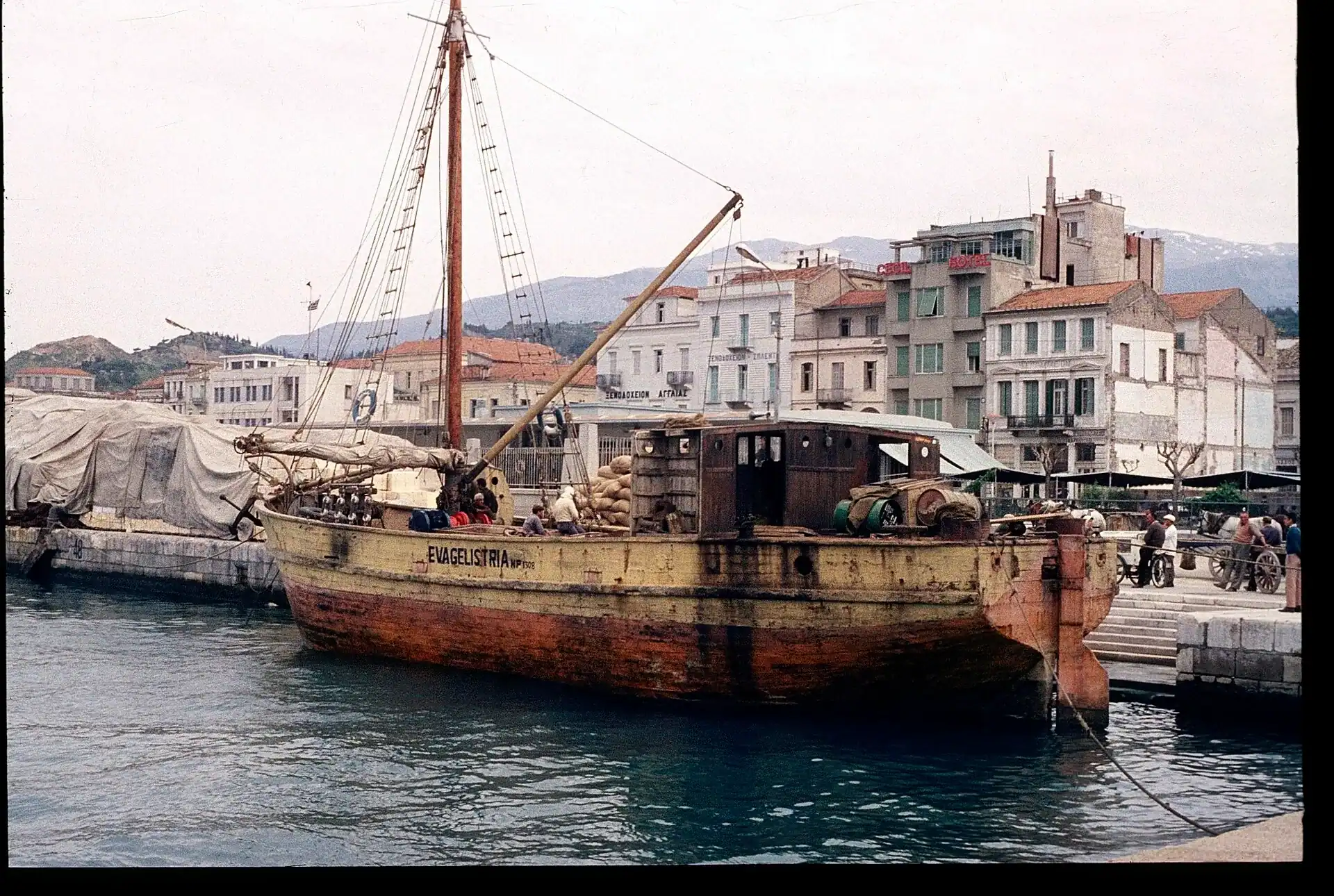 Photo: Anidaat / Wikimedia Commons (CC BY-SA 4.0)