Cost of Living in Santorini
Where this figure comes from. No cost survey covers Santorini, so the $3,300 a month above is our own estimate rather than a measurement. On 416 of our 999 city guides the figure is built from a published Numbeo basket, a one-bedroom rent in the centre plus one person's monthly costs without rent, converted to USD; this city is not one of them. How we source everything.
Santorini is one of the most expensive places to base yourself in Greece. Budget accordingly: this is a luxury tourist island, and prices reflect that even outside peak season.
- Rent (studio/1BR, central Fira or Oia): $1,380-2,070/month in shoulder season. Prices spike dramatically in July and August and many landlords only offer short-term lets.
- Rent (cheaper areas such as Karterados, Messaria, or Pyrgos): $805-1,270/month. These inland villages are a 5-15 minute drive from Fira and far more livable on a budget.
- Groceries: $345-520/month cooking at home. A small supermarket like AB Vassilopoulos covers basics; expect to pay island premiums of 20-30% above Athens prices.
- Eating out: A sit-down dinner at a mid-range taverna runs $21-40 per person. A gyro or souvlaki at Lucky's in Fira costs $4.50-6. Coffee at a cafe is $3.50-6.
- Coworking hot desk: Around $310-345/month where available. Options are very limited (see next section).
- Local transport (buses): $2-3 per ride on KTEL buses. There is no weekly or monthly pass.
- Total monthly range: $1,960-3,680 for a solo nomad living modestly in a cheaper area and cooking most meals. Living centrally or eating out often pushes totals above $4,600.
Where to Work
Santorini has very few dedicated coworking spaces. The island's economy runs on seasonal hospitality, not the remote-work infrastructure you find in Lisbon or Tbilisi.
The best-confirmed option is the coworking area within coliving properties. Cocohub had a presence in Santorini and catered specifically to nomads with combined accommodation and workspace packages. Check current availability directly before booking, as seasonal operations shift year to year.
For cafe work, a handful of spots are realistic. Irini's Cafe in Fira is a traditional spot with caldera views and WiFi. Galini Cafe in Firostefani has terrace seating and a relaxed pace that tolerates lingering, especially outside peak season. Akrotiri Bistro in Akrotiri village is quieter and good for morning sessions.
The honest WiFi situation: fixed connections across the island are workable for video calls, but reliability varies sharply by neighborhood and accommodation. Caldera-edge locations can have poor signal due to the terrain. Run a speed test on arrival and have a mobile data backup. Greek SIM cards (Cosmote, Vodafone GR) are cheap and 4G coverage is solid in populated areas. A local data plan costs $17-35/month.
In July and August, cafes fill with tourists and staff may not welcome someone occupying a table for three hours on a laptop. Shoulder season is far more amenable to cafe working.
Getting Around
The KTEL public bus network is the backbone of cheap transport. All routes hub through Fira's central bus station. Fares range from $2 to $3 per ride, cash only, with buses running every 30-60 minutes in high season and hourly or less in winter. To get between two non-Fira towns you typically need to change in Fira.
Taxis exist but are expensive and scarce in peak season. A taxi from the airport to Fira costs around $23-29 fixed rate. Renting an ATV or scooter ($23-46/day) is the most practical way to explore the island independently. Car hire is available but parking in Fira and Oia is a serious problem in summer.
Walkability varies by village. Fira is walkable within its core, but the caldera path to Oia (roughly 10 km on foot) is scenic, strenuous, and only practical as a day hike. Most inter-village travel requires a vehicle or bus.
Airport: Santorini National Airport (JTR) is about 6 km from Fira. A bus from the airport to Fira costs around $2.50 and runs roughly hourly but is unreliable for tight flight schedules. Taxis are more dependable for departures. Budget airlines including Ryanair serve the island seasonally from several European cities. Ferries from Piraeus (Athens port) take 5-8 hours and are a pleasant option for arriving with luggage.
Sorting transport? Book an airport transfer, or compare car rental on Auto Europe and QEEQ.
Visas and Staying Long-Term
Greece is part of the Schengen Area. Citizens of the US, UK, Canada, Australia, and most other common nomad passports can enter visa-free for up to 90 days within any 180-day period. No action is needed in advance.
Greece introduced a Digital Nomad Visa for non-EU/EEA citizens who work remotely for employers or clients based outside Greece. The initial visa allows a 12-month stay. Requirements include proof of remote income of at least $4,030/month (net), valid health insurance, and a clean criminal record. You apply through a Greek consulate in your home country before traveling. Once in Greece, you can convert it to a two-year residence permit, renewable in two-year increments. Holders also benefit from a 50% income tax reduction for up to seven years.
EU/EEA citizens can stay and work indefinitely. No ferry leaves this island for anywhere outside Greece, so a break from the Schengen count means flying out or going the long way round through Rhodes to Marmaris or Fethiye in Turkey, quays where the Entry/Exit System logs the departure and the return to the day.
Best Time to Visit
Santorini is a Mediterranean island with hot, dry summers and mild winters. For remote work, April through June and September through October are the clear sweet spots.
Spring (April-May) brings temperatures of 17-23 degrees C (63-73 F), very low rainfall, and a fraction of summer's crowds. Accommodation is 30-50% cheaper than peak rates, cafes are spacious, and the island is genuinely beautiful without being overwhelmed. Most restaurants and services are open by mid-April.
September and early October offer similar conditions with the bonus of warm sea temperatures. Evenings cool down pleasantly. Many businesses are still fully operational through late September.
July and August are peak tourist season. Temperatures hit 28-33 degrees C (82-91 F), accommodation costs are at their highest, Fira and Oia are extremely crowded, and ferry queues at the port can be hours long. Working productively in peak summer is harder: cafes are loud and full, coworking options are scarce, and the general chaos is distracting.
November to March is off-season: many hotels, restaurants, and cafes close entirely, and the island feels deserted. Rents drop substantially but the lack of services makes it a poor choice for most nomads.
Pros and Cons
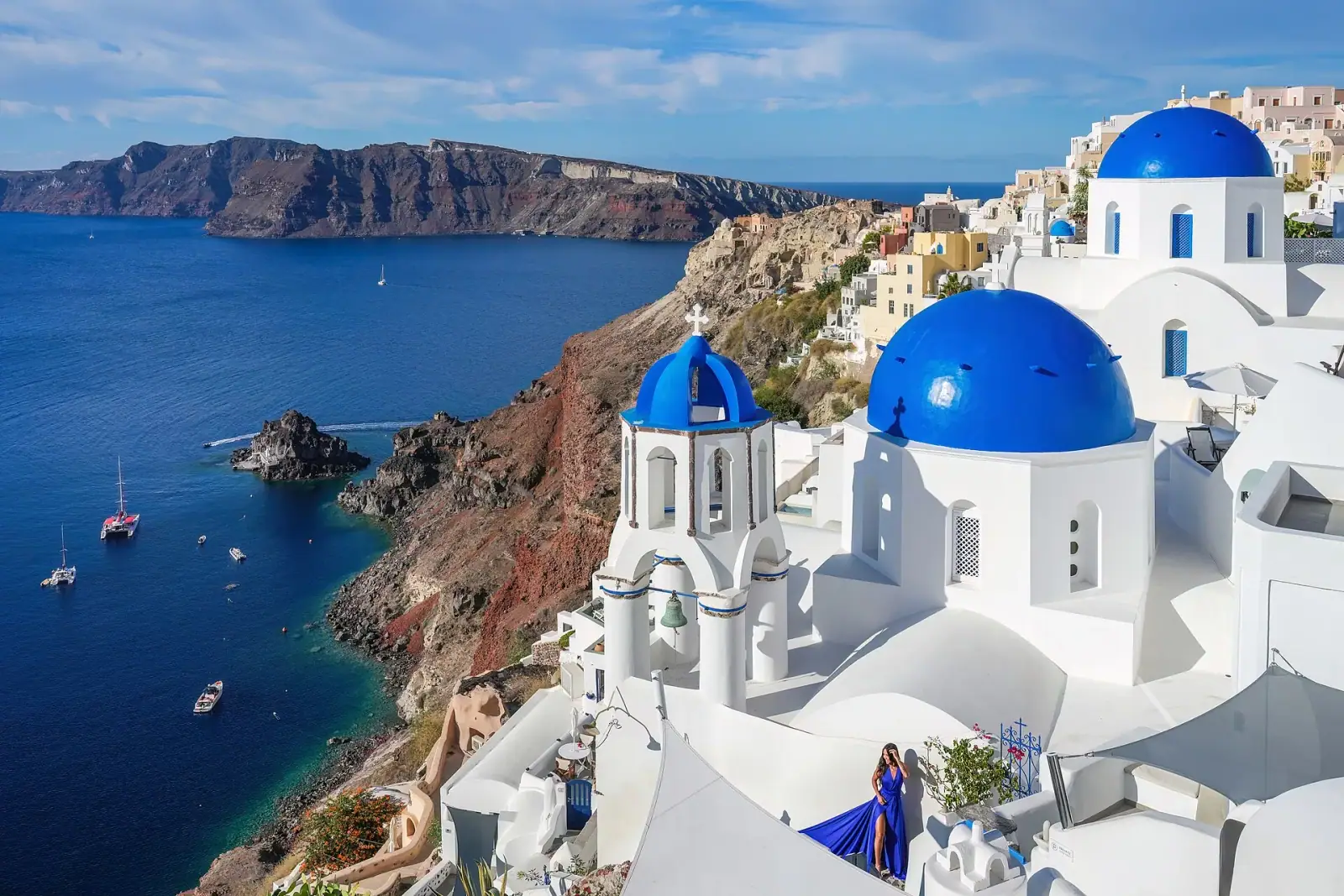
- Genuinely stunning scenery that delivers on the photos
- Excellent food from budget gyros to Michelin-starred dining
- Shoulder season pricing is far more reasonable than reputation suggests
- Strong safety record with very low crime
- Good 4G coverage as a mobile backup to patchy fixed WiFi
- Greek Digital Nomad Visa available for longer stays with tax advantages
- Very limited coworking infrastructure compared to nomad-friendly cities
- High cost relative to the rest of Greece and most of Southern Europe
- Small island with no metro, no train and limited bus frequency
- Peak season crowds make Fira and Oia nearly unlivable in July-August
- Most of the island shuts down from November to March
- Short-term rental market dominated by tourist lettings; finding a monthly deal takes effort
Who Santorini Is Best For
Santorini works well for nomads who want a short, memorable stay of two to six weeks rather than a long-term base. It suits you if you already have a stable work setup that requires minimal external infrastructure: a reliable laptop, a good mobile data plan, and the discipline to work from your accommodation or a quiet cafe. It is ideal for creative professionals, writers, and photographers who draw real inspiration from environment, and for anyone who wants to combine a proper work month with an exceptional travel experience.
The shoulder seasons (May and September in particular) hit a sweet spot where you get the beauty of the island without paying summer prices or fighting summer crowds.
Skip Santorini as your primary base if you rely on a dedicated coworking community, need fast and guaranteed WiFi, are on a tight budget, or plan to stay more than two or three months. For extended stays in Greece, Athens, Thessaloniki, or islands like Crete and Rhodes offer better nomad infrastructure at a lower cost. Santorini is a place to experience, not a place to grind through a heavy workload.