Cost of Living in Plitvice Lakes
Where this figure comes from. No cost survey covers Plitvice Lakes, so the $1,000 a month above is our own estimate rather than a measurement. On 416 of our 999 city guides the figure is built from a published Numbeo basket, a one-bedroom rent in the centre plus one person's monthly costs without rent, converted to USD; this city is not one of them. How we source everything.
Plitvice Lakes is a national-park area rather than a city, so your budget depends heavily on the season and the guesthouse or apartment you choose. A slow-stay nomad basing in one of the nearby villages can expect a realistic monthly range of roughly $1,000 to $1,800. Off-season, a simple apartment or room in Mukinje, Jezerce or Korenica is affordable, and cooking at home keeps food costs low since restaurant options are limited. In peak summer, lodging prices spike sharply as demand from tourists surges, and short-stay rates can eat your budget quickly. Groceries, fuel and the occasional trout dinner are moderate by Croatian standards. Park entry swings with the calendar more than rent does: an adult day ticket is about $12 from November to March and about $47 from June to September, which makes winter the cheap season to walk the lakes again and again. A two-day ticket, at half as much again as a single day, is the better buy for anyone who wants both lake systems unhurried.
- Village apartment or guesthouse room: cheaper off-season, much pricier July to August
- Groceries are affordable; stock up in Korenica or larger towns
- Park entry tickets are seasonal and can add up if you visit often
- A car brings fuel costs but unlocks the whole region
Where to Work in Plitvice Lakes
Picture a working week here as a desk in a guesthouse rather than an office, because the land around the lakes is rural parkland without a single coworking space and with very few town services. That said, a comfortable remote-work stay is possible if your expectations match reality. Wifi in guesthouses, apartments and village cafes is usually decent for calls and everyday tasks, though it can wobble during busy periods or storms. The best setup is a self-catering apartment in a nearby village such as Mukinje, Jezerce or Korenica, where you get a quiet desk, a kitchen and reliable enough connectivity. Carry a mobile data plan as a backup for important video meetings.
- Book an apartment with a dedicated desk and verified wifi
- Village cafes and guesthouse restaurants offer casual laptop time
- Croatian mobile data is a reliable backup for calls
- Do not expect coworking, coffee-shop culture or a nomad scene here
Getting Around Plitvice Lakes
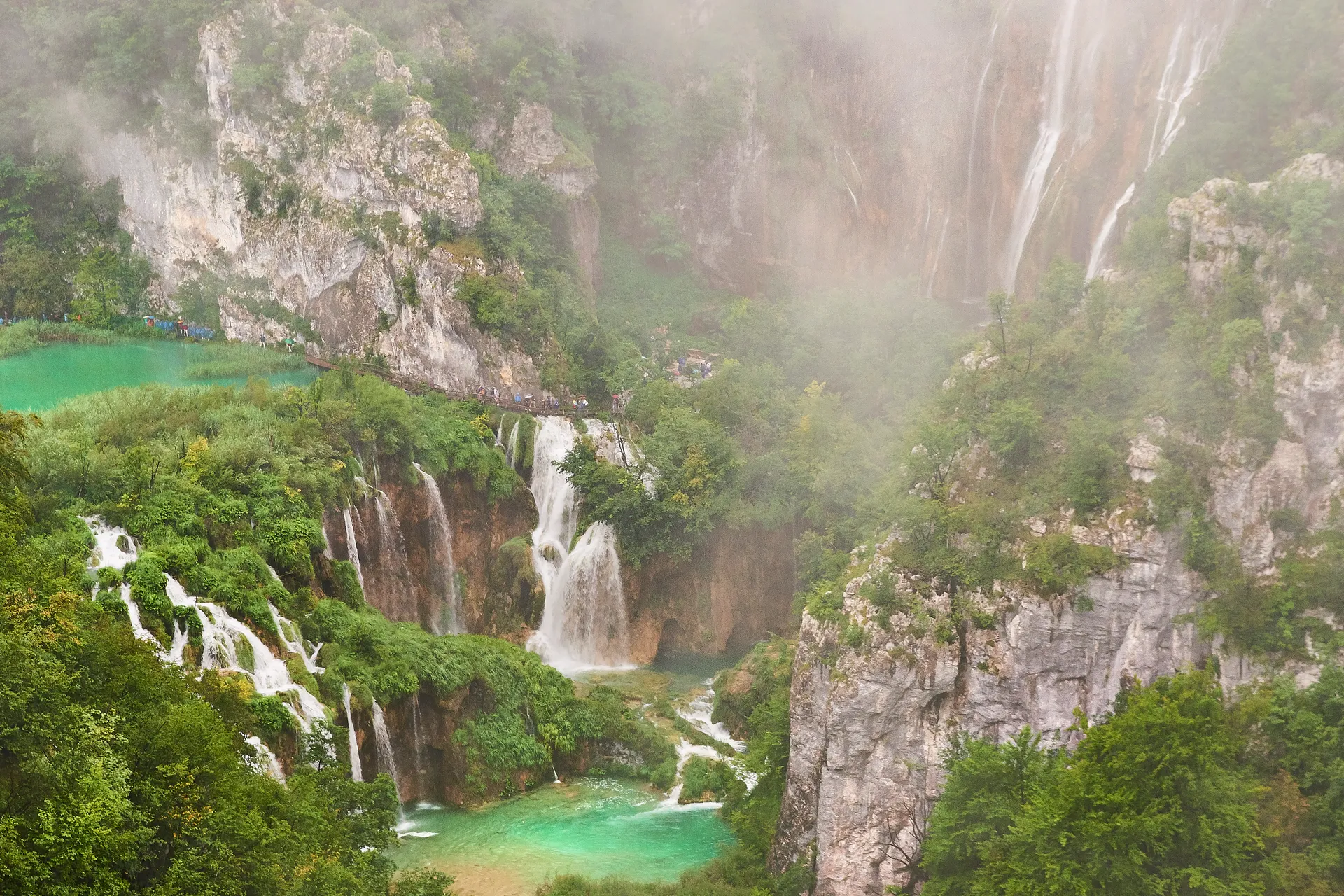
Inside the park, everything is explored on foot along a network of wooden boardwalks and footbridges that thread past the sixteen terraced lakes and waterfalls. The park runs electric boats across Lake Kozjak and panoramic shuttle trains that connect the upper and lower sections, so you can loop long routes without backtracking. Outside the park, a car is genuinely useful: the villages, guesthouses and wider Lika region are spread out, and public transport is thin. If you are car-free, intercity buses on the Zagreb to Zadar and Split route stop at the park entrances, making arrival straightforward, but local mobility between villages is harder without wheels.
- Boardwalks, park boats and shuttle trains cover the lakes themselves
- A rental car is the most practical way to reach villages and explore Lika
- Buses on the Zagreb to Zadar/Split corridor stop at Entrance 1 and 2
- Wear sturdy shoes; boardwalks can be slippery and busy in peak season
Sorting transport? Book an airport transfer, or compare car rental on Auto Europe and QEEQ.
Visas for Plitvice Lakes
Plitvice Lakes sits in Croatia, which joined the Schengen Area and adopted the euro in 2023. For most non-EU visitors this means the standard Schengen rule of 90 days within any 180-day period applies across the whole zone, so time spent in other Schengen countries counts toward your limit. EU and EEA citizens can stay and work freely. For longer stays, Croatia offers a digital-nomad residence permit aimed at remote workers employed by companies outside Croatia, which allows a stay of up to 18 months. Bihać and the Una National Park in Bosnia are about half an hour away through the Ličko Petrovo Selo crossing, which is an external Schengen border: the Entry/Exit System logs you out and back in, and the days spent on the Bosnian side do not count toward the Schengen allowance.
- Schengen 90/180 rule applies to most non-EU short stays
- Croatia joined Schengen and adopted the euro in 2023
- EU/EEA citizens face no time limit
- Croatia's digital-nomad permit suits longer remote-work stays
Best Time to Visit Plitvice Lakes
Late spring and early autumn are the sweet spots. In May, June and September the waterfalls run full from snowmelt or rain, the forest is vivid, and the crowds are thinner than in high summer, so the boardwalks feel calmer and the light is beautiful for photography. July and August are the busiest and hottest months, when the park can feel packed and lodging prices peak, so arrive early in the day if you visit then. Winter is quiet and can be genuinely magical, with snow-dusted trees and frozen cascade edges, but expect shorter days, reduced park routes, closed boats and trains, and fewer open services in the surrounding villages. The lakes lie at roughly 500 to 640 metres above sea level, high enough that a summer evening calls for a jumper while the Adriatic two hours away is still warm.
- Late spring and early autumn: full waterfalls, fewer crowds
- Summer: warmest and most crowded, higher prices
- Winter: snowy and beautiful but with reduced services and routes
- Visit at opening time to beat tour-bus crowds
Pros and Cons of Plitvice Lakes
The appeal of Plitvice is simple and profound: it is one of Europe's most spectacular natural landscapes, a UNESCO World Heritage site of turquoise lakes and cascading waterfalls where the air is clean, the forest is quiet and the pace is restorative. For a nature-focused slow stay, few places compare. The tradeoffs are equally clear. This is a park, not a city, so town services are very limited, nightlife is essentially nonexistent, and there is no nomad community to plug into. It is seasonal and can be crowded at its peak, and without a car the surrounding region is hard to explore. Set expectations accordingly and it rewards richly. The park also carries a sharp piece of history: the armed clash here at Easter 1991, known as the Plitvice Lakes incident, produced the first fatal casualties of the Croatian War of Independence, and the thinly peopled villages around it still show what the war cost.
- Pro: world-class scenery, clean air, deep quiet and restful pace
- Pro: easy hiking on well-built boardwalks; strong safety and English
- Con: very limited services, near-zero nightlife, no nomad scene
- Con: seasonal, crowded in summer, and best explored with a car
Who Plitvice Lakes Is For
Plitvice Lakes suits the remote worker who wants nature at the center of a slow, quiet chapter rather than a buzzing work hub. If you dream of finishing your day with a forest walk, photographing waterfalls at golden hour, and trading city noise for birdsong, a week or two based in a village apartment here can be deeply recharging. It is ideal for solo travelers, couples and outdoor lovers who value calm and can work independently without a community around them. It is a poor fit for anyone who needs coworking, social energy, nightlife or convenient city amenities. Come for the landscape and the reset, not for the scene.
- Great for nature lovers, hikers and photographers on a slow stay
- Good for independent workers who do not need a community
- Ideal as a restorative week or two, not a long-term base
- Not for those seeking nightlife, coworking or city convenience