Cost of Living in Osijek
Real market data
Source: Numbeo · July 2026
$1,330/moSolo nomad1-bed centre + living costs
$1,860/moCoupleshared 1-bed + costs
$1,090/moLean / localcheaper area + costs
- 1-bed rent, city centre$660€571
- 1-bed rent, outside centre$420€365
- Monthly costs excl. rent (1 person)$670€581
- Meal, inexpensive restaurant$12€10
- Monthly transit pass$38€33
- Buy price, per m² (centre)$2,790€2,423
Prices are from Numbeo (July 2026), converted to USD at $1 = €0.87 (01 Aug 2026). The monthly living-costs figure is our transparent one-person basket, groceries, a few meals out, utilities, phone, internet, transport and essentials, priced from those figures. Solo adds central rent; couple and lean are estimates from the same numbers.
Budget around $1,330 a month, which makes Osijek one of the cheapest cities in the European Union. A one-bedroom runs roughly $420 to $660, well below Split or Dubrovnik. Market produce is very cheap and Slavonia is Croatia's agricultural region, producing the paprika, kulen sausage and freshwater fish that define the local cooking. Eating out is inexpensive. Utilities run through a continental winter. Croatia adopted the euro in 2023, which removed the kuna conversion and pushed some prices up noticeably. Anyone comparing with the Croatian coast should note that Split or Dubrovnik run three or four times higher for a comparable flat and considerably more in summer. An OIB, the personal identification number, is the first thing to obtain and opens the lease, the phone contract and the bank account alike. Most flats heat with gas or from the city system, and the winter bill is the line that separates a cheap month from an ordinary one. Produce in the market is priced by the kilo and haggling is not done, but the gap between market and supermarket prices repays the walk across town.
Where to Work in Osijek
Connectivity is very good. Croatia has extensive fibre at reasonable prices, comprehensive mobile coverage and reliable power, and Osijek is well served. There is a coworking presence and a growing software sector, and Croatia's digital nomad visa has brought a modest number of people to the country, though almost all of them to the coast rather than here. The time zone is central European. Croatian administration has improved considerably since European Union accession and is now reasonably efficient. Anyone using Croatia's digital nomad visa should note that it is a temporary stay rather than residence, cannot be renewed back to back, and requires a six month gap before reapplying. The software sector is small but real and works almost entirely for clients abroad, which is the national model at a lower cost base. English is widely spoken by anyone under forty, a consequence of subtitled television rather than of schooling, and it carries daily life comfortably. The harder fact is the emigration: a great many of the region's graduates left for Germany and Ireland after 2013, and the ones who stayed are the ones you will end up working with.
Getting Around Osijek
Osijek is flat and works very well on a bicycle, with an extensive cycle network that is genuinely unusual for a Croatian city, and a tram system that is one of the oldest in the country. The old fortress quarter of Tvrda is walkable. Trains reach Zagreb in about four hours and buses do it faster. Osijek airport has very limited service. Budapest is about three and a half hours by road, Belgrade two and a half, and the Hungarian and Serbian borders are both within half an hour. Anyone cycling should look at the Pannonian Peace Route, which runs from Osijek through the wetlands into Hungary and Serbia along the old border fortifications.
Sorting transport? Book an airport transfer, or compare car rental on Auto Europe and QEEQ.
Visas for Osijek
Croatia is in the European Union and joined the Schengen area in 2023, so European Union and EEA citizens may live and work here without a permit and everyone else faces the Schengen ninety in one hundred and eighty rule. Croatia operates a digital nomad visa, a temporary stay of up to 18 months for remote workers with foreign employers or clients, not renewable back to back, with an income threshold and a favourable tax position for holders, and it was among the earliest such schemes in Europe. Anyone applying should be aware that the income threshold is set against the Croatian average wage and is revised annually, so the figure moves. Holders are exempt from income tax on the foreign earnings the permit covers, which is the substantive benefit and is written into the tax law rather than granted case by case. A registered address is required at application, so a lease usually has to exist before the permit does, which is the ordering that catches people out. Close family can be included in the same application, and everything is lodged at a police station rather than at an embassy. Novi Sad is an easy weekend away, but the Danube bridge at Erdut is Schengen's outer edge, where the EES logs every non-EU passport out and back in.
Best Time to Visit Osijek
May to September is the comfortable window, with July around twenty seven degrees and the Drava and the Kopacki Rit wetlands at their best. Spring and autumn are short and pleasant. Winter from December to February is cold, often around freezing with fog on the Pannonian plain, and the region's winter air quality is poor for the same reasons as the rest of the Danube basin. Kopacki Rit, one of the largest wetlands in Europe, is best for birds in spring and autumn. Anyone visiting Kopacki Rit should aim for spring or autumn, when the migration is at its heaviest and the flooded forest is navigable by boat. The two rivers both rise in spring when the Alpine snow melts, and the wetland east of the city is built around that flooding rather than defended from it, which is precisely why the birds are there. Summer on the plain is hotter and stiller than the coast, without the sea breeze that makes the same temperature bearable on the Adriatic. Autumn is the harvest, and the villages around the city give over weekends to it through September and October.
Pros and Cons of Osijek
Osijek is a genuinely handsome baroque town at eastern European prices inside the European Union, with the eighteenth century fortress quarter of Tvrda, an unusually good cycle network, and Kopacki Rit, one of Europe's largest intact wetlands, half an hour away. Croatia's digital nomad visa applies. Winter brings a haze that sits over the town for weeks at a time, the rest of Croatia is a long drive off, and the region lost a great deal of its population to the 1991 war and to emigration since. Osijek also sits about thirty-five kilometres from Vukovar, where the 1991 siege and its aftermath are commemorated, and that history remains close to the surface across Slavonia.
Who Osijek Is For
European Union residency rights and Schengen access at the lowest possible cost, particularly for digital nomad visa holders willing to be inland rather than coastal. It suits cyclists and birdwatchers, since the flat terrain and Kopacki Rit are both genuinely good. Winter air pollution in Slavonia is worse than most visitors expect, the Adriatic is a long drive from this corner of Croatia, and nothing international has taken shape here yet, whatever the low rents might eventually attract. Slavonian food is nothing like the coastal Croatian cooking most visitors arrive knowing. The kulen sausage, the fis paprikas river fish stew and the region's own wines belong to a different country altogether. A year on the nomad permit is the shape this place fits, since the gap it requires before reapplying rules out treating it as a permanent base. Rents are low enough that a flat can be held through a trip elsewhere, which is not true further west. Anyone who needs a coast, an airport or a crowd should look at the other end of the country and pay accordingly.
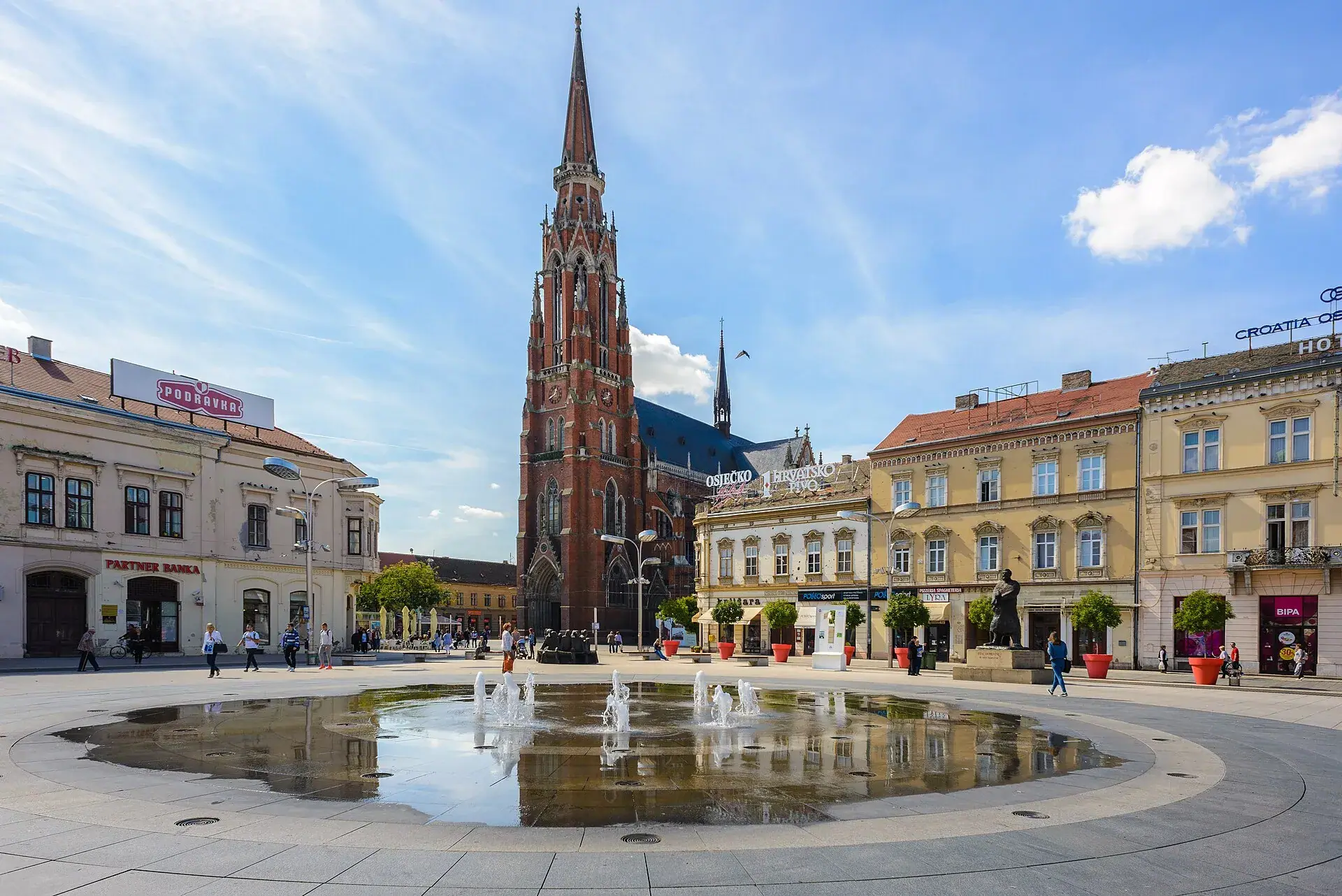 Photo: Nick Savchenko from Kiev, Ukraine / Wikimedia Commons (CC BY-SA 2.0)