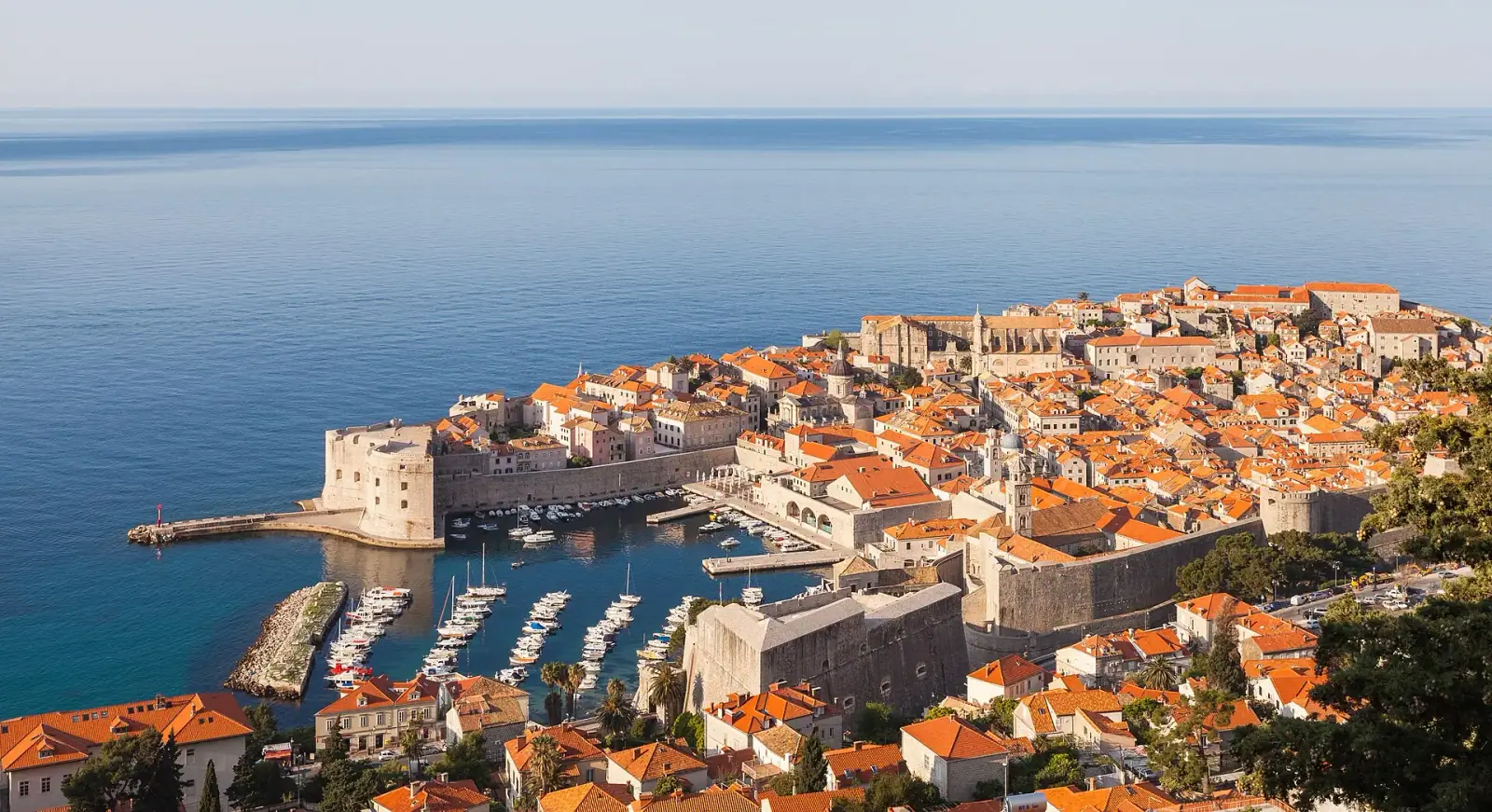
Aerial view of Dubrovnik Old Town and city walls with the Adriatic Sea
Photo: Diego Delso / Wikimedia Commons (CC BY-SA 3.0)
Croatia flag

Dubrovnik

Croatia

The Pearl of the Adriatic where medieval walls meet crystal-clear waters.

$2.800
Monthly Budget
--
Current Weather
Mediterranean
Climate Type
60 Mbps
Avg. WiFi Speed
9/10
Safety Score
500+
Active Nomads
--
Time Difference
Scroll
0
Nomad Score

Why Dubrovnik Works for Remote Work

The Pearl of the Adriatic where medieval walls meet crystal-clear waters. A mediterranean climate and strong nature make Dubrovnik an easy base, and at about $2,800 a month it fits a range of budgets. Keep the size of the nomad scene in mind.

Compare Dubrovnik vs Kotor →

Category Breakdown

How Dubrovnik scores across all 13 factors

Weather in Dubrovnik

Monthly averages from 2019-2023 (Open-Meteo), and the best time to visit

11°
Jan
13°
Feb
14°
Mar
17°
Apr
21°
14°
May
27°
19°
Jun
30°
21°
Jul
30°
21°
Aug
26°
18°
Sep
22°
13°
Oct
17°
10°
Nov
14°
Dec
Daily high & low (°C)Rainfall (mm/month)Best months to visit

The best time to visit Dubrovnik for comfortable weather is Jun, Jul, Aug. The warmest month is Jul (around 30°C by day), and the wettest is Nov (about 434mm of rain).

Chasing good weather? See other cities that are warm in Jun, or plan a multi-city route around the seasons. Staying a while in Dubrovnik? Check visa options, your time-zone overlap and how far your budget stretches, or find it on the world map.

Historical monthly averages, not a forecast. Source: Open-Meteo.

Best Neighborhoods in Dubrovnik

Where to base yourself for the perfect nomad experience

Old Town (Stari Grad)

$$$$
Historic & Tourist

Dubrovnik's UNESCO walled wonder

Old Town is Dubrovnik's crown jewel - UNESCO-listed walls, marble streets, and Game of Thrones fame. It's magnificent but overwhelmed by cruise ship crowds.

Best for: History lovers, photographers, and those seeking iconic Dubrovnik
✓ Pros
  • UNESCO walls
  • Stunning architecture
  • Historic atmosphere
  • Walkable
✗ Cons
  • Extremely crowded
  • Very expensive
  • Cruise ship chaos

Pile

$$$
Gateway & Scenic

Dubrovnik's western gateway

Pile sits at the main entrance to Old Town - the iconic Pile Gate, Lovrijenac Fortress, and beach access. It's where Dubrovnik's drama begins.

Best for: First-time visitors, sunset seekers, and beach lovers
✓ Pros
  • Pile Gate
  • Lovrijenac views
  • Beach access
  • Sunset spot
✗ Cons
  • Tourist central
  • Expensive
  • Crowded entrance

Ploče

$$$$
Beach & Upscale

Dubrovnik's eastern beach quarter

Ploče extends east from Old Town - Banje Beach, luxury hotels, and cable car access. It's Dubrovnik's upscale beach zone.

Best for: Beach lovers, luxury travelers, and cable car riders
✓ Pros
  • Banje Beach
  • Cable car
  • Luxury hotels
  • Old Town access
✗ Cons
  • Expensive
  • Limited local feel
  • Crowded beach

Lapad

$$
Resort & Relaxed

Dubrovnik's relaxed resort peninsula

Lapad is Dubrovnik's resort area - beaches, promenade, and more affordable accommodation. It's where you escape Old Town crowds.

Best for: Beach lovers, families, and those seeking affordable Dubrovnik
✓ Pros
  • Good beaches
  • More affordable
  • Local restaurants
  • Relaxed vibe
✗ Cons
  • Far from Old Town
  • Resort atmosphere
  • Less historic

Gruž

$
Local & Working

Dubrovnik's working harbor and market

Gruž is Dubrovnik's functional side - ferry port, main market, and local life. It's where Dubrovnik actually works away from tourism.

Best for: Budget travelers, market lovers, and those seeking real Dubrovnik
✓ Pros
  • Local market
  • Ferry connections
  • Affordable
  • Real life
✗ Cons
  • Industrial feel
  • Less scenic
  • Far from sights

Cost of Living in Dubrovnik

Dubrovnik is Croatia's most expensive city, and prices swing hard with the season. Croatia adopted the euro in 2023, so everything below is in euros with rough US dollar equivalents (about $1.08 per euro in 2025 and 2026). A realistic solo budget lands somewhere around 1,700 to 2,700 euros ($1,850 to $2,900) per month, depending on where you rent and how much of the year you overlap with peak summer.

Here is a monthly breakdown for one person:

  • Rent, central one-bedroom: roughly 650 to 900 euros ($700-970), and sea-view or old-town-adjacent flats push well past 1,000 euros. Short summer lets cost far more, so aim for a longer off-season lease.
  • Rent, cheaper area: 500 to 700 euros ($540-760) in districts like Gruz or the outer suburbs, away from the tourist core.
  • Groceries: around 220 to 270 euros ($240-290), higher than mainland Croatia because much is shipped in.
  • Eating out: a casual meal runs 12 to 20 euros ($13-22); old-town restaurants are tourist-priced, so budget 350 to 450 euros ($380-490) monthly if you eat out often.
  • Coworking hot desk: expect roughly 100 to 200 euros ($110-215) for a monthly flexible membership, though the small local scene means you should confirm current rates directly.
  • Local transport: a single Libertas bus ride is 1.73 euros bought in advance at a kiosk or 2.50 euros ($1.90-2.70) from the driver; a 24-hour ticket is 5.31 euros.

Add utilities, a SIM, and coworking, and a comfortable central life sits near 2,200 to 2,700 euros ($2,400-2,900). Rent cheaper and cook at home and you can hold it closer to 1,700 euros ($1,850).

Where to Work

The dedicated coworking scene is tiny. The main purpose-built option is Desk & More in the Gruz district on Lopudska ulica, near the ferry port and main bus station, offering flexible hotdesks and workstations with 27-inch monitors, free printing, a meeting room for calls, air conditioning, and fast WiFi. International operators Regus and Spaces also run flexible offices and hot desks in Dubrovnik if you want a more corporate setup. Beyond that, options thin out fast, so do not expect a big nomad-hub choice.

Cafe-work culture is limited. Dubrovnik cafes are built around slow coffee and tourists, not laptops, and staff in the old town may not love you camping at a table during a busy lunch. You will have better luck in quieter Gruz and Lapad spots. WiFi is generally reliable across the city and in most modern apartments, but confirm speeds before booking a longer stay, and keep a mobile data plan as backup for video calls.

Getting Around

The walled old town is compact and entirely pedestrian, so you will cover it on foot, up and down a lot of stone steps. For everything outside the walls, the Libertas bus network connects the old town, Gruz, Lapad, and the suburbs. Buy tickets in advance at kiosks or Tisak newsstands to get the cheaper 1.73-euro fare; card payment is accepted. Uber and Bolt both operate here and are handy when buses thin out at night.

From Dubrovnik Airport (DBV), which sits about 20 kilometers southeast of the city, the Platanus shuttle bus is the simplest link. It is timed to flight arrivals, departs roughly 30 minutes after each landing, stops at the Ploce Gate by the old town, and continues to the Gruz bus station. The ride takes about 30 to 35 minutes and costs 10 euros one way ($11) or 15 euros for an open return. Taxis, Uber, and private transfers are the alternative if you land late or have heavy bags.

Visas and Staying Long-Term

Croatia is in the Schengen Area, so the standard rules apply. Citizens of the US, UK, Canada, Australia, and many other countries can stay visa-free for up to 90 days in any rolling 180-day period across the whole Schengen zone, not just Croatia. That is the default for most short and medium stays.

For longer, Croatia offers a digital nomad residence permit for non-EU/EEA citizens who work remotely for foreign companies or clients. As of a March 2025 change, it can be granted for up to 18 months. You will need to show a minimum income (recently around 3,300 euros per month, updated annually), valid health insurance, a clean criminal record, and proof of accommodation. Importantly, time on the permit does not count against your Schengen 90/180 allowance, though trips to other Schengen countries still do. Rules and income thresholds change, so confirm the current requirements with the Croatian Ministry of the Interior or an official government source before you apply.

Best Time to Visit

Dubrovnik has a Mediterranean climate: hot, dry summers around 27 to 30 degrees Celsius (low-to-mid 80s Fahrenheit) and mild, sometimes rainy winters near 10 degrees Celsius (around 50 Fahrenheit). Snow is rare.

The best windows for remote work are the shoulder seasons, roughly May to early June and mid-September to mid-October. You get warm weather, lighter crowds, a still-swimmable sea in autumn, and more reasonable rents. July and August are the opposite: brutal heat, packed streets, cruise-ship surges, and peak prices, so avoid them if you actually need to work. Winter is genuinely quiet, cheap, and calm, but many old-town restaurants and services close, and the town can feel deserted, so it suits you only if you want deep focus over social life.

Pros and Cons

The honest picture:

  • Pros: stunning walled old town and coastline; reliable WiFi; easy euro and Schengen access; a genuine 18-month nomad permit for non-EU citizens; excellent shoulder-season weather; very safe; walkable historic core.
  • Cons: expensive by Croatian standards; severe summer overtourism driven by cruise ships and Game of Thrones fame; a tiny nomad and coworking scene; steep, stepped terrain everywhere; dead, half-shuttered winters; short summer rentals are pricey and hard to lock down.

Who Dubrovnik Is Best For

Dubrovnik suits an independent remote worker who values scenery, safety, and a walkable old-world setting over community, and who plans around the shoulder seasons rather than summer. It works well if you already have your own routine and clients and do not need a nomad crowd to plug into. It also fits non-EU nomads who want a longer, tax-friendly base in the EU via the residence permit.

Skip it if you want a large, buzzing nomad community, cheap living, or reliable year-round energy. Budget travelers, people who crave a big coworking and social scene, and anyone who cannot tolerate summer crowds should look at Split, Zagreb, or elsewhere on the Croatian coast instead. Dubrovnik is a beautiful base for the right, self-sufficient person, but it is not a plug-and-play nomad hub.
Where to Stay in Dubrovnik

Top neighborhoods and accommodations for digital nomads

Boutique Hotel Stari Grad

Boutique hotel
Old Town

Nine-room 16th-century nobleman's house inside the city walls, steps from Stradun, with rooftop terrace and free wifi.

Check availability →

Boutique Hotel Kazbek

Boutique hotel
Gruz Bay

Restored 1573 noble residence on the quiet Gruz waterfront, free wifi, outdoor pool, and easy bus access to Old Town.

Check availability →

Hotel Lapad

Hotel
Lapad

Historic harbourside hotel in calm Lapad with free wifi throughout, outdoor pool, and a 10-minute bus ride to Old Town.

Check availability →

Hostel Angelina Old Town

Hostel
Old Town

400-year-old building seconds from Stradun, free wifi, fully equipped kitchen, private rooms and dorms for solo nomads.

Check availability →

Apartments Lapad

Serviced apartments
Lapad

Self-catered apartments with full kitchen, private terraces, free wifi, and 10-minute walk to Lapad beach and local shops.

Check availability →

Browse apartments, aparthotels and hotels across Dubrovnik. Compare prices and book a base that suits a remote-work stay.

See available stays in Dubrovnik →

Affiliate link. See our disclosure.

Best Coworking Spaces

Where nomads get work done in Dubrovnik

Desk and More

Dedicated coworking
Gruz Harbour

Locally run coworking space in Gruz with ergonomic desks, fibre wifi, air conditioning, and a friendly coastal vibe.

Visit website →

TUP Coworking Space

Free coworking
Gruz

Free community coworking space on the first floor of the TUP building in Gruz, open weekdays with sea views.

Visit website →

Life According to KAWA

Specialty cafe
Ploce

Top-rated specialty coffee shop near the Old Town walls with 50 Mbps wifi, power outlets, and a curated artisan goods selection.

View on Maps →

Akademis Academia Cafe

Hotel cafe
Lapad

Relaxed cafe in the Lapad neighbourhood with reliable 30 Mbps wifi, terrace seating, and affordable coffee away from tourist crowds.

Visit website →

Soul Caffe and Rakhija Bar

Alleyway cafe
Old Town

Shaded Old Town alleyway cafe with free wifi, power outlets, and a laid-back atmosphere suited for morning laptop sessions.

View on Maps →

Coffee Break Dubrovnik

Neighbourhood cafe
Gruz University

Low-key cafe near Gruz with 30 Mbps wifi, affordable drinks around 2 EUR, and a relaxed crowd of locals and students.

View on Maps →

Where to Eat & Drink

Best food and drink spots in Dubrovnik

Pantarul

Modern Croatian
Lapad

Beloved local bistro in Lapad serving seasonal Dalmatian dishes from small farms and the morning catch, with homemade pasta.

Visit website →

Bistro Tavulin

Michelin bistro
Old Town

Michelin-guided Old Town bistro known for octopus ragout, mussels in white sauce, and inventive takes on Dalmatian classics.

Visit website →

Azur Dubrovnik

Mediterranean Asian fusion
Old Town

Bright Old Town restaurant blending Mediterranean and Asian flavours with fresh local seafood at prices friendlier than most in the area.

Visit website →

Bura Bistro Wine and Cocktails

Contemporary bistro
Old Town

Convivial bistro on Buniceva Poljana square serving wood-fired pizza, local tapas, seasonal fish, and an excellent Croatian wine list.

Visit website →
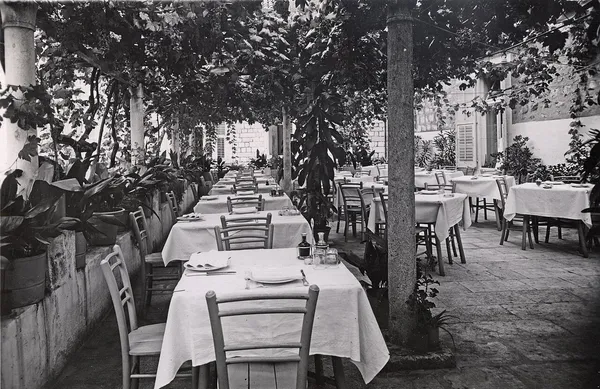
Proto Fish Restaurant terrace, Dubrovnik, 1912

Photo: Sasa Sobot (CC BY-SA 4.0)

Fish Restaurant Proto

Seafood institution
Old Town

Historic seafood restaurant open since 1886 on a side street off Stradun, famed for lobster, shellfish, and an award-winning wine cellar.

View on Maps →

D'Vino Wine Bar

Wine bar
Old Town

Intimate Old Town wine bar with over 60 Croatian and imported varieties, guided tastings, and local cheese and charcuterie platters.

Visit website →

What Do Nomads Say?

Vote on how accurate these scores are based on your experience

Cities with a Similar Vibe to Dubrovnik

Different places that score alike across our 13 categories, if you like Dubrovnik, these tend to feel similar.

In the rankings

Where Dubrovnik ranks

Dubrovnik features in 2 of our 32 city rankings.

  1. 8Best cities in Europe
  2. 14Best all-round cities

Frequently Asked Questions About Dubrovnik

How much does it cost to live in Dubrovnik as a digital nomad?

A comfortable nomad budget in Dubrovnik is around $2,800 a month: a furnished rental, food, coworking, and getting around. Live a little outside the center or eat local to spend less.

Is the internet fast enough for remote work in Dubrovnik?

With a WiFi score of 6/10, connectivity in Dubrovnik is workable for calls and focused work. A prepaid local SIM keeps you online when you are away from the apartment.

Is Dubrovnik safe for digital nomads?

Dubrovnik scores 9 out of 10 for safety in our ratings, which is excellent for solo travel and long stays. Use normal precautions at night and with valuables, and choose well-reviewed areas.

Is Dubrovnik a good city for digital nomads overall?

For nomads, Dubrovnik is worth a look if you value nature and safety. Costs sit near $2,800 a month and the community keeps growing, though, like anywhere, it will not match every checklist.