Cost of Living in Trogir
Where this figure comes from. No cost survey covers Trogir, so the $1,300 a month above is our own estimate rather than a measurement. On 416 of our 999 city guides the figure is built from a published Numbeo basket, a one-bedroom rent in the centre plus one person's monthly costs without rent, converted to USD; this city is not one of them. How we source everything.
Trogir is a comfortable, mid-range Dalmatian base rather than a bargain, and prices climb sharply through the summer season when demand peaks. As an editorial estimate, a single nomad can expect to spend roughly $1,100 to $1,500 a month once rent, food and getting about are included. Monthly rents ease considerably outside the July and August crush, and staying on the mainland or on Ciovo island stretches a budget further than the old town itself. Cooking with fresh market produce and local fish keeps costs down, while daily restaurant meals on the riva add up quickly. Overall it is affordable by Western European standards. The seasonal swing here has a shape worth exploiting. Owners want the summer for nightly lets and will take eight guaranteed months over an empty flat, so a lease running October to May costs a fraction of the same place in July and frequently includes the bills. The catch is the handover date, which is not negotiable. Beyond rent, note that a lot of what the town sells is priced for a day visitor off a cruise ship rather than for a resident, and the supermarket across the water costs half what the shops in the lanes do.
- One-bedroom rental: roughly $650 to $950 a month, higher in peak summer
- Casual restaurant meal: around $12 to $18 per person
- Monthly local transport and coffee habit: about $60 to $90
- Fresh market groceries for one: roughly $200 to $280 a month
Where to Work in Trogir
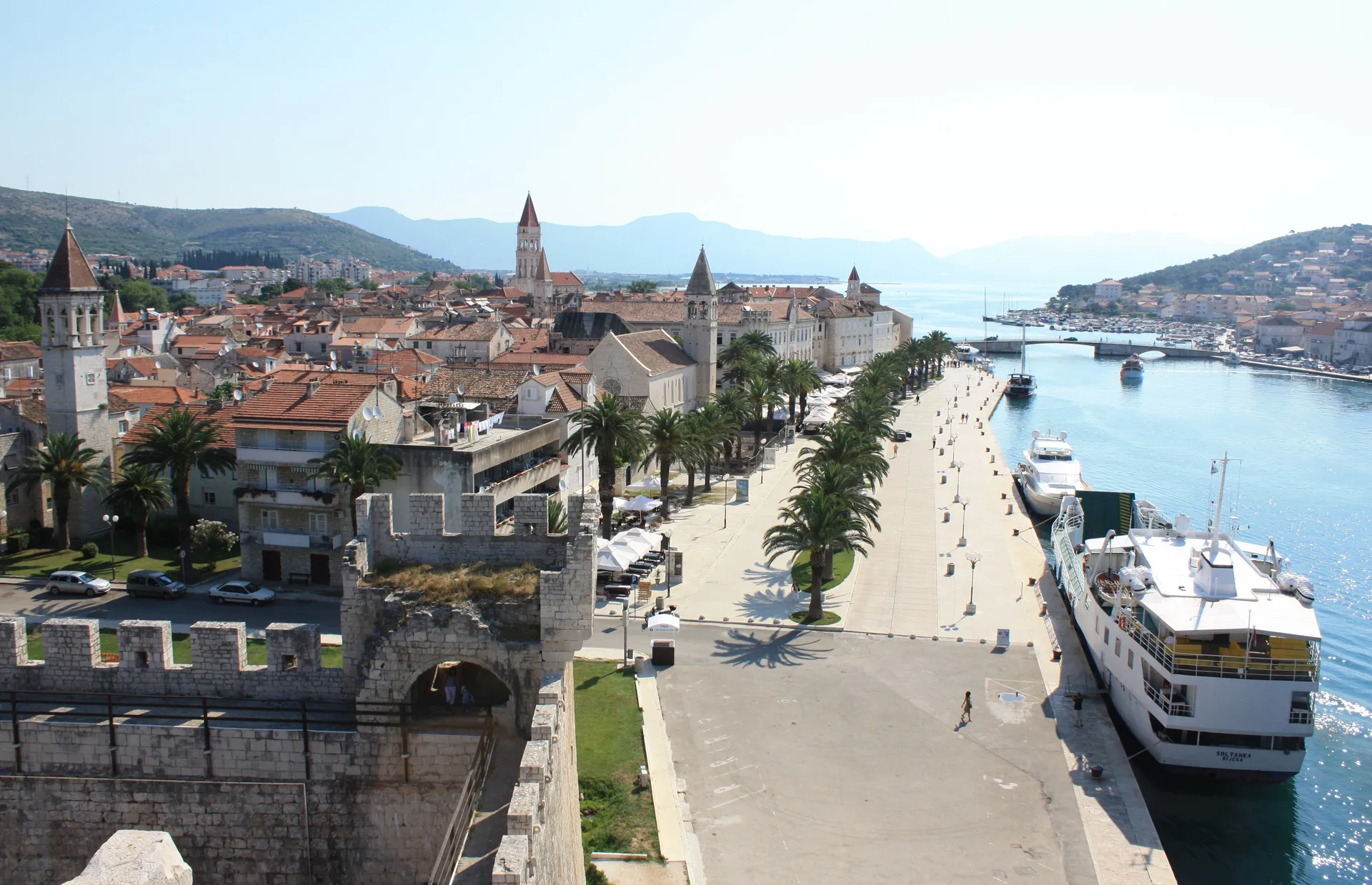
Trogir is tiny and does not have a dedicated coworking scene, so most nomads work from apartments, cafes and the palm-lined riva. Several old town cafes and konobas offer reliable enough connections for calls, and quieter mornings before the tour groups arrive are the productive window. For a fuller coworking setup, Split is only about thirty minutes away by bus or car and has proper shared offices. A rental with dependable fibre and a comfortable desk is the single best investment here, since the dense marble lanes can be lively and loud in season. Ciovo island apartments tend to be calmer and better suited to focused, uninterrupted work. Whether a working day here is pleasant comes down to two things. The first is which side of the water you sleep on: the island old town is beautiful and echoes, with every sound bouncing off marble between buildings a few metres apart, while the newer side across the bridge is ordinary, quiet and ten minutes away on foot. The second is the season. Between June and September the lanes fill with day visitors from about ten until five, which is not a background hum but a crowd, and a window over one of them is unworkable through those hours.
Getting Around Trogir
Trogir is wonderfully walkable, being a small island old town you can cross on foot in minutes, with short bridges linking it to the mainland and to Ciovo. You will rarely need a car within the town itself, and parking near the historic core is limited and pricey in summer. Frequent local buses connect Trogir to Split in roughly thirty minutes, and Split airport sits only about five kilometres away, making arrivals and departures unusually easy. Seasonal ferries and boat taxis reach nearby beaches and islands. For wider Dalmatian exploring, a hire car helps, but day to day life here is comfortably done on foot. The airport proximity is the genuine practical advantage and it is worth spelling out. The regional airport is nearer to this town than to the city it is named after, close enough to walk in under an hour and a few minutes by taxi, which makes a five in the morning flight a non-event rather than a night lost. Very few places on this coast can say that. The counterweight is the bridges: everything crossing between the old town, the mainland and the island beyond funnels through them, and in August the queue backs up a long way in both directions.
Sorting transport? Book an airport transfer, or compare car rental on Auto Europe and QEEQ.
Visas for Trogir
Croatia is part of the European Union and, since 2023, the Schengen area, so short stays follow the standard ninety days in any one hundred and eighty for many nationalities. For longer stays, Croatia offers a digital nomad residence permit aimed at remote workers employed by or running companies outside Croatia, granted for up to 18 months, with a new application possible six months after it expires. Applicants generally show proof of remote income, health insurance and accommodation. Being in Schengen, your Croatian days count toward the wider Schengen allowance, so plan accordingly. Since the Schengen accession the practical mechanics have changed twice over. A week spent here is now a week off the same allowance you would spend in Italy or Germany, which ended the old habit of treating this coast as a pause between Schengen stays, and since April 2026 the tally is taken biometrically at the external border rather than in stamps, so it runs whether or not anybody looks. The ferry to Italy is an internal crossing and is not checked; one to a country outside the bloc is. Assume the arithmetic is being done for you. The machinery behind that is the EU Entry/Exit System, which at the airport next door photographs and fingerprints non-EU travellers arriving from outside the bloc on their first entry.
Best Time to Visit Trogir
Trogir shines in the shoulder seasons of late spring and early autumn, when the weather is warm, the sea is swimmable and the old town is lively without the crush. May, June and September strike the best balance of sunshine, sociable evenings and manageable crowds. July and August are hot, busy and expensive, with the narrow lanes packed with day trippers, which suits some nomads and overwhelms others. Winter is mild, quiet and much cheaper, though many seasonal cafes and boat services wind down. If you want beach weather and a working rhythm without peak chaos, aim for the edges of summer rather than its centre. The thing that shapes a summer here more than the temperature is the ship schedule. The cruise arrivals into the larger port nearby send tenders and coaches along this coast, and this town is a standard half-day stop, which means the crowd arrives and leaves in a block rather than spreading through the day. The port publishes the calendar. Check it, and you can have the old town to yourself for most of the hours everybody else finds it unbearable. The other seasonal note is the wind: the winter northeasterly is cold, strong and a genuine reason the town empties.
Pros and Cons of Trogir
Trogir rewards nomads who love beauty, walkability and the sea, but its small size cuts both ways. The UNESCO-listed old town is genuinely stunning, the Dalmatian coast and islands are on your doorstep, and Split plus its airport are minutes away, making travel effortless. Against that, the town is tiny and heavily touristic in summer, the remote-work community is thin, and nightlife is limited compared with bigger cities. Costs rise steeply in peak months, and dedicated coworking means a trip to Split. Weigh whether you want a calm, scenic base with easy escapes, or a larger city with a denser nomad scene. Worth putting the size in proportion, because it is the whole story. The historic core occupies an islet roughly four hundred metres by two hundred, with something like two thousand residents on it, and you can walk it end to end in under ten minutes. That scale is why it is so complete and so pleasant, and it is also why a month there is a different proposition from a month somewhere with a hinterland. Everything a longer stay needs, the gym, the hospital, the supermarket, the other people, is across a bridge or half an hour up the road.
- Pros: breathtaking UNESCO old town, superb walkability, close beaches and islands, minutes from Split and its airport
- Cons: very small with a thin nomad community, heavily crowded and pricey in peak summer, limited nightlife and no dedicated coworking
Who Trogir Is For
Trogir suits the nomad who prizes atmosphere over amenities: someone happy to work quietly from an apartment or cafe, then swim, sail and wander marble lanes after hours. It is ideal for couples, solo travellers who enjoy their own company, and anyone using the Dalmatian coast as a slow, scenic base with easy island hopping and simple airport access. History lovers and seafood devotees will feel spoiled. It is less suited to those who need a buzzing coworking scene, a large ready-made community or vibrant nightlife, since those live in nearby Split. Come for calm, culture and coastline, and dip into the city when you want more energy. The arrangement that works for most people is a flat across the bridge and the old town as somewhere to walk into, which halves the rent, removes the noise and costs ten minutes. Arrive in September and stay through to spring, which gets you the warm autumn, the empty winter and the weeks before the crowds come back. Anyone wanting a professional life should accept that it happens up the road in the bigger city and plan two days a week there rather than hoping it arrives here. And learn to swim off the rocks rather than the beaches; it is what the residents do.