Cost of Living in Rovinj
Real market data
Source: Numbeo · August 2026
$1,700/moSolo nomad1-bed centre + living costs
$2,280/moCoupleshared 1-bed + costs
$1,360/moLean / localcheaper area + costs
- 1-bed rent, city centre$980€850
- 1-bed rent, outside centre$630€550
- Monthly costs excl. rent (1 person)$720€628
- Meal, inexpensive restaurant$17€15
- Buy price, per m² (centre)$5,760€5,000
Prices are from Numbeo (August 2026), converted to USD at $1 = €0.87 (01 Aug 2026). The monthly living-costs figure is our transparent one-person basket, groceries, a few meals out, utilities, phone, internet, transport and essentials, priced from those figures. Solo adds central rent; couple and lean are estimates from the same numbers.
Rovinj is one of the pricier bases in Croatia, its beauty and popularity pushing costs up, especially in the summer high season. A comfortable single-person budget runs roughly $1,200 to $1,800 a month, though this swings hard with the calendar. Long-term off-season rentals can be reasonable, while summer short-lets climb steeply with the tourist tide. A furnished one-bedroom near the old town on a longer lease runs about $650 to $1,000 outside peak months. These are our editorial estimates in US dollars, converted from the euro Croatia adopted in 2023; securing a winter-to-summer lease early is the key to keeping costs down. A genuine financial advantage here is rarely mentioned. Someone holding the remote-work residence permit pays no Croatian tax on money earned abroad while the permit runs, and on a decent salary that relief can dwarf whatever you save by choosing a cheaper stretch of coast. Before you can sign anything or open an account you need an OIB, the identification number every resident and taxpayer is given. Against that, short lets carry a nightly tourist charge, and heating an old stone house through a damp winter costs more than the summer impression suggests.
- Off-season 1-bed near the old town: roughly $650 to $1,000 a month
- Konoba (tavern) meal with local wine: roughly $18 to $30
- Istrian olive oil, truffles and produce at the market: variable, a real draw
- Bus to Pula or the airport: a few dollars
Where to Work in Rovinj
Rovinj is a lifestyle base more than a coworking hotspot, but it works well for a focused remote worker, especially outside the summer crush. Home internet in and around the town is decent, with fibre available in many areas, though checking a specific rental's connection is wise. Dedicated coworking is limited, so most nomads work from home or from old-town and harbour cafes, quieter and easier off-season. An A1, Hrvatski Telekom or Telemach SIM provides reliable mobile data. Rovinj shares Croatia's Central European time zone, giving comfortable overlap for European collaboration and a workable window further afield. In July and August the practical problem is not bandwidth but seats. Every cafe with a plug is full of holidaymakers by ten in the morning, and the pleasant harbour-front spots are the first to go, so anyone working through the high season needs a desk at home and the discipline to use it. The other seasonal hazard is the bura, the cold northeasterly that funnels down the coast in winter and can take the power out for a few hours. For a proper coworking floor and other remote workers, the larger town forty minutes south is the place to look.
Getting Around Rovinj
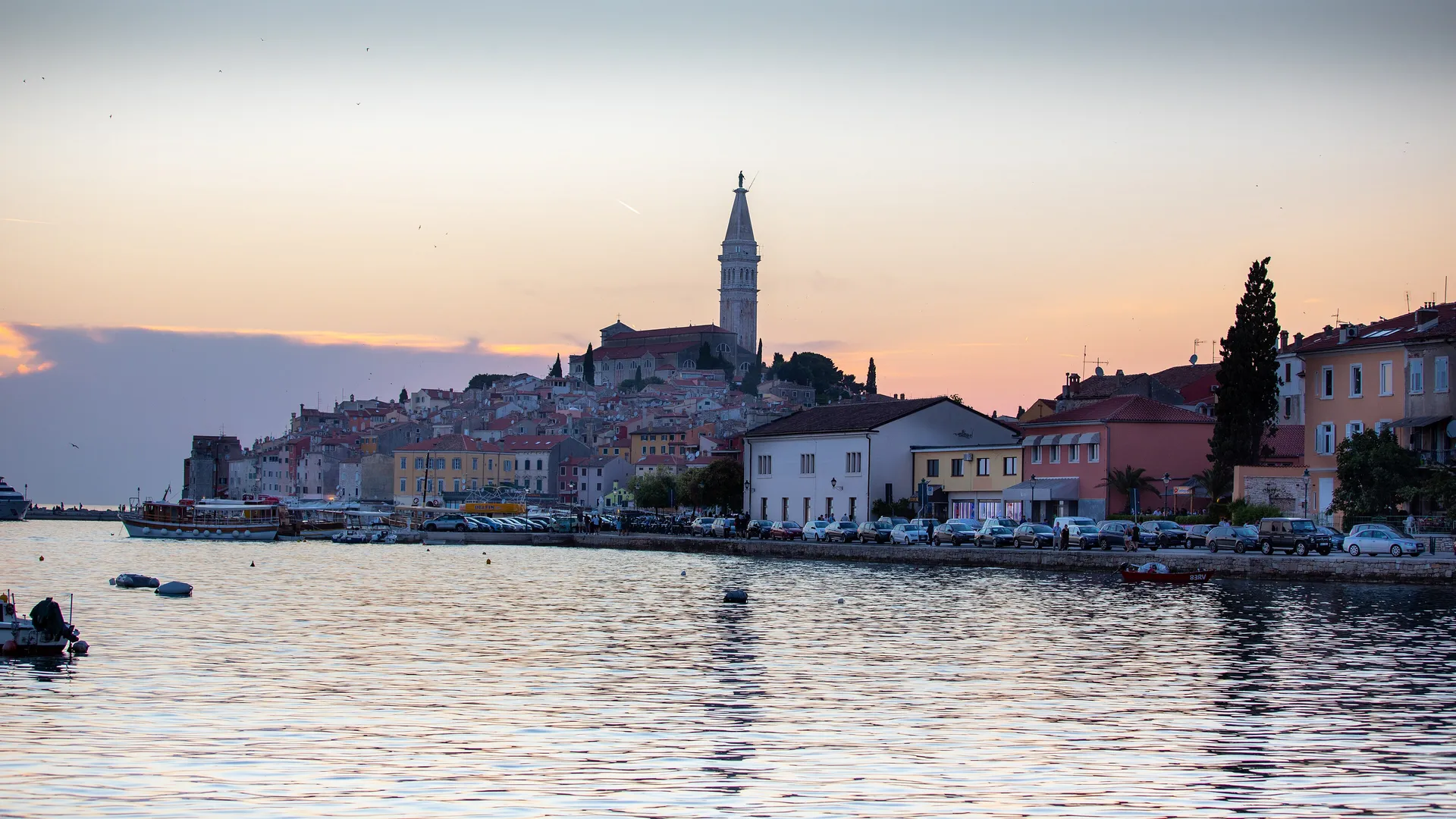
Rovinj's historic core sits on a car-free peninsula of steep cobbled lanes, so the old town is explored entirely on foot, climbing up to the landmark church of St Euphemia. The wider town is walkable and cycle-friendly, and bikes are a pleasant way to reach nearby beaches and the forested Punta Corrente park. Buses connect Rovinj to Pula, whose airport is about forty minutes away, and to the rest of Istria and Croatia, and in season catamarans run to Venice. A car is useful for exploring Istria's hilltop towns, vineyards and truffle country inland. Parking is the daily friction. Nothing drives onto the peninsula, the lots around its base fill by mid-morning through the season and are charged by the hour, so a car here is an asset for weekends and a liability on weekdays; many residents keep one and walk everywhere anyway. The coastal path south through the pine woods runs for several kilometres and is the best thing about the town on a working day, twenty minutes each way and swimmable at the end. Public transport inland to the hill towns is thin, so hire a car for those days rather than relying on timetables.
Sorting transport? Book an airport transfer, or compare car rental on Auto Europe and QEEQ.
Visas for Rovinj
Rovinj is in Croatia, which joined the Schengen Area in 2023, so most non-EU visitors can stay only 90 days in any 180-day period visa-free, while EU and EEA citizens face no restriction. For a longer stay, Croatia runs a well-established digital nomad residence permit for remote workers who can show sufficient income and are not employed by a Croatian company, granting a stay of up to 18 months. Mind the Schengen 90-day limit if you enter visa-free. That permit has two features worth knowing before you build a plan around it. It runs a maximum of eighteen months and cannot simply be rolled over; a holder must spend a spell outside the country before reapplying, so it is a good year rather than a route to settling. Nor does the time on it build toward permanent residence, which matters if the longer aim is a European base rather than a long holiday. Close family can be written into the same application, which is unusually generous and often missed. Until Croatia joined Schengen, the Slovenian crossing at Plovanija was where Istria met the Schengen frontier and passports were stamped both ways. It is now an open internal border, and the Entry/Exit System enrols you only at the outer edge of the bloc, wherever you first arrived from outside it.
Best Time to Visit Rovinj
Rovinj has a mild Mediterranean climate, and the shoulder seasons are the sweet spot. Late spring and early autumn, roughly May to June and September, bring warm, sunny days, swimmable sea and a relaxed atmosphere without the peak-summer crowds. July and August are hot, beautiful and very busy, when the old town fills with holidaymakers and prices peak. Winter, from November to March, is cool, quiet and sometimes wet, with many seasonal businesses closed but a peaceful, local feel. For the best balance of weather, sea and calm, target the shoulder months. The first weeks after the season ends are what quietly beat everything else. The sea holds its summer warmth well into them, the crowds thin, prices fall, and the light on the stone is at its best. Inland, the autumn truffle season starts shortly after, which turns the hill villages into the reason to have a car. At the other end, be realistic about winter: a large share of the restaurants and every seasonal shop close down, and a town built around visitors with no visitors in it is very quiet indeed for four months.
Pros and Cons of Rovinj
Rovinj offers postcard Adriatic beauty and EU-grade safety, tempered by strong seasonality. This differs from the other pretty coastal towns it gets compared with in two ways. Scale is the first: about fourteen thousand people live here, which is a large village rather than a small city, and the consequence is that everything is within ten minutes and nothing is anonymous. The second is that the country runs one of the more workable remote-work residence permits in Europe, which turns a place that would otherwise be a ninety-day holiday into a year you can actually plan. Against those, the summer is genuinely overwhelming for a town this size, and the winter is genuinely empty, and there is no version of living here that avoids both. What you are choosing is whether four extraordinary shoulder months and a very quiet winter beat a more balanced year somewhere less beautiful.
- Pros: a stunning pastel old town and harbour, clear Adriatic swimming and pretty beaches, superb Istrian food, wine, olive oil and truffles, exceptional safety, EU membership and Croatia's nomad visa, and easy access to the rest of Istria.
- Cons: high summer prices and heavy overtourism, a quiet, partly shut-down winter, limited coworking, a small off-season community, and higher costs than much of Croatia. It rewards timing your stay around the shoulder seasons.
Who Rovinj Is For
Rovinj is for the Adriatic-loving nomad who wants beauty, safety and Istrian good living, and who can time a stay for spring or autumn. It is ideal for those on the Croatian digital nomad visa and for EU citizens seeking a sea-fringed base with easy European links. Couples, food-and-wine lovers and anyone who enjoys old-town wanders, swimming and slow Mediterranean days will feel at home. It is a weaker fit for those needing a large year-round nomad scene, a lively winter or budget prices in peak season. Come in the shoulder months, secure a longer lease early, and let the old town and the Adriatic set the pace. A concrete suggestion for anyone taking the permit route: start in April and go through to November, then either winter somewhere warmer or spend those months inland, where the hill towns stay lived-in and the rents are a fraction. That pattern uses the best of the year and avoids the two versions of the town that nobody enjoys, the August crush and the February silence. Learn a little Italian as well as the local language; it is the second language of this peninsula and it opens doors that English does not.