Cost of Living in Kanchanaburi
Where this figure comes from. No cost survey covers Kanchanaburi, so the $1,000 a month above is our own estimate rather than a measurement. On 416 of our 999 city guides the figure is built from a published Numbeo basket, a one-bedroom rent in the centre plus one person's monthly costs without rent, converted to USD; this city is not one of them. How we source everything.
Kanchanaburi is one of Thailand's most affordable places to base yourself for a month or more. Costs are noticeably lower than Bangkok and roughly comparable to smaller northern cities like Chiang Mai, though with far fewer nomad amenities.
- Rent (central, Mae Nam Kwai Rd area): $150-240/month for a basic studio or guesthouse room with air conditioning
- Rent (cheaper areas, outer town): $84-135/month for a bare-bones local apartment
- Groceries (self-catering): $90-150/month at local markets and Tesco Lotus
- Eating out: $2-3.50 per meal at local Thai spots; $6-12 at riverside tourist-facing restaurants
- Coworking hot-desk: No established coworking hub; budget $45-90/month if you use cafes regularly for drinks
- Local transport: about $0.50 per songthaew ride; motorbike rental $4.50-6/day
- Mobile data (AIS/DTAC SIM): $9-15/month for unlimited packages
- Home fiber internet: Around $24-27/month if you rent longer-term with a line included
Realistic monthly total: $540-895 covers a comfortable solo nomad life here, including accommodation, food, transport, and a SIM card. You can go lower if you commit to local living, but do not expect Chiang Mai-level infrastructure at this price.
Where to Work
Kanchanaburi does not have a proper coworking scene. There is one office-style coworking space, Space Leader, but it primarily serves local businesses rather than short-stay nomads, and walk-in access is inconsistent. Your realistic options are cafes.
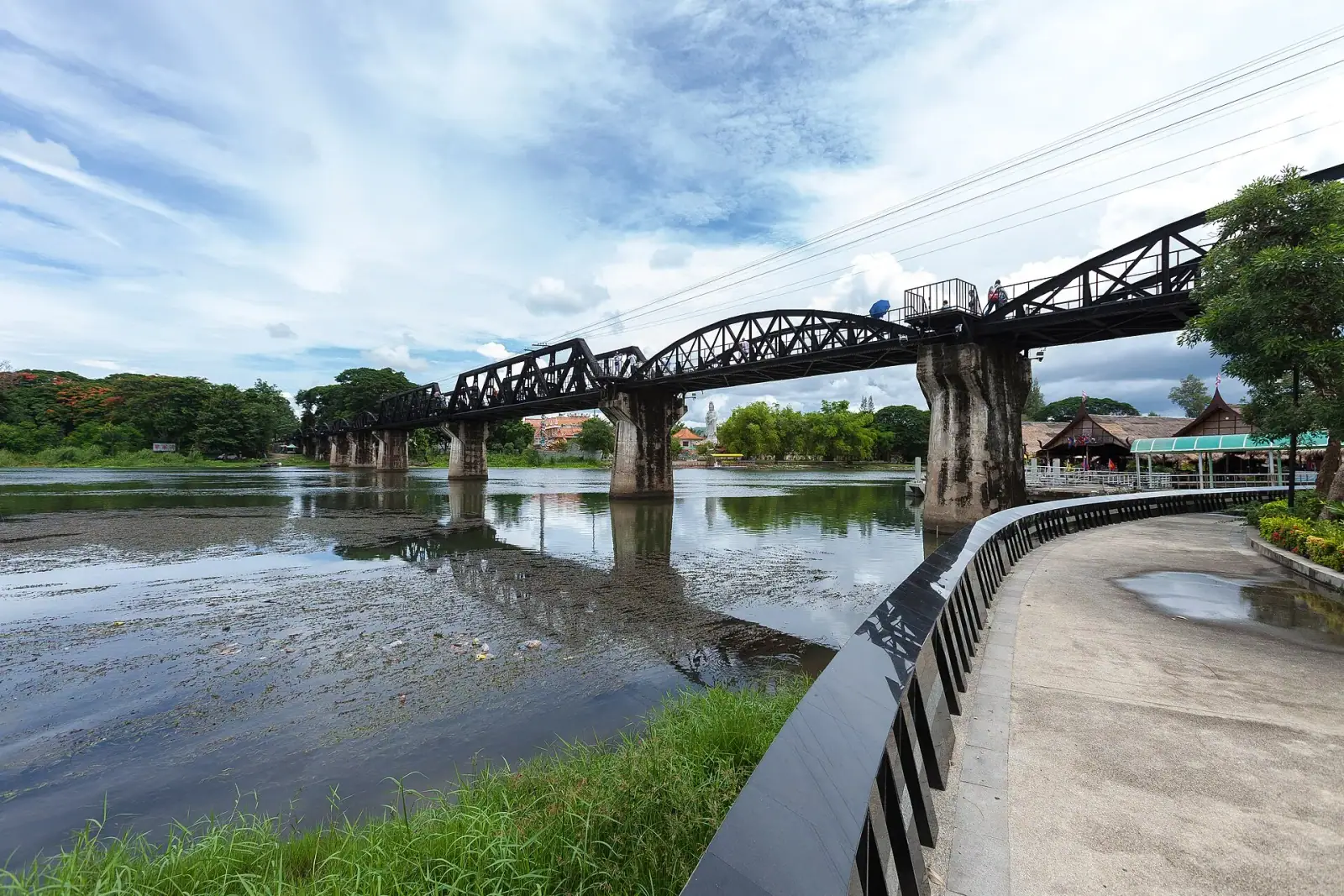
Library Cafe on Mae Nam Kwai Road is the most commonly cited laptop-friendly cafe, with a modern interior, a full food menu, and WiFi. Scenario Cafe and Hostel near the Bridge over the River Kwai has free WiFi and a communal lounge suitable for short working sessions. The Village Farm To Cafe on Saeng Chuto Road is a larger venue with a relaxed atmosphere and reliable WiFi, though it sits further from the guesthouse strip.
When you do get a good fixed-line connection in Kanchanaburi, it is fast. Mobile data (4G via AIS or DTAC) is the more consistent fallback, especially outside the town center. Many riverside guesthouses have adequate WiFi for video calls, but test speeds before committing to a month-long stay if your work depends on stable uploads.
The cafe-work culture here is low-key. Staff at tourist-area cafes are accustomed to people sitting for hours with a laptop, but during peak weekend tourist influx, seating gets competitive. Weekday mornings are the most productive window.
Getting Around
The town center is walkable if you stay on or near Mae Nam Kwai Road, where guesthouses, restaurants, and most cafes are concentrated. Beyond that strip, distances get awkward on foot in the heat.
The main local transport is the orange songthaew (shared pickup truck), which runs up and down Saeng Chuto Road connecting the bus terminal, train station, and the Bridge area for about $0.50 per ride. Tuk-tuks and motorbike taxis are available and fares are negotiable. Renting a bicycle ($1.50/day) or motorbike ($4.50-6/day) is the most practical way to reach waterfalls, national parks, and spots outside the center.
Getting to Bangkok: buses depart every 30 minutes from the bus terminal and take about 2.5-3 hours to the Southern Bus Terminal (Mo Chit or Sai Tai Mai). The fare is around $3.50. There is a train connection to Bangkok's Thonburi station (not Hua Lamphong), but services are infrequent and third-class only, making the bus a far more practical choice.
There is no commercial airport in Kanchanaburi. The nearest airport is Suvarnabhumi (BKK) or Don Mueang (DMK) in Bangkok, roughly 3 hours by bus plus airport transfer time. Build at least a half-day buffer for any flight.
Sorting transport? Book an airport transfer, or compare car rental on Auto Europe and QEEQ.
Visas and Staying Long-Term
Thailand offers 30-day visa-exempt entry to nationals of 60 countries, down from 93 countries at 60 days, since 15 September 2026. Thailand's Cabinet approved the return to 30-day exemptions in May 2026 and the regulations were gazetted on 31 August, so the two-year run of 60-day entries is over.
A single-entry tourist visa (TR) grants 60 days and can be extended once by 30 days at any immigration office, including the Kanchanaburi provincial office (shorter queues than Bangkok). Visa-exempt entries can be extended by 30 days on the first extension, then by 7 days on a second extension per calendar year, with visa-exempt entries over land borders limited to two per calendar year.
Thailand's Long-Term Resident (LTR) visa is available to remote workers earning at least $80,000/year and is valid for 10 years with work-from-Thailand permission. Thailand also offers a Destination Thailand Visa (DTV), introduced in 2024, for 180-day stays per entry over five years with multiple entries, targeted at remote workers and freelancers.
Best Time to Visit
Kanchanaburi has a tropical climate with three recognizable seasons. The dry, cool season from November through February is the most comfortable window for remote work: temperatures sit between 20-30 degrees C (68-86 F), humidity drops, and the skies stay clear. This is peak tourist season, so guesthouses fill up on weekends.
March to May is hot and dry, with April hitting up to 39 degrees C. Working conditions indoors remain fine, but stepping outside in the afternoon is draining. The rainy season runs from May through October, with July, August, and September seeing the heaviest rainfall. Rain usually comes in short, intense bursts rather than all-day grey drizzle, so mornings are often clear for working. The upside is that prices drop significantly and the waterfalls at Erawan National Park are at their most impressive.
For a balance of pleasant weather, manageable crowds, and good prices, November through January is the optimal window. If you want absolute quiet and do not mind the heat, February and March work well too.
Pros and Cons
- Very low cost of living compared to Bangkok, Chiang Mai, and island destinations
- Relaxed, unhurried pace with far less noise and traffic than Thai cities
- Stunning natural surroundings: River Kwai, Erawan National Park, national parks within easy reach
- Good connectivity to Bangkok (2.5-3 hour bus) for visa runs or airport trips
- Interesting history (Death Railway, WWII memorials) for those who value cultural context
- Safe, low-crime environment with friendly locals and a well-worn tourist corridor
- Almost no coworking infrastructure: no proper coworking hubs, no nomad community to speak of
- Limited cafe-work options: fewer dedicated laptop cafes than Chiang Mai or Bangkok
- Small expat and nomad community: if you need co-workers, accountability partners, or regular English-speaking social contact, this will feel isolating
- No international airport: every flight requires a 3-hour bus trip to Bangkok first
- Very hot from March to May, making outdoor breaks uncomfortable
- Weekend tourist crowds on the guesthouse strip can make cafe seating scarce
Who Kanchanaburi Is Best For
Kanchanaburi suits you if you are self-sufficient, do not need a coworking community, and want to combine remote work with a quiet riverside lifestyle at very low cost. It works especially well as a slow-travel base for a month or two: you get a legitimate Thai town rather than a tourist bubble, excellent nature access, and a sensible bus link to Bangkok for anything you cannot find locally.
It is a good fit for writers, solo developers, designers, and anyone whose work is largely asynchronous. If your job requires daily video calls with stable upload speeds, invest in testing your specific accommodation's WiFi before committing. Couples or solo travelers who are comfortable self-directing their days will find it rewarding.
Skip Kanchanaburi if you rely heavily on coworking community, in-person networking, or frequent international flights. It is also not the right base if you need a wide choice of international grocery options, a modern fitness scene, or consistent nightlife. For those priorities, Chiang Mai or Bangkok remain the stronger choices in Thailand.