Cost of Living in Hua Hin
Real market data
Source: Numbeo · August 2026
$910/moSolo nomad1-bed centre + living costs
$1,180/moCoupleshared 1-bed + costs
$730/moLean / localcheaper area + costs
- 1-bed rent, city centre$570฿19,150
- 1-bed rent, outside centre$400฿13,267
- Monthly costs excl. rent (1 person)$340฿11,287
- Meal, inexpensive restaurant$3฿100
- Buy price, per m² (centre)$1,830฿61,071
Prices are from Numbeo (August 2026), converted to USD at $1 = ฿33.45 (01 Aug 2026). The monthly living-costs figure is our transparent one-person basket, groceries, a few meals out, utilities, phone, internet, transport and essentials, priced from those figures. Solo adds central rent; couple and lean are estimates from the same numbers. The guide below quotes its own monthly range, which is a different measurement rather than a competing one: this table prices a defined basket at the figures above, while that range is a judgement about how somebody actually lives here.
Hua Hin sits in the middle tier for Thailand: more expensive than Chiang Mai, cheaper than Bangkok, and far cheaper than Koh Samui once you factor in accommodation. Your real monthly spend depends heavily on whether you rent near the beach or a short distance inland.
- Rent, central or beach-adjacent: $450-600 for a furnished 1-bedroom condo
- Rent, Hin Lek Fai or further inland: $240-390 for comparable space
- Groceries (self-catering, mix of local market and supermarket): $120-210 per month
- Eating out (local restaurants and occasional Western meal): $180-360
- Coworking hot-desk (monthly membership): $105-165
- Local transport (songthaew, Grab, occasional motorbike rental): $45-105
- Utilities and SIM data: $45-75
Realistic monthly total: $1,050-1,640, depending on your accommodation choice and how often you eat out. A lean but comfortable setup closer to inland areas can come in under $1,100. Beach-adjacent living with regular dining out pushes you to $1,400 and above.
Where to Work
Hua Hin is not Chiang Mai. You will not find a dozen coworking spaces competing for your business. What you get instead is a handful of solid options and a well-developed cafe culture that has quietly adapted to laptop workers over the last few years.
Hua Hin Workspace (Soi Mooban Takiab, Nong Kae) is the most established dedicated coworking space, with fiber internet, ergonomic seating, meeting rooms, and a monthly hot-desk membership at around $115. Trustpilot rates it 4.1 out of 5. The Hub Hua Hin (Hin Lek Fai) is a community-focused alternative away from the tourist strip, with good WiFi and nearby sports facilities.
Cafes fill most of the gap. Gallery Drip Coffee on Soi 51 is a specialty shop in a standalone garden house where laptop work is normal. Collins Coffee Bar in Nong Kae runs fiber internet and comfortable seating; it shifts to cocktails in the evening. The Barn Coffee Lab near the Night Market is a light-roast specialty roaster with a reliable sit-and-work atmosphere.
The unwritten rule at cafes is to buy something every two hours and move on during busy lunch periods. Most owners have accepted this arrangement and won't hassle you.
WiFi reality: Dedicated coworking spaces offer fiber. Specialty cafes are typically fine for video calls. General Thai cafes can be slower and inconsistent. Get a local SIM with a data plan (AIS or DTAC) from day one and use it as backup. Fiber-backed condos are available on long leases, making a home setup the most reliable option for stays beyond a month.
Getting Around
Hua Hin is not a walking city beyond the central beach strip and the Night Market area. Distances between neighborhoods are manageable only with transport.
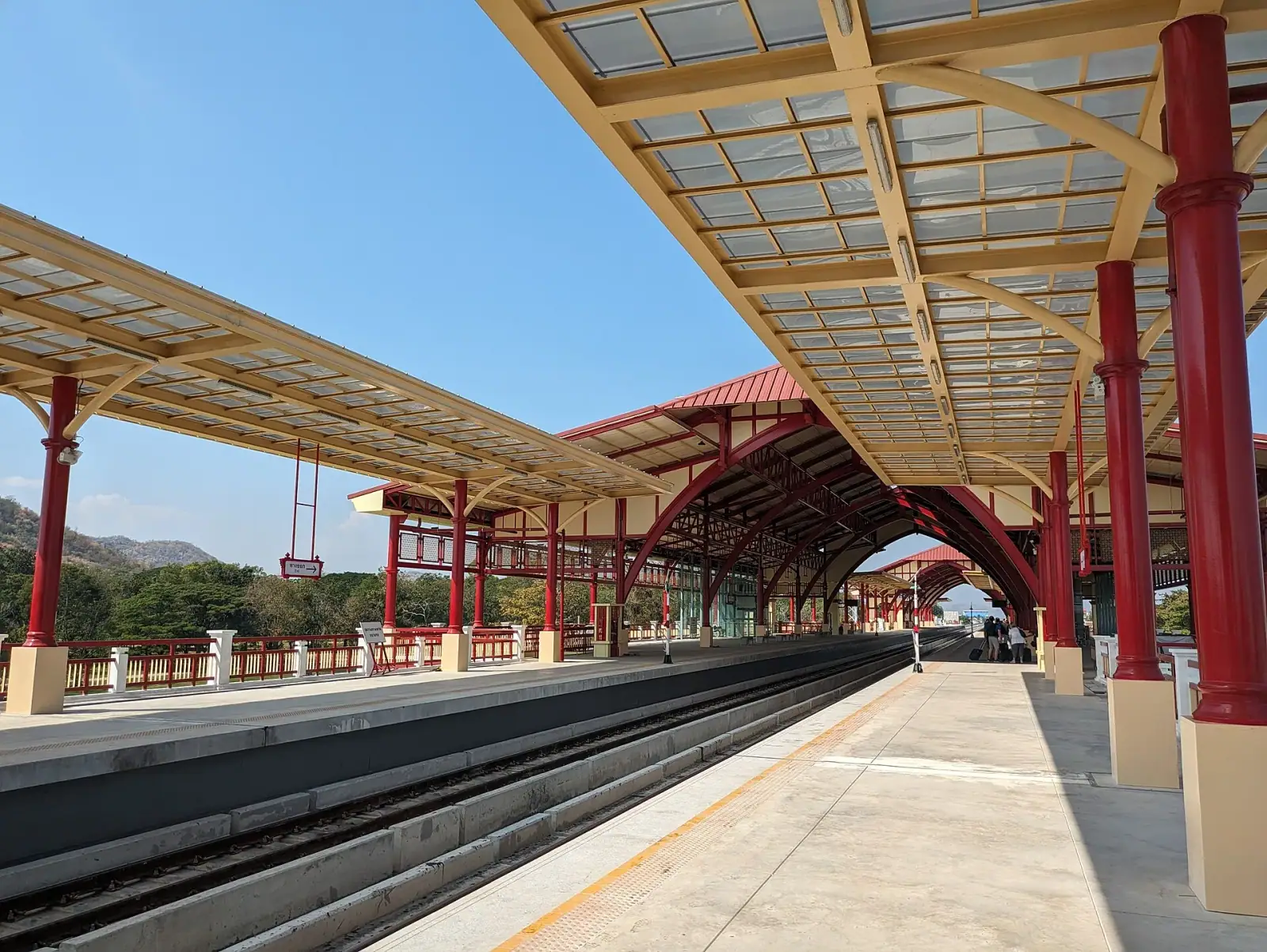
Songthaew (shared pickup truck bus): Green songthaews run a fixed route from Khao Takiab in the south through the town center to the area near the train station. Fare is $0.50 per leg. They run roughly every 15 minutes from 6am to 9-10pm. They are the cheapest option for north-south movement along the main corridor.
Grab: Works well here. Both car and motorbike options are available, pricing is transparent, and you will not need to negotiate. This is the default for anything off the songthaew route or after dark.
Motorbike rental: Around $75-105 per month for a scooter, and it opens up the whole area. Many coworking spaces mention scooter rental on-site. Recommended if you plan to stay beyond two weeks.
Getting to and from Bangkok: Trains run several times daily from Krung Thep Aphiwat Central Terminal to Hua Hin station. Journey time is roughly 3.5-4 hours and costs $6-18 depending on class. Minibus shared vans are faster (around 3 hours) and depart from Victory Monument area. The nearest airport, Hua Hin Airport (HHQ), handles limited routes. Most people fly into Suvarnabhumi (BKK) and take ground transport the rest of the way. A metered taxi from Suvarnabhumi to Hua Hin costs around $45-60 and takes about 3 hours depending on traffic.
Sorting transport? Book an airport transfer, or compare car rental on Auto Europe and QEEQ.
Visas and Staying Long-Term
Most Western passports (USA, UK, EU, Australia, Canada) receive a 30-day visa exemption on entry from 15 September 2026, halved from the 60 days that ran from July 2024. You can extend this once at an immigration office for 30 days ($57), giving you up to 60 days total. After that, you need to leave and re-enter or switch visa categories. Thai authorities have tightened enforcement on back-to-back visa-exempt entries: visa-exempt entries over land borders are limited to two per calendar year, so the old border-run strategy is no longer reliable.
Destination Thailand Visa (DTV): Thailand launched a dedicated remote-work visa in July 2024. It grants 180-day stays (renewable each time without leaving the country) and is valid for five years. The requirements are a $14,950 bank balance shown over three months, proof of remote employment or freelance income, and a $300 application fee. This is the most practical long-term option for most nomads who qualify.
LTR Visa: A 10-year residency option for high earners (personal income above $80,000 per year for the past two years). Comes with significant tax benefits. Too restrictive in income threshold for most nomads but worth knowing about.
Best Time to Visit
Hua Hin sits on the Gulf of Thailand's western shore and follows a different weather pattern than the islands to the east. It gets less total rainfall than most of Thailand and avoids the worst of the east coast monsoon.
Best window for remote work: November through February. Temperatures sit between 22-30°C (72-86°F), humidity drops, and rain is rare. This is also peak season, so accommodation prices are higher and the town is busier.
March through May brings increasing heat, peaking around 35°C (95°F) in April. It is dry, but the heat makes outdoor time uncomfortable. Air-conditioning bills go up. Work is still perfectly manageable from a conditioned condo or cafe.
June through October is the rainy season. Hua Hin receives significantly less rain than Phuket or Koh Samui during this period, and the showers are typically short and heavy rather than all-day affairs. Prices drop noticeably, the town is quieter, and remote workers who can tolerate occasional disruptions get good value. September and October are the wettest months and worth avoiding if outdoor lifestyle matters to you.
Pros and Cons
- Comfortable cost of living relative to the quality of life available
- Stable internet infrastructure in condos and coworking spaces
- Safe, low-stress environment with almost no petty crime
- Good food at every price point, from $2 pad thai to fine-dining Thai cuisine
- Easy Bangkok access for visa runs, flights, and city breaks
- More relaxed pace than Bangkok; beach access without island-level remoteness
- Small nomad community compared to Chiang Mai or Bangkok; harder to meet other remote workers
- Limited coworking infrastructure; you will likely need to work from home or cafes most of the time
- Car or scooter really needed for anything beyond the central strip
- Nightlife is mild; there is a bar scene, but this is a resort town that shuts down relatively early
- Older expat-heavy demographic that can make the social scene feel limited for younger nomads
- Peak season crowds and prices from December through February
Who Hua Hin Is Best For
Hua Hin works best for remote workers who want a quieter Thai base that isn't Bangkok. If you have been doing Chiang Mai for a while and want a beach-adjacent alternative with lower noise, better food infrastructure, and easier Bangkok access, Hua Hin delivers. It suits people who are comfortable building their own routine, working mostly from a condo or cafe, and don't need a ready-made nomad community to plug into.
It is also a solid choice for people doing longer Thailand stays who want to split time between Bangkok and a coastal base. The train connection makes this practical without involving a flight.
Skip it if community is your top priority. Chiang Mai has a far larger, more organized nomad network with coworking events, meetups, and ready social infrastructure. Skip it also if you want a lively nightlife scene or the kind of island atmosphere you get in Koh Lanta or Koh Phangan. Hua Hin is a pleasant, settled resort town, not a backpacker hub or a digital nomad colony, and that is both its strength and its limitation.