Cost of Living in Krabi
Where this figure comes from. No cost survey covers Krabi, so the $1,700 a month above is our own estimate rather than a measurement. On 416 of our 999 city guides the figure is built from a published Numbeo basket, a one-bedroom rent in the centre plus one person's monthly costs without rent, converted to USD; this city is not one of them. How we source everything.
Krabi sits in a mid-range tier among Southeast Asian nomad hubs. You can live here comfortably, but it is not as cheap as Chiang Mai or inland Thai cities, especially if you want to stay close to the beach in Ao Nang.
- Rent (Krabi Town, 1 bedroom): $240-450/month. Further from the beach, quieter, but with better local food options.
- Rent (Ao Nang, 1 bedroom): $450-745/month. Prices spike in high season (December-March).
- Groceries (self-catering): $150-240/month at Big C or local markets.
- Eating out: $2.50-4.50 for a local meal; $9-18 at a mid-range restaurant.
- Coworking hot desk: $9/day; $180-240/month for a membership.
- Local transport: $1.50-3/trip by songthaew; $6-10/day for a rented scooter.
- Mobile data (10 GB): around $6/month. SIM cards from AIS or DTAC work well.
Monthly total range: Budget-focused nomads in Krabi Town spend roughly $1,050-1,490/month. A comfortable lifestyle near Ao Nang with regular dining out and coworking runs closer to $1,640-2,390/month.
Where to Work
Dedicated coworking is thin on the ground in Krabi compared to Chiang Mai or Bangkok. What exists is genuinely good, and the cafe-work culture fills most of the gap.
Dedicated coworking spaces: Phansa Space in Ao Nang is the most accessible dedicated option, offering ergonomic furniture, an outdoor terrace, and fast fibre internet. KLW Coworking Coliving Workspace in Mueang Krabi is highly regarded for clean, quiet space and reliable connectivity, open 24/7 with pool access on site. Pricing at both starts around $9 per day.
Laptop-friendly cafes: Cafe 8.98 in Ao Nang is the most popular cafe workspace, with WiFi, plentiful outlets, and long opening hours. Sprucy Cafe in Krabi Town has a dedicated coworking area in the back, strong coffee, and air conditioning. Zoo Coffee in Krabi Town is quiet and cheap, ideal for morning work sessions before 4 PM when it closes.
The real WiFi situation: Mobile 4G/5G coverage from AIS or True is reliable throughout Krabi Town and Ao Nang, so a local SIM is your backup when cafe WiFi disappoints. Speeds at dedicated coworking spaces comfortably support video calls. Beach bungalows and guesthouses vary wildly: always check recent reviews before booking if connectivity matters to you. Do not rely on free city WiFi.
Getting Around
Krabi is not a walkable destination. Krabi Town and Ao Nang are about 18 km apart, and most attractions, beaches, and restaurants require a vehicle or paid transport.
Songthaews (shared pickup trucks): The main public transit option. The white songthaew runs between Krabi Town and Ao Nang for $1.50, operating from around 6 AM to 9 PM. Useful and cheap, but you wait for them to fill up.
Scooter rental: The practical choice for most nomads. You can rent for $6-10/day from many guesthouses and rental shops. Roads in town and out to viewpoints are manageable, but the coastal road to Ao Nang can be busy in high season.
Tuk-tuks and taxis: Available in Krabi Town and Ao Nang. Always negotiate the price before you get in. Grab (rideshare app) works in Krabi Town, though coverage is lighter than in Phuket or Bangkok.
Airport connections: Krabi International Airport (KBV) is about 15 km from Krabi Town. A shared blue songthaew from the airport to town costs around $2.50. Private taxis run $10-15 to Ao Nang. Shared minivans are a middle-ground option with set prices posted at the arrivals area.
Islands and beaches: Reaching Railay, Koh Phi Phi, or the four islands requires a longtail boat or speedboat ferry. Factor in transfer time and boat fares if you plan to island-hop regularly.
Sorting transport? Book an airport transfer, or compare car rental on Auto Europe and QEEQ.
Visas and Staying Long-Term
Thailand's visa situation changed significantly in 2024-2026.
Visa-free entry: Citizens of around 93 countries received 60-day visa-free entry from July 2024. Thailand's cabinet approved reducing this back to 30 days in May 2026, the regulations were published in the Royal Gazette on 31 August, and the cut took effect on 15 September 2026.
Tourist visa extension: You can extend your stay once at the Krabi immigration office in Krabi Town for $57, adding 30 days. This applies whether you entered visa-free or on a tourist visa.
Destination Thailand Visa (DTV): Launched in July 2024, the DTV is designed for digital nomads and remote workers. It requires proof of remote work plus $14,950 in funds, offers 180 days per entry, and has 5-year validity. It is a genuinely useful option for long-term stays if you can meet the funds requirement.
Best Time to Visit
Krabi has a pronounced seasonal split driven by the southwest monsoon, and the timing matters a lot for remote workers who care about boat access, beach weather, and reliable power.
Peak season (November-March): This is the best window. Skies are clear, humidity is manageable, seas are calm, and longtail boats run reliably to all beaches. Temperatures sit around 25-32C (77-90F). Expect higher accommodation prices and more tourists, particularly in December and January.
Shoulder season (April-May): Still largely dry and hot (up to 35C/95F), with falling prices and thinner crowds. A solid choice for budget-conscious nomads who do not mind heat.
Wet season (June-October): The southwest monsoon brings heavy, frequent rain, choppy seas, and occasional boat cancellations to Railay and islands. Working from a well-equipped indoor coworking space is fine, but spontaneous beach days become unreliable. Prices drop 30-40% on accommodation, and you will have the place largely to yourself. September and October are the wettest months.
For remote work combined with beach access, November through February is the sweet spot.
Pros and Cons
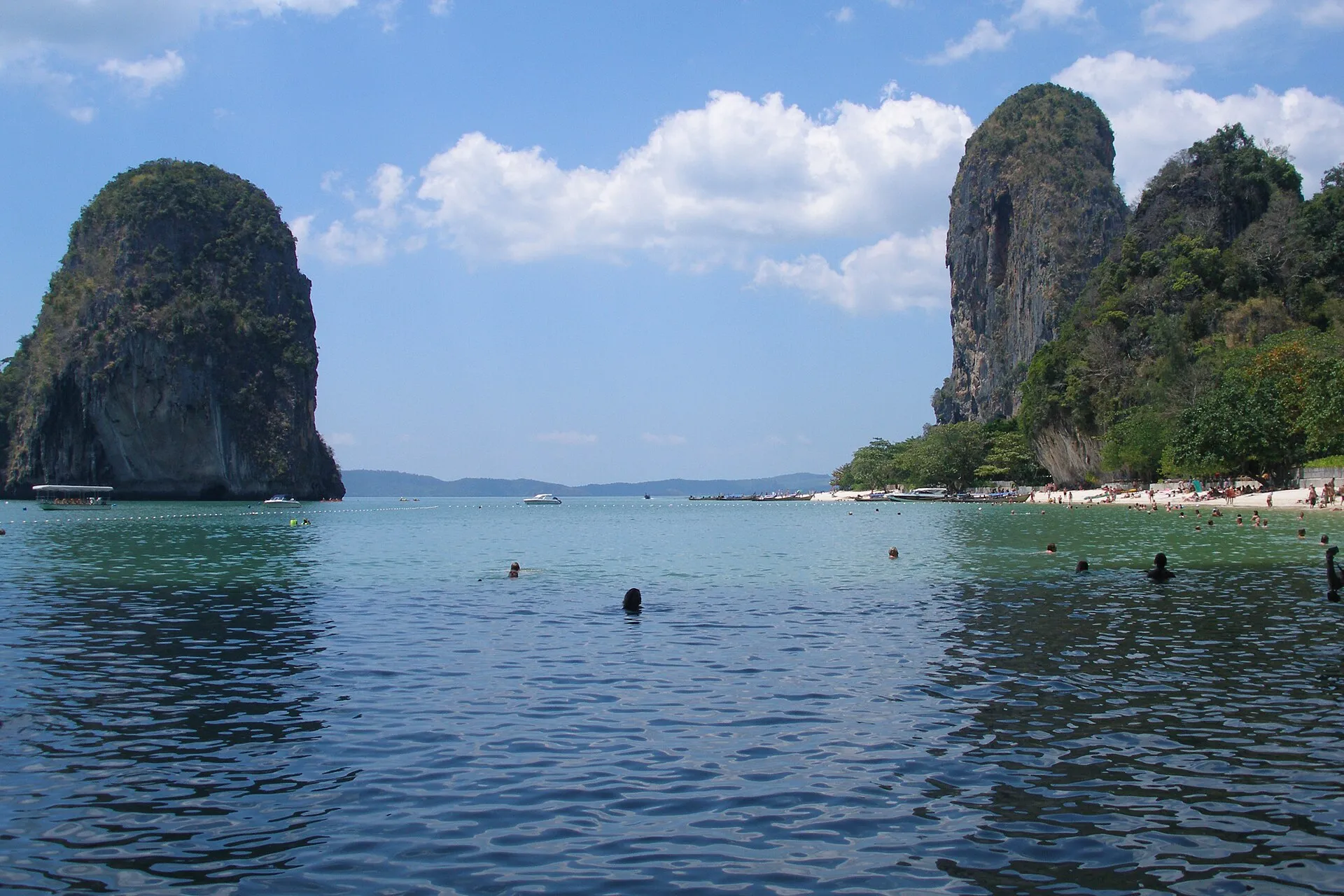
- Stunning natural environment: Limestone karsts, clear water, and some of Thailand's best beaches within easy reach
- Lower cost than Phuket with a similar Andaman coastline
- Good mobile data coverage from AIS and True across the main areas
- Relaxed, unhurried pace compared to Bangkok or Phuket
- Excellent local food scene in Krabi Town, with cheap southern Thai cooking
- Direct international flights to Kuala Lumpur, Singapore, and several European cities in season
- Very few dedicated coworking spaces; you will mostly work from cafes or your accommodation
- No walkability between key areas; you need a scooter or paid transport constantly
- Wet season can be disruptive: frequent power cuts and boat cancellations from June-October
- Tourist infrastructure in Ao Nang can feel generic and overpriced compared to Krabi Town
- Nomad community is small; harder to find coworking peers than in Chiang Mai or Bangkok
- Short-stay tourist vibe makes settling into a routine feel less natural than in dedicated nomad hubs
Who Krabi Is Best For
Krabi works well for remote workers who can operate independently, do not need a strong coworking community, and want nature access built into their daily life. If your idea of a productive day is coffee in a quiet local cafe in the morning, a swim or kayak in the afternoon, and a cheap Thai dinner in town at night, Krabi delivers that better than almost anywhere in the region.
It suits nomads on flexible schedules who plan to stay through the dry season (November-March) and are comfortable on a scooter. It also works for people doing short working holidays who want to pair serious output weeks with weekend island trips.
Skip Krabi if you need a dense coworking scene for in-person collaboration, rely on daily video calls that demand consistently fast and stable fiber connections, or want to walk everywhere without renting a vehicle. It is also a poor fit if you are visiting June through October and expect beach access to be part of your routine. Longer-term nomads often use Krabi as a seasonal base alongside Chiang Mai in the north rather than as a year-round primary location.