
Thailand's seasons
Thailand's three great choices all have a bad stretch, and they fall at different times of year. In the north, smoke from crop burning hangs over the hills from about February to April. On the Andaman coast, the south-west monsoon brings rough seas and rain from about May to October. On the Gulf side, the heaviest rain arrives from about October to December. So there is almost always somewhere in the country at its best, and many long-stay foreigners simply follow the good weather around, by a domestic flight that rarely costs much.
The north
Chiang Mai is one of the best-known remote-work cities in the world for good reason, with its moated old city, excellent hospitals, cheap food and countless workspaces, at around $1,600 a month. Chiang Rai is the quieter version, a few hours away, and Pai, up a road of many hundreds of bends, is a small valley town with more hippie cafés than reliable connections. From November to January these places are at their finest, with clear skies and fresh mornings.
Bangkok
Bangkok is hot all year and flooded with both traffic and options, at around $2,200 a month. It has elevated trains, serious hospitals, embassies, shopping and the main international airport, which is why many people come through it for a few weeks at a time to sort out their paperwork, and then find they do not want to leave. It is also the easiest place in Thailand to live without a scooter.
The islands and the coast
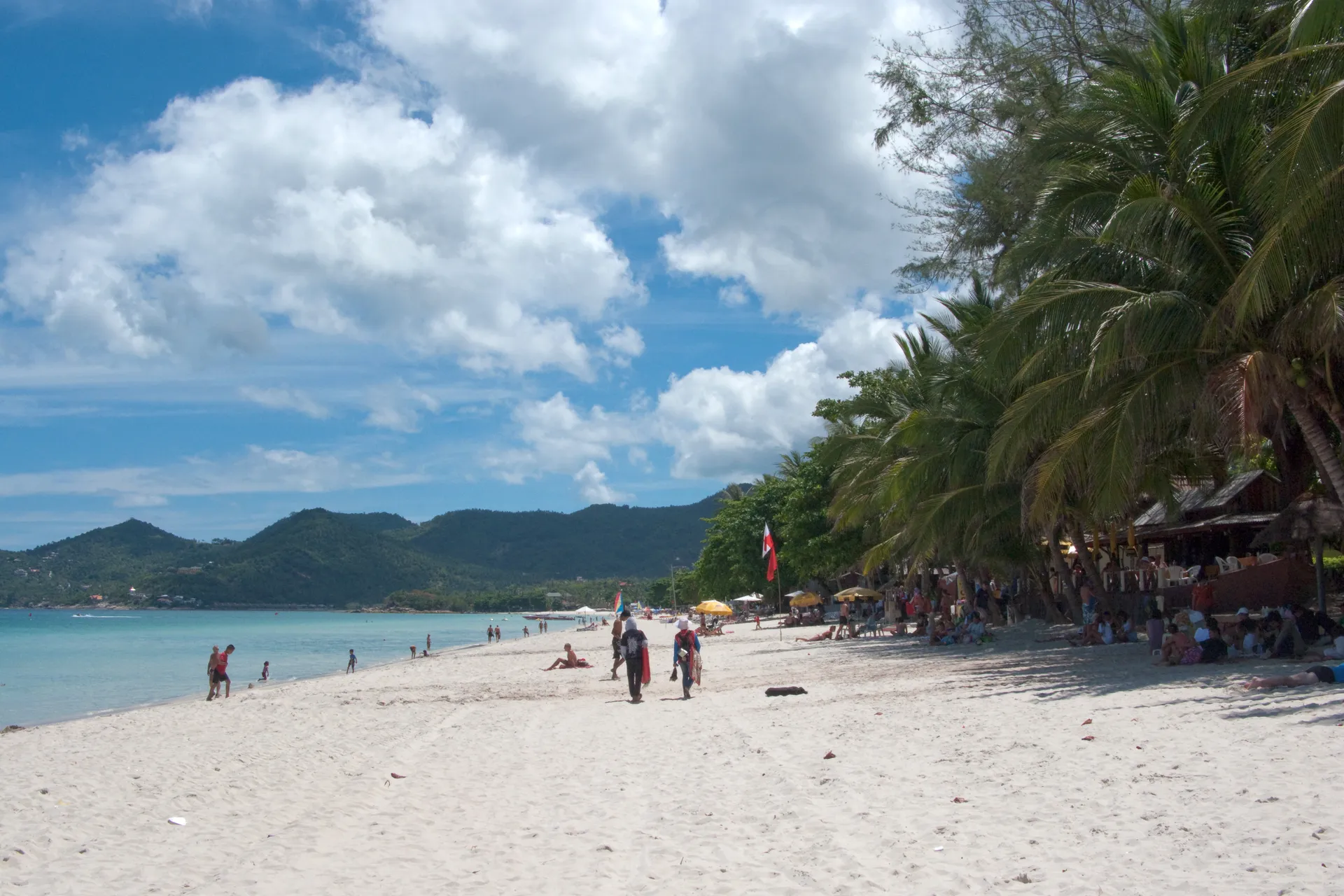
On the west, Phuket is the largest island and a real town in its own right, at around $2,400, with Krabi and its limestone cliffs close by and Koh Lanta as the slower, family-friendly option. Across the peninsula, Koh Samui has the villas and an airport, while neighbouring Koh Phangan has built a surprisingly large community of remote workers and yoga teachers behind its Full Moon reputation. Koh Tao is for divers. Hua Hin, on the mainland coast within reach of Bangkok, is the steady, comfortable choice, popular with retirees.
Visas and practical details
The Destination Thailand Visa, introduced in 2024, gave ordinary remote workers a proper route, and it tests savings rather than monthly income. The rules for applying have since been tightened, and the current ones are below. English is common wherever visitors go and rare beyond that, though daily life is easy to manage with a translation app. Learn to ride a scooter carefully or not at all: the roads are among the most dangerous in the world, and many travel insurance policies will not pay out if you ride without the right licence.
By Yannick Schroth. Updated November 2026.