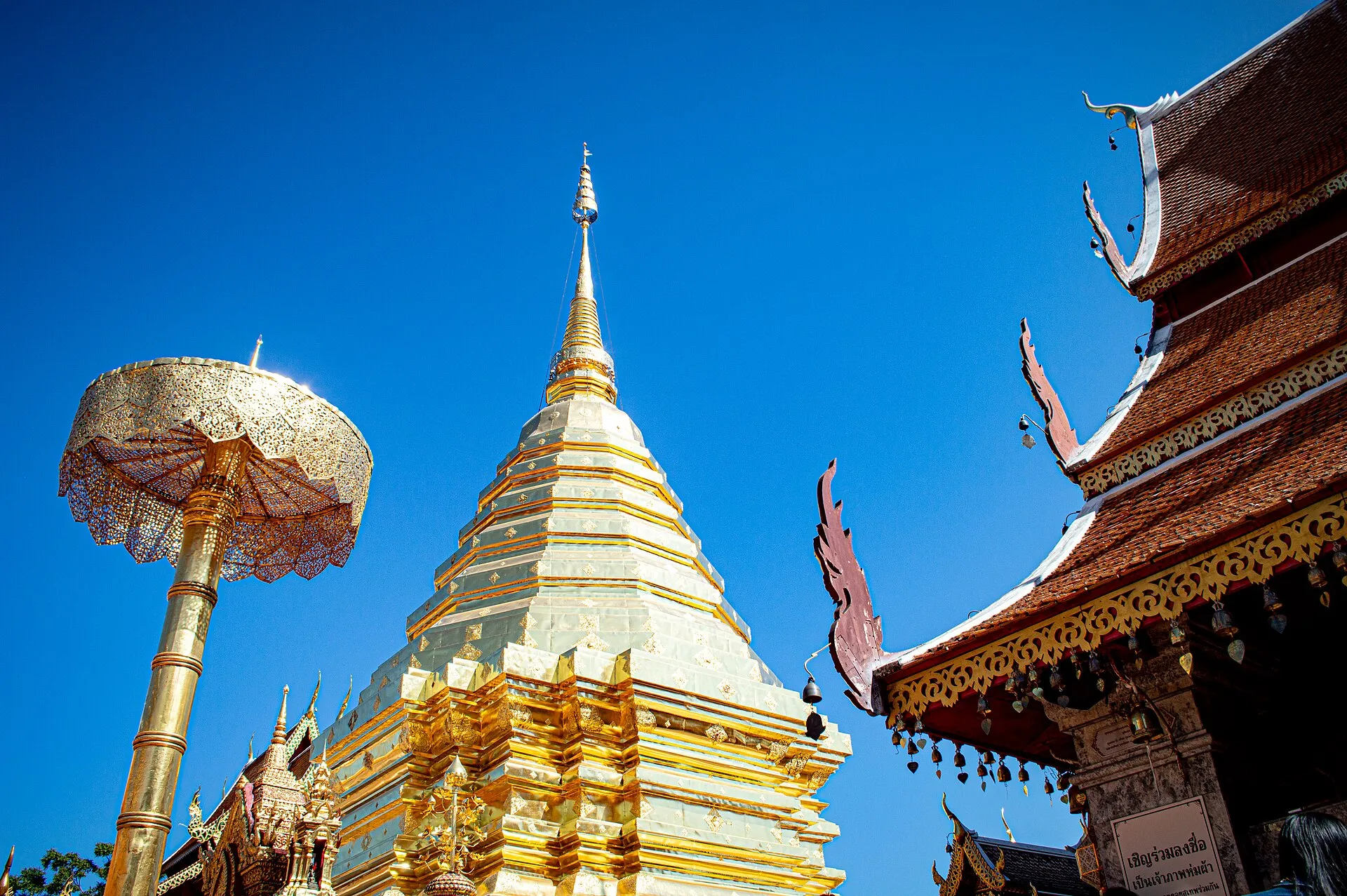
 Chiang Mai
Mai means new. Chiang Mai, with its old brick gates and its reputation as the place everyone already knows, is literally New City, and the town people now flee to when it feels overexposed is the old one. King Mangrai founded Chiang Rai in 1262 as his capital. He moved south, built at Wiang Kum Kam on the Ping River in 1294, was flooded out, and began again at the foot of Doi Suthep in 1296. The name stuck, and so did the importance. Seven centuries on, the new city has about 1.2 million people in its urban area, and the old one has about 70,000.
What "new" gets you today
The word still fits better than it should. Chiang Mai is where the north's modern life landed: Nimman's specialty coffee, coworking spaces along its sois, night markets of every sort, red songthaews at $1 or so a ride, an airport three kilometres from your flat with direct flights to Seoul, Taipei, Singapore, Kuala Lumpur and Hanoi. Almost anything a foreigner might need already exists, in English, usually with reviews. You can arrive on Tuesday and have friends by Saturday.
Against that, Chiang Rai's airport moved almost two million passengers in 2025, and only about 7,000 of them were international. You will fly through Bangkok. You will also need more Thai, or some kham mueang, the northern speech that its speakers call city language, because English runs out quickly here.
What "old" gets you
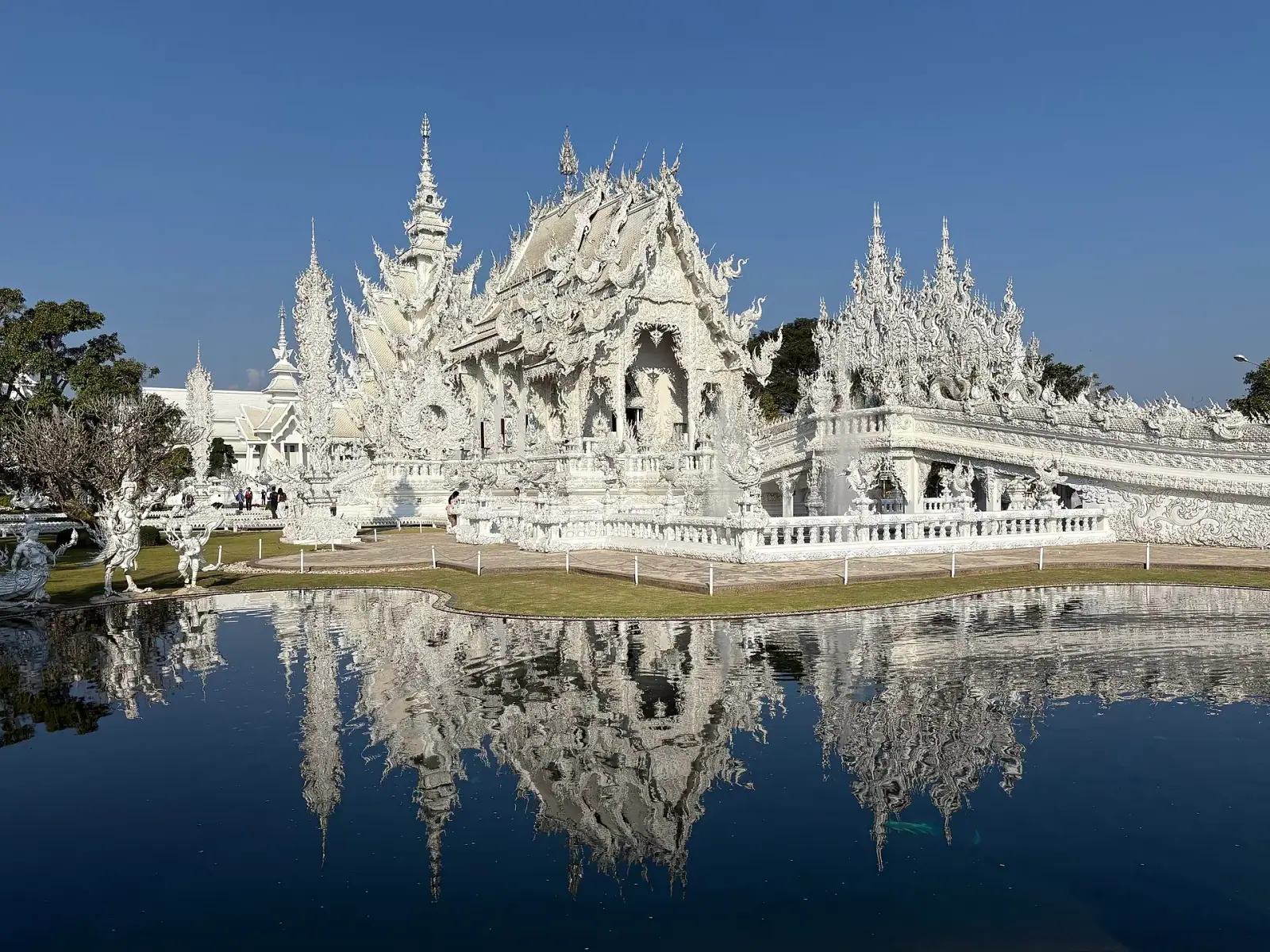
You would expect the old capital to feel like a museum. Oddly, the most surprising thing in town is contemporary. Chiang Rai makes art on an unusual scale. Chalermchai Kositpipat, a local, began rebuilding Wat Rong Khun in the late 1990s out of his own pocket, and the white temple with its bridge over hundreds of reaching hands is not expected to be finished until 2070. Thawan Duchanee filled nearly forty black houses at Baan Dam, ten kilometres north, with bones, horns and skins. UNESCO lists the place as a City of Design.
A normal week is much smaller than that. You could walk from your room to the clock tower and the Night Bazaar, where the food court has music or dance most evenings, then spend Saturday from six on the four blocks of Thanalai Road's walking street. Coworking means a couple of cafés and a handful of proper spaces. We estimate a month at about $1,300, against about $1,600 in Chiang Mai, and the quiet comes with the saving. The two towns are 3 hours 20 minutes apart on the Greenbus, for about $9, so nothing here is final.
The Kok River
The romantic choice is a guesthouse on the Kok, and we would look carefully first. In September 2024 the floods that followed Typhoon Yagi were described as the worst in the province in 50 years, killing at least 36 people there, against six in Chiang Mai's province. Since then, the river has had a slower problem. Researchers link heavy metals in the Kok to unregulated mining upstream in Myanmar. Sediment sampled in July 2026 at bridges through the city itself showed arsenic above the safe level, with one point near Chalerm Phra Kiat Bridge above the severe-hazard line. Provincial officials advise using treated tap water instead of river water, and say there is no immediate risk. For a tenant, this means no swimming and no river fish, and a flat on higher ground.
What the north shares, it shares fully. Moving up the road will not rescue you from the burning season, which is about as bad in one as the other from late February through April. We explain how to plan around it in Chiang Mai and Bangkok. The monsoon is no kinder either: Chiang Rai's August brings far more rain than Chiang Mai's.
The old city will have something new of its own before long. A railway to Chiang Rai, the first it has ever had, is due in 2028, and that may be the moment its prices and its quiet start to change. For now, spend your first months in the new city. Learn enough of the language to order lunch. Then get on a Saturday bus north and find out whether the old one was what you were looking for all along.
 United States
 United Kingdom
 Germany
 Canada
 Australia
 India