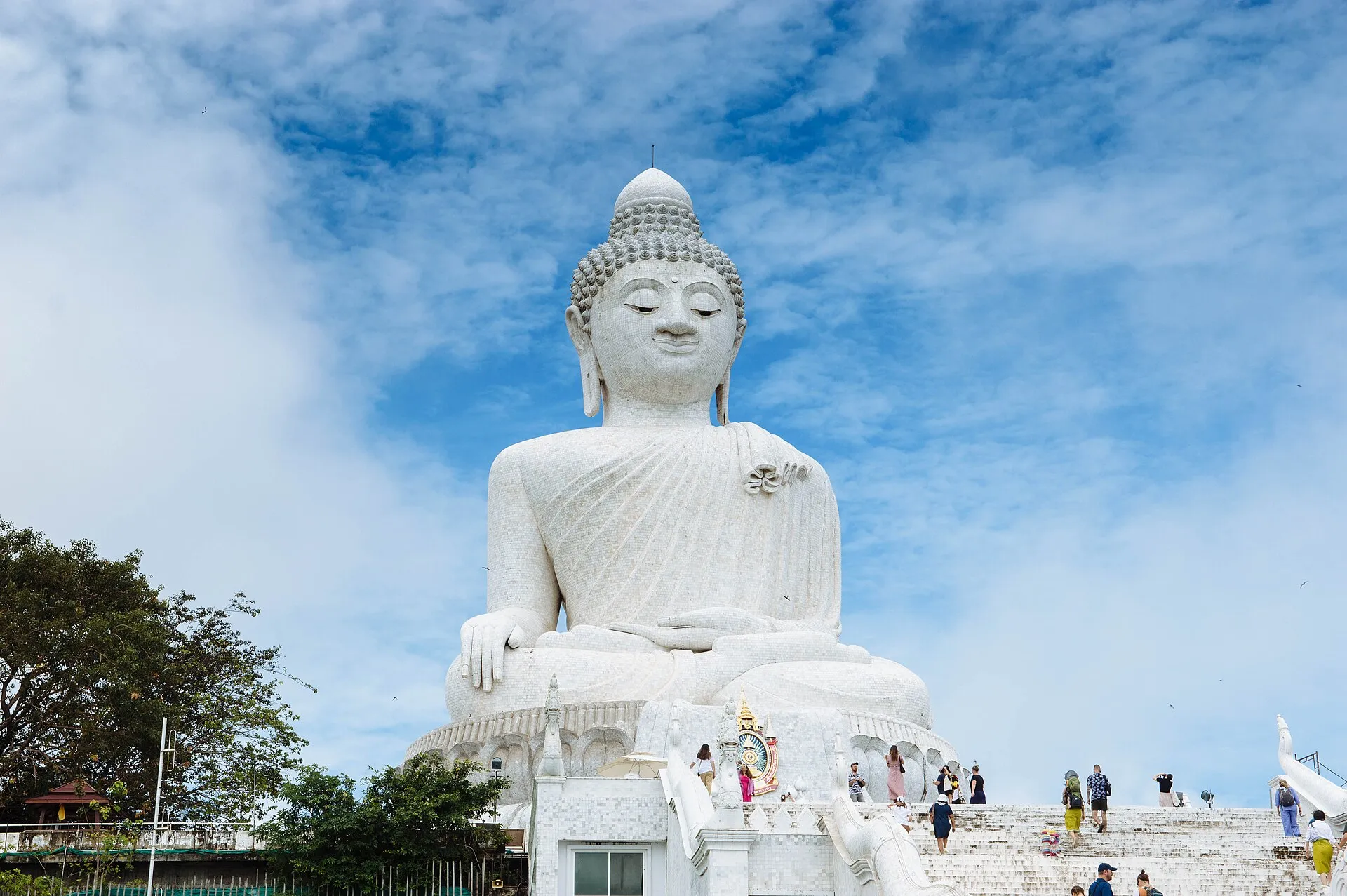

 Phuket
At the start of July 2024, Phuket had just taken about 330 millimetres of rain in a week, and pumps were going into its canals. At the same moment, Koh Samui's main reservoir was down to 10 percent, and a food vendor at Lamai was paying around $140 a month for private water deliveries. The two islands are a few hours apart across the Thai peninsula. Water is the most useful way to tell them apart, and it does not work the way the brochures say.
The rain calendar
The usual advice is that their seasons run opposite, so you can follow the sun. That is half true. Phuket faces the Andaman Sea and is wet for eight months of the year, peaking in September at about 350 millimetres. Koh Samui sits in the Gulf and gets most of its rain from mid-October to early December, with November well over 300 millimetres. Over a full year they are not far apart, at around 2,200 and 1,960 millimetres.
| Phuket | Koh Samui | |
|---|---|---|
| January to March | Dry | Dry |
| June to September | Wet, worst in September | Drier, showers often brief |
| Mid-October to early December | Still wet into November | Wettest of the year |
So both islands are at their best at the same time, and Samui's advantage is the European summer. That is exactly when the second problem appears.
The taps on Samui
Samui is a small island of about 229 square kilometres with some 70,000 registered residents, more than 200,000 people there for work, and millions of visitors a year. On 27 July 2026, after a long dry spell, tap water began to fail. Reservoirs were largely empty, and the undersea pipeline from the mainland was delivering about 16,000 cubic metres a day against demand of about 34,000. Rationing by zone began on 3 August, with tanker trucks bringing in water for the hotels and businesses that could pay. Two years apart, the same story.
The detail to keep in mind is that higher ground was hit hardest. The hillside villa with the view, the one in the listing photos, is likely to be among the first to run dry. Down on the flat at the Fisherman's Village or Maenam you should be better placed, and a building with its own big tank better still.
The floods on Phuket
Phuket's trouble is the opposite, and easier to plan around. A wet-season cloudburst can flood low roads, particularly where canals are blocked with debris, so a ground-floor flat by a canal is the one to avoid. Long-term foreigners tend to settle around Rawai, Nai Harn and Chalong in the south, where you could join Grind Time for about $120 a month and have seafood from the market for dinner. Phuket is not free of water problems either: one of its MPs was calling for urgent action on shortages in October 2025. But the island is more than twice Samui's size and it has a bridge, the Sarasin, to the mainland.
Leaving
That bridge points to the wider difference. Phuket's airport handled about 17.5 million passengers in 2025, with some 79 international destinations on its boards. Samui's small airport was built and is owned by Bangkok Airways, with the ferries to Don Sak as the alternative. Should you need to fly every few weeks, this alone settles it.
Our call
On our estimate you will spend about $2,400 a month in Phuket and about $2,200 on Samui. We would pay the difference for anything longer than a few months, because you can plan around rain and you cannot plan around a dry tap in a town you cannot easily leave. For January to April alone, with the Friday walking street in Bophut and a quieter coast, we would go to Samui without hesitation. Our Thailand guide covers the visa, which is the same for both.
Before you sign for a place on Samui, ask the landlord one thing. Where did the water come from last August?
 United States
 United Kingdom
 Germany
 Canada
 Australia
 India