
 Chiang Mai
Draw a line from one to the other and you cross almost 1,200 kilometres of Thailand, from forested hills near the Burmese border down to limestone towers in the Andaman Sea. Thai AirAsia is the only carrier we could find flying it direct, at about two hours. Take away that one route and these are not really alternatives at all, as the only other way between them shows.
The way by land
From Chiang Mai you board a sleeper to Bangkok, 12 hours 35 minutes on the best train. Next comes the southern line as far as Surat Thani, some 635 kilometres further, since Krabi has no railway station of its own. Finally, a bus or minivan takes another two to two and a half hours across to the coast. That is at least two days of your life and a night in between, and hardly anyone with a laptop does it twice. So this choice turns on the plane, and how often you would use it.
Getting around once you land
The two places also differ most in the small journeys. Chiang Mai's airport sits three kilometres from Nimman. After that you have Grab, or a red songthaew at a dollar or so, and in Nimman a working day can run on foot between a flat, a coworking desk and a bowl of khao soi. Many long-stayers add a motorbike.
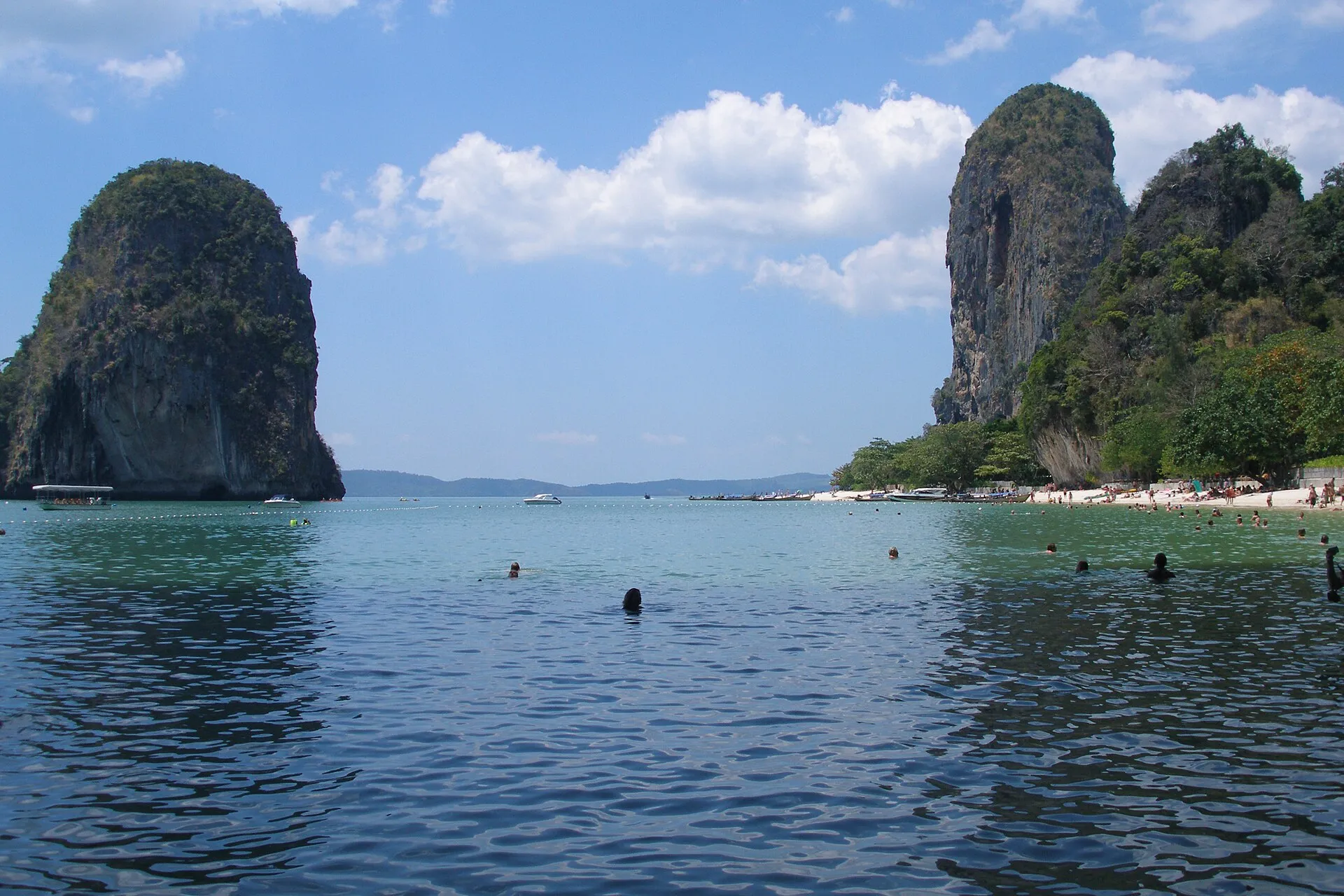
Krabi runs on boats and distance. Krabi Town and Ao Nang are 18 kilometres apart, joined by white songthaews at about $2, which thin out in the evening and stop at around ten. Ao Nang is where the longtails wait on the sand. A boat to Railay, cut off from the mainland by its own cliffs, takes ten minutes and costs about $3, but it will not leave until eight people want to go, and you wade out through the surf to board it. From June to October, the monsoon may cancel it altogether. That rhythm is charming on a Saturday. It is less charming when your client moves a call to four o'clock and you are on the wrong side of the headland, so we would never live on Railay itself, however good the climbing.
A rented scooter at $6 to $10 a day solves much of the mainland problem. Ao Nang's one-bedrooms run $450 to $745, and those in Krabi Town, which has the night market by the pier and few tourists, $240 to $450. It is a surprise to many that the beach ends up dearer overall: our estimate is about $1,700 a month in Krabi and about $1,600 in Chiang Mai, partly because everything is a paid ride from somewhere else.
Why the flight matters more than either city
Each place has a bad stretch of the year, and the two do not overlap. Chiang Mai is at its loveliest from November to January, with nights down to 16°C, and then the smoke arrives, staying through March and into April. Krabi is at its best from about December to March, with calm seas, before a wet season peaking at about 371 mm in September, when very few restaurants stay open in town and the boats become unreliable. Read the two calendars together and they point to the same two-stop year we would recommend: the cool months in the north with your community around you, then that two-hour flight in late January or February, to wait out the smoke beside the Andaman. Thailand's visa rules are national, so nothing about the move needs new paperwork.
Should you need a single address all year, take Chiang Mai, with its scene and its easy streets, and buy a good air purifier. And book that AirAsia seat early for the first week of February, because you will not be the only one who has read a pollution map.
 United States
 United Kingdom
 Germany
 Canada
 Australia
 India