 Chiang Mai
The city everyone calls overwhelming is the easy one to live in, and the city everyone calls easy will ask you to buy a helmet.
Chiang Mai proper is tiny: about 127,000 people on 40 square kilometres, around a moated square roughly a mile across. In August 2025 the municipality released ten geese into that moat to eat the algae, and staff ended up chasing them off the road. It is that sort of place. You can cross the old town on foot, and on Sunday evenings Rachadamnoen Road closes to traffic for a kilometre of market stalls. But the city you actually live in sprawls well beyond the moat, a light rail line has stayed on paper for years, and getting around means Grab, the red songthaew trucks you flag down and bargain with, or, for most long-stayers, a motorbike. Nimman is walkable. Your flat in Santitham or Hang Dong, your gym and your favourite khao soi may not be.
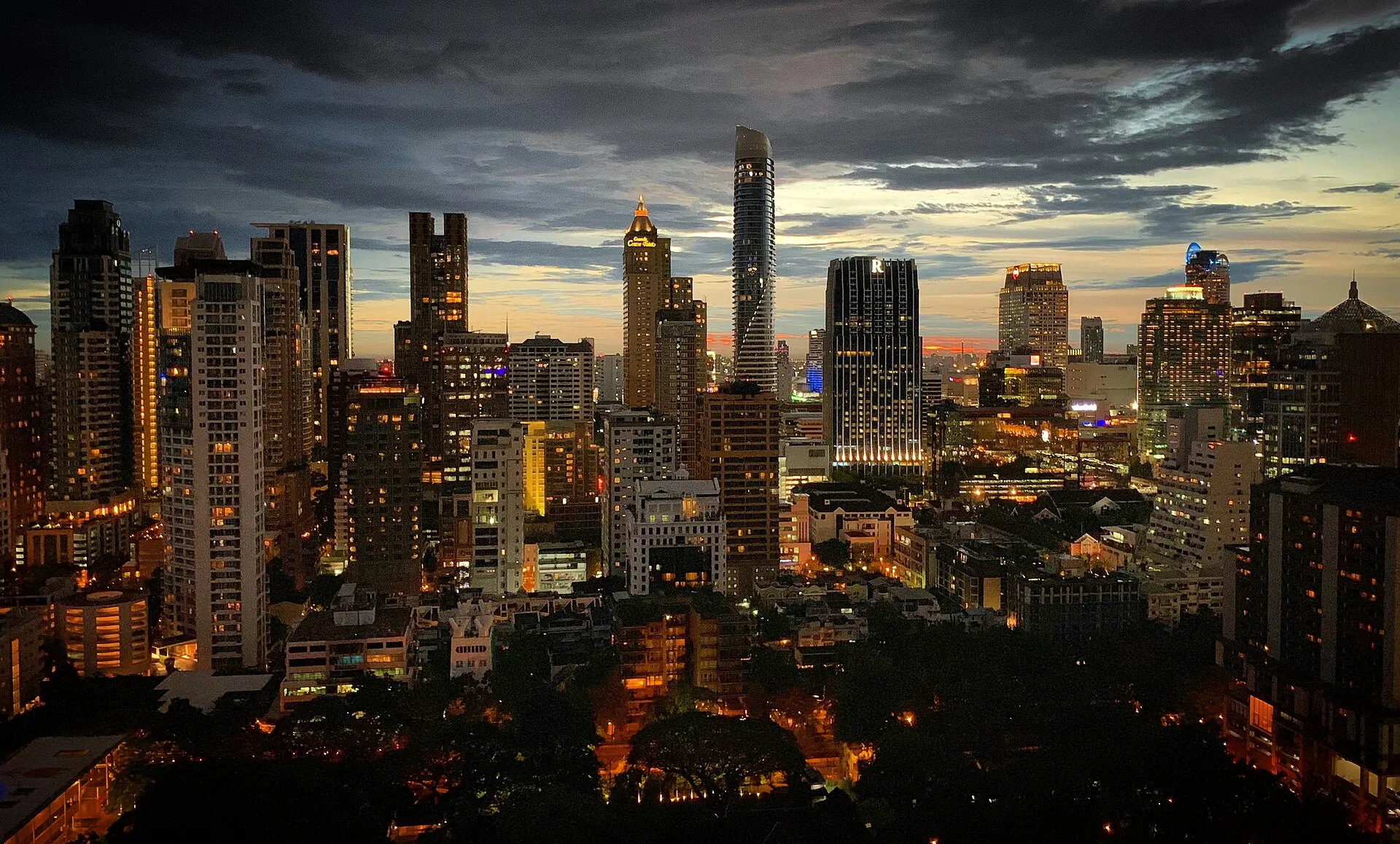
Bangkok has about nine million people and roads carrying several times the vehicles they were built for. It should be impossible. Yet if you rent within a few minutes of a station around Ari, Thonglor or On Nut, you can run your entire life on the BTS and MRT, some 170 stations between them, without ever learning to ride anything. When the train does not reach, there is a man in a numbered vest at the end of your soi with a motorbike, or the Saen Saep canal boat, which still carries over 50,000 people a day past the backs of houses. The biggest city in the country asks the least of you.
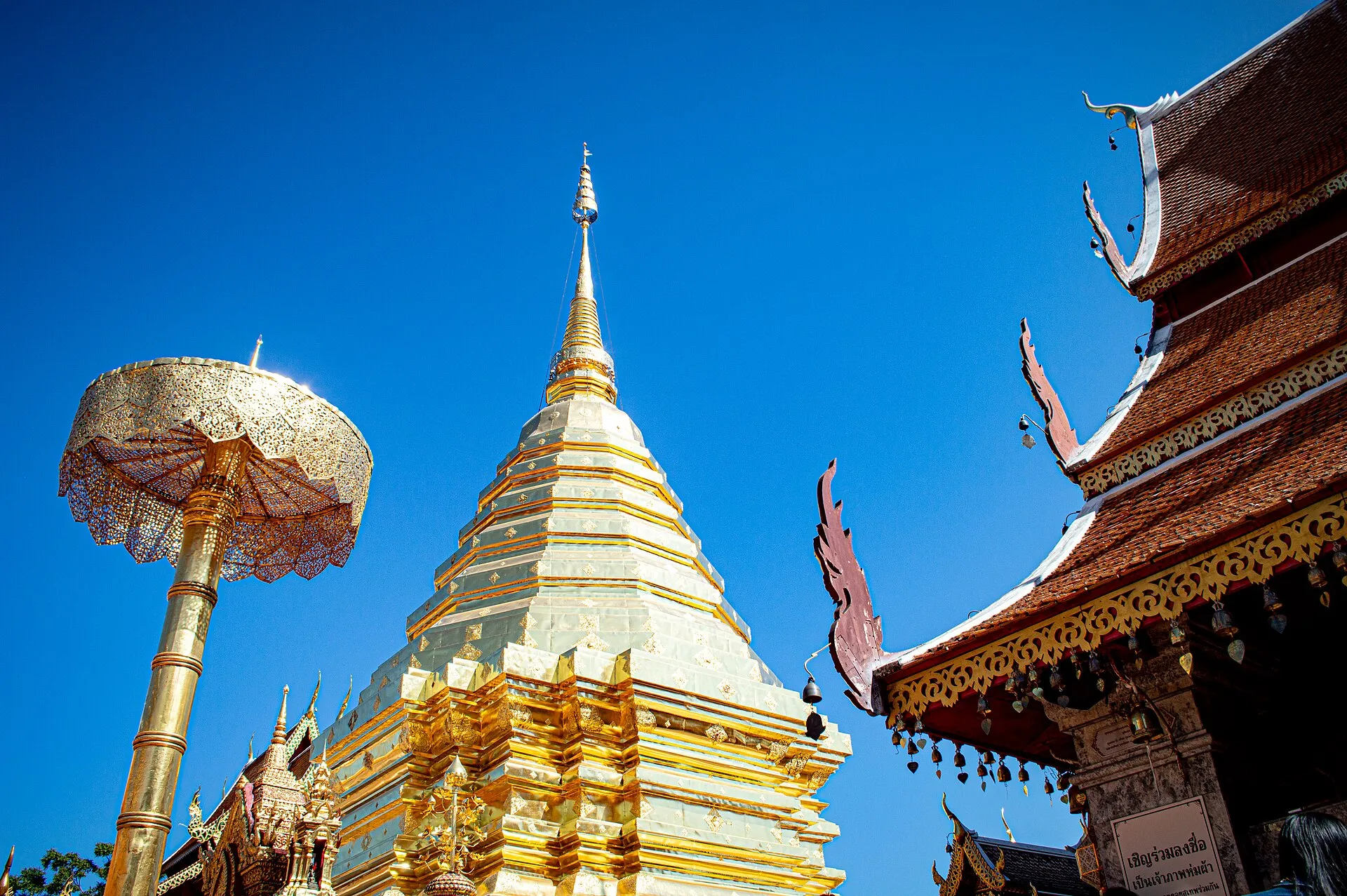
Green space flips the picture again, and so does the air. Doi Suthep-Pui National Park begins at Chiang Mai's western edge, so you can leave work and be on a forest road up to the temple at 1,073 metres before sunset. Bangkok has about 3.3 square metres of park for each resident, against an Asian city average of 39, so you make do with the monitor lizards of Lumphini or a boat across the river to Bang Kachao. And yet the mountain town is the one with the worse lungs. Fields and forests burn across the north, the smoke gets trapped against the mountains, and February and March are the worst of a bad season. Bangkok has dirty weeks of its own in January and February, but it rarely reaches that level.
Where to be in each season
| Months | Chiang Mai | Bangkok |
|---|---|---|
| November to January | Highs near 30°C, nights as cool as 16°C, and Yi Peng's paper lanterns. The best place to be in Thailand. | Its coolest spell, and still 23°C at night. |
| February to April | Smoke, then 37°C in April. Leave if you can. | Hot and sticky, but the air is usually kinder. |
| May to October | Green, wet and much quieter, with cleaner air. | Hard monsoon downpours, peaking around September. |
What the saving is worth
We estimate a month at $1,600 in Chiang Mai and $2,200 in Bangkok. That is $7,200 a year on paper. But if you hold a flat in Chiang Mai while you sit out two or three smoky months elsewhere, you are paying twice for that stretch, and a good part of the saving goes with it. If you stay through the smoke instead, you are saving money by breathing something you would pay to avoid.
The visa rules are the same in both, as our Thailand guide explains, and the journey between them is short: an hour and a quarter by plane, on one of about 50 daily flights, or a 12 to 15 hour night on the sleeper train.
So take the year in two parts if your life allows it: the cool months in the north with no lease beyond January, then Bangkok from February. If you must pick one address for twelve months, pick Bangkok, however much that surprises you. The charm of Chiang Mai is real, and it is best enjoyed by people who can leave.
 United States
 United Kingdom
 Germany
 Canada
 Australia
 India