Cost of Living in Rome
Real market data
Source: Numbeo · August 2026
$2,010/moSolo nomad1-bed centre + living costs
$2,630/moCoupleshared 1-bed + costs
$1,680/moLean / localcheaper area + costs
- 1-bed rent, city centre$1,240€1,080
- 1-bed rent, outside centre$910€790
- Monthly costs excl. rent (1 person)$770€669
- Meal, inexpensive restaurant$17€15
- Monthly transit pass$40€35
- Buy price, per m² (centre)$8,600€7,469
Prices are from Numbeo (August 2026), converted to USD at $1 = €0.87 (01 Aug 2026). The monthly living-costs figure is our transparent one-person basket, groceries, a few meals out, utilities, phone, internet, transport and essentials, priced from those figures. Solo adds central rent; couple and lean are estimates from the same numbers.
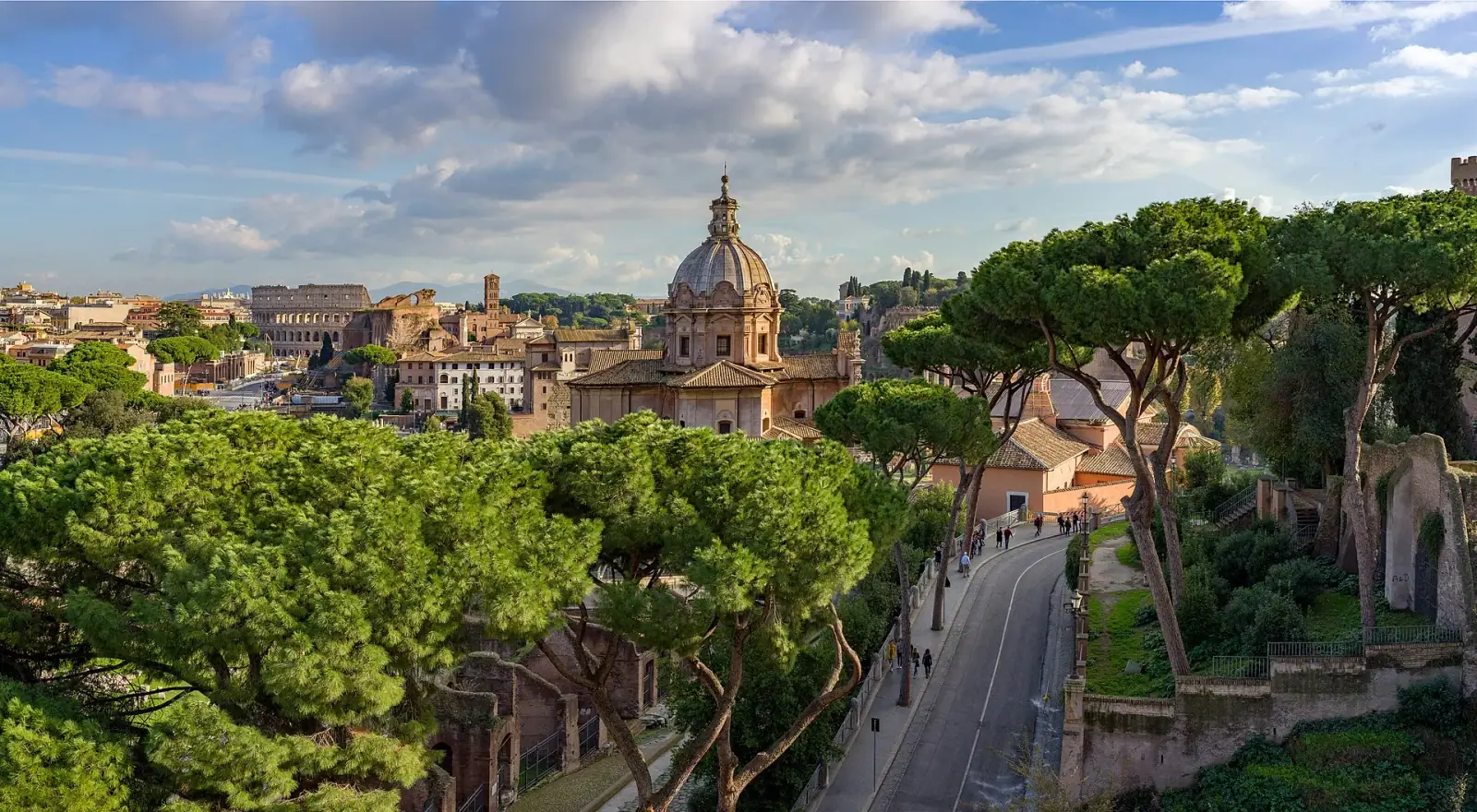
Rome is one of the more expensive cities in southern Europe, though it remains cheaper than London or Paris. Rent is the biggest variable. A one-bedroom apartment in central neighborhoods like Monti, Trastevere, or Prati runs $1,380-1,960 per month (roughly USD 1,300-1,850). In outer neighborhoods like Pigneto, Ostiense, or Garbatella you can find the same space for $920-1,270 (USD 870-1,200), still with good metro or tram access.
Groceries at a local supermarket (Carrefour, Conad, Esselunga) cost around $230-320 per month if you cook regularly. Eating out at a neighborhood trattoria runs $14-23 per person for a full lunch; dinner at a sit-down place is closer to $29-46. Street food and pizza al taglio keep costs lower on the days you don't cook.
A coworking hot-desk membership lands between $150-345 per month depending on the space and hours. Local public transport (metro, bus, tram) costs $40-44 per month for an unlimited pass. Utilities for a typical apartment add $115-175, and a local SIM with data runs around $12-17 per month.
A realistic all-in monthly budget: $2,070-2,880 living solo in a reasonable apartment with coworking access and a mix of cooking and eating out.
Where to Work
Rome has a solid coworking scene, particularly in the Ostiense district. Talent Garden Ostiense is the largest hub, with 5,000 square meters, fast fiber internet, event spaces, and a community of 500-plus members including startups and freelancers. Day passes run around $23; monthly flex plans start at $150. Coaster Coworking, near the Colosseum, is a smaller, well-reviewed space with reliable connections and views of the Lateran basilica. Impact Hub Roma, also in the Ostiense area, blends coworking with social innovation events and flexible plans from $140 per month for 10 days.
Cafe culture in Rome is genuine but not built for laptop marathons. Italians take espresso standing at the bar, and most traditional cafes expect a quick turnover. A few places do tolerate laptops: Faro Specialty Coffee on Via Piave is one of the better known spots, open weekday mornings until 3pm, with decent WiFi and a quieter atmosphere. Caffè Letterario in Ostiense formally offers coworking and WiFi alongside its bookshop and event space. For serious calls or long work sessions, lean on coworking spaces rather than cafes.
WiFi in apartments can be fast (fiber is widely available) but getting a local provider set up on a short lease takes effort. Some furnished rentals include it; confirm before you book.
Getting Around
Rome's historic center is walkable if you are comfortable with cobblestones and hills. Many nomads base themselves in areas like Monti, Trastevere, or Prati and walk to most daily errands. Beyond the center, the metro is limited to two main lines (A and B) that intersect at Termini station. Trams and buses cover a wider network but traffic and unreliable schedules make them frustrating. A monthly transport pass costs around $40-44 and covers all public transit.
Cycling is picking up with more bike lanes added in recent years, though you need patience navigating traffic and parked scooters. Ride-hailing (Free Now, Uber Black) works but costs more than standard taxi.
For the airport, Rome has two. Fiumicino (FCO) is the main international airport, roughly 30 kilometers from the city center. The Leonardo Express train runs direct to Termini in 32 minutes and costs $16; regional trains are cheaper at $9-10 but take a few minutes longer. Ciampino (CIA) is smaller and mostly used by budget carriers; shuttle buses to Termini take 35-45 minutes depending on traffic.
Sorting transport? Book an airport transfer, or compare car rental on Auto Europe and QEEQ.
Visas and Staying Long-Term
If you hold a US, Canadian, UK, Australian, or New Zealand passport, you can enter Italy visa-free for up to 90 days within any 180-day window under standard Schengen rules. This does not reset by leaving and re-entering; the 90-day counter follows your passport across all Schengen countries.
Italy launched a formal Digital Nomad Visa in 2024, which is active in 2025 and 2026. It allows non-EU remote workers to live in Italy for 12 months, renewable indefinitely. Key requirements include proof of remote income of at least $28,540 per year, a work contract or client agreement with entities outside Italy, health insurance covering at least $34,530, and at least six months of professional experience in your field. Italy sets that floor at three times the income below which residents are exempt from health charges. You apply through an Italian consulate in your home country before arrival. Fiumicino is where that follow-the-passport rule now has teeth: the Entry/Exit System registers a non-EU arrival there and reads the same record at the exit desk, so even a single day over the limit is flagged by the machine, and an overstayer's file is kept for five years instead of the usual three.
Best Time to Visit
The best windows for remote work in Rome are April to mid-June and mid-September to November. Spring brings mild temperatures around 18-22C (64-72F), manageable crowds, and long daylight hours. Autumn offers similar comfort with fewer tourists than spring and a warm, golden feel to the city.
Avoid July and August if you care about productivity. Temperatures regularly hit 35-38C (95-100F), air conditioning in older buildings is inconsistent, many local cafes and restaurants close for August, and tourist crowds peak. It is genuinely uncomfortable and the city feels half-empty of Romans.
Winter (December to February) is mild by northern European standards, around 8-12C (46-54F), but some days are rainy and grey. The city is quieter and cheaper, which some remote workers prefer. The Catholic Jubilee that filled Rome through 2025 closed on 6 January 2026, so visitor numbers are back to the usual pattern of a busy spring, summer and autumn.
Pros and Cons
- Extraordinary food culture, from quick pizza al taglio to sit-down Roman classics
- Rich history and beauty woven into everyday life, not just tourist zones
- Good flight connections across Europe and long-haul from Fiumicino
- Growing coworking scene, especially in the Ostiense district
- Warm, sociable atmosphere and a large expat and nomad community
- Visa pathway exists with the Digital Nomad Visa for stays beyond 90 days
- High summer heat makes outdoor time and productivity genuinely hard
- Bureaucracy is slow: banking, SIM cards, and housing contracts can test your patience
- Cafe culture does not default to laptop-friendly, unlike northern European cities
- Traffic and noise are real in central areas, and scooter chaos is constant
- Cost is higher than other southern European nomad destinations like Lisbon or Tbilisi
- Tourist crowds are intense in spring and autumn in the historic center
Who Rome Is Best For
Rome works best for nomads who genuinely want to live in a city rather than pass through it. If you value food, culture, history, and a place where everyday life has texture and depth, Rome rewards slow stays. It suits people on the Italy Digital Nomad Visa, those already holding EU residency, or those with passports that make multi-entry Schengen stays feasible. Remote workers in design, writing, media, or social innovation will find community through Talent Garden and Impact Hub.
Rome is a harder fit if you are strictly budget-focused, need constant reliable cafe WiFi, or want the streamlined expat infrastructure of somewhere like Lisbon or Barcelona. It is also demanding in high summer. If you run on tight deadlines and need zero friction in your workday setup, a smaller Italian city like Bologna or Catania may serve you better as a first Italy base.