 Rome
The line between them
Europe's first high-speed railway was built to join these two cities. The Direttissima opened in stages from 1977 and was finished in 1992, and today Frecciarossa and Italo trains cover it in about an hour and a half, with the fastest timetabled nearer an hour and twenty. Few Italian decisions are as easy to reverse. You can live in one and have lunch in the other, so the useful question is which city's other trains, trams and planes you would rather depend on.
Moving around at home
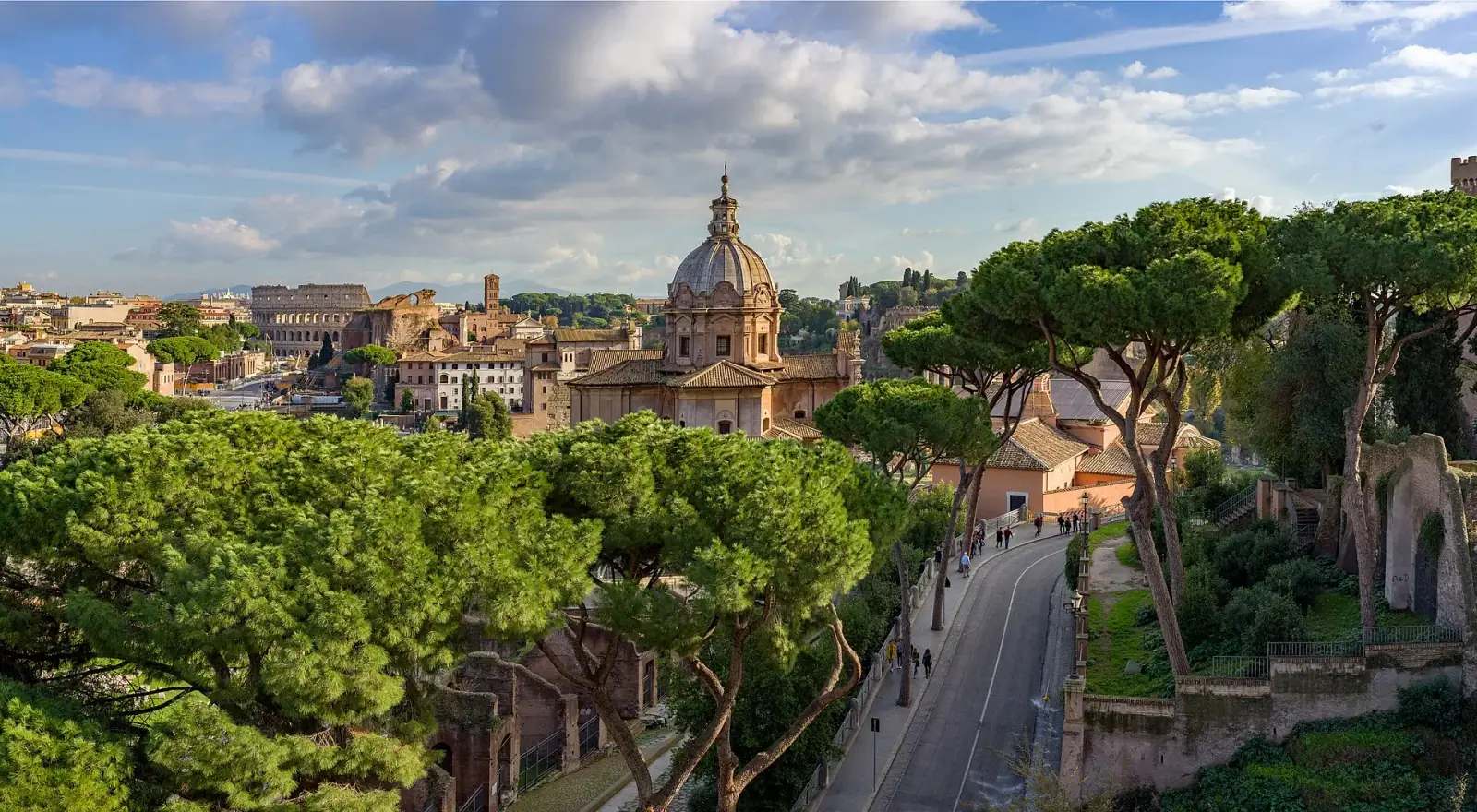
This is where Rome makes you pay. It has about 2.7 million people and a metro of three lines and 62 kilometres, because almost anywhere you dig, you find something. Tunnels can pass beneath the archaeology, but stairwells and ventilation shafts have to come up through it. Line C only reached the Colosseum in December 2025. Buses and trams fill in the rest, and traffic often undoes them. The way around this is to stay put: choose a district such as Testaccio, with its market and its hill made of ancient broken amphorae, or Monti behind the Forum, and treat the rest of the city as an outing.
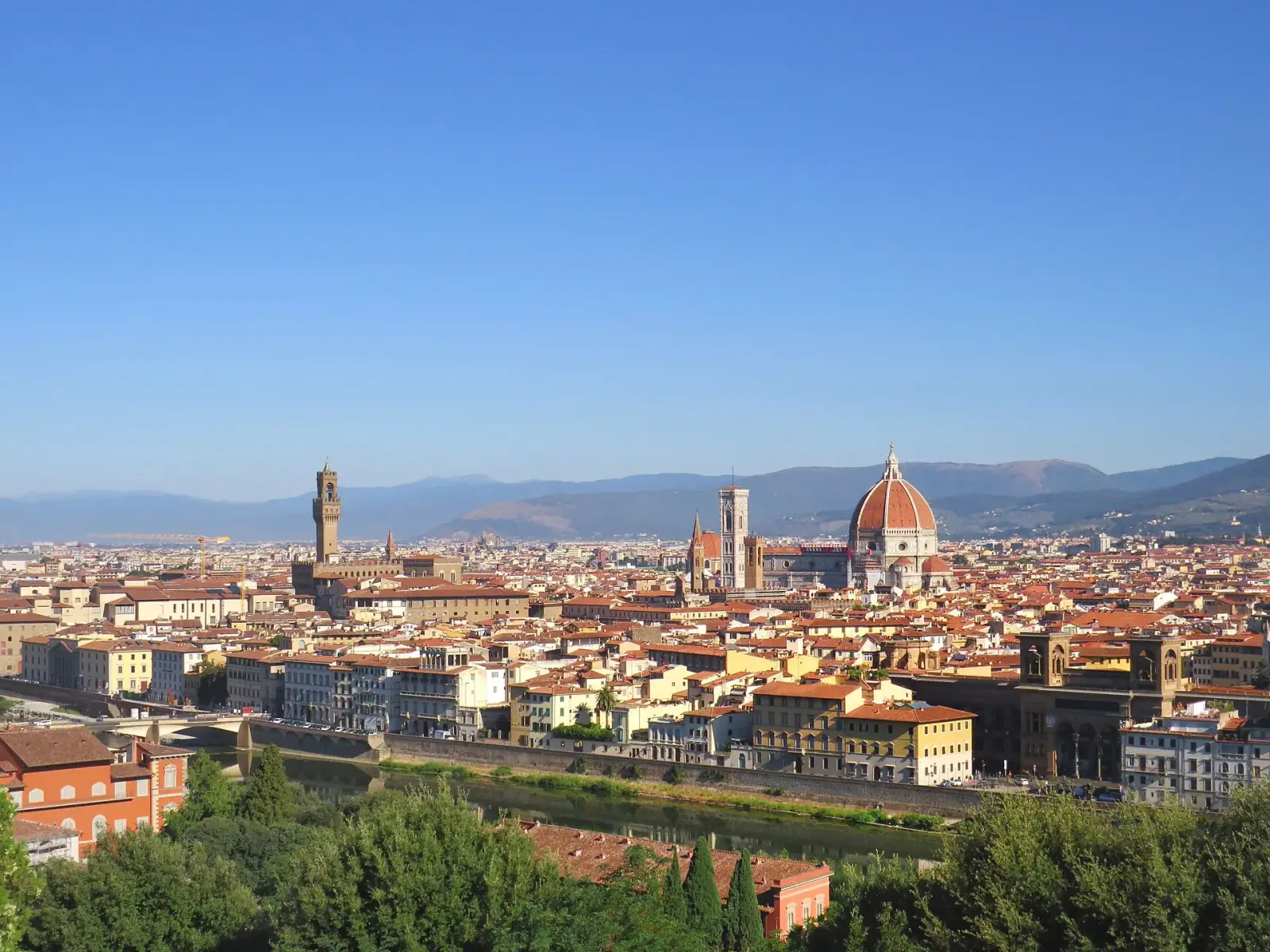
Florence, with about 360,000 people, barely asks the question. Almost everything inside the old walls is a 20 to 30 minute walk away, and two tram lines totalling about 19 kilometres take care of the suburbs. You could spend months in the Oltrarno, buying lunch near Piazza Santo Spirito, without using a ticket at all. That is the great pleasure of the place, and you would feel it on every errand.
Leaving Italy
Then you try to fly somewhere, and the positions reverse.
| Rome Fiumicino | Florence Peretola | |
|---|---|---|
| Passengers a year | Over 50 million | About 3.8 million |
| Range | Long-haul worldwide | European routes only, from a 1,560 metre runway |
| Into town | 32 minutes and $16 by Leonardo Express | About 20 minutes and $1.50 by T2 tram |
Peretola is delightful when it has the flight you want. For anything else, you are heading for Pisa or Rome. And here the railway does something most people miss: Frecciarossa trains run direct from Fiumicino's own station to Florence, so a flight home from another continent does not require a change at Termini, with its 32 platforms and 150 million passengers a year. Fiumicino effectively serves both cities.
What the train will not fix
Finding a home is the local problem, and Florence's is the more unusual. The city has banned new tourist lets in its historic centre, and in 2026 extended that to nine residential areas outside it, including Campo di Marte, Le Cure and Rifredi, which brings the total to over 100,000 homes. Existing lets may carry on, so flats will come back to the long-term market slowly, if at all. Our month works out at about $2,800 in Florence and about $3,000 in Rome, and that gap is too small to steer the decision. The visa is the same too: Italy's digital nomad visa asks about $2,380 a month in either place.
Summer does not separate them either. Both reach about 32°C in August, and Florence counts on 71 days above 30°C a year.
What separates them is size, and it works slowly. Florence is a city of millions of tourists and a few neighbourhoods you will know by heart by spring. Rome will still be showing you something new in year three, assuming you can stand getting there.
We would start in Florence, since its daily life is the one you cannot buy any other way, and use Rome as your airport and your long weekend. Then count your tickets. Should you find yourself on that train to Rome more than twice a month by spring, you are living at the wrong end of the line, and moving is about as easy as changing cities gets. Should neither end convince you, we also compare Florence with Bologna.
 United States
 United Kingdom
 Germany
 Canada
 Australia
 India