 Rome
Look only at the thermometer in August and you would call this pair a tie: average highs of 31.7°C in Rome and 31.0°C in Naples. It is the one month when that number tells you least, and when the two cities feel most unlike each other. Spend August in each, and you learn what each one is selling.
The first half of August
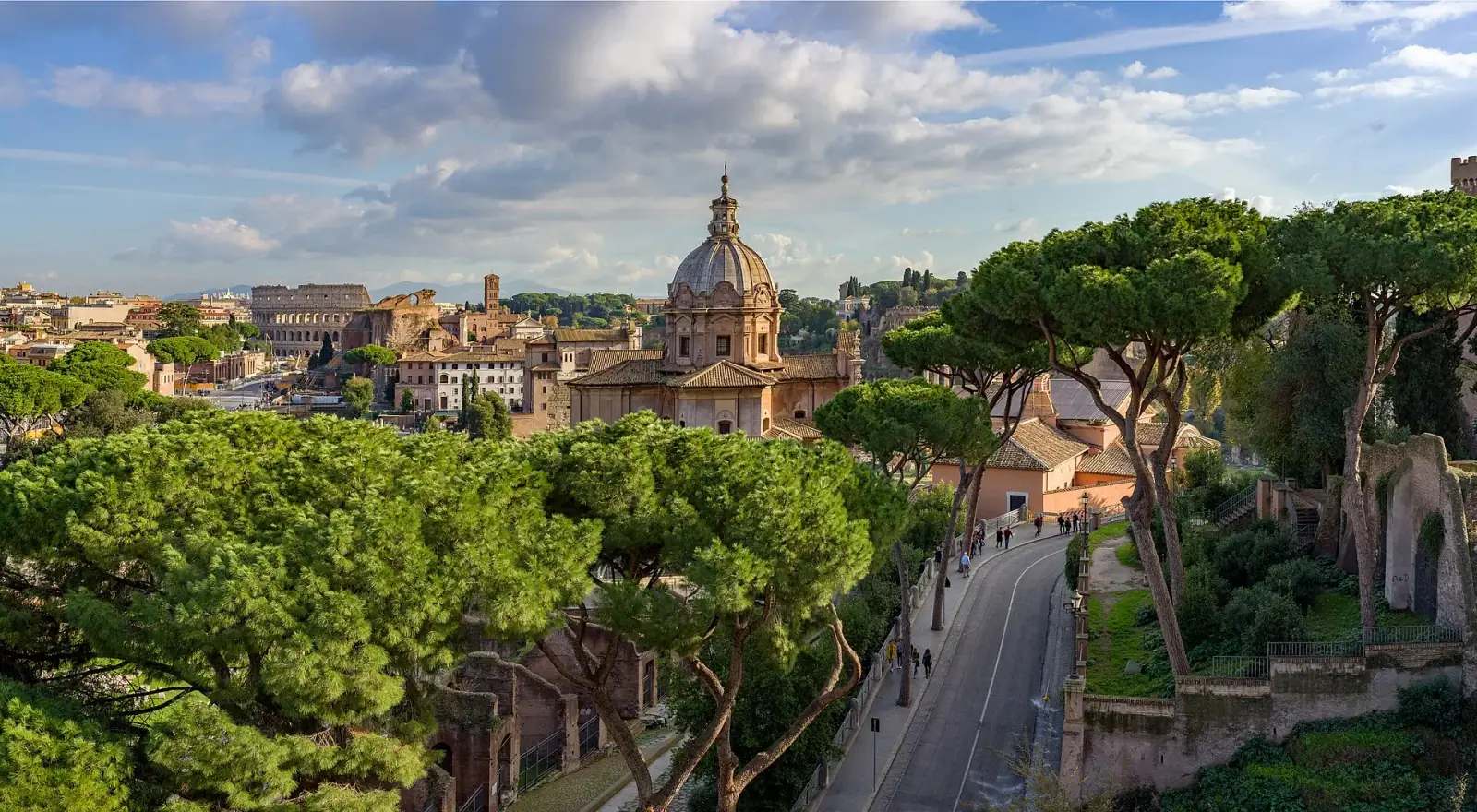
Italian companies commonly shut for about two weeks around Ferragosto, the holiday on the 15th, and in Rome you will feel it as a slow loss of services. Your barber is gone. The trattoria in Testaccio has a note on the shutter. The stone holds the heat, and the sea, 24 kilometres away from the centre, stays out of reach unless you make a plan to go.
The plan does exist. The Metromare train leaves Porta San Paolo, up to eight an hour with extra summer service, and reaches the end of the line at Ostia in about 37 minutes. It is a decent thing to do on a Saturday and hardly part of your day. The other way to see it is that August is the one month when Rome belongs to the few people left in it, and the walk through Monti at dusk has room in it for you.
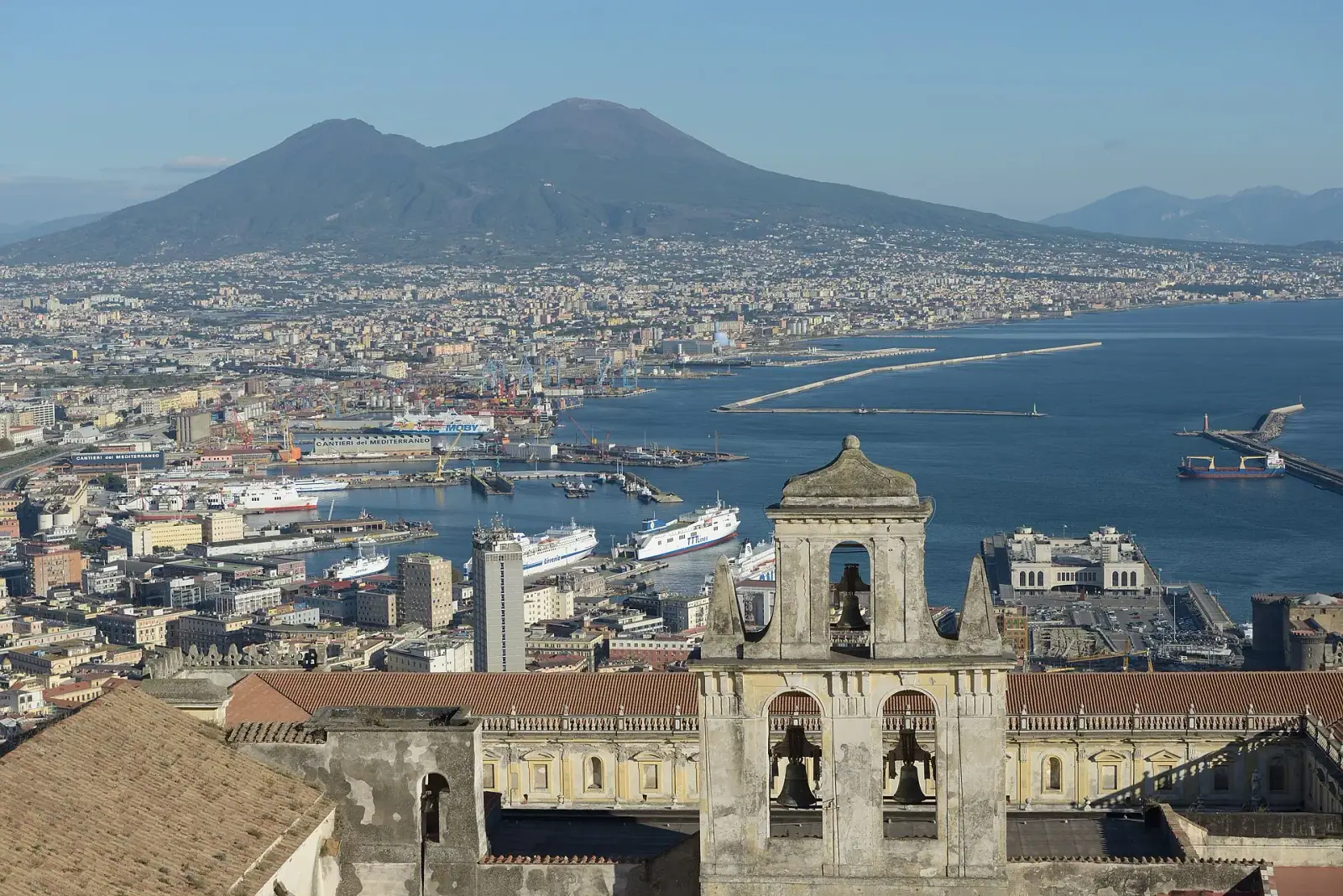
Naples in the same fortnight is a city with its feet in the water. Posillipo runs six kilometres along the western end of the bay, cliffs broken by small coves and harbours, with Marechiaro in one of them and at Gaiola a marine park where Roman villa foundations and fish ponds lie just under the surface. You could finish work at five and be swimming by six without leaving the city limits. Beyond that, ferries from the port reach the islands: Procida, where Il Postino was filmed, has just under 10,000 people on about four square kilometres.
What August shows you about each city
Naples is having its moment, with some 20 million visitors reported in 2025, and August is when you learn what a crowded bay feels like. You also get a reminder of what lies under it. On 31 July 2026 a magnitude 4.7 earthquake, the strongest in this run, struck the Campi Flegrei at about three kilometres deep, with outages and damage. The activity centres on Pozzuoli, and damage has been reported in Bagnoli and Fuorigrotta on the city's western edge, so we would look for a flat further east, in Chiaia or the old centre. That is a serious thing to live with, and it does not have an end date.
Rome's rail network has gaps of its own, but it is at least growing where it counts: Line C reached Colosseo in December 2025. In Naples the art stations are beautiful, Toledo above all, but Line 1 shuts at 11 p.m. on most nights, and Line 6 stops mid-afternoon at weekends. The extension to the airport is still being built.
Cost and the visa
Our estimate has a month at $3,000 in Rome and $2,300 in Naples. Italy's digital nomad visa, on our visa page, is the same in both and asks for about $2,380 a month. That Naples figure sits almost exactly at the bar, so the visa's minimum income will just about keep you there, and not in Rome.
A warning about November
You may fall for Naples in August, and many people should. Rome is the better choice for a working year, and Naples the better choice for a summer: for about 70 minutes on the train, you can test both. But do not sign a twelve-month lease on the strength of a swim at Gaiola. Naples is wetter than Rome, about 1,008 millimetres a year against 752, and November is the worst of it, with 152 millimetres falling on a city of steep streets and stairways. Come back that month and walk up to Vomero in the rain before you commit.
 United States
 United Kingdom
 Germany
 Canada
 Australia
 India