Cost of Living in Perugia
Real market data
Source: Numbeo · August 2026
$1,220/moSolo nomad1-bed centre + living costs
$1,790/moCoupleshared 1-bed + costs
$1,160/moLean / localcheaper area + costs
- 1-bed rent, city centre$500€433
- 1-bed rent, outside centre$440€383
- Monthly costs excl. rent (1 person)$720€625
- Meal, inexpensive restaurant$18€16
- Monthly transit pass$63€55
- Buy price, per m² (centre)$1,890€1,643
Prices are from Numbeo (August 2026), converted to USD at $1 = €0.87 (01 Aug 2026). The monthly living-costs figure is our transparent one-person basket, groceries, a few meals out, utilities, phone, internet, transport and essentials, priced from those figures. Solo adds central rent; couple and lean are estimates from the same numbers.
Perugia is one of central Italy's more affordable cities, and a budget of roughly $1,100 to $1,600 a month covers a comfortable, unflashy life here. Because it is a student town, rooms and small flats stay reasonable, and daily costs feel gentle compared with Rome or Florence. Fresh produce, Umbrian wine and long trattoria lunches rarely strain the wallet, while an aperitivo on Corso Vannucci remains a modest treat. The figures below are editorial estimates, not surveyed averages, and they vary with season, location and whether you rent alone or share with the many students in town. The market here is priced by the bed rather than by the flat, which is worth knowing before you start looking. A single room in a shared apartment is the standard unit, advertised on noticeboards and in local groups, and it comes furnished with bills either included or split; taking a whole flat costs more than the sum of its rooms because far fewer people want one. If you do want your own place, look in the lower town rather than inside the walls. Then there is winter warmth: a stone building on a hilltop in January is colder inside than the forecast implies.
- Studio or one-bed rent: roughly $550 to $850 a month, cheaper in a shared flat.
- Monthly groceries: around $250 to $350 for one person cooking at home.
- Coffee and a pastry at a bar: a couple of dollars, standing at the counter.
- Local bus or Minimetro fares: a few dollars a day, with monthly passes available.
Where to Work in Perugia
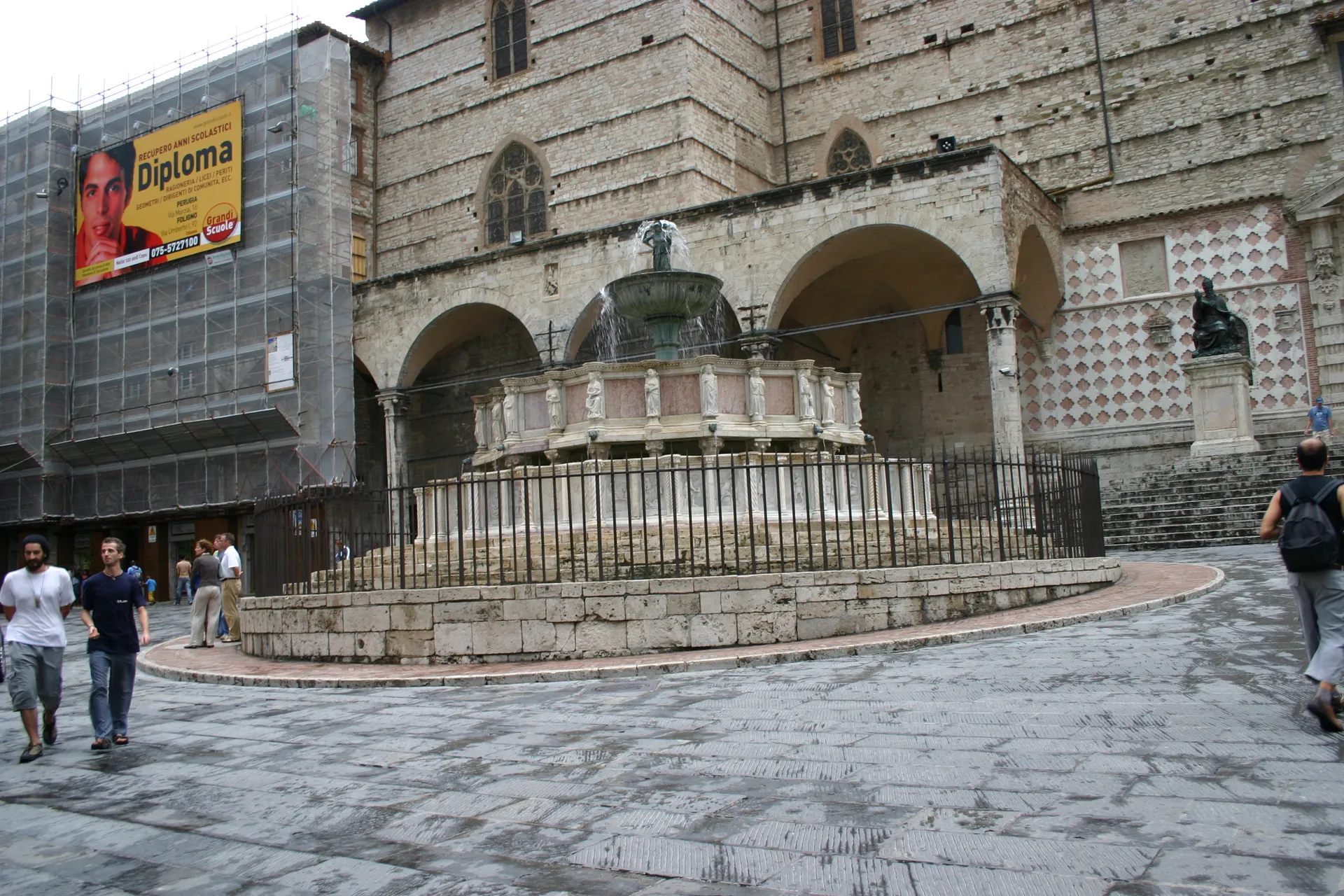
Perugia suits the quietly focused nomad rather than the coworking-obsessed. A handful of shared offices and study-friendly cafes sit around the Centro Storico and near the universities, where student demand keeps opening hours generous. The University for Foreigners crowd means you will find laptop-friendly bars serving strong espresso and reliable enough wifi for calls. Corso Vannucci and Piazza IV Novembre offer atmospheric spots to answer email between sights, while the lower town near Fontivegge holds more modern, functional spaces. Libraries tied to the University of Perugia give a calm alternative. For heavy video work, a proper fibre connection at home remains the steadiest bet. The one seasonal thing to plan around is the week of the big music festival in July, when the centre becomes a venue, the streets are closed and a flat above the corso is unworkable until two in the morning. Book a room elsewhere or take the week off. Beyond that, the useful local trick is the escalator system: the lifts and escalators through the fortress run to a published timetable and stop in the evening, which means the pleasant ten-minute route home becomes a twenty-minute climb after closing, and everyone learns that once.
Getting Around Perugia
Perugia is a hilltop city, so walking means stairs, slopes and the occasional reward of a sweeping Umbrian view. The historic centre is compact and best explored on foot, helped by a network of escalators and lifts that climb through the Rocca Paolina fortress. The driverless Minimetro links the Fontivegge station area up to the old town, sparing you the steepest climbs. City buses connect outer districts like Elce and Ferro di Cavallo. Regional trains reach Assisi, Lake Trasimeno and beyond, while the small San Francesco airport handles limited flights. A car helps for exploring rural Umbria but is a nuisance in the centre. The driverless line is the detail most visitors never use and every resident does. It runs from the station area up into the old town in about ten minutes on a single ticket, which turns an arrival with luggage from an ordeal into a non-event, and it is the reason a flat down near the station is a reasonable choice rather than exile. The other thing worth knowing is that the city is effectively two cities stacked on top of each other, the medieval one on the ridge and the twentieth-century one on the plain, and almost everything ordinary, the supermarkets, the gyms, the cinema, is down below.
Sorting transport? Book an airport transfer, or compare car rental on Auto Europe and QEEQ.
Visas for Perugia
Perugia sits within Italy and the Schengen Area, so most visitors from visa-exempt countries may stay up to 90 days in any 180-day period without a visa. For longer stays, Italy now offers a digital nomad and remote worker visa aimed at qualified professionals working for clients or employers outside the country, with income, insurance and accommodation requirements to satisfy. Other routes include the elective residence visa for the self-funded and various student permits, which fit naturally given the city's language schools. This city has a route most places do not. A long-stay study visa attached to enrolment at the language university is a well-trodden path here, it permits a limited number of working hours, and it converts to other categories more easily than a tourist entry ever will. Courses run in fixed terms and the visa is issued against the enrolment, so the application starts with the school rather than with the consulate. It is not a loophole and it should not be treated as one, but for anyone who genuinely wants the language it is the cheapest legal year available in this country. That study visa also takes the holder out of the Entry/Exit System, which records only short stays, so a language student's comings and goings no longer eat into a ninety-day allowance.
Best Time to Visit Perugia
Perugia enjoys a mild Mediterranean-continental climate, with warm summers and cool, sometimes damp winters. Late spring, from April to June, brings green Umbrian hills, comfortable temperatures and long light, making it arguably the finest window. Early autumn is similarly pleasant and quieter once the summer crowds thin. July draws music lovers for the famous Umbria Jazz festival, when the streets fill and rooms grow scarce, while October's Eurochocolate celebration turns the centre into a fragrant, busy fair. Winters are chilly and can feel misty on the hilltop, though they suit anyone wanting low prices and an unhurried, distinctly local pace of life. A weather effect here is worth a mention because it is genuinely lovely. On still winter mornings the fog fills the valley below while the ridge stands clear above it, so the city floats on a white sea and the hill towns opposite appear as islands. It happens often enough between November and February to be a reason to be here rather than a curiosity. The practical seasonal warning is the autumn festival that fills the historic centre for a week and makes ordinary movement through it impossible; book a room outside the walls or plan to work from home.
Pros and Cons of Perugia
Perugia rewards those who value substance over spectacle. It offers genuine Italian life, a rich student energy and easy access to some of Umbria's loveliest countryside, all at a price that undercuts the big tourist cities. The trade-offs are real too: the international nomad scene is thin, English is patchy outside academic circles, and the hilltop geography plus modest transport links can test your patience. Weigh these honestly against your priorities before settling in. A single fact reframes most of that. This city of about one hundred and sixty thousand has two universities and something like thirty thousand students, a third of whom at the one for foreigners are not Italian, which means it has an international population that has nothing to do with tourism and a standing cohort of twenty-somethings from everywhere. That is a very different thing from an expat scene, and it is better: you meet people who are here to learn the language rather than to avoid it. The cost is that the population turns over on an academic cycle, so friendships have end dates built in, and that the town empties for three months in summer. Anyone arriving in July will wonder what the fuss was about.
- Pros: affordable for central Italy, authentic and walkable historic centre, lively student atmosphere, strong food and festival culture, close to Assisi and Lake Trasimeno.
- Cons: small international nomad community, limited English outside universities, steep terrain and stairs, cool damp winters, fewer direct flights than major hubs.
Who Perugia Is For
Perugia is for the nomad who wants to live like a local rather than tick off a nomad hotspot. It suits language learners drawn by the University for Foreigners, culture lovers who savour medieval streets, art galleries and chocolate festivals, and anyone happy to trade a buzzing expat network for authentic Umbrian rhythm. Independent workers who can self-motivate without constant coworking chatter will thrive here, as will those who enjoy day trips into vineyards, olive groves and hill towns. It is less ideal for people needing a large English-speaking crowd, flat easy streets or a fast, party-driven social calendar every single week. The shape that works is an academic year rather than a season: arrive in late September when the terms start, leave in June, and you will have had the version of the city that everyone who loves it is describing. Enrol in something, even a part-time language course, because it is the only reliable way into the population that actually lives here. Rent a single room in a shared place rather than your own flat for the first term; it costs less, and it solves the problem that a foreigner in a town like this otherwise spends six months failing to solve.