Cost of Living in Pescara
Where this figure comes from. No cost survey covers Pescara, so the $1,250 a month above is our own estimate rather than a measurement. On 416 of our 999 city guides the figure is built from a published Numbeo basket, a one-bedroom rent in the centre plus one person's monthly costs without rent, converted to USD; this city is not one of them. How we source everything.
Budget around $1,250 a month. A one-bedroom runs roughly $500 to $800, with the seafront blocks at the top and the inland districts cheaper. Market produce is good and cheap, and Abruzzo produces excellent wine, particularly Montepulciano d'Abruzzo, along with saffron, lamb and arrosticini, the skewered mutton that is the regional obsession. Eating out is inexpensive. Utilities are moderate. Pescara is a domestic resort rather than an international one, which keeps the summer premium lower than the Adriatic towns further north. Anyone comparing with the coast further north should note that Rimini and the Romagna resorts run considerably higher in summer for a comparable flat near the sea. Arrosticini illustrate how the food economy works here better than any figure does: skewers of mutton cut to a fixed size, cooked over a long narrow brazier, sold by the tens rather than the plate and priced at a few cents each. An evening of them for two costs less than a pizza in Rome. The wine follows the same logic, since Montepulciano d'Abruzzo is made in volume and a drinkable cooperative bottle runs about three dollars in a supermarket.
Where to Work in Pescara
Connectivity is good. Fibre reaches most of Pescara at reasonable speeds, mobile coverage is comprehensive and power is reliable. There is a small coworking presence. The time zone is central European. Abruzzo has been among the more active Italian regions in trying to attract remote workers to its inland villages, several of which have offered relocation incentives, and while those are aimed at depopulating hill towns rather than at Pescara, the region is unusually receptive to the idea. Italian bureaucracy applies here as elsewhere. Anyone planning a stay should obtain a codice fiscale early, since Italian banks, landlords and phone companies all require it before anything else can proceed. Under the Gran Sasso, reached through a side door in the motorway tunnel, sits the largest underground physics laboratory in the world, shielded by fourteen hundred metres of rock and staffed by an international research population that lives partly in these valleys. It is not somewhere a remote worker will ever use, but it explains why a region this rural holds an international scientific community at all, and why the English in those valleys is better than the map suggests.
Getting Around Pescara
Pescara is flat and long, running sixteen kilometres along the beach, and cycling is genuinely the best way to move: the seafront cycle path runs the full length and connects to the Bike to Coast route that follows the whole Abruzzo shore. Buses cover the city. The railway station is central, with Rome about three and a half hours away and Bologna four. Abruzzo airport is a few kilometres inland with limited flights. The Gran Sasso and Majella national parks are both under ninety minutes by road. Anyone heading into the mountains should note that the Gran Sasso road tunnel and the passes both close in bad winter weather, sometimes at short notice. South of the city the old coastal railway has been lifted and turned into the Via Verde, a paved path along the Costa dei Trabocchi past the wooden fishing platforms that give the coast its name, running through tunnels and across viaducts built for trains. It is one of the better rail trails in Europe and it begins about twenty minutes down the line.
Sorting transport? Book an airport transfer, or compare car rental on Auto Europe and QEEQ.
Visas for Pescara
Italy is in the European Union and the Schengen area, so European Union and EEA citizens may live and work here with no permit, registering with the comune. Everyone else needs a Schengen visa or a permesso di soggiorno, and Italy's 2024 digital nomad visa applies for highly skilled remote workers meeting income and insurance thresholds. Anyone attracted by the inland relocation incentives that Abruzzo municipalities have offered should read the residency conditions carefully, since they generally require establishing residence in the specific village rather than the region. Anyone applying for the digital nomad visa should build in time, since Italian consulates have interpreted the 2024 rules inconsistently and processing has varied widely. The incentive schemes are municipal rather than regional, which is why the amounts and the conditions differ from one village to the next and why one that was open last year may be closed now. They generally pay against a purchase or a renovation rather than a rental, require the applicant to move their fiscal residence to that comune, and set a minimum number of years. None of it interacts with a visa: the money is a housing subsidy, and the right to be in the country still has to come from somewhere else. Pescara's Tirana flights cross an Entry/Exit System border; since 2025 Bucharest's do not.
Best Time to Visit Pescara
May, June and September are the best months, warm at around twenty four degrees with the sea swimmable and the beaches manageable. July and August are hot and the Italian holiday crowd fills the whole coast. Winter from December to February is mild at around nine degrees on the coast and genuinely snowy in the mountains an hour inland, which is the point: Abruzzo is the only place in Italy where you can reasonably ski in the morning and be on the beach in the afternoon, and people do. Anyone here in winter should know that Campo Imperatore and Roccaraso are both within ninety minutes and hold snow reliably from January to March. Campo Imperatore is where Mussolini was held in 1943 and lifted out by German glider troops, and the hotel he was kept in still stands on the plateau. The plain itself is high, treeless and grazed, which is why it doubles for central Asia in films and why the transhumance routes crossing it are recognised by UNESCO. In summer it is the coolest ground within an hour of the coast, which is its practical use.
Pros and Cons of Pescara
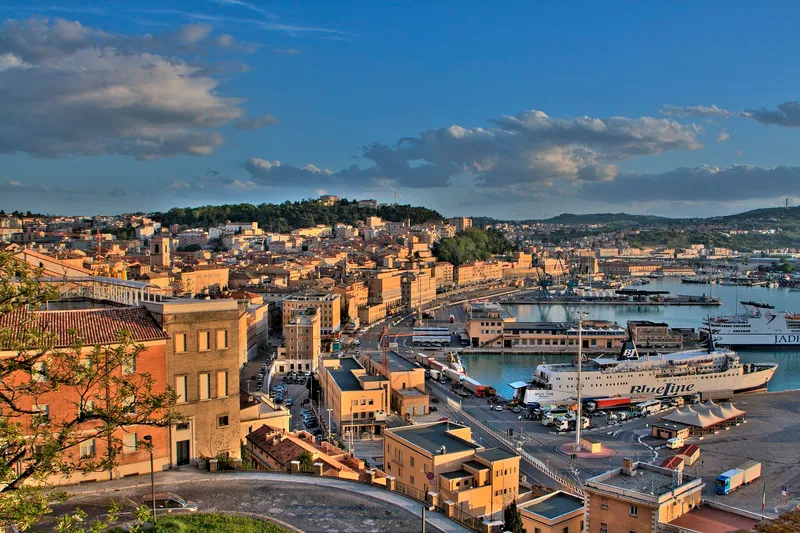
Sixteen kilometres of Adriatic beach run below the Apennines here, which means swimming in the morning and skiing in the afternoon, with Gran Sasso and Majella, two of the largest protected areas in Europe, within ninety minutes of the seafront. Costs are low, the food is excellent and the city is flat and cyclable. Pescara itself lost almost everything old to wartime bombing and was put back up in concrete afterwards, so it is a pleasant modern city rather than an Italian one in the postcard sense, and it does not pretend otherwise. The city produced two writers who pushed Italian culture in opposite directions: Gabriele d'Annunzio, whose house survived the bombing and is now a museum, and Ennio Flaiano, who wrote much of La Dolce Vita and spent a career being funnier about Italy than anyone else. A place with no historic centre has that instead. What the postcard version also misses is how much protected land sits behind it: roughly a third of Abruzzo is national or regional park, the highest share of any Italian region, which is why the wolves and the bears are still there rather than a matter of luck.
Who Pescara Is For
Beach and mountains in the same base, which very few places genuinely offer, along with cyclists, since the coastal route is excellent and the inland climbs are serious. It suits people who take food and wine seriously and want Abruzzo prices. The war removed the historic city and what replaced it is modern and functional, so the old Italy most people picture is a drive away rather than underfoot. The visitors here are also almost entirely Italian, which means no international scene at all. Abruzzo's national parks hold the last Marsican brown bears anywhere, along with wolves and chamois, and sightings are a real possibility for anybody prepared to be patient, not a brochure promise. It suits a skier who also swims, a narrow group and exactly the one this coast is built for, since Roccaraso and the sea are ninety minutes apart and people genuinely do both in a day. Eating well on very little is straightforward here, because the food is peasant cooking done seriously rather than restaurant cooking made cheap. Anyone who came to Italy for the architecture should treat this as a base and spend the days elsewhere, which is what the residents effectively do.
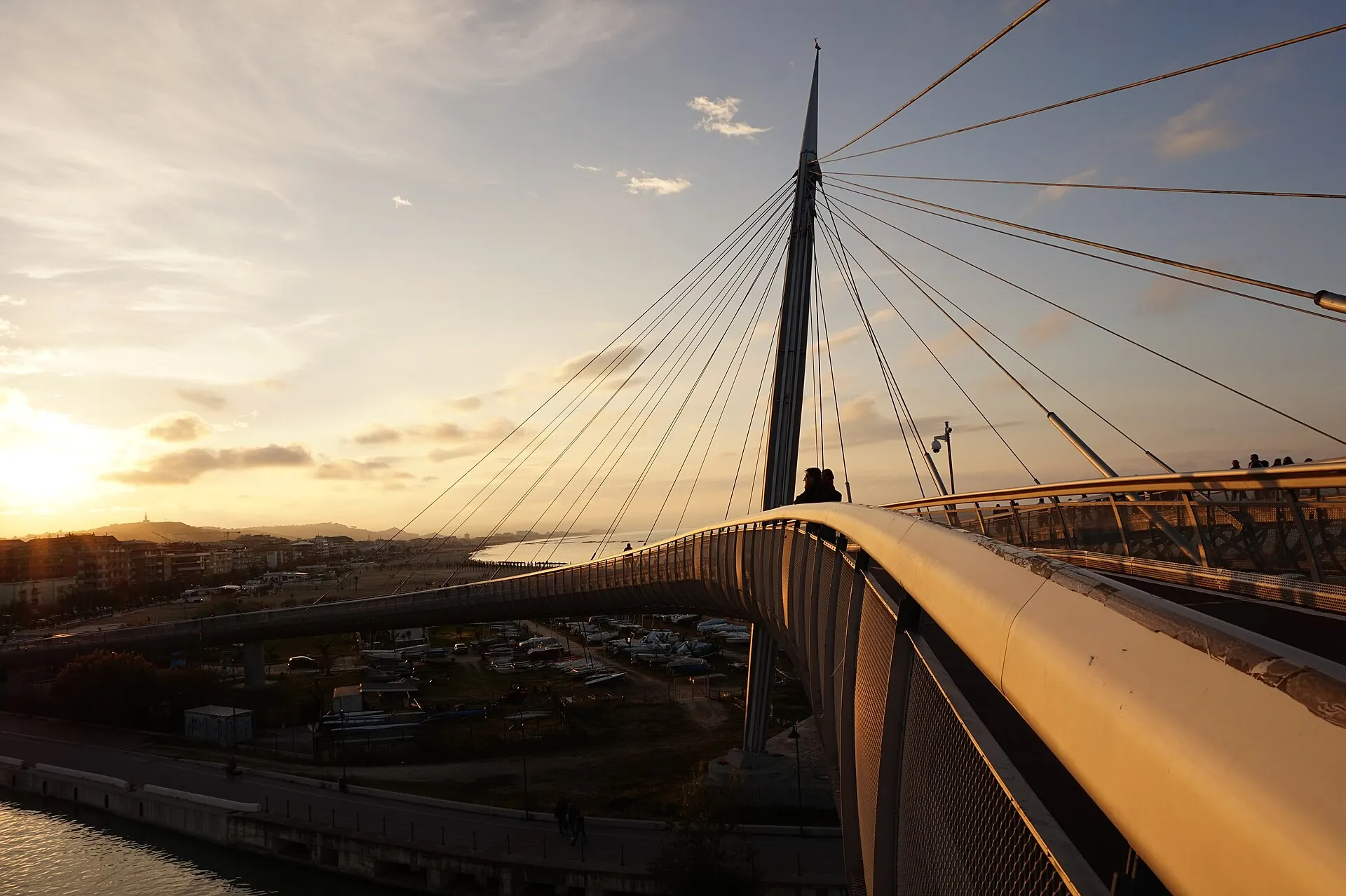 Photo: Gianni o O / Wikimedia Commons (CC BY-SA 4.0)