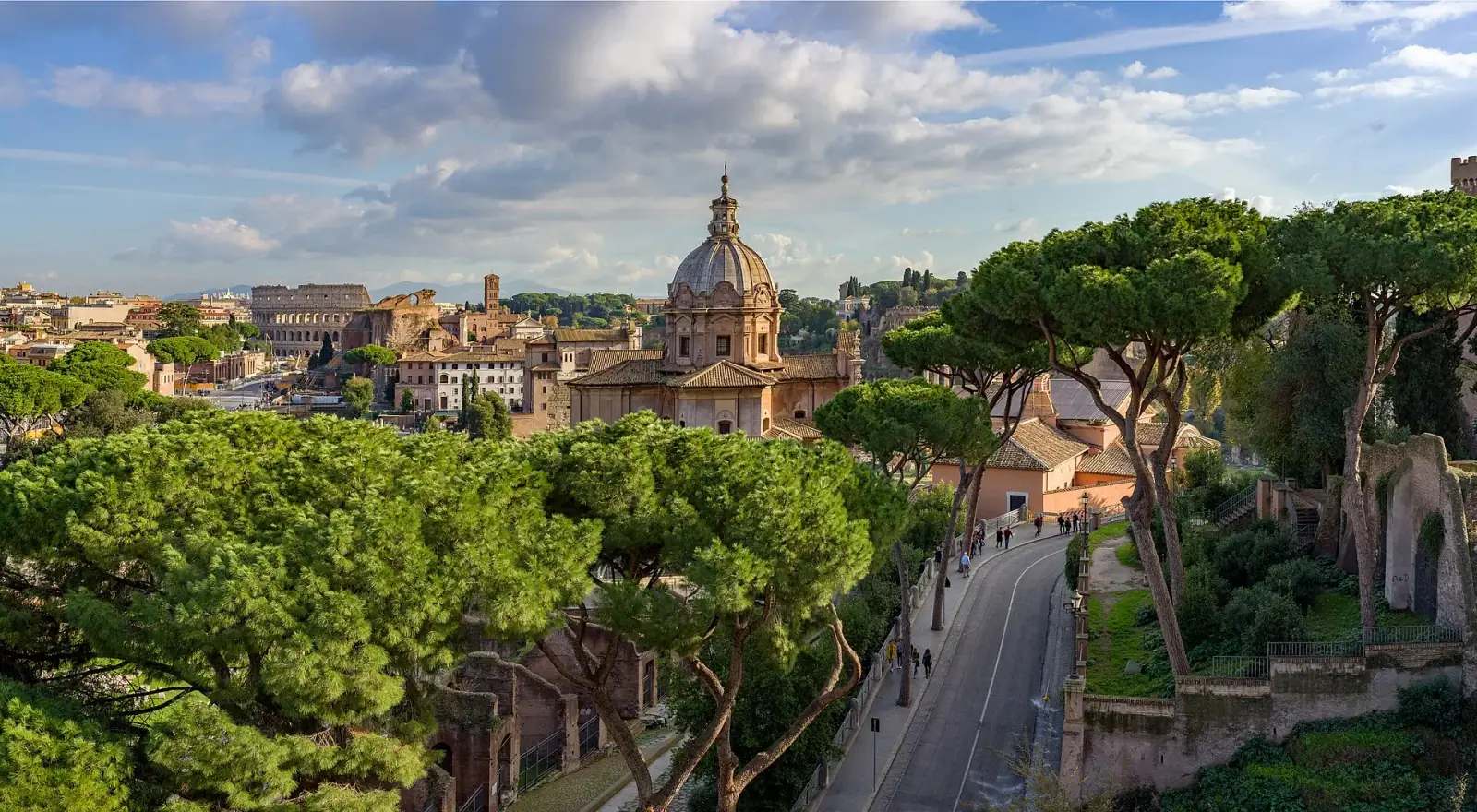
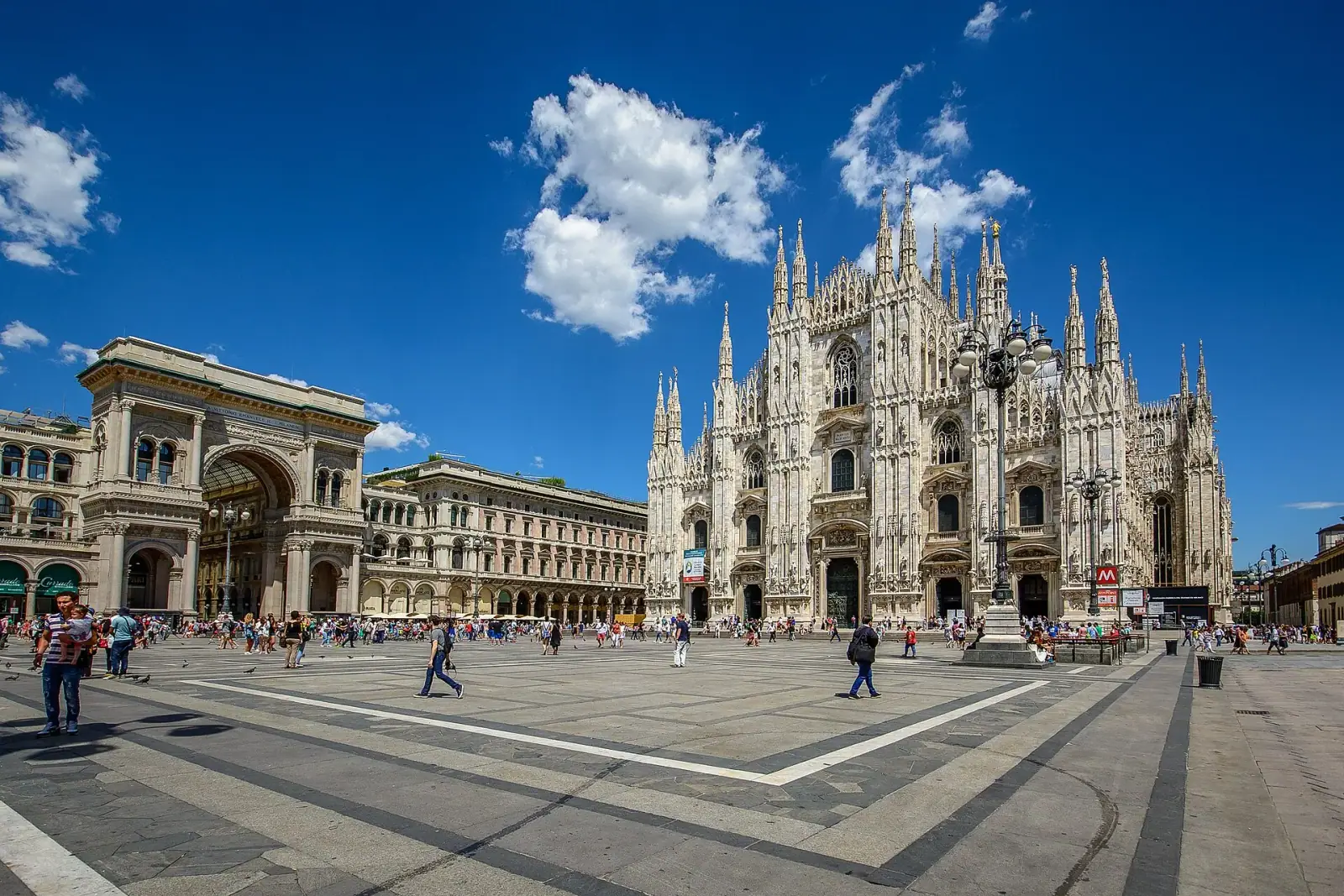

Rome Milan
Head to head
Rome vs Milan

Rome vs Milan: Which Is Better for Digital Nomads?

Overall: Rome edges ahead, 7.2 to 6.5

You work from a laptop, you have a client call at nine, you fly somewhere most months, and you have to tell a landlord in Italy something by Friday. Which city will let you get through a normal week without a fight? Milan, clearly, and it charges you for that. Our estimate puts a month there at $3,500, with Rome at $3,000. Local tenants show the same order on a new one-bedroom lease: about $910 and $750.

Getting across town

Rome is the bigger city with the smaller metro: three lines and 74 stations over about 62 kilometres. Milan has five lines and 125 stations over nearly 112. In Milan you can pick a flat in Isola or Nolo almost at random and reach a coworking desk underground. M4 even runs from Linate airport into the centre at San Babila.

Rome digs through Rome, which is why its metro is short. Excavation keeps turning up the past, and line C reached the Colosseum only on 16 December 2025, after years of slipped dates. Buses and trams fill the gaps with frustrating timetables. So in Rome the map of your life is drawn by your address. San Giovanni, where lines A and C meet, is a fine one and relatively cheap. A lovely flat in Trastevere means walking everywhere, which is pleasant until you have somewhere to be.

Flying out

Here the usual advice is too simple. Milan is called the better base for flights, but it divides its traffic across three airports, Malpensa, Linate and Bergamo, and Malpensa sits 49 kilometres out, so allow 50 to 75 minutes. Rome has one big airport. Fiumicino handled over 50 million passengers in 2025 as ITA's main hub, with direct long-haul flights to places like New York, Los Angeles and Tokyo, and the Leonardo Express reaches Termini in 32 minutes. For long-haul trips Rome is at least as good, and it may be easier. For a Tuesday hop to a client in Europe, a flat near the M4 is hard to beat.

Breathing in January

Milan's real cost is the one its estimate cannot include. The Po Valley is closed in by the Alps and Apennines, winds are weak, and in winter cold air holds traffic and farm emissions close to the ground. It has been called the worst area in Europe for air quality, and one index estimates that pollution takes about half a year off residents' lives. January runs from around freezing to 7°C, and the city gets about 2,200 hours of sun a year.

Rome's January days reach about 12.6°C, under some 500 more hours of annual sun. You could eat lunch outside in Testaccio, at the foot of a hill made entirely of broken Roman oil jars, and you will not feel you have made a sacrifice for your rent. Rome pays for that in August, at nearly 32°C. Milan is barely any cooler in summer, and August there is a dead month in any case, with the people gone and many restaurants shut.

Our answer

Take Milan for your first year in Italy when clients expect you in rooms, when you need to reach people in design, fashion or finance, or when your week has no slack in it. The canal-side bars of the Navigli will keep you company. Take Rome when the job never leaves the laptop, because then the metro stops mattering and you get the better winter, the better lunch and $6,000 a year back.

The visa will not push you either way: Italy's digital nomad route asks for $2,380 a month in both. Check one thing before signing in Rome. Put the address into a journey planner for 8:30 on a weekday, and if the answer involves two buses, keep looking.

Rome vs Milan: side by side

All 13 categories we rate, each out of 10. Green is strong, amber is middling, red is weak.

RomeMilan
7 Climate 5
4 Cost of living 3
7 WiFi 7
8 Nightlife 8
5 Nature 4
6 Safety 7
10 Food 9
6 Community 6
5 English 6
7 Visa 7
10 Culture 9
5 Cleanliness 6
6 Air quality 5

Rome and Milan at a glance

477 kmapart in a straight line
Same timein January
$500a month less in Rome
Population, urban areaRome3,339,000Milan2,945,000
ElevationRome58 mMilan147 m
Time zoneUTC+1 in January, UTC+2 in Julyin both
Nearest airportRomeCiampino-G. B. Pastine International Airport (CIA), 14 kmMilanMilano Linate Airport (LIN), 7 km
Main languageItalianin both
CurrencyEuro (€, EUR)in both
PlugsType C/F/L, 230V / 50Hzin both
Tap waterSafe to drinkin both
Emergency number112in both
TippingCoperto charged; round upin both
Ride-hailingFreeNow, Uber (limited), Boltin both
In the Schengen areaYesin both

Population is the Natural Earth figure for the urban area around each city, elevation from the Copernicus height model, airports from OurAirports.

Where they differ most

The three biggest gaps between the two, in the words of each city guide.

Climate

Rome

Rome has a classic Mediterranean climate: hot, dry summers with July and August regularly hitting 35-38C, and mild winters around 8-12C. Spring (April-May) and autumn (September-October) are the sweet spots for nomads, with comfortable 18-22C days, low rain, and long daylight hours.

Milan

Milan has a continental climate with cold, foggy winters from November to February and hot, humid summers peaking in July and August. Spring (April to June) and autumn (September to October) offer the most comfortable conditions, with mild temperatures between 15-22C.

Cost of living

Rome

Rome is mid-range to expensive for Europe. A one-bedroom apartment in a central neighborhood runs $1,380-1,960 per month; outer areas like Pigneto or Ostiense drop to $920-1,270.

Milan

Milan is Italy's most expensive city. A realistic monthly budget for a digital nomad runs $2,530-3,680, covering a modest apartment in an outer zone ($1,040-1,380), groceries ($290-405), eating out a few times a week ($460-690), a coworking hot desk ($230-370), and a monthly ATM transport pass ($45).

Nature

Rome

Rome sits in a relatively flat basin surrounded by the Colli Romani hills and the Lazio coast around 30 kilometers west. Villa Borghese and Villa Pamphilj offer large green parks within the city for running and outdoor breaks.

Milan

Milan itself offers limited nature within the city: the Parco Sempione near the castle is the main green lung, and the Navigli canals add a waterside texture. The broader region compensates well. Lake Como is 45 minutes by train, Lake Maggiore and Lake Garda are under 90 minutes.

From the score notes in the Rome and Milan guides, where each one is explained in full.

Month by month: the weather

Each bar runs from the average daily low to the average daily high. Rain is below.

RomeMilanScale runs from 0C to 32C, rain up to 112 mm
See the numbers
RomeMilan
Jan12C / 3C, 66 mm7C / 0C, 36 mm
Feb13C / 3C, 63 mm10C / 1C, 38 mm
Mar16C / 6C, 59 mm15C / 4C, 42 mm
Apr19C / 9C, 69 mm19C / 8C, 58 mm
May23C / 13C, 57 mm24C / 13C, 70 mm
Jun28C / 17C, 30 mm28C / 17C, 67 mm
Jul31C / 19C, 20 mm31C / 19C, 44 mm
Aug32C / 20C, 30 mm30C / 19C, 82 mm
Sep27C / 16C, 65 mm26C / 15C, 74 mm
Oct22C / 12C, 88 mm19C / 10C, 82 mm
Nov17C / 8C, 108 mm12C / 5C, 112 mm
Dec13C / 5C, 98 mm7C / 1C, 46 mm

Rome: weather-station averages for 1991-2020. Milan: weather-station averages for 1991-2020.

What a month costs

Rome$3,000
Milan$3,500

What residents pay

RomeMilan
$749 One-bedroom rent $907
$300 Groceries $300
$193 Eating out $193
$152 Utilities $152
$74 Local transport $74
$28 Home internet $28
$29 Phone $29

Our own estimate for a comfortable month for one remote worker, the same figure the city guides use. The lower lines are local prices: rent from the official statistics office named on each city guide, the rest from World Bank price levels.

Entry rules for common passports

Tourist entry on arrival. Every passport is in the visa finder, and remote-work visas are on the nomad visa page.

United States
Visa-free, 90 daysin both
United Kingdom
Visa-free, 90 daysin both
Germany
Visa-freein both
Canada
Visa-free, 90 daysin both
Australia
Visa-free, 90 daysin both
India
Visa requiredin both

Where you would live and work

The areas people choose in each city, and some of the places they work from.

Rome

Neighbourhoods

  • TrastevereRome's most romantic neighborhood with nightlife
  • TestaccioRome's authentic foodie neighborhood
  • MontiRome's trendy vintage neighborhood near Colosseum
  • PratiElegant neighborhood near Vatican City
  • San GiovanniLocal Rome near the ancient walls

Places to work

Talent Garden Rome OstienseCoaster CoworkingImpact Hub RomaCaffe LetterarioFaro Specialty Coffee
More on the Rome guide →
Milan

Neighbourhoods

  • NavigliMilan's canal district with aperitivo culture
  • BreraMilan's artistic quarter with boutique charm
  • IsolaMilan's creative island with emerging energy
  • Porta RomanaMilan's balanced residential with local life
  • Centro StoricoMilan's heart with Duomo and fashion temples

Places to work

Talent Garden Milano CalabianaCopernico Milano CentraleSpaces IsolaGogol and CompanyColibri
More on the Milan guide →

Services in a language you speak

Providers in our directory who work in a language other than the local one, from official registers, consular lists and the providers’ own websites.

Translators
Therapists
Physiotherapists
Notaries

Where each city wins

Rome is stronger on

ClimateCost of LivingNatureFoodCultureAir Quality
Rome guide →

Milan is stronger on

SafetyEnglishCleanliness
Milan guide →

Add a third city in the comparison tool →

Frequently asked questions

Is Rome or Milan cheaper for digital nomads?

Rome is the cheaper base, around $3,000 a month versus $3,500 in Milan, a difference of about $500.

Which has better WiFi, Rome or Milan?

Both score 7/10 for WiFi, so connectivity is comparable.

Which is safer, Rome or Milan?

Milan rates higher on safety (7/10 versus 6/10).

Rome or Milan: which is better overall for remote work?

Rome takes the overall Nomad Score (7.2/10 versus 6.5/10), though the right pick depends on what you value most.




