Cost of Living in Vatican City
Where this figure comes from. No cost survey covers Vatican City, so the $2,500 a month above is our own estimate rather than a measurement. On 416 of our 999 city guides the figure is built from a published Numbeo basket, a one-bedroom rent in the centre plus one person's monthly costs without rent, converted to USD; this city is not one of them. How we source everything.
Nobody rents in Vatican City, so the figure here is really Rome around it: budget about $2,500 a month to live within walking distance of St Peter's. A one-bedroom in Prati or Borgo runs roughly $1,200 to $1,800, and those two districts carry a premium for the address and the calm. Groceries at the Trionfale market a few streets north are among the best value in Rome. Eating out ranges from tourist prices on the Via della Conciliazione to genuinely cheap in Prati's back streets, and the difference is a two minute walk. The euro is the currency and Italian banking applies. Prati is one of the few central Roman districts built on a grid with wide streets, which is why it commands its premium: the flats are larger and lighter than the centro storico's. A coworking desk runs $180 to $300 a month. Rome's tourist tax applies to short stays and is charged per night on top of the rate, and anyone renting for months should expect to pay several months up front plus an agency fee, which is standard practice rather than a negotiation.
Where to Work in Vatican City
Practically speaking you work in Rome. Fibre reaches most of Prati and Borgo at good speeds, mobile coverage is complete and Italian plans work throughout. Power is reliable. There is a reasonable coworking market in Prati and across the river in the centre, and the cafes around the Vatican walls are quieter than anywhere near the Pantheon. Vatican City itself has its own telephone country code, its own postal service, its own radio station and its own internet domain, none of which a visitor uses. The time zone is central European, so European work is straightforward. Italian bureaucracy is the practical obstacle rather than the infrastructure: a residence permit, a tax code and a bank account each take longer than they should, and a fibre installation can take weeks. The codice fiscale is the key that unlocks the rest and is obtainable relatively quickly, so it is worth doing first. Coworking in Prati runs $180 to $300 a month and is quieter than anything across the river.
Getting Around Vatican City
Everything here is walking. Vatican City is under half a square kilometre and you cross it on foot in minutes, with the museums entrance on the north wall and St Peter's Square on the east. Rome's metro line A stops at Ottaviano and Cipro, both a few minutes from the walls, and buses and trams run along the river. Roma San Pietro station is a short walk south. Fiumicino airport is about forty minutes by taxi or a train from Termini, and Ciampino is further out and mostly serves budget carriers. The Vatican Museums and St Peter's have separate entrances on opposite sides of the walls and there is no public route between them without leaving and walking around, which is a fifteen-minute detour that catches most first-time visitors. Rome's buses are frequent and unreliable in equal measure; the metro is limited but punctual, and line A is the one that matters here.
Sorting transport? Book an airport transfer, or compare car rental on Auto Europe and QEEQ.
Visas for Vatican City
Vatican City has no border control and no visa of its own: you enter from Italy and the entry rules that matter are Italy's, which means the Schengen ninety day rule for most non-European visitors and free movement for European Union citizens. Time spent here counts against a Schengen allowance in practice because you are in Italy to get here. Residence in the Vatican itself is granted only to those working for the Holy See, and its citizenship is functional and temporary rather than something anyone acquires by living here. Italy operates its own digital nomad visa, introduced in 2024, for highly qualified remote workers meeting an income threshold, which is the realistic route for a non-European wanting more than ninety days near the Vatican. It requires an Italian tax code, health insurance and proof of accommodation, and is applied for at a consulate before travel rather than after arrival. The state issues its own passports and has a few hundred citizens, almost all of whom hold that status because of the post they occupy rather than where they were born, and it lapses when the job ends. There is no route into it and no particular reason to look for one.
Best Time to Visit Vatican City
April to June and September to October are the best months, warm at around twenty three degrees and without the July and August heat that regularly pushes past thirty five. Winter is mild at around twelve degrees and much quieter, which makes it the best time to see the museums without queuing for an hour. Easter and Christmas bring enormous crowds to St Peter's Square. The Sistine Chapel and the museums are open most weekdays and closed on Sundays except the last Sunday of the month, when entry is free and the queues are correspondingly long. A papal audience fills the square on Wednesday mornings and the Angelus does the same on Sundays at noon, so anyone living here quickly learns which two half-days to avoid crossing it. August empties Rome of Romans and fills it with visitors, and a good number of the neighbourhood restaurants simply close for two or three weeks.
Pros and Cons of Vatican City
The draw is simple and hard to argue with: the Sistine Chapel, the Raphael Rooms, the Laocoon and St Peter's Basilica sit within a few hundred metres of each other, and living beside them means seeing them on a Tuesday morning rather than in a two hour queue. Prati is a genuinely pleasant Roman neighbourhood. What you pay for it is living in the most tourist-saturated square kilometre in Europe, where prices reflect exactly that, and the Vatican itself closes at night, so the area empties in a way central Rome does not. The Vatican Gardens can be visited by booked tour only and are the one part of the state most residents of the surrounding streets never see. The museums also run occasional evening openings in the warmer months, which is by some distance the best way to experience them.
Who Vatican City Is For
This suits art historians, students of the Renaissance, and anyone whose interest in Rome is specifically the Vatican collections, which reward repeated visits far more than a single one. The appeal is a quieter, more residential Rome than the centro storico offers, without giving up the ability to walk to everything worth walking to. No nomad community exists in the smallest state on earth, the surrounding Roman prices are what they are, and the flow of pilgrims and tour groups is continuous rather than seasonal, which wears on some people within days. Attending a papal audience is more straightforward than most people assume. The general audience on Wednesday mornings costs nothing, and tickets come from the Prefecture of the Papal Household if requested in advance. Business at one of the pontifical universities or the institutes around the Borgo changes the picture entirely, since the academic community here is considerably larger than the size of the state would ever suggest.
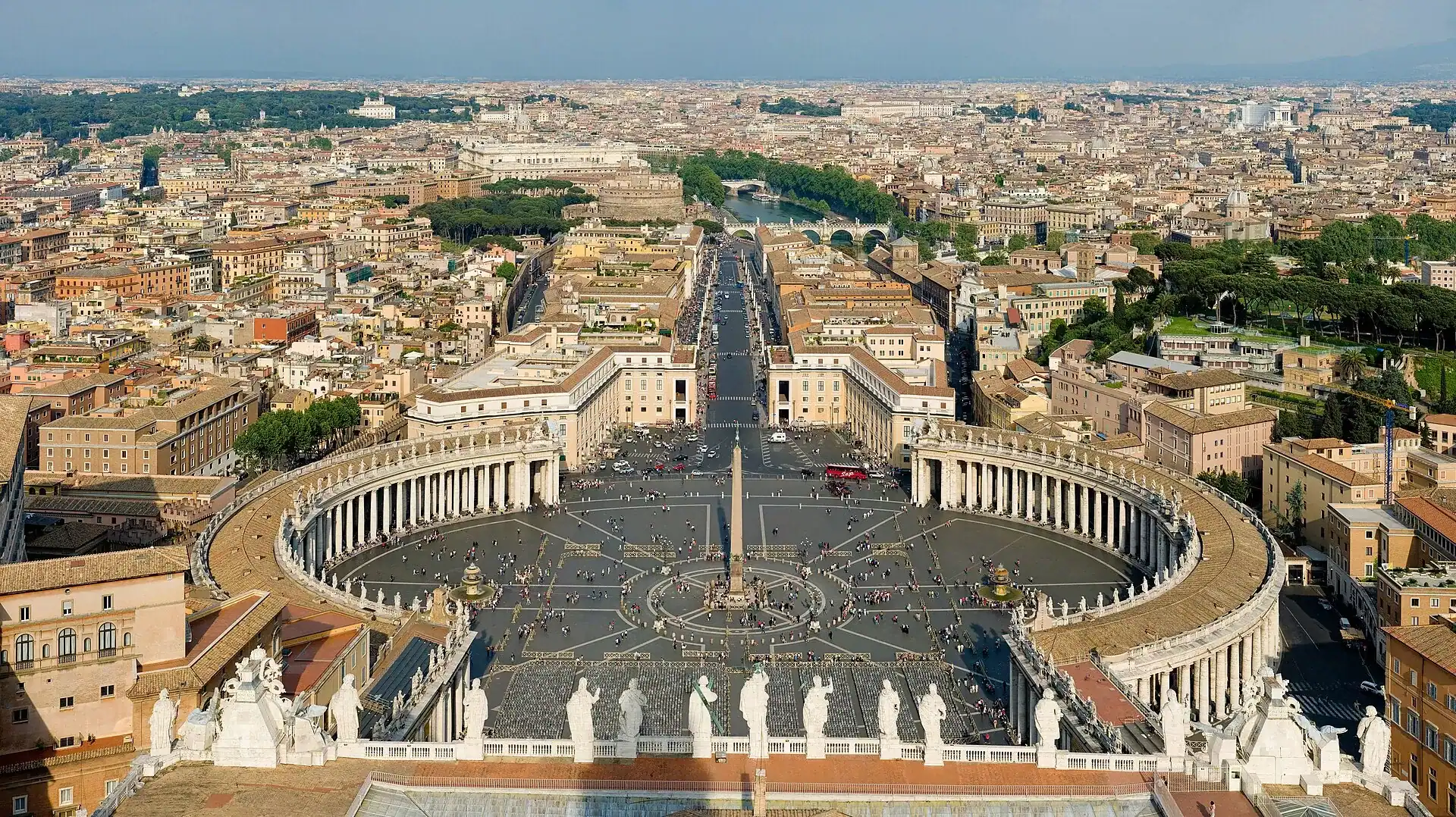 Photo: Diliff / Wikimedia Commons (CC BY-SA 3.0)