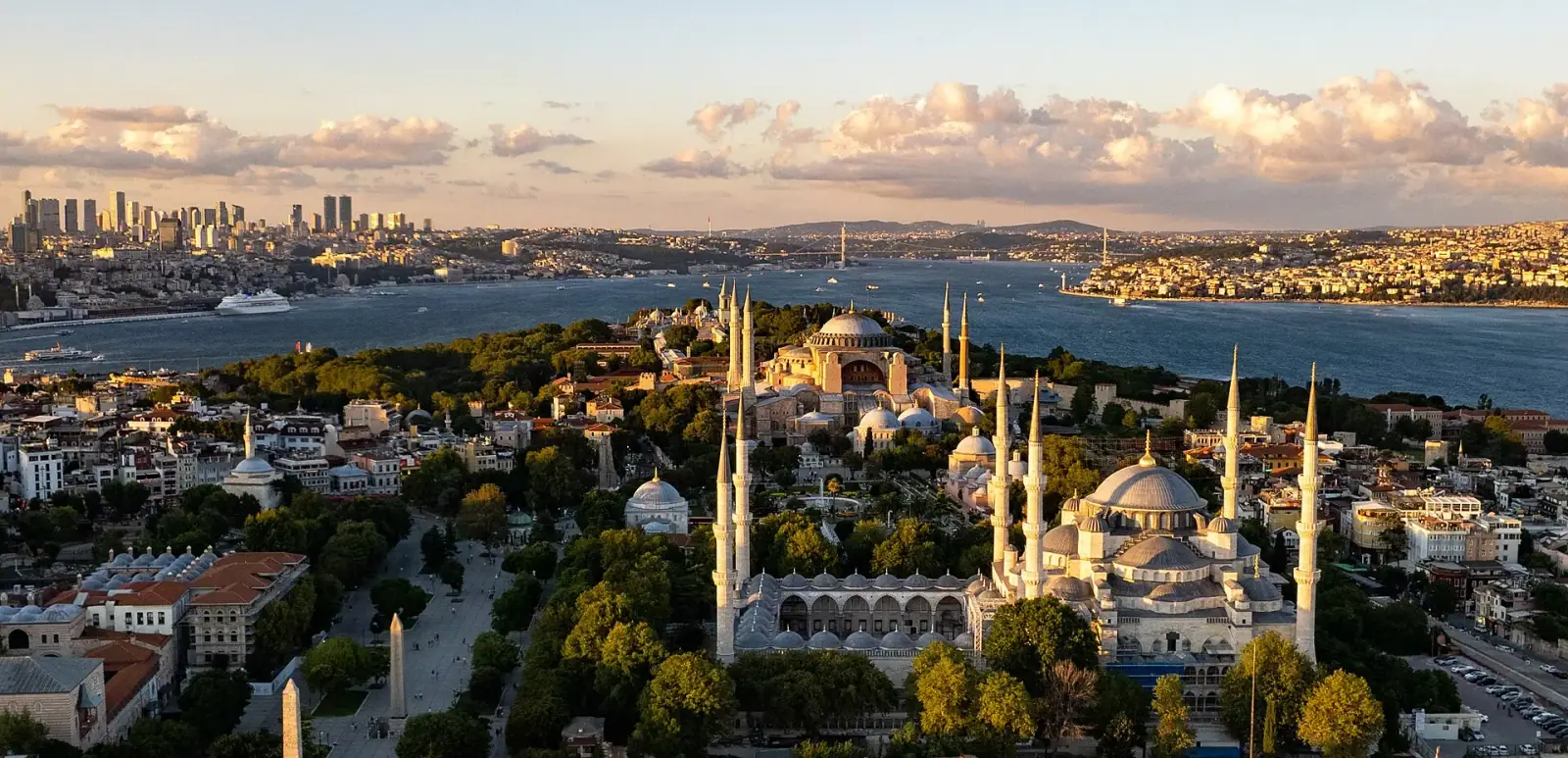
Cost of Living in Istanbul
Real market data
Source: Numbeo · August 2026
$1,520/moSolo nomad1-bed centre + living costs
$1,960/moCoupleshared 1-bed + costs
$1,180/moLean / localcheaper area + costs
- 1-bed rent, city centre$980₺46,471
- 1-bed rent, outside centre$640₺30,419
- Monthly costs excl. rent (1 person)$540₺25,819
- Meal, inexpensive restaurant$11₺500
- Monthly transit pass$63₺3,000
- Buy price, per m² (centre)$2,970₺141,114
Prices are from Numbeo (August 2026), converted to USD at $1 = ₺47.54 (01 Aug 2026). The monthly living-costs figure is our transparent one-person basket, groceries, a few meals out, utilities, phone, internet, transport and essentials, priced from those figures. Solo adds central rent; couple and lean are estimates from the same numbers. The guide below quotes its own monthly range, which is a different measurement rather than a competing one: this table prices a defined basket at the figures above, while that range is a judgement about how somebody actually lives here.
Istanbul sits in a peculiar position: it feels like a budget destination when you first arrive, but the Turkish lira's ongoing inflation means your costs in local currency rise faster than the exchange rate compensates. Budget in USD and check rates frequently.
- Rent, central area (Kadikoy, Besiktas, Karakoy): $525-945/month
- Rent, outer districts (Esenyurt, Gaziosmanpasa): $315-465/month
- Groceries (cooking at home): $84-145/month
- Eating out (local restaurants): $4-11 per meal; mid-range sit-down dinner around $15-25
- Coworking hot-desk: $63-125/month
- Local transport (Istanbulkart, monthly heavy use): $11-19
- Total monthly range: $900-1,600 for a comfortable solo nomad life in a well-connected neighborhood, or $1,400-2,200 in central areas with dining out regularly
The lira fluctuates. Always convert fresh before making decisions, and hold your savings in a hard currency.
Where to Work
Istanbul has a growing coworking scene concentrated in neighborhoods like Karakoy, Levent, Bomontiada, and across the Bosphorus in Kadikoy. Kolektif House operates several locations including Levent (a converted embroidery factory in the financial district) and Sisane near Galata, both with hot-desk memberships, fast fiber, meeting rooms, and a members' restaurant. Atolye at Bomontiada is a creative-tech hub inside a restored beer factory with prototyping equipment and a genuinely interdisciplinary community. Day passes run around $6.50-11; monthly memberships start around $63.
Cafe-working is deeply woven into Istanbul culture. Kadikoy is the best neighborhood for it: independent third-wave coffee shops tolerate laptops for hours, WiFi is usually functional, and outdoor seating is plentiful in good weather. Walter's Coffee Roastery in Moda and Kronotrop in Karakoy are reliable choices with power outlets and decent speeds. In touristy areas like Sultanahmet, WiFi quality drops considerably and cafes are less laptop-tolerant.
The real WiFi situation: fixed broadband and coworking fiber connections in Istanbul are solid. Cafe WiFi is more variable. Mobile data on Turkcell or Vodafone Turkey is fast and affordable if you buy a local SIM. Note that some VoIP and video-call services face periodic restrictions, so a reliable VPN is not optional for many nomads.
Getting Around
The Istanbulkart is your daily tool. A reloadable transit card (around $2.50 to purchase), it covers the metro, tram, bus, Metrobus, ferries, and funiculars with a discounted fare per trip. As of 2025, contactless bank cards also work on most lines. The city runs 11 metro lines plus trams; the T1 tram through the old city and the M2 metro on the European side are the most useful for nomads.
Walkability is excellent within individual neighborhoods but poor between them. Kadikoy is flat and very walkable. The historic peninsula (Sultanahmet to Grand Bazaar) is compact on foot. Crossing between the Asian and European sides by ferry takes 20-25 minutes and is genuinely pleasant; by metro via the Marmaray tunnel it is faster but less scenic.
Istanbul Airport (IST) connects to the city center via the M11 metro line to Gayrettepe in roughly 35 minutes. From Gayrettepe you transfer to the M2 for most central destinations. The ride costs around $0.50 with an Istanbulkart. Taxis from IST run $11-19 depending on traffic, which is often severe. Always use a metered taxi or a ride-hailing app such as BiTaksi.
Sorting transport? Book an airport transfer, or compare car rental on Auto Europe and QEEQ.
Visas and Staying Long-Term
UK, US and Canadian passport holders, and most EU citizens, can enter Turkey visa-free for up to 90 days within a 180-day window. Some other nationalities need an e-Visa, applied for online before travel, and a few get 30 days rather than 90, so check your own passport's terms.
Turkey launched a formal Digital Nomad Visa in April 2024, available to citizens of a wide list of countries including EU member states, the UK, US, and Canada. Requirements include being aged 21-55, holding a university degree, proof of remote employment or freelance contracts with companies outside Turkey, and a minimum monthly income of $3,000. Approval grants a one-year residence permit, renewable. The first step is a Digital Nomad Identification Certificate from the official GoTürkiye portal, which you then take to a Turkish consulate when applying for the visa itself.
The older route of a short-term tourist residence permit has narrowed: since 2022 migration offices have refused most first-time tourism applications, and in October 2022 ten districts with a high share of foreign residents, including Fatih and Esenyurt, were closed to first-time residence applications, so check an address before you sign for it.
Best Time to Visit
Spring (April and May) and autumn (September and October) are the best windows for remote workers. Temperatures sit between 15-22 degrees Celsius, daylight is long, outdoor cafes fill up, and the city is energized without the crush of peak summer tourism. These months also coincide with lower accommodation prices relative to July and August.
Summer (June-August) is hot, humid, and crowded. Highs regularly reach 28-33 degrees Celsius, and the most popular tourist areas become noticeably more expensive and congested. That said, the Bosphorus breezes and rooftop bar scene make it livable if you schedule focused work in morning hours.
Winter (December-February) is genuinely cold and rainy, occasionally snowy, with temperatures dropping to 3-8 degrees Celsius. Tourist numbers fall sharply, accommodation prices drop 30-50%, and the city takes on a quieter, more local character. It is entirely workable for nomads who do not mind grey skies and layering up.
Pros and Cons
- Pro: Exceptionally affordable relative to Western European cities at the same quality tier
- Pro: Outstanding food scene ranging from street-level kofte and balik ekmek to Michelin-recognized restaurants
- Pro: Rich cultural life, world-class museums, two continents accessible by ferry
- Pro: Strong and expanding metro network; cheap local transport
- Pro: Large and growing nomad and expat community, especially in Kadikoy and Beyoglu
- Pro: Turkey digital nomad visa provides a legal one-year pathway
- Con: Lira inflation erodes purchasing power predictability; prices in TL rise fast
- Con: VPN essentially required for reliable access to some services (VoIP, select platforms)
- Con: Traffic congestion is severe; crosstown journeys can take far longer than expected
- Con: Air quality in central areas can be poor, particularly in winter with heating emissions
- Con: Tourist residence permits have become harder to obtain in popular central districts
- Con: Language barrier is real outside tourist areas, where few locals speak English
Who Istanbul Is Best For
Istanbul works particularly well for nomads who want a genuinely international city with serious cultural depth at a cost well below comparable European capitals. If you value food culture, history, a dynamic arts and nightlife scene, and the novelty of straddling two continents in daily life, Istanbul delivers reliably. It suits people comfortable with a certain level of urban chaos, willing to learn a few words of Turkish, and prepared to use a VPN routinely.
It is a harder fit if you need absolute predictability in monthly expenses, rely on specific platforms that face Turkish internet restrictions, or want a small, navigable city where everything is within walking distance. Those who prefer quiet, clean, and compact Southeast Asian nomad hubs may find Istanbul's scale and intensity more draining than inspiring.