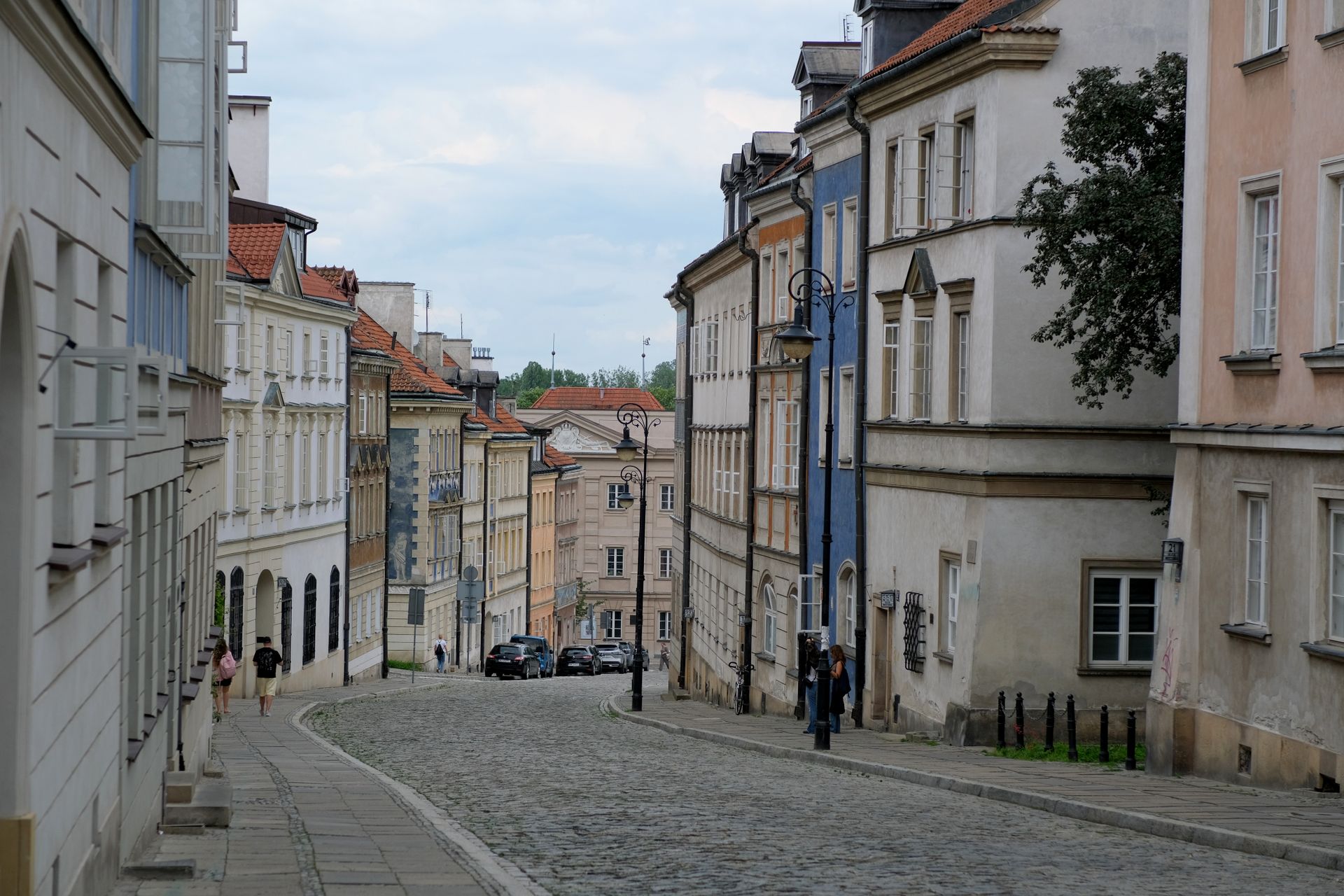

The crossing starts on the river. Santa Apolónia, the oldest railway terminus in Portugal, has stood on the bank of the Tagus below the Alfama since 1865, and the tilting Alfa Pendular leaves it for Porto, stopping at Oriente and reaching Porto's Campanhã station in under three hours. From Porto, trains (and, this year, one stretch of bus) carry you on to Barcelona, Berlin, Prague, Vienna and, in the end, the Adriatic at Split: a string of the European cities that work best for remote work, each a ride from the last.
Every one of them sits inside the Schengen area, Croatia included since January 2023, and that is the first thing to understand about the trip. On a US, British, Canadian or Australian passport the whole line runs on one allowance of 90 days in any 180. A fortnight in Porto and a month in Berlin come out of the same pot, so a slow crossing of the continent is either a three-month tour or a decision to stop somewhere with a residence permit.
Where to stop depends on what you need. Lisbon, first in our ranking of the best digital nomad cities in Europe, has the deepest nomad community and a proper remote-work visa, at a price. Porto and Barcelona give you the Atlantic or the Mediterranean with the same paperwork. Berlin is for people who want a big, international city and can live with grey winters. Budapest costs least, Prague has a nomad programme of its own, Vienna runs most smoothly, and Split is the summer stop, with the sea at the end of the street and the thinnest scene.
| Stop | One person, a month | Central one-bedroom | To stay past 90 days | Best months |
|---|---|---|---|---|
| Lisbon | $2,400 | $1,700 | D8 visa, from $4,240 a month | May to Oct |
| Porto | $2,140 | $1,320 | D8 visa, from $4,240 a month | Jun to Sep |
| Barcelona | $2,440 | $1,700 | Nomad visa, from $3,280 a month | May, Jun, Sep, Oct |
| Berlin | $2,520 | $1,500 | Freelance permit, no fixed figure | May to Sep |
| Prague | $1,970 | $1,200 | Nomad programme, IT and marketing only | May to Sep |
| Vienna | $2,500 | $1,280 | No nomad visa | May to Sep |
| Budapest | $1,550 | $880 | White Card, from $3,450 a month net | May, Jun, Sep |
| Split | $1,820 | $1,030 | Nomad permit, from $4,170 a month | May, Jun, Sep, Oct |
Monthly budgets and rents: our one-person budgets, priced from Numbeo's June to August 2026 figures, as shown on each city page. Visa floors: our digital nomad visa finder, from each government's rule. Dollar figures use the exchange rate our city pages use, 0.87 euros per dollar on 1 August 2026.
City scores at a glance
| City | Nomad Score | Budget | Cost | WiFi | Safety | Community | Climate |
|---|---|---|---|---|---|---|---|
 LisbonPortugal LisbonPortugal |
9.6 | $2,400/mo | 3 | 8 | 8 | 9 | 9 |
 TbilisiGeorgia TbilisiGeorgia |
7.8 | $1,180/mo | 7 | 5 | 7 | 7 | 6 |
 BudapestHungary BudapestHungary |
7.8 | $1,550/mo | 6 | 8 | 7 | 8 | 5 |
 SplitCroatia SplitCroatia |
8.7 | $1,820/mo | 6 | 6 | 8 | 5 | 8 |
 BerlinGermany BerlinGermany |
8.3 | $2,520/mo | 3 | 6 | 7 | 9 | 5 |
 TallinnEstonia TallinnEstonia |
7.8 | $1,710/mo | 5 | 7 | 8 | 7 | 4 |
The Nomad HQ ratings, scored 0 to 10 across our 13 categories.
One clock for the whole line
The 90 days are counted across every Schengen country together, looking back 180 days from each day you are in the zone. Since 10 April 2026 the EU's Entry/Exit System has been fully running: it records your fingerprints, face and every entry and exit at the outer border, so the count is kept by a computer rather than by a border guard reading stamps. The next step, the ETIAS travel authorisation that visa-free visitors will have to buy online before they travel, is not yet running: the EU's last stated target was the last quarter of 2026, and it has promised to announce the exact date several months ahead.
Inside the zone the trains cross borders without a stop, but not always without a check. Germany has notified temporary controls at all its land borders until 15 March 2027, and Austria at its borders with Czechia, Slovakia, Hungary and Slovenia, so police may walk the train between Prague and Vienna. Keep your passport on you, not in the bottom of the bag.
The practical rule for a crossing like this: count your days before you book, not after. A 90-day tour lets you taste four or five of these cities for two to three weeks each. If one of them is the place, the sections below say which permit would let you stay, and what it asks of your income.
Plan the crossing around your 90 days
Put your stops and dates in order, and the route planner tracks your Schengen days, prices each month and checks the weather at every stop.
Open the route planner →Lisbon: the city that starts the line
Lisbon is a city of hills and river light. The old trams of line 28 grind up from Martim Moniz through Graça and on across the city towards Estrela, and from the terraces called miradouros you look out over tiled roofs to the Tagus. On the flat land out east, Parque das Nações, the MEO Arena hosts Web Summit every November, this year from 9 to 12 November, which is one reason the city's startup scene runs so deep.
For a remote worker, Lisbon is the most complete stop on the line: warm summers, January nights that average 8°C, a large community and coworking in every central district. It is not cheap: Berlin, Vienna and Barcelona are the only stops that cost more. Our one-person budget with a central one-bedroom comes to about $2,400 a month, and rent, around $1,700 for that flat, is the line that decides it.
If Lisbon is where the crossing ends, Portugal's D8 remote-work visa asks for an average income of four times the Portuguese minimum wage over the three months before you apply, about $4,240 a month. The floor is pegged to the minimum wage, so it rises whenever the wage does. Our step-by-step guide to the Portugal nomad visa covers the documents, and the complete Lisbon digital nomad guide goes district by district.
Porto: tiles, the Douro and a lower rent
The Alfa Pendular stops at Campanhã, and a short hop on a local train brings you to São Bento, where the hall is lined with about 20,000 blue and white azulejo tiles that Jorge Colaço painted between 1905 and 1916: battles, royal arrivals, grape harvests and wine boats on the Douro. Below the station the old town drops to the Ribeira quay, and across the double-decker Dom Luís I bridge the port lodges of Vila Nova de Gaia face the city.
Porto is Lisbon's calmer, cheaper neighbour. Our one-person budget comes to about $2,140, and a central one-bedroom to about $1,320, some $380 less than in the capital. The nomad scene is smaller, and the Atlantic brings a proper winter: our Porto page records more than 250 mm of rain in December. Come from June to September, when highs sit in the low to mid 20s. The same D8 visa applies.
The border without a through train
Here the line breaks. There has been no direct train between Lisbon and Madrid since the Lusitânia sleeper stopped running in March 2020. From Porto, the Celta runs twice a day to Vigo, with a bus replacing the train between Valença and Vigo until April 2027 while the Spanish track is rebuilt; from Vigo, Renfe's trains continue to Madrid, and from Madrid the non-stop AVE reaches Barcelona in two and a half hours. It is a full day of travel, and the one leg of this crossing worth weighing against a flight.
Barcelona: the grid, the sea and a warning about flats
Barcelona's Eixample is one of the great city plans: Ildefons Cerdà's grid of long straight streets and square blocks with their corners cut off, so every crossing opens into a small octagonal plaza. The city has been handing some of those streets back to people: along Carrer de Consell de Cent, a green axis has replaced through traffic, and four of its crossings have become tree-planted squares. Beyond the grid are the beaches of Barceloneta and, behind the city, the Collserola hills.
Barcelona is second in our European ranking and about as expensive as Lisbon: $2,440 a month for one person, $1,700 for a central one-bedroom. The detail to know before you look for a flat is political. The city council plans to stop renewing the licences of its roughly 10,000 tourist apartments in November 2028, so furnished short lets are under pressure. For a stay of a month or two, plan on a seasonal contract or a coliving, and do not expect the long-lease rent in the table.
To stay beyond 90 days, Spain's digital nomad visa asks for about $3,280 a month. That floor is 200% of Spain's minimum wage, so it rises whenever the wage does. When you move on, a direct TGV leaves Barcelona Sants for Paris Gare de Lyon and gets there in under seven hours, the start of the longest stretch of the crossing.
Berlin: a runway for a park
Berlin rewards whoever arrives in May. Tempelhofer Feld, the airport that closed in 2008, is now a park of 355 hectares where people cycle and skate down the old runways, fly kites and tend community gardens; in 2014 Berliners voted by referendum to keep it free of building. On summer evenings the S-Bahn runs out to lakes such as Wannsee and Schlachtensee.
The other half of the year is the price of the city. On 21 December the sun sets before four in the afternoon, and January highs average about 5°C. What keeps people through the winter is the city itself: a big international crowd, English spoken almost everywhere, and a culture and club scene that does not stop for the weather. Our Berlin city guide puts the budget at about $2,520 a month, and the Deutschlandticket, $73 a month, covers every local train, tram and bus in Germany.
There is no digital nomad visa. The route for a freelancer is a residence permit for freelance work, limited to three years at a time, where the immigration office judges whether your income will cover your living, with no fixed figure; applicants over 45 also need adequate pension provision. The harder part is the flat: rent is the biggest line in a Berlin budget and central flats are hard to find, so start the search before you arrive.
Prague: bridges from a beer garden
The railjet from Berlin to Prague leaves every two hours and takes about four. South of Dresden it follows the Elbe, past the spa town of Bad Schandau and Střekov Castle on its rock above the river. On Letná, the hill across the Vltava from the Old Town, a giant metronome swings on the pedestal where a statue of Stalin stood until 1962, and a little further along the park a beer garden of wooden tables looks down on the river's bridges, one after another. Below, the centre is compact enough to cross on foot, and the trams get you everywhere else.
Prague is the third-cheapest stop on the line, after Budapest and Split: about $1,970 a month for one person, $1,200 for a central one-bedroom and $25 for a monthly transit pass. It shares Berlin's climate, with January highs around 4°C, so the same rule applies: come from May to September.
Czechia is also the one country on the route with a remote-work scheme that is not open to everyone. Its Digital Nomad Program takes citizens of 13 countries, among them the US, the UK, Canada, Australia and India, who work in IT or marketing and earn at least 1.5 times the Czech average gross salary. If that is you, it is the way to spend a year in the city rather than 90 days.
Vienna: the coffee house and the council flat
Another railjet, again every two hours, covers Prague to Vienna in about four hours. Vienna's coffee houses are on Austria's national inventory of intangible UNESCO heritage, and the custom is the point: marble-topped tables, bentwood chairs, a table of newspapers, and a bill that charges for the coffee but not for the hours you sit over it. At the edge of the city, in Grinzing, Nussdorf and Stammersdorf, winemakers pour their own wine in Heurigen among the vineyards.
The city also owns about 220,000 flats, which is part of why its rents undercut most western capitals: about $1,280 for a central one-bedroom, against $1,500 in Berlin. You will not get a council flat on a short stay, but the effect on the wider market helps. Our Vienna city guide puts the budget at about $2,500 a month, because everything that is not rent costs more than in Berlin.
Austria has no digital nomad visa, so Vienna is a stop for your Schengen days, not a place to settle on a laptop income. For a longer stay nearby, look east: a railjet reaches Budapest in about 2 hours 40 minutes. Budapest costs about $1,550 a month for one person, the lowest on the line, and its baths are the reason to linger: Széchenyi, in City Park, opened in 1913 and is fed by thermal springs that come up at over 70°C. Hungary's White Card asks for a net income of about $3,450 a month for the six months before you arrive and throughout the stay, for one year, renewable once. Our Budapest nomad guide has the districts.
Split: the end of the line, inside a Roman palace
The last leg runs through Zagreb. Croatian Railways' daily train takes about eight hours from Zagreb to Split, and from October a night train with couchettes and sleepers runs on Friday nights. In summer, until 2 October this year, Hungarian Railways' Adria sleeper runs straight from Budapest to Split.
The palace that Emperor Diocletian built for his retirement at the end of the third century is not a ruin you visit: it is half of Split's old town, with about 3,000 people living inside its walls among the shops and cafés. West of the harbour, Marjan, a 178-metre hill covered in pine forest, has jogging trails, small chapels and beaches at its foot, and at Bačvice beach people stand in the shallows playing picigin, keeping a small ball in the air with their palms, a game that began there in 1908.
Split is the cheapest mainland city in the top ten of our European ranking: about $1,820 a month for one person, $1,030 for a central one-bedroom. The compromises are the internet, which is the weakest on this line, a small community, and a season that swings hard: summer rents climb as the cruise and holiday crowds arrive, and November is wet. May, June, September and October are the months to come.
Croatia's temporary stay for digital nomads lasts up to 18 months and asks for about $4,170 a month. That floor is 2.5 times Croatia's average net salary, so it moves with the national average.
The stop no train reaches: winter
Every city on this line has the same weakness: winter. In December the sun sets around four in Berlin, Prague and Vienna, with nights near freezing, and November and December are the wettest months in Split and Porto. The European answer is off the rails. Las Palmas de Gran Canaria, on the Canary Islands, averages highs of 19 to 21°C from December to March, has a large, long-established nomad community, and costs about $1,580 a month on our budget. It is Spanish territory and in Schengen, so the same visa rules apply.
Where to get off
| If you want | Get off at | Why |
|---|---|---|
| A ready-made community and a visa to stay | Lisbon | Deepest nomad scene; D8 from $4,240 |
| Portugal for less | Porto | About $260 a month cheaper; same visa |
| A big city on the Mediterranean | Barcelona | Beaches and culture; visa from $3,280 |
| Career, culture and nightlife | Berlin | Largest international crowd; freelance permit |
| A year in the heart of Europe on an IT income | Prague | $1,970 a month; nomad programme for 13 nationalities |
| Order and coffee houses for a month or two | Vienna | Smooth daily life; no nomad visa |
| The lowest budget | Budapest | $1,550 a month; White Card from $3,450 net |
| A summer by the sea | Split | $1,820 a month; permit for up to 18 months |
| Somewhere warm from November to March | Las Palmas | Highs near 20°C in winter; $1,580 |
The crossing works best in two passes. Use the 90 days to try two or three stops for a few weeks each, in the months when they are at their best. Then pick the one you did not want to leave, check the permit its country offers against your income in our digital nomad visa finder, and go back to live there properly.
See the full European ranking
Fifteen European bases, from Lisbon to Ericeira, with each one's monthly budget, safety and wifi, and the reasoning behind its place.
Open the Europe ranking →Frequently Asked Questions
What is the best European city for digital nomads in 2026?
Lisbon, for its community, climate and D8 visa, at about $2,400 a month. Porto offers much the same for about $2,140, and Split is the best value near the top of our ranking at about $1,820.
What is the cheapest European city for digital nomads on this route?
Budapest, at about $1,550 a month for one person, then Split at $1,820 and Prague at $1,970. Las Palmas, in the Canaries, costs about $1,580 and is the warmest in winter.
How long can I stay in Europe without a visa as a digital nomad?
On a US, UK, Canadian or Australian passport, 90 days in any 180 across the whole Schengen area, which includes every city in this article. The days are shared between countries, not counted per country.
Which European countries offer a digital nomad visa?
On this route, Portugal (from about $4,240 a month), Spain ($3,280), Croatia ($4,170) and Hungary (about $3,450 net). Czechia runs a programme for IT and marketing workers from 13 countries, Germany offers a freelance permit, and Austria has none.
Can you travel between these cities by train?
Mostly. Lisbon to Porto takes under three hours, Berlin to Prague and Prague to Vienna about four each, and Vienna to Budapest about 2 hours 40. The hard legs are Portugal to Spain, a full day with a bus section until April 2027, Barcelona to Berlin, via Paris, and Zagreb to Split, about eight hours.
Which European city is best for digital nomads in winter?
Las Palmas de Gran Canaria, with highs of 19 to 21°C from December to March. Of the mainland cities, Lisbon is the mildest, with January highs around 14°C and nights around 8°C.


