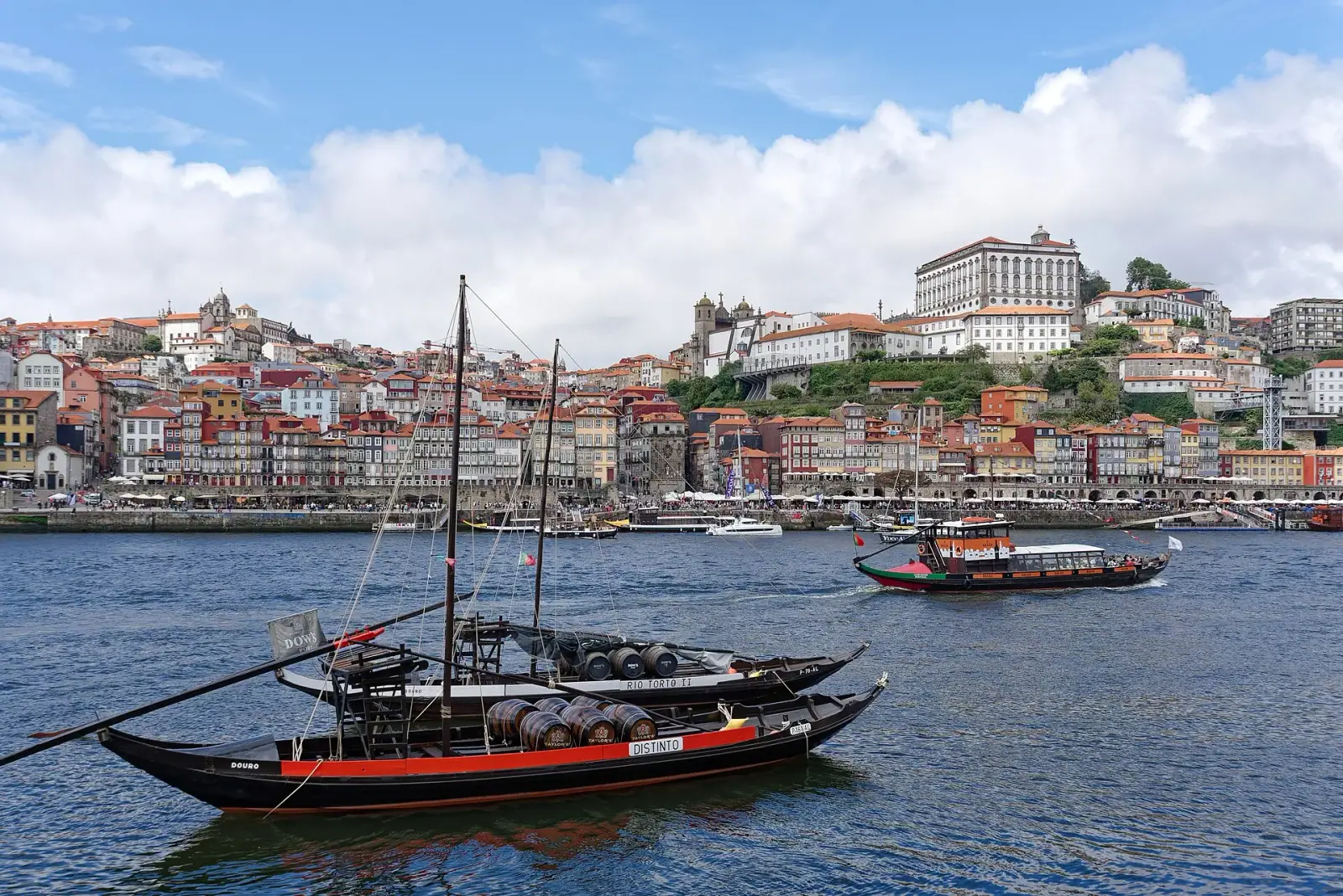
Porto's Ribeira waterfront with rabelo boats on the Douro River
Photo: Jakub Halun / Wikimedia Commons (CC BY 4.0)
Portugal flag

Porto

Portugal

Experience port wine, azulejo tiles, and a more laid-back alternative to Lisbon.

€2.800
Monthly Budget
--
Current Weather
Mediterranean
Climate Type
70 Mbps
Avg. WiFi Speed
8/10
Safety Score
5,000+
Active Nomads
--
Time Difference
Scroll
0
Nomad Score

Setting Up as a Nomad in Porto

Experience port wine, azulejo tiles, and a more laid-back alternative to Lisbon. For remote workers, Porto leans on culture and climate, with a typical budget near $2,800 a month. The main trade-off is cost.

Compare Porto vs Coimbra →

Category Breakdown

How Porto scores across all 13 factors

Weather in Porto

Monthly averages from 2019-2023 (Open-Meteo), and the best time to visit

13°
Jan
16°
Feb
16°
Mar
17°
11°
Apr
21°
13°
May
21°
15°
Jun
24°
16°
Jul
24°
16°
Aug
23°
16°
Sep
20°
14°
Oct
16°
11°
Nov
14°
Dec
Daily high & low (°C)Rainfall (mm/month)Best months to visit

The best time to visit Porto for comfortable weather is Jun, Jul, Aug. The warmest month is Jul (around 24°C by day), and the wettest is Dec (about 267mm of rain).

Chasing good weather? See other cities that are warm in Jun, or plan a multi-city route around the seasons. Staying a while in Porto? Check visa options, your time-zone overlap and how far your budget stretches, or find it on the world map.

Historical monthly averages, not a forecast. Source: Open-Meteo.

Best Neighborhoods in Porto

Where to base yourself for the perfect nomad experience

Ribeira

$$$
Historic & Scenic

UNESCO riverside magic with port wine views

Ribeira is Porto's historic heart - a UNESCO World Heritage site cascading down to the Douro River. Colorful buildings, riverside cafes, and port wine lodges across the water create unforgettable atmosphere. Touristy but essential Porto experiencing.

Best for: First-time visitors, photographers, and nomads seeking Porto's most iconic setting
✓ Pros
  • Stunning river views
  • Historic atmosphere
  • Port wine access
  • Walkable
✗ Cons
  • Very touristy
  • Steep hills
  • Higher prices
  • Crowded

Cedofeita / Baixa

$$
Creative & Central

Porto's creative downtown with the best cafes

Cedofeita and Baixa form Porto's creative core - independent shops, specialty coffee, art galleries, and a thriving nomad scene. Rua de Cedofeita and Miguel Bombarda streets are lined with cafes perfect for remote work. Central and increasingly popular.

Best for: Digital nomads, creatives, and anyone seeking Porto's best work-from-cafe scene
✓ Pros
  • Best cafes
  • Creative scene
  • Central location
  • Growing community
✗ Cons
  • Getting expensive
  • Busy streets
  • Limited parking

Foz do Douro

$$$
Coastal & Upscale

Where the river meets the Atlantic

Foz is Porto's upscale seaside neighborhood where the Douro meets the Atlantic. Beach access, ocean promenades, and elegant restaurants attract a more affluent crowd. It's Porto's best quality of life, though further from the historic center.

Best for: Beach lovers, families, and nomads seeking ocean access with city proximity
✓ Pros
  • Beach access
  • Ocean views
  • Quieter streets
  • Good restaurants
✗ Cons
  • Far from center
  • More expensive
  • Need transport

Bonfim

$
Local & Emerging

Porto's emerging neighborhood with local soul

Bonfim is where Porto locals actually live - a residential neighborhood with growing creative energy. Cheaper rents, local tascas, and proximity to the center make it increasingly popular with nomads who've discovered its authentic charm.

Best for: Budget nomads, long-term stayers, and those seeking authentic Porto life
✓ Pros
  • Affordable
  • Local character
  • Near center
  • Emerging cafes
✗ Cons
  • Less polished
  • Fewer tourists
  • Basic amenities

Vila Nova de Gaia

$$
Scenic & Value

Port wine cellars with the best Porto views

Technically a different city across the river, Gaia offers the best views of Porto's skyline. Famous for port wine cellars, it's increasingly popular with nomads for its value and stunning vistas. The cable car and riverfront add to its appeal.

Best for: Wine lovers, view seekers, and nomads wanting Porto views at better prices
✓ Pros
  • Best Porto views
  • Port wine cellars
  • Good value
  • Less crowded
✗ Cons
  • Across the river
  • Fewer cafes
  • Uphill walks

Cost of Living in Porto

Porto is still one of Western Europe's better value cities, though rents have climbed steadily and it is no longer the bargain it was five years ago. As a solo remote worker you'll realistically budget somewhere in the range of €1,400 to €2,200 a month (about $1,500 to $2,400), with rent the swing factor.

Here is a typical monthly breakdown:

  • Rent, furnished studio or one-bedroom in a central area (Cedofeita, Bonfim, Baixa): roughly €850 to €1,300 ($920 to $1,400). Short-term and furnished listings sit at the top of that range.
  • Rent in a cheaper area a little further out (Paranhos, Campanhã, Ramalde): often €600 to €850 ($650 to $920).
  • Groceries: €200 to €300 ($215 to $325) for one person cooking most meals.
  • Eating out: a menu do dia (soup, main, drink, coffee) runs €10 to €14 ($11 to $15). A relaxed dinner for two at a mid-range spot lands around €40 to €60 ($43 to $65).
  • Coworking hot-desk: a monthly membership is commonly €89 to €150 ($95 to $160), or about €13 to €15 ($14 to $16) per day.
  • Local transport: a monthly Andante pass is €30 to €40 ($32 to $43) depending on zones.
  • Utilities and home internet: budget €100 to €150 ($108 to $160) combined, with fiber alone around €30 ($32).

Live centrally and eat out often and you'll push toward the top of the range. Take a flatshare or a place slightly out and cook at home, and Porto stays comfortably affordable.

Where to Work

Porto has a mature coworking scene. Porto i/o runs several locations (Trindade and Boavista are the busiest) and leans professional, with local startups and freelancers. Work Wise near Sá da Bandeira is one of the cheaper full-time options at around €89 a month for weekday access. Typographia and Vertical Coworking both offer day passes near €15 and monthly plans from around €150. The Social Hub near the center is another reliable pick with day passes and a cafe you can settle into.

Cafe-work culture exists but is more low-key than in some nomad hubs. Plenty of specialty coffee spots in Cedofeita and Baixa are laptop-friendly during off-peak hours, though smaller traditional cafes expect you to keep it short. For long calls or a full workday, a coworking desk is the safer bet.

Connectivity is a genuine strength. Fiber is standard across the city, gigabit-capable coverage is very high, and you'll routinely see real-world speeds well above 200 Mbps. Home fiber plans start around €30 a month, and coworking spaces and most cafes have solid WiFi.

Getting Around

Porto is compact and very walkable in the center, with the historic core, riverfront, and main squares clustered within a couple of kilometers. The big caveat is the hills: some walks are genuinely steep, so factor that in if you have mobility concerns or a bad knee.

Public transport runs on the Andante card (the card itself is about €0.60, then you load fares or a monthly pass). The metro, buses, and local trains cover the city and suburbs well. Getting to and from the airport is easy: the metro's purple line connects Francisco Sá Carneiro Airport (OPO) directly to the center in roughly 30 to 40 minutes, and you can buy your card at the airport station on arrival. A taxi or rideshare to the center typically costs around €20 to €30 ($22 to $32). Uber and Bolt both operate widely and are affordable for the occasional trip.

Visas and Staying Long-Term

Portugal is in the Schengen Area, so visitors from the US, UK, Canada, Australia, and many other countries can stay visa-free for up to 90 days within any 180-day period. That window is shared across the whole Schengen zone, not per country, so time spent in Spain, France, or elsewhere counts against it.

To stay longer, the main route for remote workers is the D8 digital nomad visa. It requires proof of remote income of roughly four times the Portuguese minimum wage (around €3,680 per month at recent levels), savings of about €11,040, and a Portuguese address or rental agreement. The D8 typically grants an initial residence permit that is renewable, and it lets you continue moving around Schengen on the standard 90/180 basis. Income thresholds, savings amounts, and family rules change from year to year, and recent legislation has tightened parts of the process.

Rules shift often, so confirm the current requirements with official sources (Portugal's immigration authority AIMA and your nearest Portuguese consulate) before you commit to anything.

Best Time to Visit

Porto has a mild Atlantic climate: cool, wet winters and warm, mostly dry summers. Winter (November through March) is the rainy stretch, with frequent showers and grey days, though it rarely gets truly cold. Summer highs sit comfortably in the low-to-mid 20s Celsius (low-to-mid 70s Fahrenheit), cooler than inland Portugal thanks to the ocean.

The best window for remote work is the shoulder seasons: late spring (May and June) and early autumn (September into mid-October). You get warm, largely dry weather, long daylight, and thinner crowds than peak summer, when the center fills with tourists and short-term rentals get pricey. June is often singled out as the single best month.

Pros and Cons

  • Pro: excellent, cheap fiber internet and a solid coworking scene.
  • Pro: still affordable by Western European standards, with great food and wine.
  • Pro: compact, walkable, and well connected by metro, including a direct airport line.
  • Pro: a real remote-worker community and a clear long-stay visa path.
  • Con: rents have risen sharply and central furnished places are no longer cheap.
  • Con: wet, grey winters can drag on from November to March.
  • Con: steep hills make some daily walking a workout.
  • Con: summer tourism crowds the center and pushes up short-term prices.

Who Porto Is Best For

Porto suits remote workers who want a walkable European base with reliable internet, good food, and a lower cost of living than Lisbon or northern Europe, without giving up city life. It is a strong fit if you value character and coastline over nonstop nightlife, and if you plan a medium-to-long stay and might pursue the D8 visa.

You should probably skip Porto if you need guaranteed sunshine year-round, if steep hills are a dealbreaker, or if you want a large, high-energy nightlife and events scene. In those cases Lisbon or a Spanish coastal city may serve you better.
Where to Stay in Porto

Top neighborhoods and accommodations for digital nomads

Libere Porto Laranjais

Serviced apartments
Baixa

Central Rua do Almada location with fully equipped kitchens, high-speed WiFi, and long-stay discounts up to 40%.

Check availability →

Thomaz Palace

Serviced apartments
Bonfim

Stylish restored apartments in walkable Bonfim with full kitchens, free parking, and a 9.4 Booking score.

Check availability →

Oporto Maison Alves da Veiga

Aparthotel
Bolhao

Quiet historic-centre aparthotel near Mercado do Bolhao with pool, full kitchens, and top cleanliness reviews.

Check availability →

Gallery Hostel

Hostel
Miguel Bombarda

Award-winning boutique hostel with a dedicated social coworking lounge in Porto's arts district, rated 9.5 on Booking.

Check availability →

Browse apartments, aparthotels and hotels across Porto. Compare prices and book a base that suits a remote-work stay.

See available stays in Porto →

Affiliate link. See our disclosure.

Best Coworking Spaces

Where nomads get work done in Porto

Facts Coworking

Dedicated coworking
Boavista

Professional coworking space 100m from Rotunda da Boavista, offering hot desks, private offices and fast fibre internet since 2010.

Visit website →

Typographia Cowork

Boutique coworking
Historic Centre

Century-old typography building converted into a calm, community-focused coworking space that values a stable resident membership.

Visit website →

Vertical Coworking

Modern coworking
Bolhao

Contemporary two-floor coworking hub near Bolhao market with 82 workstations, soundproof phone booths and a well-equipped kitchen.

Visit website →
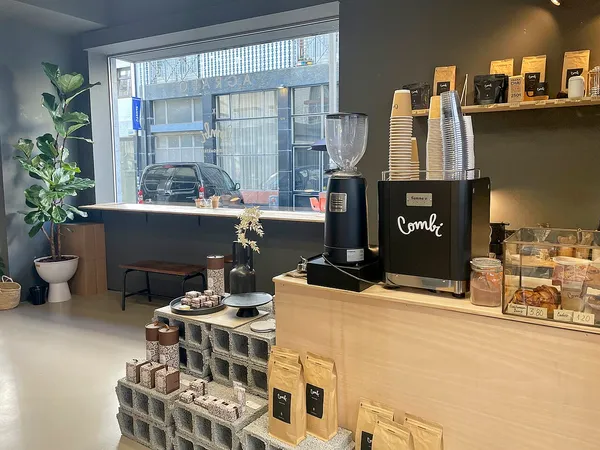
Interior of Combi Coffee Roasters in Porto showing the counter with espresso machine and coffee bags

Photo: Bex Walton (CC BY 2.0)

Combi Coffee Roasters

Specialty coffee cafe
Bonfim

Porto's most celebrated specialty roaster with in-house roasting, strong wifi and a loyal nomad following at its Bonfim flagship.

Visit website →

Maus Habitos

Cultural cafe and bar
Cedofeita

Fourth-floor Art Deco cultural space blending cafe, bar, gallery and live music in the heart of Porto's creative district.

Visit website →

Cafe Candelabro

Wine bar and cafe
Baixa

Relaxed wine bar in central Baixa with free wifi, small plates and a budget-friendly menu popular with students and remote workers.

View on Maps →

Where to Eat & Drink

Best food and drink spots in Porto

Adega Sao Nicolau

Traditional Portuguese
Ribeira

Beloved Ribeira tavern serving classic bacalhau and octopus dishes in a historic stone-walled setting favoured by local chefs.

Visit website →
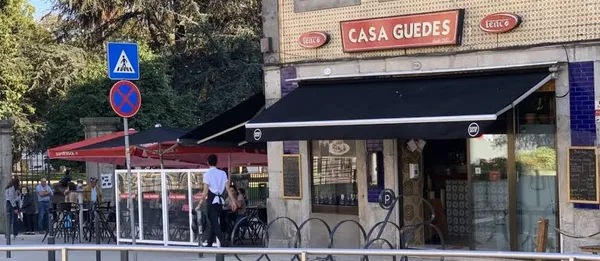
Exterior of Casa Guedes Tradicional restaurant in Porto with signage above the entrance

Photo: Casa Guedes (CC BY 3.0)

Casa Guedes Tradicional

Portuguese sandwiches
Poveiros

Porto institution famed for its pork shank sandwiches on rustic bread served with sheep's cheese at a counter with no reservations.

Visit website →

Flow Restaurant and Bar

Mediterranean
Baixa

Elegant Mediterranean restaurant in a restored neo-Arabic building offering creative seasonal menus and a terrace in central Baixa.

Visit website →

BOA-BAO

Pan-Asian
Bairro das Artes

Vibrant pan-Asian street food restaurant drawing from Thai, Vietnamese and Japanese traditions with signature cocktails and a lively atmosphere.

View on Maps →

Lareira Baixa

Portuguese tapas
Vitoria

Casual and popular Portuguese tapas spot serving generous portions of cod fritters, octopus salad and pork sandwiches at affordable prices.

View on Maps →

Maus Habitos

Cultural bar
Cedofeita

Porto's most iconic alternative bar hosting live music, DJ nights and gallery openings on the fourth floor of an Art Deco building.

Visit website →

What Do Nomads Say?

Vote on how accurate these scores are based on your experience

Cities with a Similar Vibe to Porto

Different places that score alike across our 13 categories, if you like Porto, these tend to feel similar.

Frequently Asked Questions About Porto

How much does it cost to live in Porto as a digital nomad?

A comfortable nomad budget in Porto is around $2,800 a month: a furnished rental, food, coworking, and getting around. Live a little outside the center or eat local to spend less.

Is the internet fast enough for remote work in Porto?

With a WiFi score of 7/10, connectivity in Porto is good for calls and focused work. A prepaid local SIM keeps you online when you are away from the apartment.

Is Porto safe for digital nomads?

Porto scores 8 out of 10 for safety in our ratings, which is excellent for solo travel and long stays. Use normal precautions at night and with valuables, and choose well-reviewed areas.

Is Porto a good city for digital nomads overall?

For nomads, Porto is worth a look if you value culture and climate. Costs sit near $2,800 a month and the community keeps growing, though, like anywhere, it will not match every checklist.