Cost of Living in Guimarães
Where this figure comes from. No cost survey covers Guimarães, so the $1,300 a month above is our own estimate rather than a measurement. On 416 of our 999 city guides the figure is built from a published Numbeo basket, a one-bedroom rent in the centre plus one person's monthly costs without rent, converted to USD; this city is not one of them. How we source everything.
Guimarães is one of Portugal's better-value bases, cheaper than Lisbon or Porto while still offering city comforts. A remote worker can plan on roughly $1,100 to $1,600 a month, depending on whether you rent a studio in the medieval core or share a flat near the university. Rent is the largest line, followed by food and the occasional train to Porto. Local markets, cafes and vinho verde keep everyday spending gentle, and the compact centre means you rarely need taxis. These figures are editorial estimates rather than fixed quotes, so treat them as a sensible starting point and adjust for your own habits. Prices here follow the local economy rather than the visitor numbers. This is the heart of the Vale do Ave, the country's textile and clothing belt, and the factories ringing the town remain the region's biggest employer at wages far under what the coastal cities pay. Rent is set against those wages, not against remote incomes, and that gap is the whole reason the arithmetic works here and fails on the coast. The corollary is that a foreign salary makes you an outlier in this market, so negotiate a longer lease with a private owner instead of bidding on whatever appears in English.
- Studio or one-bed rent: roughly $650 to $900 a month depending on location
- Groceries and local markets: around $220 to $300 a month for one person
- Coffee, pastel de nata and a glass of vinho verde: a few dollars each
- Train to Porto and regional day trips: budget a modest weekly allowance
Where to Work in Guimarães
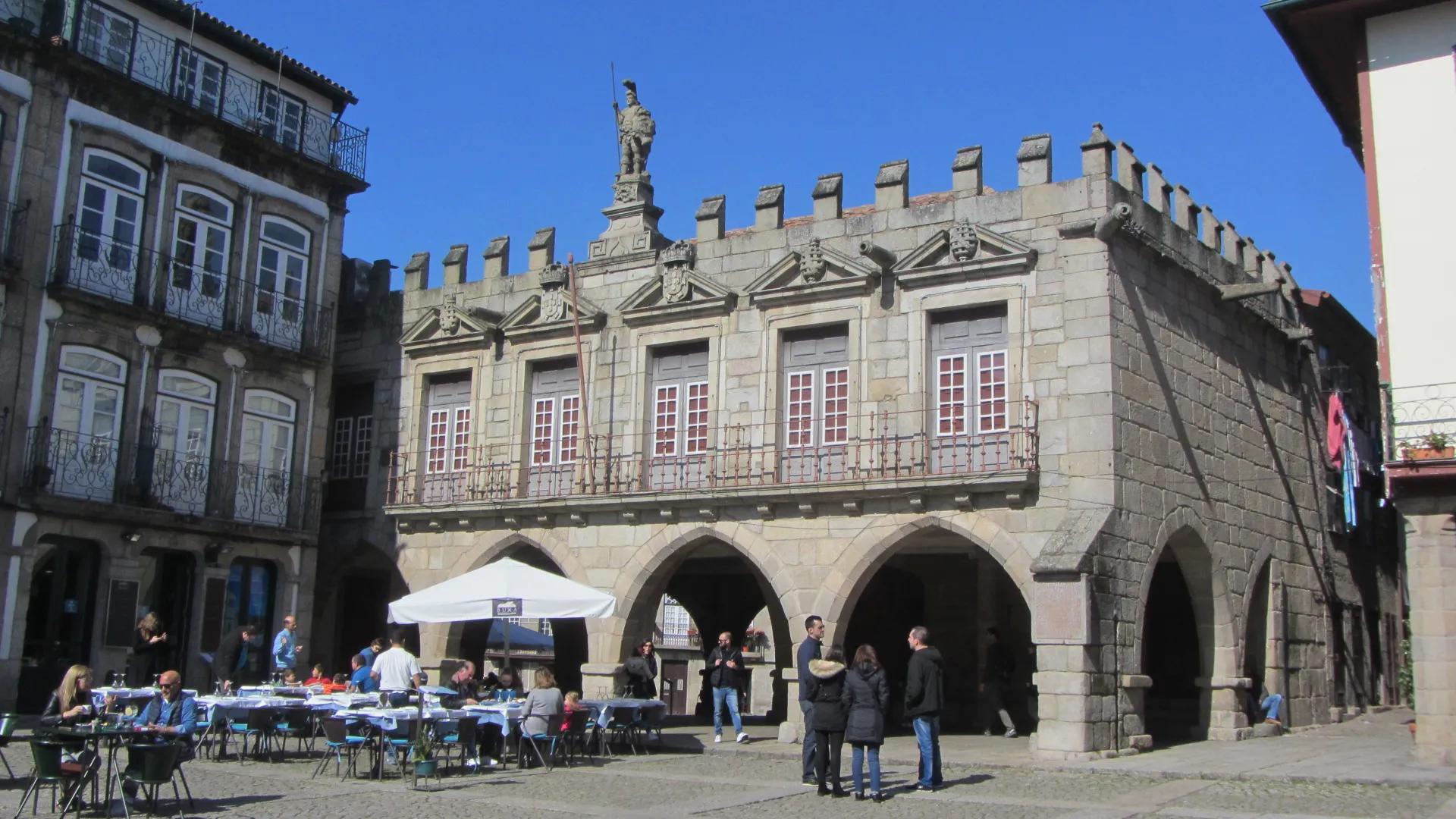
Guimarães rewards a cafe-and-flat working rhythm more than a dedicated coworking scene. The historic centre is full of granite-fronted cafes around the Largo da Oliveira and Praca de Santiago where you can settle in with a coffee and reliable wifi. As a lively university town, it has a young, studious atmosphere, and the Campus de Azurem and Couros creative quarter draw students and startups. A handful of coworking desks and business incubators linked to the university exist, though the choice is smaller than in Porto. Most nomads mix home wifi with favourite cafes, and a fifty-minute train hop puts Porto's larger coworking spaces within easy reach when needed. The old tanning quarter below the centre is where a working stay here actually lives. The stone tanks the hides were soaked in are still sunk into the ground between the buildings, and after the town held the European Capital of Culture title in 2012 the whole district was rebuilt around design and engineering schools, an incubator and the cafes that came with them. That is where anyone building something can be found, ten minutes downhill from the medieval core. Broadband, meanwhile, is not the issue anywhere in this country: what a stay here rations is company, not bandwidth.
Getting Around Guimarães
Guimarães is delightfully walkable, and most nomads never need a car. The UNESCO centre is a car-free maze of granite lanes, squares and staircases, best explored on foot, with the whole medieval core crossable in fifteen minutes. Local buses cover the wider town and the outskirts, and the Penha hill is reached by a scenic cable car that climbs above the rooftops. For longer trips, regular trains and the motorway connect you to Porto in about fifty minutes and to nearby Braga in under half an hour. Porto's airport is the gateway for international flights. Cycling is pleasant on the greener edges, though the cobbled hills reward good shoes. The cable car up the hill gets treated as an attraction when it is really a commute. It lifts you to a wooded plateau six hundred metres up, where the paths and viewpoints make the best hour available to anyone working from the town below; out of season it runs shorter hours, so check before relying on the ride down. As for the railway, the line down the valley is a suburban service rather than an intercity one, so it is frequent, cheap and slower than the motorway, and the airport lies beyond the city at the far end, which means budgeting for the crossing as well as the journey.
Sorting transport? Book an airport transfer, or compare car rental on Auto Europe and QEEQ.
Visas for Guimarães
Portugal is a popular landing spot for remote workers, and Guimarães sits within the Schengen Area, so many visitors arrive visa-free for up to ninety days in any one hundred and eighty. For longer stays, Portugal offers the D8 digital nomad visa aimed at remote workers and freelancers who earn a qualifying income from outside the country, giving a legal route to residency. There is also the broader D7 route for those with passive or stable income. Factor in time for appointments and document gathering. That income test is four times the national minimum wage, which currently works out at about $4,240 a month and rises every January when the wage does, so an older guide's figure is out of date. The immigration agency was rebuilt as AIMA in late 2023 and inherited a backlog, so appointment waits run to months and you should start them early. And the old non-habitual resident tax regime closed to new arrivals, replaced by a narrower scheme, so the tax case for the country is not what it was in 2022. At Porto airport, where most people heading here land, the EU Entry/Exit System now keeps that ninety-day count biometrically, and it stops applying to you once a D8 visa is in your passport, because the system follows short stays only.
Best Time to Visit Guimarães
Guimarães sits in the green Minho, where the landscape stays lush thanks to a fair amount of rain, especially in winter. Late spring and early autumn are the sweet spots, with warm days, comfortable evenings and the granite squares at their most inviting. Summer is lively and warm without the fierce heat of southern Portugal, and the university term fills the town with energy, though August sees some quiet as locals travel. Winters are mild but properly wet, so pack a good jacket. Festival season, including the vibrant Gualterianas in August, adds colour, while quieter shoulder months reward those who prefer calm cobbled mornings. The rain deserves a figure rather than an adjective, because the green landscape has a cause. This corner of the country takes well over a metre a year, most of it from October to March, and it arrives as long grey weeks instead of afternoon storms. Stone and damp together leave the old town looking extraordinary and the flats feeling cold, so insist on double glazing and some form of heating, which housing stock here is famously short of. As for dates, the one to arrange a stay around falls in December: the Nicolinas occupy the first fortnight, are run by the students rather than the council, and show the town at its most itself.
Pros and Cons of Guimarães
Guimarães offers a rare blend of deep history, student energy and everyday affordability, all wrapped in a safe, walkable package. The birthplace of Portugal wears its heritage lightly, with a living centre rather than a museum piece. The trade-offs are real, though: it is a smaller town, so the nomad community is thin, nightlife is modest, and the wet Minho winters test the patience. For many, Porto's size and buzz sit close enough to fill any gaps without giving up the calm. Weigh these points against your own priorities before settling in, and consider a trial month first. The founding claim deserves precision, because the tourist board leans hard on it. The first king was born here around 1109, and the battle that cut the county loose from its overlord was fought outside town in 1128. That origin is genuine and it is also nine centuries old: what exists today is a small northern town that happens to hold the best-preserved medieval core in the country. Its student population drains away from June, and the foreigners working remotely here are few enough that you will meet all of them. The bigger city down the line is the release valve, and whether an hour each way counts as near enough is what this decision really turns on.
- Pros: strikingly beautiful UNESCO centre, low cost of living, very safe, walkable, warm Minho food and vinho verde, quick trains to Porto and Braga
- Cons: small and quiet nomad community, limited nightlife and coworking, wet winters, fewer international flights without heading to Porto
Who Guimarães Is For
Guimarães suits the remote worker who wants history, calm and value rather than a big-city buzz. If you love wandering granite lanes, working from characterful cafes and having a castle and hilltop cable car on your doorstep, it will feel like home. It is ideal for solo nomads and couples who prize safety and walkability, foodies drawn to Minho cooking and vinho verde, and anyone who wants Porto's size within easy reach without the higher rent. It is a weaker fit for those who need a thriving nomad scene, buzzing nightlife or guaranteed sunshine. Treat it as a peaceful, affordable base with a proud, story-rich heart. Come for a term rather than a month, and arrive with the autumn intake so you see the place at full strength. Take a flat below the walls instead of inside them, where rents drop and the cobbles treat a bicycle more kindly. The football club is the quickest way into local life: Vitoria fill a thirty-thousand-seat stadium in a municipality of about a hundred and fifty thousand, and a season ticket buys somewhere to be every other Sunday for very little. And accept that the language is not optional here the way it is in Lisbon, because beyond the campus almost nothing happens in English.