 Porto
 Madrid
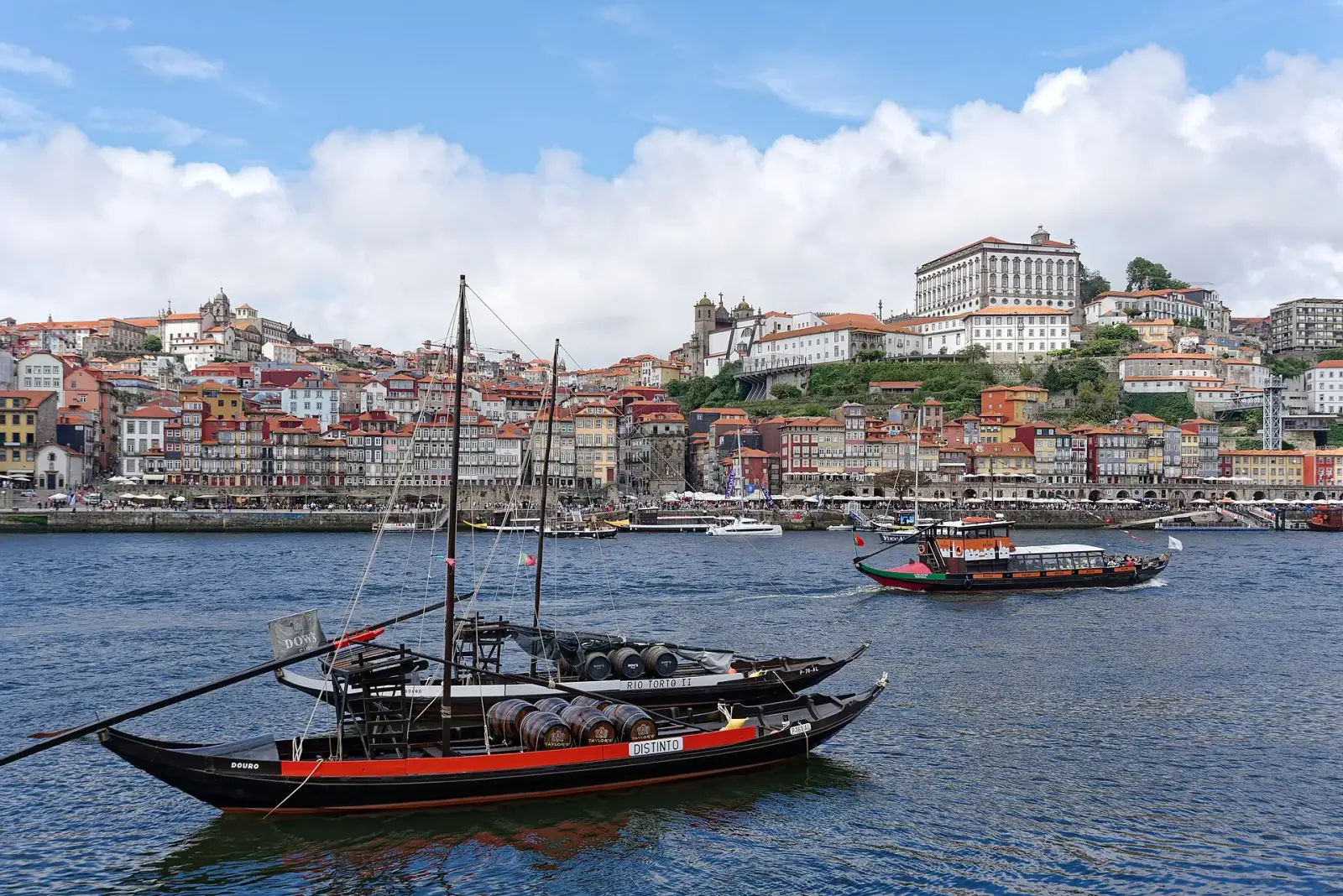
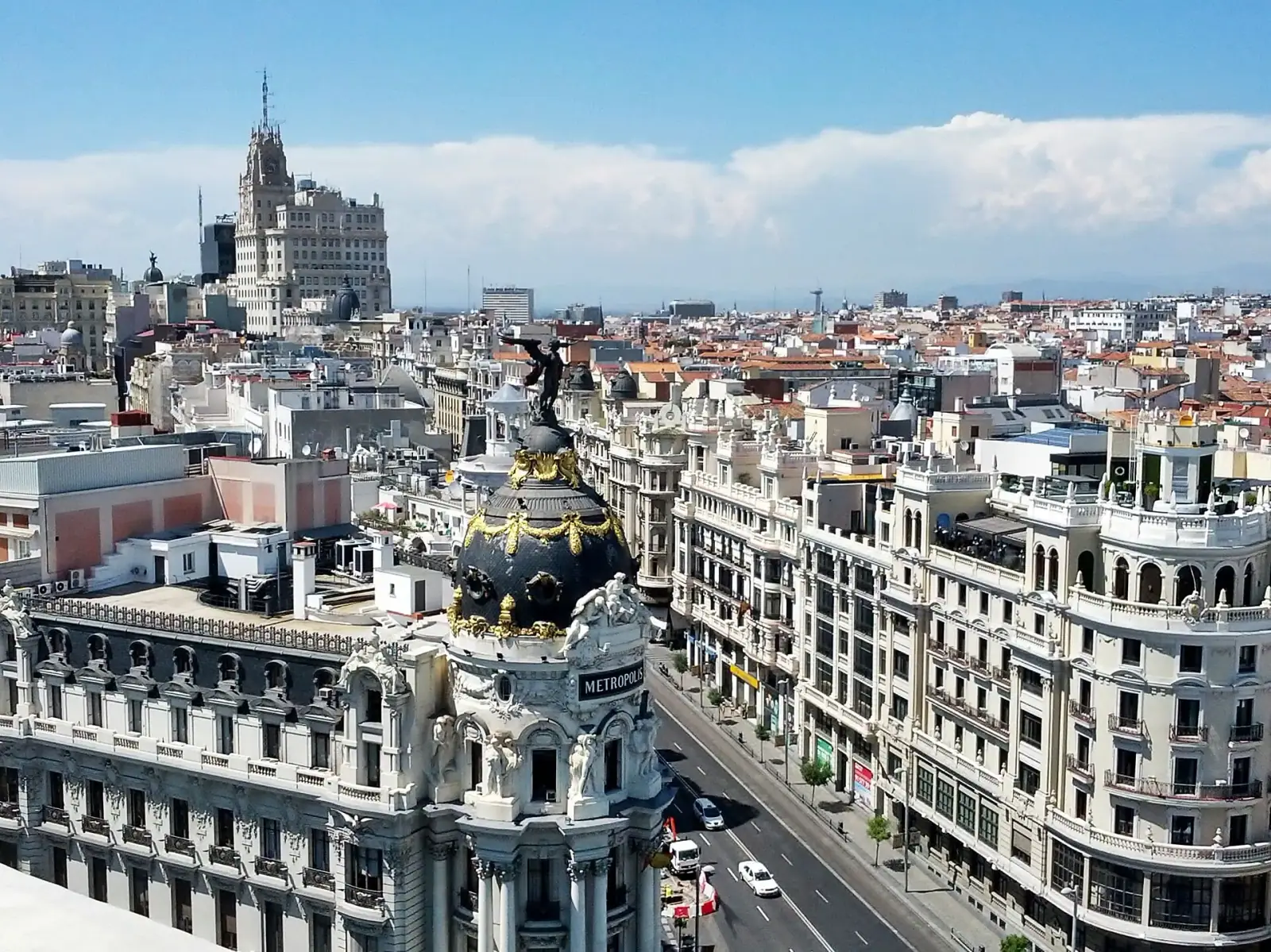
Take a designer from Toronto, on a Canadian employer's payroll, who wants to live in Europe with a laptop. She has narrowed it to two cities. Porto is a steep granite town where the top deck of the 1886 Dom Luís bridge carries walkers and metro trains high above the Douro, and the station at São Bento tells Portuguese history in painted tile. Madrid stands 660 metres up on the plateau, three and a half million people, with Malasaña's single-colour apartment blocks around the Plaza del Dos de Mayo and a crafts market in the square every weekend. On our estimate a month costs about $2,800 in the first and about $3,200 in the second.
So Porto is the cheaper option, and she leans that way. Whether she can have it, and whether it really is cheaper, depends on what she earns and how she is paid. Run her through three versions of her own life.
On $3,800 a month
The decision takes a minute. Portugal's D8 visa asks for four times the national minimum wage, currently $4,240 a month. Spain's digital nomad visa asks for about twice its own, $3,280. So the city that costs less to live in is the one that demands more income at the door, and at this salary she can move to Madrid and cannot move to Porto. Both figures rise with the wage, and our visa page tracks them.
On $6,000 a month, as an employee
Now she clears both bars, and tax takes over. Portugal's famous break for newcomers closed in January 2024, and its successor, IFICI, covers listed jobs such as research and certified startups, leaving out remote work for a foreign employer. She pays ordinary rates. Spain still has the Beckham regime, which charges employment income at a flat 24 percent for six tax years, and digital nomads working for foreign companies are among the listed routes. She must not have been Spanish tax resident in the previous five years, and she has about six months from starting work in Spain to file form 149. Miss that and it is gone.
| On $72,000 a year | Porto, ordinary rates | Madrid, Beckham regime |
|---|---|---|
| Income tax, roughly | $22,400 | $17,280 |
| Per month | $1,870 | $1,440 |
These are simple sums on gross pay, before deductions and social contributions, but the shape holds. The tax gap of about $430 a month is slightly larger than the $400 a month Madrid costs her extra. For a salaried employee on this income, the expensive city is the cheaper one, for six years.
On $6,000 a month, as a freelancer
Change the contract and the answer flips. Self-employment is not a clean route into the Beckham regime, and the moment she invoices clients instead of drawing a salary, she should assume ordinary Spanish rates. Portugal, meanwhile, has a simplified regime that taxes only a fixed share of what you bill: 75 percent for listed professions, with a cut in the first two years if you have no other work. On that same $72,000 her income tax falls to about $14,400 before the first-year cut. She will need to keep receipts for 15 percent of her fees, and social security is a separate bill at 21.4 percent of 70 percent of what she invoices. Our guide to Portuguese tax for nomads covers the detail. Even so, a freelancer above the D8 line belongs in Porto.
What the sums leave out
She would still have to live there, and the two climates suit opposite people. Porto gets about 1,200 millimetres of rain a year, with 181 in November alone, and July days that average 25°C. You could spend that November working in a café on Rua de Miguel Bombarda and riding out to the sea at Foz when the rain breaks. Madrid's wettest month brings 64 millimetres, and its July is 33°C. There, a summer evening means a walk along Madrid Río, the riverside park built after the M-30 motorway was buried, with herons on a Manzanares running free again. Porto can be crossed in an afternoon. Madrid would take you years, and it keeps a clock one hour ahead, which your European clients will prefer.
So our designer should find out one thing before she looks at a single flat: which box her next contract puts her in. Then she can fall in love with the city that box allows.
 United States
 United Kingdom
 Germany
 Canada
 Australia
 India