Cost of Living in Braga
Real market data
Source: Numbeo · August 2026
$1,490/moSolo nomad1-bed centre + living costs
$1,930/moCoupleshared 1-bed + costs
$1,310/moLean / localcheaper area + costs
- 1-bed rent, city centre$940€819
- 1-bed rent, outside centre$760€664
- Monthly costs excl. rent (1 person)$550€477
- Meal, inexpensive restaurant$12€10
- Monthly transit pass$23€20
- Buy price, per m² (centre)$2,560€2,225
Prices are from Numbeo (August 2026), converted to USD at $1 = €0.87 (01 Aug 2026). The monthly living-costs figure is our transparent one-person basket, groceries, a few meals out, utilities, phone, internet, transport and essentials, priced from those figures. Solo adds central rent; couple and lean are estimates from the same numbers.
Braga is one of the more affordable bases in Portugal, and these figures are editorial estimates rather than fixed prices. As a rule, expect to spend noticeably less here than in Lisbon or Porto, with a comfortable monthly budget landing roughly between $1,300 and $1,700 for a solo nomad. Rent is the main saving: the student population keeps a steady supply of rooms and small flats, and eating out remains genuinely cheap by Western European standards. Groceries, local wine and public transport are easy on the wallet, while imported goods and coworking desks cost a little more. Prices climb during peak summer and festival weeks, so book longer stays early. A structural fact keeps the rents down here and will eventually stop doing so. The university supplies thousands of student tenants each September and empties the market each June, which is why a twelve-month lease signed in July costs noticeably less than one signed in October. Beyond rent, the electricity tariff has two rates and switching to the cheaper night band is worth doing if you work odd hours; the change is free and most tenants never make it.
- Room in a shared flat for a long stay: around $350 to $500 a month
- A simple sit-down meal with a drink: roughly $10 to $14
- Espresso in a local cafe: about $0.90 to $1.50
- Monthly city bus pass: in the region of $30 to $40
Where to Work in Braga
Connectivity is a genuine strength here. Fibre broadband is widespread across the city, home connections are fast and reliable, and mobile coverage is solid, so video calls rarely give trouble. Braga is a young, student-driven town thanks to the University of Minho, which means plenty of relaxed cafes happy to let you linger over a laptop and a galao. A handful of dedicated coworking spaces cluster around the centre and near the university, offering desks, meeting rooms and a friendly community for those who prefer structure. The compact historic core keeps everything within a short walk, and the general pace is calm, focused and refreshingly free of big-city distraction. Check the building before you check the line. Nothing here was built with insulation or fixed heating, this is among the rainier cities in the country, and a beautiful flat in the old centre can be cold and damp from November to March in a way that makes sitting at a desk genuinely unpleasant. A modern block on the edge of town is warmer, drier and usually cheaper. The other thing to know is the academic calendar: the town is noticeably quieter and the cafes emptier through July and August.
Getting Around Braga
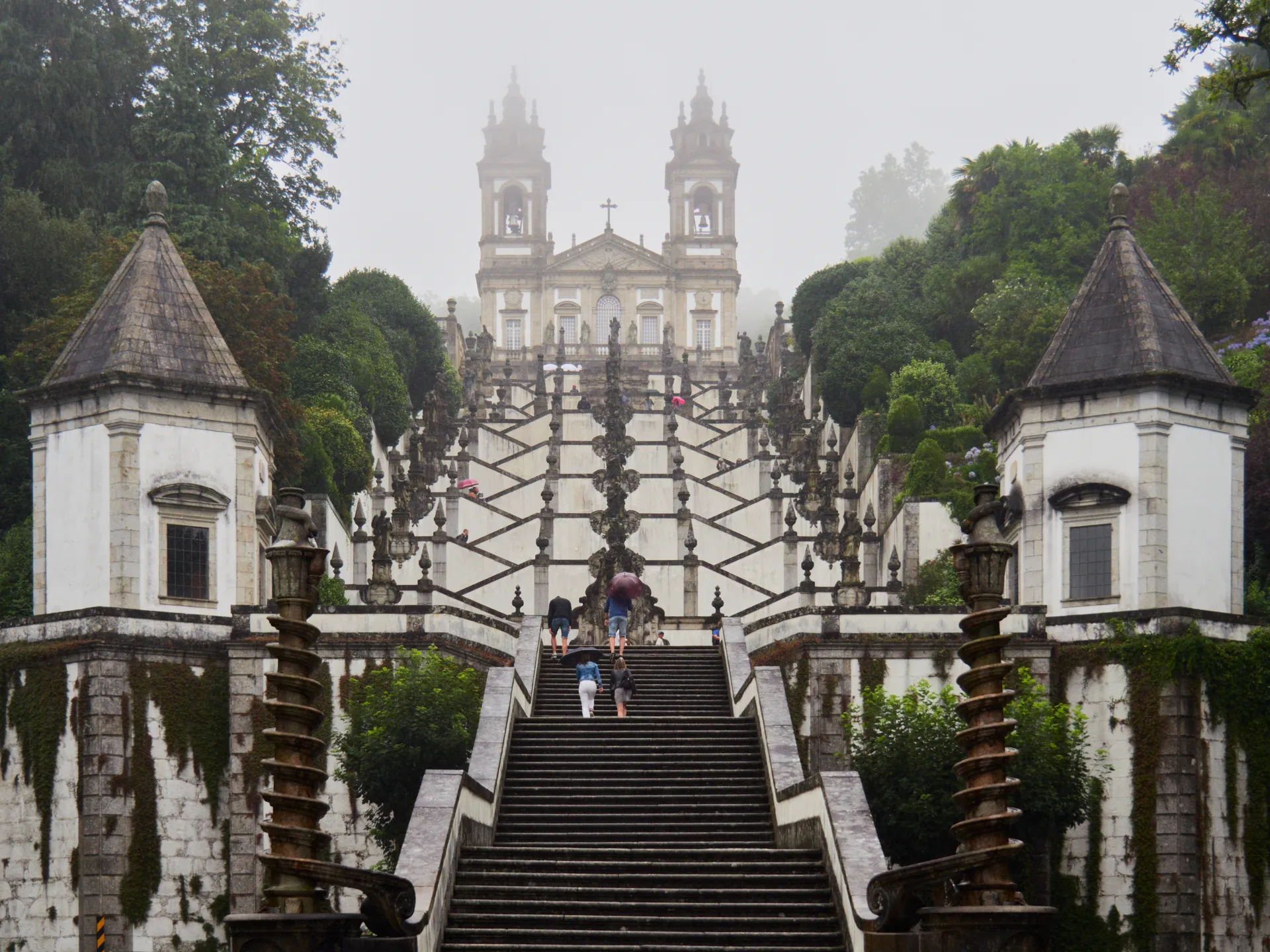
Braga is compact and genuinely walkable, and most nomads handle daily life entirely on foot within the historic centre. A dependable network of urban and regional buses fills the gaps, reaching the university, outer neighbourhoods and the foot of Bom Jesus do Monte. The train station connects you to Porto in around an hour, making day trips and airport runs straightforward, while nearby Guimaraes is an easy hop for a change of scene. Porto Airport (OPO) is the main gateway, reachable by train or direct bus in roughly an hour. A car is useful only if you plan to explore the Minho countryside and national parks properly. A week here is easier with two details in hand. The steps up to the sanctuary above the city are famous and also optional: a water-counterweight funicular has been hauling visitors up the hill since the 1880s and is the oldest of its kind still running anywhere, which is a better story than the climb. And the regional trains into the second city run on a suburban ticket rather than an intercity one, so a day return costs a couple of dollars rather than what the long-distance fare suggests.
Sorting transport? Book an airport transfer, or compare car rental on Auto Europe and QEEQ.
Visas for Braga
As part of Portugal, Braga falls under Schengen rules, so many visitors can enter visa-free for up to 90 days within any 180-day period as tourists. That tourist entry does not permit local employment. For longer stays, Portugal offers the D8 digital nomad visa aimed at remote workers earning from foreign clients or employers, with income thresholds and document requirements to meet. There are also residence routes for those planning to settle. A detail worth knowing about the remote-work route: the income evidence has to come from outside the country, and a freelancer with a single client is scrutinised harder than an employee with a contract, so a portfolio of invoices across several clients and several months is the stronger file. Applications are also decided partly on a criminal record certificate from every country you have lived in for more than a year, which takes longest to gather and should be started first. Nothing needs applying for before flying into Porto for Braga: the Entry/Exit System registration happens at the passport desk and costs nothing, while ETIAS, the online travel authorisation that is often confused with it, is a separate scheme that comes later.
Best Time to Visit Braga
Braga has a mild Oceanic climate with genuinely wet winters, so timing matters if you dislike rain. The sweet spot runs from late spring to early autumn, roughly May to September, when days are warm, long and mostly dry, ideal for exploring the baroque staircases and green surroundings. June is the liveliest month, thanks to the Sao Joao celebrations that fill the streets with music, food and fireworks, while the elaborate Semana Santa (Holy Week) processions draw crowds each spring. Winter is cooler, greyer and much quieter, which suits budget-conscious nomads who want lower rents and calmer streets, provided they pack a good waterproof. The Easter processions here are worth being specific about, because this city stages the largest and oldest of them in the country and the whole centre is given over to them for a week, with hooded figures, incense and crowds that come from across the region. Book a room or leave town. At the other end of the year, the city is a strong contender for the wettest large town in the country, and the rain arrives as weeks of drizzle rather than as storms, which is harder on morale than a downpour.
Pros and Cons of Braga
Braga rewards nomads who value authenticity and affordability over flash, but it is not for everyone. What that means concretely is a city of two hundred thousand where almost nobody is a foreigner. There is no expat quarter, no English-language scene, no cluster of other remote workers to fall into, and the practical consequence is that the first two months are lonelier here than in Lisbon and the second six are less lonely, because the friendships you make are with people who actually live here. That is the trade, and it suits some people exactly and defeats others entirely. On the ledger's other side: this is one of the oldest cities in the country and one of the most religious, with a cathedral older than the nation itself, a student population that keeps the bars open, and a rent that is roughly half what the capital asks for the same flat. Very little of it has been arranged for visitors, which is the point.
- Pros: low cost of living, excellent safety, fast fibre internet, rich baroque heritage, lively student energy, and quick train access to Porto and the wider Minho region.
- Cons: a small and still-growing nomad scene, real rainfall for much of the year, no coastline in the city itself, quieter nightlife than the big cities, and older locals who speak less English.
Who Braga Is For
Braga suits the nomad chasing an affordable, authentic and very safe Portuguese base with plenty of youthful student energy and easy access to Porto whenever the mood strikes. It rewards those who enjoy walkable historic streets, strong coffee culture, green countryside on the doorstep and a slower, more local rhythm of life. It is a poor fit for anyone whose priority is beach living, a large established nomad community, or a heaving nightlife scene, all of which sit better in Lisbon, Porto or the Algarve. Come here to work well, spend less and settle into real Portuguese daily life. A year is the right unit here rather than a season, because almost everything good about the place needs time: the language, the neighbours, the routine, the cheap twelve-month lease. Six months in and most people are still on the outside. Anyone who wants to test it first should come for the second half of September, when the students return and the city is at its most alive, rather than in August when half of it has gone to the coast. And take the train to the sea on a Saturday; it is forty minutes and changes how the winter feels.