Cost of Living in Willemstad
Where this figure comes from. No cost survey covers Willemstad, so the $1,700 a month above is our own estimate rather than a measurement. On 416 of our 999 city guides the figure is built from a published Numbeo basket, a one-bedroom rent in the centre plus one person's monthly costs without rent, converted to USD; this city is not one of them. How we source everything.
Budget around $1,700 a month as a solo remote worker in Willemstad, which makes Curacao considerably cheaper than the Caribbean islands with the best-known nomad visas. A one-bedroom flat runs roughly $600 to $1,000, with Pietermaai and Punda at the top of that range and the residential districts inland well below it. Groceries are imported and priced accordingly, though the Dutch supply chain keeps the range wider and the markup lower than on smaller islands. Eating at a local snack or truk'i pan costs very little. The guilder is pegged to the United States dollar at around 1.79, and dollars are accepted almost everywhere. This is our own estimate rather than measured data. Fibre runs about $50 to $90 a month and a coworking desk $150 to $250. Electricity is expensive because it is generated from imported fuel and desalinated water adds to the utility bill, so a flat with air conditioning through the year can add $150 to $250 a month. Car hire runs about $600 to $800 monthly, which most people accept as unavoidable once they see how far the good diving is from town. Rents in the inland districts of Otrobanda and Santa Rosa run a third below Pietermaai for the same space, at the cost of a walk into the restored centre.
Where to Work in Willemstad
Curacao has a real coworking scene for an island of 150,000, concentrated in Pietermaai and around the Punda side of the harbour, and much of it grew directly out of the @HOME remote work programme. Fibre from Flow reaches the developed parts of the island at reliable speeds and mobile data is inexpensive. Power is stable. Dutch is the language of administration and Papiamentu of daily life, but English is widely and comfortably spoken, which makes Curacao unusually easy to operate in. The island runs four hours behind central European time, so a Dutch afternoon is a Curacao morning. Papiamentu is a creole with Portuguese, Spanish, Dutch, English and West African roots and is the first language of most people here, but Curacao is genuinely quadrilingual in practice and switching mid-sentence is normal. The island runs four hours behind GMT with no daylight saving, so it sits level with New York in summer and an hour ahead in winter, which makes both European and American work practical from the same desk. The @HOME programme also lists partner accommodation and desks, which shortcuts the search for a base considerably.
Getting Around Willemstad
Willemstad is split by the St Anna Bay channel into Punda and Otrobanda, joined by the Queen Emma pontoon bridge, which swings open for shipping several times a day and is free to walk across. Both sides are walkable and the historic centre is compact. Beyond that the island needs a car: the best diving and the quiet beaches are spread along the western coast towards Westpunt, forty minutes away. Konvoi minibuses cover the main routes cheaply. Curacao's airport has direct flights to Amsterdam, Miami and across the region, which is a real advantage of the Dutch connection. The Queen Emma bridge is nicknamed the Swinging Old Lady and has been in service since 1888, and when it opens a free ferry runs alongside it so the crossing is never actually cut. The Juliana bridge high above the channel carries the road traffic and is worth walking once for the view down onto the coloured facades. Konvoi routes run from the Punda and Otrobanda terminals and thin out sharply after dark, so evenings usually mean a car or a taxi.
Sorting transport? Book an airport transfer, or compare car rental on Auto Europe and QEEQ.
Visas for Willemstad
The @HOME in Curacao programme grants a six-month remote work permit to people employed or self-employed outside the island, with a straightforward online application and a modest fee, extendable for a further six months. Dutch nationals have residence rights and do not need it. Everyone else on a short visit gets up to ninety days visa-free for most Western nationalities. Curacao is a constituent country of the Kingdom of the Netherlands rather than part of the European Union, so a Schengen visa does not apply here and time spent here does not count against a Schengen allowance. The six-month term is shorter than Barbados, Antigua or Dominica offer, but the application is among the simplest in the region and is usually decided within a couple of weeks. Time on it does not count toward residency, which in Curacao remains tied to Dutch nationality or long employment.
Best Time to Visit Willemstad
Curacao sits below the hurricane belt, which is the single most useful thing to know about its calendar: the island is warm, dry and windy essentially all year, with daytime temperatures around thirty-one and rainfall low even in the wetter months from October to February. That makes it one of the few Caribbean destinations with no season to avoid. The trade winds blow constantly and take the edge off the heat. The busiest and priciest window is December to April, when the northern hemisphere arrives. Carnival runs for weeks before Lent and is the island at its most alive. Curacao averages under 600 millimetres of rain a year, which is why the landscape is cactus and divi-divi rather than palm and jungle, and why the island can promise weather with a confidence most of the Caribbean cannot. Carnival here runs from January into the Tumba festival and the Gran Marcha, and it is a season rather than a weekend, with the whole island organised around it.
Pros and Cons of Willemstad
Willemstad is a UNESCO World Heritage site and looks like nowhere else in the Caribbean, a row of Dutch merchant houses painted in ice-cream colours along a working harbour channel. It sits outside the hurricane belt, has shore diving from dozens of points along the coast, real coworking, direct flights to Amsterdam, and costs meaningfully less than Barbados or the Cayman Islands. The island is dry and scrubby rather than lush in any way, the remote-working crowd is small, the six-month visa is shorter than the regional standard, and Willemstad outside the restored centre is an ordinary working city. Shore diving is the island's genuine speciality: dozens of marked entry points along the leeward coast drop onto reef within swimming distance of the car park, and the Tugboat and Playa Kalki sites are reached without a boat at all.
Who Willemstad Is For
The Caribbean without the hurricane season, a genuinely distinctive city to live in, and diving straight off the shore rather than from a boat. Its Dutch links make it unusually practical for Europeans, both for flights and for the language. Six months is what the visa allows, and Curacao is unusual in the region for being worth the whole of it. Anybody expecting rainforest and waterfalls has the wrong island: Curacao is arid, and the vegetation is cactus rather than canopy. Nor is there a large nomad scene here to fall in with. Divers will get more out of this island per dollar than almost anywhere in the region. European administrative standards in a Caribbean setting are rarer than they sound. Dutch healthcare, roads and public services here run at a level most of the region cannot match, and that difference is felt in ordinary weeks rather than emergencies. Curacao against Aruba comes out less polished, considerably more character, and a visa four times as long.
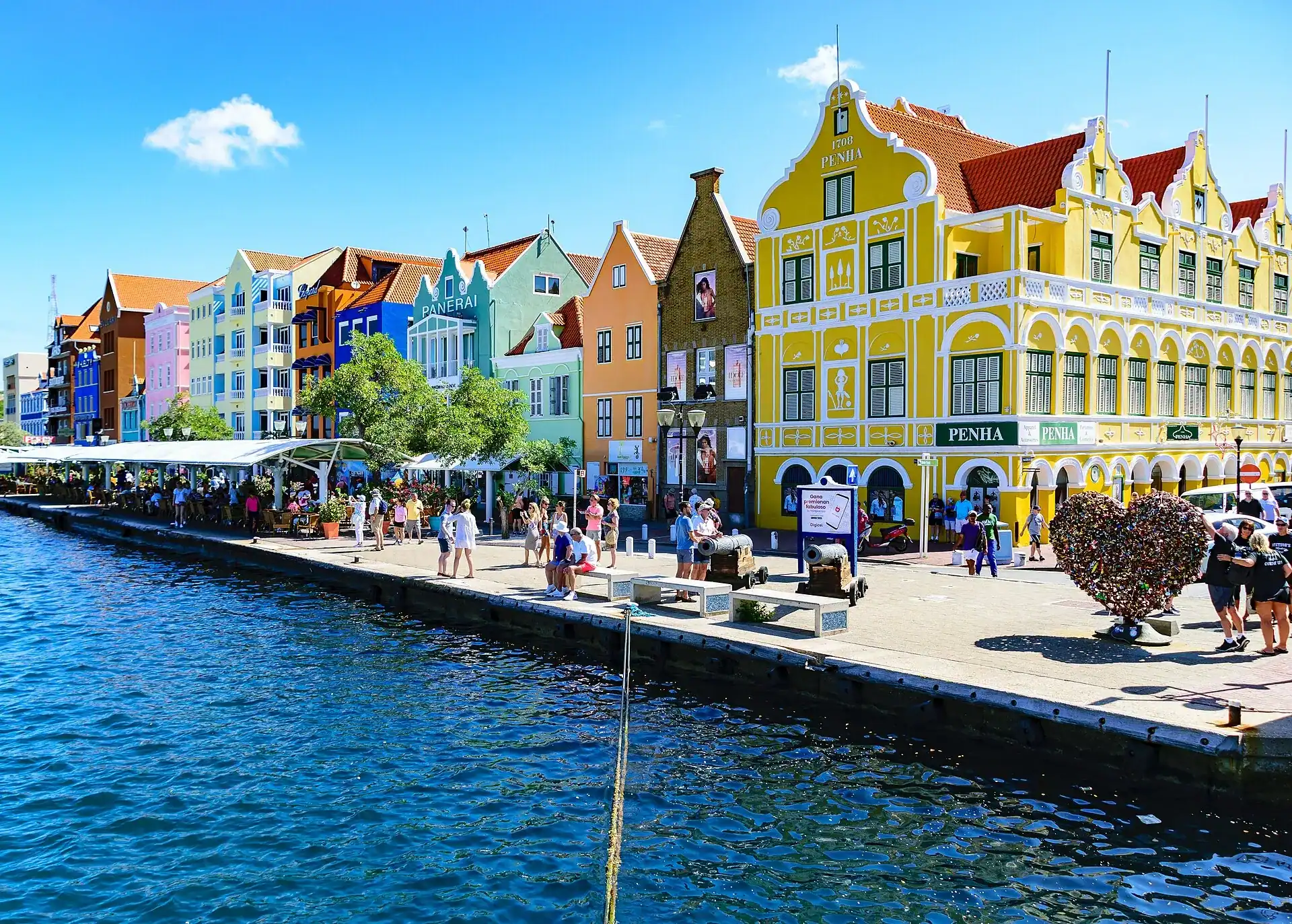 Photo: TerryDOtt / Wikimedia Commons (CC BY 2.0)