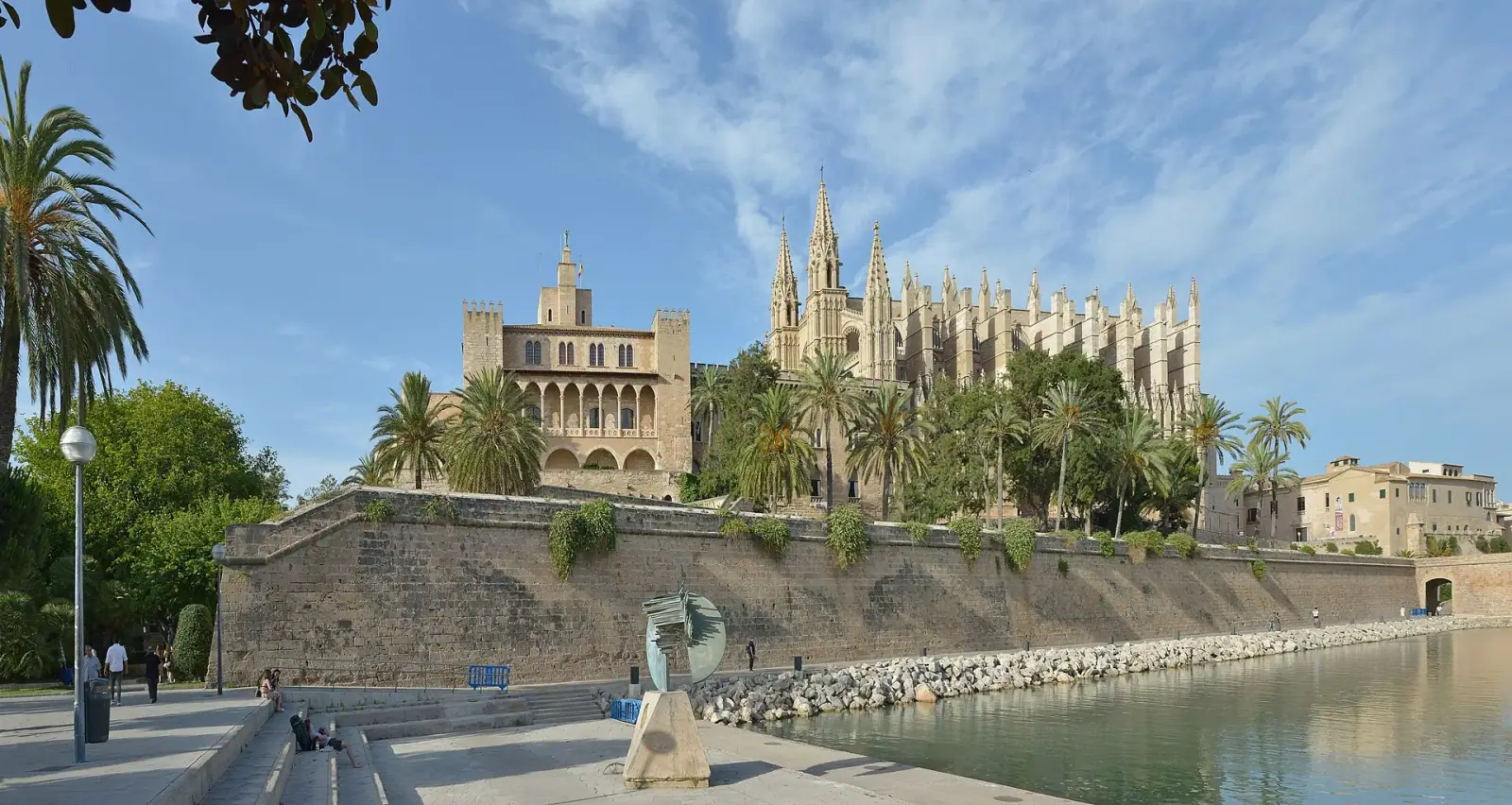
La Seu Cathedral and Royal Palace of La Almudaina rising above the waterfront promenade in Palma de Mallorca
Photo: Wolfgang Moroder / Wikimedia Commons (CC BY-SA 3.0)
Spain flag

Palma de Mallorca

Spain

Discover island sophistication, yacht harbors, Gothic cathedral, and year-round sun.

€3.200
Monthly Budget
--
Current Weather
Mediterranean
Climate Type
70 Mbps
Avg. WiFi Speed
8/10
Safety Score
5,000+
Active Nomads
--
Time Difference
Scroll
0
Nomad Score

A Remote Worker's Guide to Palma de Mallorca

Discover island sophistication, yacht harbors, Gothic cathedral, and year-round sun. Plan on roughly $3,200 a month. Its strengths are climate and nature, while cost is where it scores lower.

Compare Palma de Mallorca vs Ibiza →

Category Breakdown

How Palma de Mallorca scores across all 13 factors

Weather in Palma de Mallorca

Monthly averages from 2019-2023 (Open-Meteo), and the best time to visit

14°
Jan
17°
Feb
18°
10°
Mar
20°
12°
Apr
24°
15°
May
29°
20°
Jun
33°
23°
Jul
32°
23°
Aug
28°
20°
Sep
24°
17°
Oct
19°
13°
Nov
17°
10°
Dec
Daily high & low (°C)Rainfall (mm/month)Best months to visit

The best time to visit Palma de Mallorca for comfortable weather is Jun, Jul, Sep. The warmest month is Jul (around 33°C by day), and the wettest is Sep (about 78mm of rain).

Chasing good weather? See other cities that are warm in Jun, or plan a multi-city route around the seasons. Staying a while in Palma de Mallorca? Check visa options, your time-zone overlap and how far your budget stretches, or find it on the world map.

Historical monthly averages, not a forecast. Source: Open-Meteo.

Best Neighborhoods in Palma de Mallorca

Where to base yourself for the perfect nomad experience

Casco Antiguo (Old Town)

$$$
Historic & Sophisticated

Gothic grandeur and café culture

Palma's Old Town enchants - the magnificent cathedral dominates narrow streets filled with boutiques and tapas bars. Mediterranean sophistication meets Mallorcan heritage.

Best for: Culture lovers, architecture fans, and those wanting Palma's best
✓ Pros
  • Stunning cathedral
  • Great restaurants
  • Historic charm
  • Walkable
✗ Cons
  • Tourist crowds
  • Expensive
  • Cruise ship days

Santa Catalina

$$$
Trendy & Culinary

Former fishing quarter turned foodie heaven

Santa Catalina is Palma's trendiest neighborhood - the old fishing district now houses Mercat de Santa Catalina, craft cocktail bars, and the city's best restaurants.

Best for: Foodies, nightlife seekers, and those wanting trendy vibes
✓ Pros
  • Best food scene
  • Great nightlife
  • Central location
  • Character
✗ Cons
  • Noisy at night
  • Gentrified prices
  • Crowded weekends

El Terreno

$$
Residential & Artistic

Hillside charm with sea views

El Terreno climbs above Palma - once the nightlife center, now a residential area with stunning views, artistic community, and historic Bellver Castle nearby.

Best for: Artists, long-term residents, and those wanting views
✓ Pros
  • Great views
  • Artistic community
  • Quieter atmosphere
  • Near castle
✗ Cons
  • Hilly terrain
  • Limited shops
  • Past its prime

El Molinar

$$
Beach & Local

Local beach life outside the center

El Molinar offers authentic Palma beach culture - local swimmers, casual chiringuitos, windmill-dotted shore. Where Palmesanos escape the Old Town crowds.

Best for: Beach lovers, locals seekers, and those wanting authenticity
✓ Pros
  • Local beach scene
  • Affordable
  • Authentic vibes
  • Good seafood
✗ Cons
  • Far from center
  • Simple facilities
  • Public transport limited

Son Espanyolet

$$
Residential & Family

Residential charm with local markets

Son Espanyolet is where young Palma families live - tree-lined streets, local markets, neighborhood bars. Just enough removed from tourism for authentic daily life.

Best for: Families, long-term visitors, and those wanting local life
✓ Pros
  • Local atmosphere
  • Good prices
  • Safe area
  • Markets
✗ Cons
  • Less scenic
  • Far from beach
  • Limited nightlife

Cost of Living in Palma

Palma is not cheap by Spanish standards. The Balearic Islands run pricier than the mainland because much of what you buy arrives by ferry, and summer demand pushes everything higher. Expect a solo remote worker to spend roughly 1,900 to 2,900 EUR per month (about $2,050 to $3,150) depending on flat, season, and habits.

Housing is the swing factor. A studio or one-bedroom in a central, walkable barrio like Santa Catalina or the Old Town runs about 900 to 1,400 EUR ($975 to $1,500). Move to an outer area such as Son Ferriol or the ring around the center and you can find 700 to 1,000 EUR ($760 to $1,080). Long leases are cheaper per month than short furnished nomad rentals, which carry a premium.

  • Groceries: roughly 300 to 400 EUR ($325 to $435) per month for one person; island prices sit a bit above mainland Spain.
  • Eating out: a basic restaurant meal is about 12 to 18 EUR ($13 to $20); dinner for two at a mid-range spot runs 60 to 80 EUR ($65 to $87).
  • Coworking hot-desk: day passes are commonly 25 to 45 EUR ($27 to $49); a monthly membership is often 150 to 250 EUR ($160 to $270).
  • Local transport: a monthly EMT bus pass is inexpensive, and single rides are cheaper paid by contactless card than in cash.

Watch the seasonality. Short-term rents and daily costs climb sharply from June through September, when the island fills with tourists. Winter (November to March) is markedly quieter and cheaper, and you can sometimes negotiate off-season monthly deals that would be impossible in July.

Where to Work

Palma has a real coworking scene rather than a single token office. Well-known spaces include Palmapolitan, a design-led favorite with freelancers and creatives; Hub Mallorca, central and event-heavy with a business vibe; Nidus39, quieter with a leafy terrace; and Fortuny 3, a larger space with a garden, meeting rooms, and a kitchen. Convendum and Regus cover the more corporate end. Day passes run roughly 25 to 45 EUR.

Cafe-work culture exists but is lighter than in bigger nomad hubs. Plenty of cafes in Santa Catalina and the center welcome a laptop for a coffee and a couple of hours, though you should read the room in summer when tables are in demand. For all-day sessions, a coworking desk is the reliable move.

On WiFi: mainland-quality fiber is widespread across Palma, and connections in apartments and coworking spaces are generally fast and stable. If you take video calls, confirm the specific flat has fiber rather than relying on assumptions, and keep a mobile data plan as backup, which is standard practice anywhere.

Getting Around

Palma is compact and the Old Town is genuinely walkable, so many nomads barely need transit day to day. When you do, the EMT city bus network covers the city well, with a cheap monthly pass and single fares that are lower when paid by contactless card. Cycling is popular and the seafront promenade makes for an easy commute.

Getting to and from Palma Airport (PMI) is simple. The A1 airport bus runs to Plaza de Espanya in the heart of the city in about 20 to 30 minutes, roughly every 12 to 17 minutes depending on season. A one-way ticket is around 5 EUR (about $5.50). Taxis and pre-booked transfers are widely available if you land late or travel heavy. From Plaza de Espanya you can also catch regional TIB buses and the island train to reach the rest of Mallorca.

Visas and Staying Long-Term

If you hold a US, UK, Canadian, Australian, or other visa-exempt passport, you can stay in the Schengen Area, which includes Spain, for up to 90 days within any rolling 180-day period without a visa. Those days count across all of Schengen, not per country, and entry and exit days both count. With the EU Entry/Exit System now operational, overstays are tracked automatically, so do not push past 90 days.

To stay longer, Spain offers a digital nomad visa for remote workers employed by or contracting with companies outside Spain. As of 2026 it requires proof of income around 2,850 EUR per month (tied to 200% of the Spanish minimum wage, with higher thresholds if you bring family), plus a relevant degree or about three years of experience and proof you have worked with your clients or employer for at least three months. Applied for from a consulate abroad it is typically issued for up to one year; applied for from inside Spain it can grant a residence authorization of up to three years, both renewable, and it comes with a favorable tax regime for many applicants.

Rules and figures change, so confirm current requirements with the Spanish consulate or an official government source before you plan around them.

Best Time to Visit

Palma has a classic Mediterranean climate: hot summers and mild winters. July and August average highs near 29 to 30 C (about 86 F), with warm seas and packed beaches. Winters are gentle, roughly 10 to 15 C (50 to 59 F), rarely cold, and much quieter.

For remote work, the sweet spots are spring (April to June) and early autumn (September to October). You get warm, comfortable weather, swimmable seas, and far smaller crowds and prices than peak summer. Winter suits you if you want the cheapest rents and a calm island to focus in, accepting shorter days, some closed venues, and a sleepier social scene. Midsummer is beautiful but hot, expensive, and crowded, which is the trade-off to weigh.

Pros and Cons

What works well:

  • Walkable, beautiful Old Town with a real city feel plus beaches and mountains close by.
  • Solid coworking scene, fast fiber, and a growing nomad and startup community.
  • Easy airport connections and short bus ride into the center.
  • Mild shoulder seasons that are ideal for working while still enjoying the outdoors.

What to weigh honestly:

  • Heavy summer overtourism and noise, with rents and daily costs spiking June to September.
  • Higher prices than mainland Spain due to island import costs.
  • Island isolation: leaving means a flight or ferry, and winter can feel quiet and slow.
  • Housing is competitive and short-term furnished rentals carry a premium.

Who Palma Is Best For

Palma suits remote workers who want a genuine European city with beaches, good food, reliable infrastructure, and an outdoor lifestyle, and who value walkability and a Mediterranean pace over a bargain. It rewards those who come in spring, autumn, or winter and can afford island prices, and it fits people planning a longer stay on the digital nomad visa.

Skip it, or at least avoid midsummer, if you are on a tight budget, if you dislike crowds and heat, or if you need a large, always-buzzing nomad hub with a dense cafe-work culture year round. If constant easy overland travel to other cities matters to you, an island base will feel limiting.
Where to Stay in Palma de Mallorca

Top neighborhoods and accommodations for digital nomads

Fil Suites

Aparthotel
Old Town

Design aparthotel in a converted historic factory steps from La Rambla, with full kitchens and 9.1 Booking rating.

Check availability →

Samaritana Suites

Serviced apartments
Old Town

Boutique suites on a quiet cobbled street four minutes from Plaza Mayor, rated 9.5 by guests on Booking.com.

Check availability →

StayCatalina Boutique Hotel-Apartments

Aparthotel
Santa Catalina

Four-star apartment-suites with full kitchens in walkable Santa Catalina, the city's top nomad-friendly quarter.

Check availability →

The Boc Hostels City

Hostel
Pere Garau

Eco-designed hostel in a renovated industrial building with fast WiFi, private lockers and a seasonal rooftop pool.

Check availability →

Browse apartments, aparthotels and hotels across Palma de Mallorca. Compare prices and book a base that suits a remote-work stay.

See available stays in Palma de Mallorca →

Affiliate link. See our disclosure.

Best Coworking Spaces

Where nomads get work done in Palma de Mallorca

Palmapolitan

Coworking space
Old Town

Characterful coworking in a traditional townhouse in the heart of Palma's historic center.

View on Maps →

Panteon House

Coworking space
Central Palma

Professional coworking with 24/7 access, private offices, and meeting rooms near Santa Catalina.

Visit website →

The Hub Mallorca

Coworking space
Santa Catalina

Welcoming shared workspace with a strong community vibe and helpful staff in the nomad hub neighborhood.

View on Maps →

Nidus Coworking

Coworking space
Central Palma

Established coworking space with a large membership base, flexible desk options, and reliable infrastructure.

View on Maps →

Arabay Coffee

Laptop-friendly cafe
Old Town

Central specialty coffee shop with free wifi, power sockets, and a calm atmosphere suited for focused work.

View on Maps →

Comodo and Co Arxiduc

Laptop-friendly cafe
Arxiduc

Relaxed cafe-coworking hybrid with strong wifi, Nespresso coffee, and soundproofed seating for remote workers.

View on Maps →

Where to Eat & Drink

Best food and drink spots in Palma de Mallorca

Vandal

Contemporary tapas
Santa Catalina

Michelin-recognized vanguard restaurant with inventive small plates, premium meats, and an edgy cocktail program.

Visit website →

Stagier

Fusion small plates
Santa Catalina

Intimate venue run by a Chilean-Peruvian chef duo serving creative small plates inspired by Spain's top kitchens.

View on Maps →

Brasa Madre

Argentine grill
La Lonja

Family-owned Argentinian grill near La Lonja known for dry-aged meats, fresh seafood, and a warm atmosphere.

View on Maps →

Mouna

Plant-based Mediterranean
La Lonja

Organic restaurant in a serene La Lonja setting with vibrant plant-forward dishes made from local seasonal produce.

View on Maps →

El Camino

Wine bar and tapas
Sant Nicolau

Beloved wine bar with a sweeping bar top, excellent natural wines, and fresh tapas in Palma's old town.

View on Maps →

La Rosa Vermuteria

Vermouth bar
Sant Jaume

Relaxed neighborhood bar specializing in house vermouth and handmade pintxos, popular with locals and nomads alike.

View on Maps →

What Do Nomads Say?

Vote on how accurate these scores are based on your experience

Cities with a Similar Vibe to Palma de Mallorca

Different places that score alike across our 13 categories, if you like Palma de Mallorca, these tend to feel similar.

In the rankings

Where Palma de Mallorca ranks

Palma de Mallorca features in 1 of our 32 city rankings.

  1. 6Best cities in Spain
  2. Best cities in Europe

Frequently Asked Questions About Palma de Mallorca

How much does it cost to live in Palma de Mallorca as a digital nomad?

Budget roughly $3,200 a month in Palma de Mallorca for a furnished place, food, coworking, and transport. The most popular central areas cost more; suburbs and local spots cost noticeably less.

Is the internet fast enough for remote work in Palma de Mallorca?

Palma de Mallorca rates 7 out of 10 for WiFi in our scoring, so it handles video calls and daily remote work good. Carry a local SIM with data as a backup for cafes and travel days.

Is Palma de Mallorca safe for digital nomads?

Our safety score for Palma de Mallorca is 8/10, excellent for nomads. As anywhere, watch your belongings, favor busier streets after dark, and research neighborhoods before you book.

Is Palma de Mallorca a good city for digital nomads overall?

Palma de Mallorca stands out for climate and nature among remote workers. With a typical budget near $3,200 a month and a growing nomad scene, it suits anyone whose priorities line up with those strengths.