Cost of Living in Vigo
Real market data
Source: Numbeo · September 2026
$1,610/moSolo nomad1-bed centre + living costs
$2,170/moCoupleshared 1-bed + costs
$1,390/moLean / localcheaper area + costs
- 1-bed rent, city centre$920€802
- 1-bed rent, outside centre$700€608
- Monthly costs excl. rent (1 person)$690€600
- Meal, inexpensive restaurant$15€13
- Monthly transit pass$35€30
- Buy price, per m² (centre)$3,110€2,698
Prices are from Numbeo (September 2026), converted to USD at $1 = €0.87 (01 Aug 2026). The monthly living-costs figure is our transparent one-person basket, groceries, a few meals out, utilities, phone, internet, transport and essentials, priced from those figures. Solo adds central rent; couple and lean are estimates from the same numbers.
Budget around $1,610 a month, which makes Vigo cheaper than Madrid or Barcelona and comparable with the rest of Galicia. A one-bedroom runs roughly $500 to $800, with the areas near the marina and Samil beach at the top. Market produce is very good and cheap, and the Mercado da Pedra sells the seafood that Vigo lands in enormous quantities. Eating out is inexpensive and the standard is high: this is one of the best places in Spain to eat, and the prices do not reflect that. Utilities are moderate and heating runs through a wet mild winter. The menu del dia is the mechanism that makes eating out this cheap: a set lunch of several courses with a drink, served in most places on weekdays, and it is still the best value meal in Spain. Damp rather than cold is what costs money in a Galician winter, since a flat that is not heated regularly will show it on the walls, so budget for running heating even on mild days. Contracts usually run for a year with one or two months' deposit, and because Vigo is a working city rather than a tourist one, prices hold steady through the summer instead of spiking.
Where to Work in Vigo
Connectivity is very good. Spain has extensive fibre at high speeds and low prices, mobile coverage is comprehensive and power is reliable. There is a real coworking scene in Vigo, helped by the university and by an automotive and technology sector that is substantial: the Stellantis plant here is one of the largest car factories in Europe. The time zone is central European, which is an hour ahead of solar time in Galicia and shapes the very late Spanish day. Spain's digital nomad visa applies here as elsewhere. Anyone working from Galicia should also expect the local rhythm, since lunch runs from two until four and the working day finishes correspondingly late. The other half of the local economy is the sea, and not only fishing: Vigo builds and repairs ships, freezes and processes catch for export, and the university's marine science work follows from that. It gives the city a technical professional base with nothing to do with tourism. Galician is used comfortably alongside Spanish in offices and meetings, and while nobody expects it of an outsider, understanding a little of it goes further here than a lot of English does.
Getting Around Vigo
Vigo is built up a steep hillside above its ria, so walking is hard work in one direction and easy in the other, and the city has installed a series of public escalators and lifts to deal with it. Buses cover the city cheaply. The Ave high speed line reaches Madrid in about four hours and Porto is two hours south by road. Vigo Airport has domestic and limited European flights. The ferries to the Cies Islands, which are the reason many people come, leave from the port in summer. The most useful connection is southward. Porto's airport is a straightforward drive or bus ride away and offers far more international routes than Vigo's own, so a great many residents fly from Portugal by default, and a cross-border train runs down as well. Locally, passenger ferries cross the ria to Cangas and Moana in about twenty minutes, which turns the far shore into a commutable place to live and a very easy afternoon out. Cycling is for the determined given the gradient, though the seafront out to Samil is flat and pleasant.
Sorting transport? Book an airport transfer, or compare car rental on Auto Europe and QEEQ.
Visas for Vigo
Spain is a member of the European Union and the Schengen area, so European Union and EEA citizens may live and work here with no permit, registering for an NIE number and on the padron once resident. Everyone else needs a Schengen visa for short stays or a residence permit for longer ones. Spain operates a digital nomad visa under its 2023 startups law, valid for up to a year initially and renewable to five, with an income threshold and a favourable tax regime for qualifying applicants, and it has become one of the most used schemes in Europe. The practical bottleneck is not eligibility but appointments. Booking a slot at a Spanish consulate, or at the relevant office for the in-country route, can take longer than the application itself is meant to, and this is the stage where most timelines slip. Family members can be included on the same application, which is one of the scheme's more useful features and is often missed. The favourable tax treatment has to be requested rather than granted automatically, and it is worth proper advice given how much turns on it. Every route from Peinador stays inside Spain, so non-EU arrivals have their Entry/Exit System record opened at the connecting hub and land in Vigo on a domestic leg.
Best Time to Visit Vigo
June to September is the season, with July around twenty four degrees and the Cies Islands accessible, though the ferry requires a permit that is capped daily and books out. Galicia is the wet corner of Spain and rain is a genuine feature: Vigo gets more than most Spanish cities and the winter is grey and damp rather than cold. May and October are pleasant and quiet. The Festa da Reconquista in March, when the city dresses in period costume to commemorate expelling Napoleon's troops, is the local event. Anyone hoping to reach the Cies should apply for the permit online well in advance, since the daily visitor number is capped and the summer allocation goes quickly. Galicians distinguish between rain and orvallo, the fine drizzle that hangs in the air for days without ever quite falling, and it is the orvallo rather than the downpours that defines a winter here. There is a compensation the summer visitors miss entirely: shellfish is at its best in the cold months, and the Christmas season in particular is when the percebes and the scallops are worth the trip on their own.
Pros and Cons of Vigo
Seafood and setting carry this place: Vigo is Europe's largest fishing port by value of catch, the ria is beautiful, and the Cies Islands half an hour offshore hold a beach that British newspapers once ranked the best anywhere, now protected as a national park with capped daily visitor numbers in summer. Costs are well below the Spanish cities people have heard of. The rain is persistent, the city is industrial and steep rather than pretty, and Galician is spoken as widely as Spanish in the streets around the port and the old market. Vigo is genuinely safe, including at night and including the parts that look industrial, which is not universally true of Spanish port cities. And the old town around A Pedra, small as it is, is where the oyster sellers work the street and is far better than its size suggests. The airport's route map is thin enough that most international travel starts with a journey to Porto or Santiago, which adds a couple of hours to every trip out of the city.
Who Vigo Is For
Anyone who takes seafood seriously, which is the honest headline, along with sailors, walkers on the coastal Camino, and people on the Spanish nomad visa who want the Atlantic rather than the Mediterranean. It suits anyone working European hours. Coming to Spain for sunshine and arriving in Galicia is a category error, since this is the green corner and it is green for a reason. The historic centre is also small, and the city wrapped around it is a working port rather than anything charming. The coastal route of the Portuguese Camino to Santiago runs straight through Vigo, which makes the city a natural stage on the walk and not a detour off it. Anyone choosing within Galicia should know the trade. Santiago is prettier and smaller, A Coruna is more elegant, Pontevedra is the most pleasant to walk, and Vigo has the jobs, the transport and the lower rents. This is a working city and not a set piece. That is the whole of the appeal for some people, and families do well in it. It is also a sensible base for anyone who wants Portugal within easy reach without paying Lisbon or Porto prices.
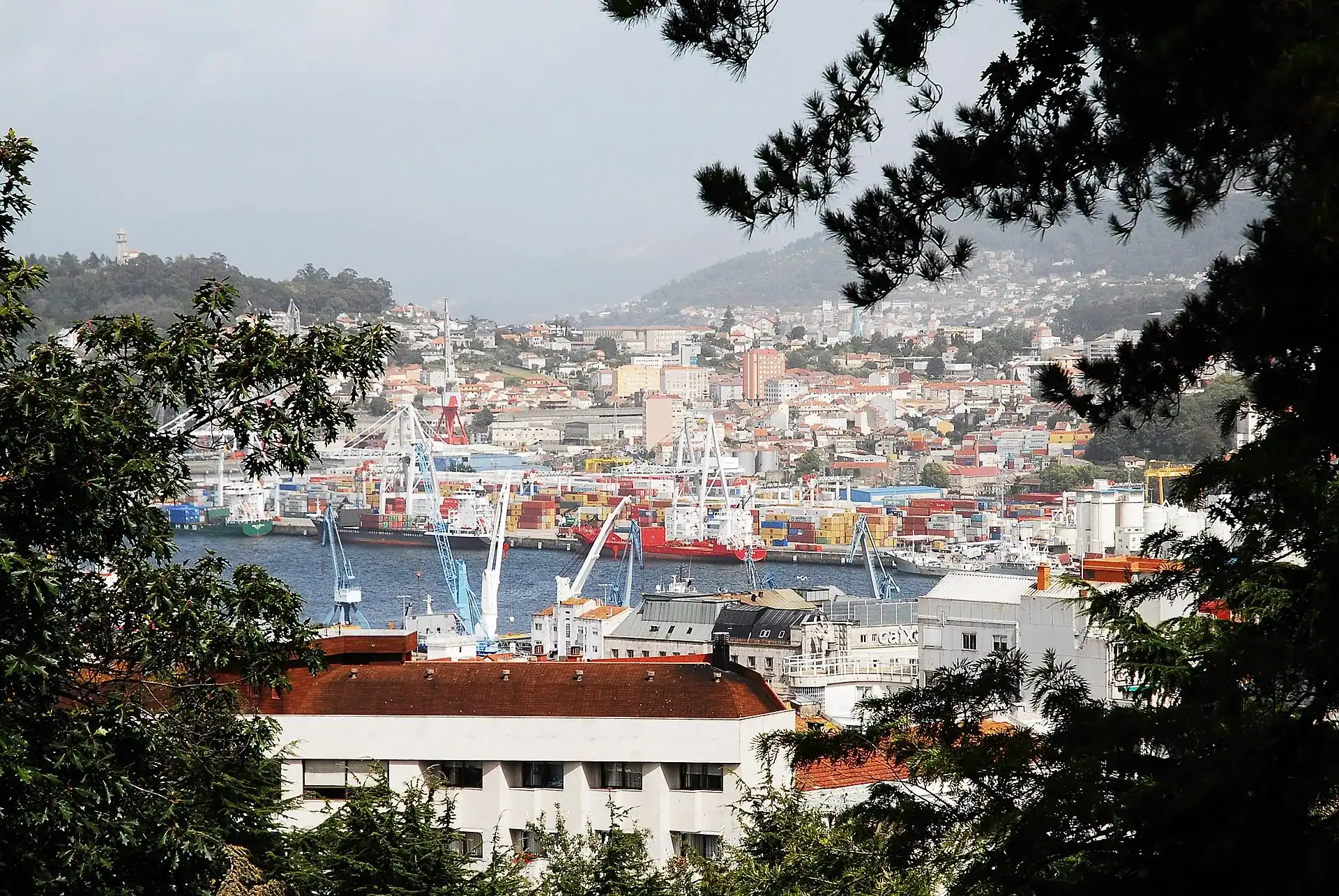 Photo: Mstyslav Chernov / Wikimedia Commons (CC BY-SA 3.0)