Cost of Living in Aveiro
Real market data
Source: Numbeo · August 2026
$1,630/moSolo nomad1-bed centre + living costs
$2,110/moCoupleshared 1-bed + costs
$1,380/moLean / localcheaper area + costs
- 1-bed rent, city centre$1,030€894
- 1-bed rent, outside centre$780€681
- Monthly costs excl. rent (1 person)$600€521
- Meal, inexpensive restaurant$14€12
- Monthly transit pass$52€45
- Buy price, per m² (centre)$3,250€2,821
Prices are from Numbeo (August 2026), converted to USD at $1 = €0.87 (01 Aug 2026). The monthly living-costs figure is our transparent one-person basket, groceries, a few meals out, utilities, phone, internet, transport and essentials, priced from those figures. Solo adds central rent; couple and lean are estimates from the same numbers.
Aveiro is one of Portugal's better-value cities, noticeably cheaper than Lisbon or Porto while offering canal-town charm and a lively university-town energy. A comfortable single-person budget runs roughly $1,100 to $1,600 a month. A furnished one-bedroom in or near the centre costs about $600 to $950, less a little further out, and a menu do dia lunch is a few dollars. These are our editorial estimates in US dollars, with rent the main swing factor; the student population keeps casual eating and everyday costs reasonable. A rental search here runs on two local habits worth knowing in advance. Landlords typically want several months up front, often the first, the last and a deposit, and many ask for a guarantor with local income, which a newcomer will not have; offering a longer prepayment is the usual way around it. You will also need a NIF, the tax number, before anyone will sign a lease or connect electricity, and it is a short errand rather than a hard one. Rents across the country have climbed steeply since 2022, so a figure from an older forum thread will be well under what you find.
- Furnished 1-bed near the centre: roughly $600 to $950 a month
- Menu do dia (set lunch): roughly $8 to $13
- Coworking hot desk, monthly: roughly $90 to $150
- Free BUGA city bike or a cheap train to Porto: little to nothing
Where to Work in Aveiro
Aveiro punches above its size for connectivity, helped by Portugal's excellent fibre network and the presence of a strong technical university. Home fibre is fast, cheap and widely available, and there are a handful of coworking spaces plus plenty of laptop-friendly cafes, with a young, tech-leaning crowd around the university. A MEO, NOS or Vodafone SIM adds inexpensive mobile data. Aveiro shares Portugal's time zone, giving easy overlap with the rest of Europe and a workable window for the Americas. For a smaller city, it is a genuinely comfortable remote-work base. Worth knowing about the housing stock rather than the network: older buildings here are famously poorly insulated and rarely centrally heated, so a beautiful flat near the canals can be cold and damp between December and March in a way that a thermometer reading of twelve degrees does not convey. Ask whether the windows are doubled and whether there is any fixed heating at all, and if not, budget for portable heaters and a dehumidifier. The city has also been pushing a technology-cluster programme around the university for several years, which is why a town this size has more engineers and startups than its population would predict.
Getting Around Aveiro
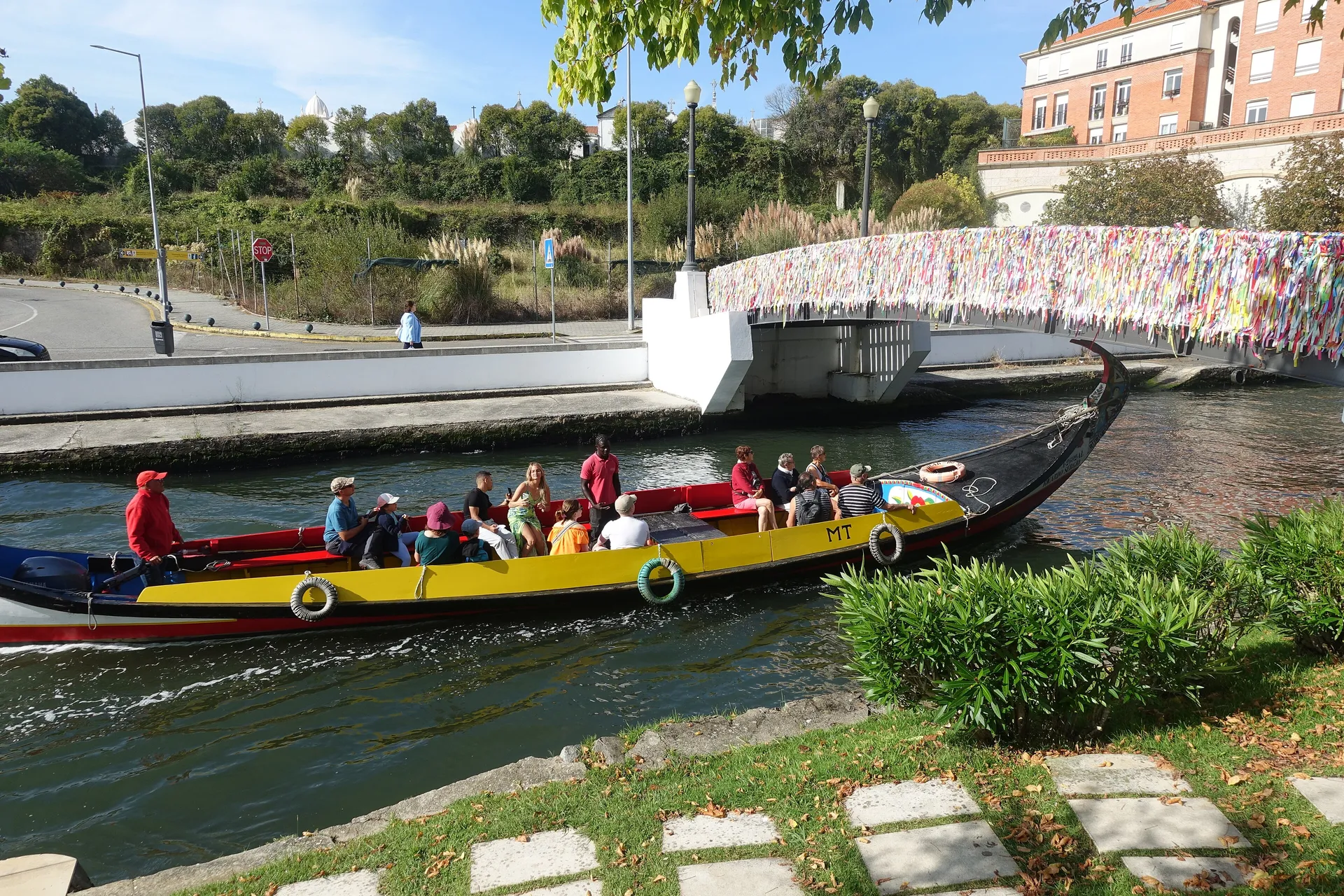
Aveiro is flat, compact and a joy to get around, which sets it apart from hilly Lisbon and Porto. The centre is easily walked, and the city runs a free public bike scheme, the BUGA, that makes cycling the natural way to move around. The famous moliceiro boats glide along the canals more for pleasure than transport. Regional trains link Aveiro to Porto in about an hour and down the coast, and buses reach the striped-house beach village of Costa Nova and the wide sands of Barra nearby. Porto's airport is an easy train or drive away. A caveat on the free bikes: they are lent out from staffed stations during daytime hours against an identity document, and they are heavy, single-speed and meant for pottering rather than covering ground. Anyone staying more than a few weeks buys a secondhand bike instead, and a flat city with a lagoon path running south past the salt pans makes that an easy decision. The main line also runs south to the capital in a little under three hours, which makes a weekend there genuinely casual rather than a trip.
Sorting transport? Book an airport transfer, or compare car rental on Auto Europe and QEEQ.
Visas for Aveiro
Aveiro is in Portugal and the Schengen Area, so most non-EU visitors can stay visa-free for up to 90 days in any 180-day period. EU and EEA citizens can live and work with no restriction. For a longer stay, the main route for remote workers is Portugal's D8 digital nomad visa, which requires proof of remote income of roughly four times the Portuguese minimum wage, plus a local address, and grants a renewable residence permit. Income thresholds and rules change from year to year, and recent legislation has tightened parts of the process. What the paperwork does not tell you is how long it takes. The immigration agency that replaced the old service in 2023 inherited a very large backlog, and appointment waits measured in many months have been routine since, which means a residence process is something to start well before you need it rather than after arriving. The tax picture has also shifted: the old non-habitual resident scheme closed to new applicants and was replaced with a narrower one aimed at particular professions, so advice written a few years ago about ten years of light taxation no longer applies. Fly in via Madrid or Frankfurt and the Entry/Exit System did its work at that hub, so the Porto landing is as domestic as the train to Aveiro.
Best Time to Visit Aveiro
Aveiro has a mild Atlantic climate, cooler and breezier than inland Portugal thanks to the ocean and its coastal lagoon. The best window for remote work is late spring through early autumn, roughly May to September, when the weather is warm, largely dry and sunny, and the nearby beaches come into their own. Winters, from November to March, are mild but wet and grey, with frequent Atlantic showers, though it rarely gets truly cold. The shoulder months of May, June and September offer the sweet spot of warm days without peak summer crowds. The local calendar has a couple of oddities worth the diary. In January the São Gonçalinho festival has people throwing cavacas, a hard glazed pastry, down from the chapel roof to crowds below, which is exactly as chaotic as it sounds and entirely a local affair. Through the summer the moliceiro boats race on the lagoon in a festival of their own. A warning about the beaches: the ocean here stays cold all year and the afternoon nortada wind gets up reliably from early summer, so a beach day is usually a morning affair.
Pros and Cons of Aveiro
Aveiro offers Portuguese charm and value in a calm, walkable package. Calm is the word that will decide it for most people. This is a city of about eighty thousand where the evening ends early, the same faces recur, and a Saturday night has one good option rather than twenty. For someone arriving from a capital that is a relief for roughly three months and a problem by month six, and the honest test is whether you already know that you are happier with a bicycle and a routine than with choice. What the place does exceptionally well is remove friction. It is flat, it is safe, the internet is among the cheapest and fastest in Europe, the train to a real city takes an hour, and the beach is twenty minutes away. Very few small cities get all five of those right at once, and that combination, rather than the canals, is the actual argument for coming.
- Pros: picturesque canals and Art Nouveau architecture, excellent and cheap fibre internet, a flat, walkable, bike-friendly layout, lovely beaches minutes away, genuine safety, a lively student atmosphere, and lower costs than Lisbon or Porto with an easy train link to the latter.
- Cons: a smaller city with fewer amenities and a modest nomad community, wet and grey Atlantic winters, cooler sea temperatures, and a quieter nightlife and events scene than the big cities.
Who Aveiro Is For
Aveiro suits the remote worker who wants an affordable, walkable and genuinely pleasant Portuguese base without the crowds, cost or hills of Lisbon and Porto. Anyone who values reliable internet, easy cycling, canal-town charm and quick access to both a major city and the beach will feel at home, and the student energy keeps it from feeling sleepy. It is a strong fit for a medium-to-long stay and for those eyeing the D8 visa. It is a weaker choice for those needing a large nomad scene, guaranteed sunshine year-round, or big-city nightlife. Base yourself near the centre, grab a BUGA bike, and enjoy Portugal at a gentler pace. A useful way to decide: spend a week here and a week in the bigger city up the line before committing to either. Most people find that the hour between them changes the question entirely, because you can live cheaply and quietly in one and still have the other for everything a metropolis provides. If the answer is still the bigger city after that week, you have learned something cheaply. If it is this, take a twelve-month lease rather than a series of short ones, because the rental market here rewards commitment far more than flexibility.