Cost of Living in Bordeaux
Real market data
Source: Numbeo · August 2026
$1,800/moSolo nomad1-bed centre + living costs
$2,510/moCoupleshared 1-bed + costs
$1,670/moLean / localcheaper area + costs
- 1-bed rent, city centre$910€789
- 1-bed rent, outside centre$790€682
- Monthly costs excl. rent (1 person)$890€773
- Meal, inexpensive restaurant$21€18
- Monthly transit pass$49€43
- Buy price, per m² (centre)$6,980€6,065
Prices are from Numbeo (August 2026), converted to USD at $1 = €0.87 (01 Aug 2026). The monthly living-costs figure is our transparent one-person basket, groceries, a few meals out, utilities, phone, internet, transport and essentials, priced from those figures. Solo adds central rent; couple and lean are estimates from the same numbers. The guide below quotes its own monthly range, which is a different measurement rather than a competing one: this table prices a defined basket at the figures above, while that range is a judgement about how somebody actually lives here.
Bordeaux sits in a middle tier for French cities: more affordable than Paris but noticeably pricier than Toulouse or Montpellier. Plan on roughly $2,070 to $3,220 per month (approximately 2,000 to 3,100 USD) as a remote worker, depending on your accommodation and lifestyle.
- Rent, central neighborhoods (Chartrons, Saint-Pierre, Hôtel de Ville): $1,040 to $1,380/month for a furnished studio or 1-bedroom
- Rent, cheaper areas (Bastide, Saint-Jean, outer Nansouty): $690 to $980/month for a studio
- Groceries (self-catering, one person): $230 to $345/month; markets like Marché des Capucins beat supermarket prices for fresh produce
- Eating out: a sit-down lunch menu runs $14 to $21, dinner at a mid-range bistro $29 to $46 per person; a coffee costs around $3 to $4
- Coworking hot desk: $17 to $29/day, or roughly $205 to $290/month on a monthly pass
- Local transport (TBM monthly pass): $38 to $60/month depending on age and zone
- Monthly total range: $2,070 to $2,760 on the modest end; $2,760 to $3,220 living more comfortably
Bordeaux does not offer the rock-bottom prices of Southeast Asia or Eastern Europe, but it rewards the lifestyle spend with serious food quality, walkability, and a relaxed pace that is hard to replicate.
Where to Work
The coworking scene is mature and varied. Dedicated spaces suit focused work days; cafes are better for a few hours between meetings.
Coworking Spaces
Coolworking on Rue de Condé is consistently well-reviewed for its balance of price, central location, and social energy. WIGI Bordeaux on Rue Condillac combines a coworking format with specialty coffee and attracts a lot of freelancers and short-stay nomads. Bigfive in Chartrons has a garden and a calm atmosphere suited to longer focus sessions. Hot desks at most spaces start around $17 per day with fiber WiFi included.
Cafe Work Culture
Bordeaux cafes are generally tolerant of laptop workers, particularly the specialty coffee spots. Piha on Rue des Ayres is a New Zealand-inspired cafe with outlets, stable WiFi, and a light-food menu; it has become a known nomad spot. Le Buro des Possibles doubles as a vegan tea café and coworking hybrid with a strong community feel. Classic French cafes are less laptop-friendly: ordering one coffee and occupying a table for three hours is frowned upon in traditional settings.
WiFi Situation
Fiber infrastructure is solid in Bordeaux and most coworking spaces offer reliable connections. City-wide free WiFi exists in some public squares but is inconsistent. Connections at dedicated coworking spaces handle video calls without issue. The city scores "okay" on free WiFi availability in nomad surveys, so plan on using a coworking pass or your own mobile data plan (a 10 GB French SIM costs around $12 to $17/month) rather than depending on cafe connections for critical calls.
Getting Around
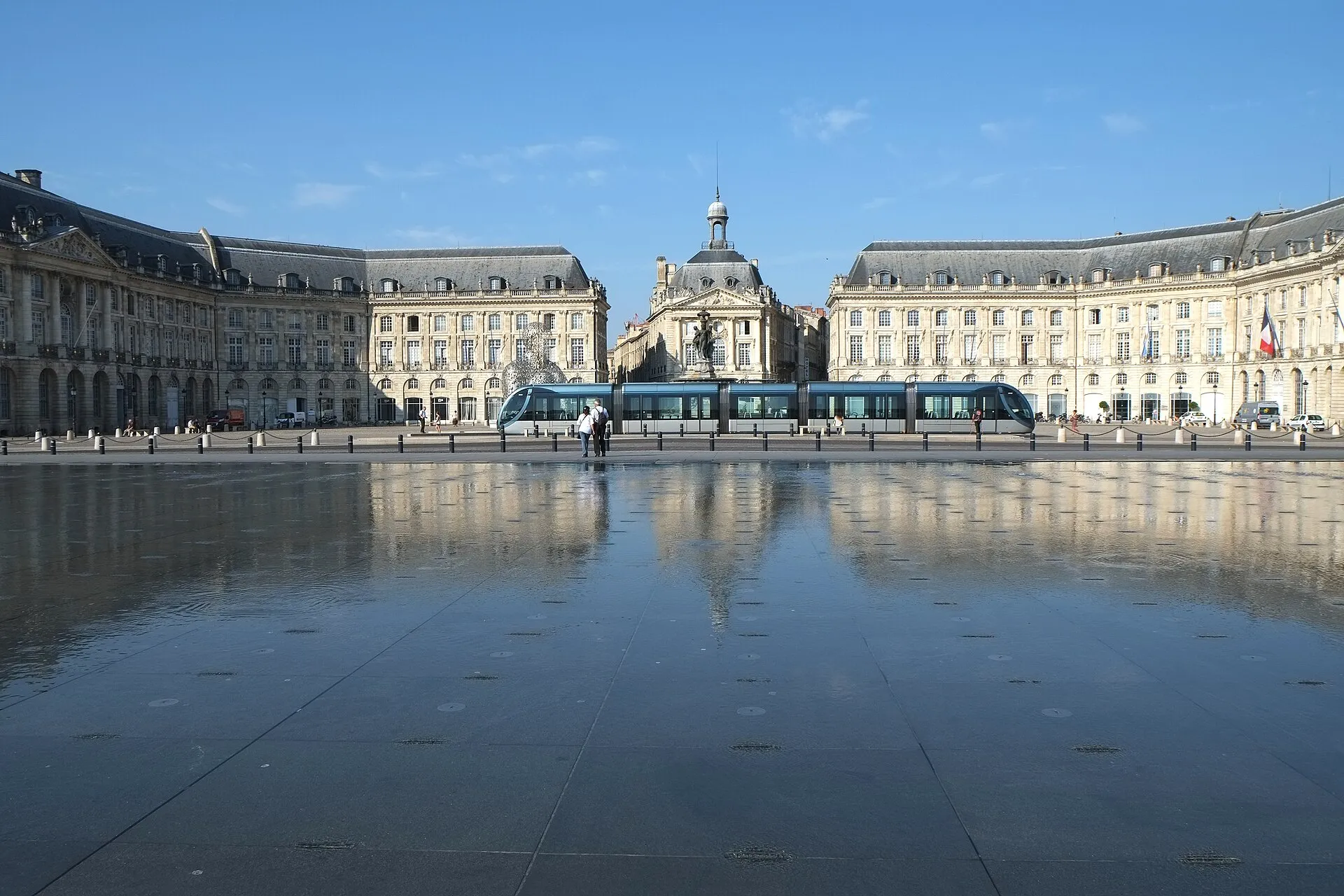
Bordeaux is one of France's most walkable mid-sized cities. The compact historic center means you can reach most restaurants, cafes, and coworking spaces on foot in under 20 minutes from a central apartment.
Tram and Bus
The TBM tram network covers four lines and 139 stations across 82 km, the most extensive network in France outside Paris. Trams run frequently and reliably. Buses complement the tram on routes the tram does not serve. A single ticket costs around $2; a monthly pass runs $38 to $60 depending on your profile.
Cycling
Bordeaux is genuinely bike-friendly with an extensive cycling lane network and a flat terrain. The public Vcub bike-share scheme has hundreds of stations across the city. Many residents and nomads never take the tram at all.
Airport
Bordeaux-Merignac Airport is around 12 km west of the city center. As of December 2025, tram line F connects the airport directly to Bordeaux Saint-Jean train station via the city center. The tram runs every 10 minutes on weekdays, operates from 5 a.m. to midnight, and costs a standard TBM fare. Taxis and rideshare run around $29 to $46 for the same journey.
Sorting transport? Book an airport transfer, or compare car rental on Auto Europe and QEEQ.
Visas and Staying Long-Term
France is a Schengen Area member. Citizens of the US, Canada, Australia, the UK, and most other Western countries can enter visa-free for stays up to 90 days in any 180-day rolling period. You cannot legally conduct paid remote work under a tourist entry, though enforcement against work-for-foreign-clients is minimal in practice.
France does not offer a dedicated digital nomad visa. For stays beyond 90 days, the most practical route is a Long-Stay Visitor Visa (VLS-TS), which allows up to one year in France and can be renewed. It is designed for people living off income earned outside France, making it usable for most remote workers. You apply at a French consulate in your home country before traveling; expect a processing time of several weeks and proof of sufficient funds.
A Profession Libérale visa exists for freelancers serving French clients but involves more bureaucratic complexity.
Best Time to Visit
Bordeaux has a semi-oceanic climate with mild, wet winters and warm, sunny summers. The city averages more than 2,000 hours of sunshine per year.
- Spring (April to June): The best window for remote work. Temperatures sit between 14 and 22°C (57 to 72°F), the vineyards around the city turn green, and the crowds have not yet arrived. Outdoor terraces open up. This is the sweet spot.
- Summer (July to August): Hot and sunny, often reaching 30 to 35°C (86 to 95°F). Few buildings have air conditioning, which can make working from apartments uncomfortable during heat waves. Lively but touristy.
- Fall (September to October): Nearly as good as spring. Temperatures remain warm, harvest season brings wine events, and the city quiets down from peak summer. A close second to spring for remote workers.
- Winter (November to February): Mild by northern European standards (rarely below 5°C/41°F) but grey, rainy, and overcast for extended periods. Productivity is fine indoors but the outdoor appeal largely disappears.
Avoid the peak of August if heat and tourist density bother you.
Pros and Cons
Pros
- Outstanding food and wine culture at accessible price points
- Walkable, beautiful historic center (UNESCO World Heritage listed)
- Good tram network and new direct airport tram link
- Growing freelance and startup community with active coworking scene
- Excellent air quality and access to Atlantic beaches, Dordogne, and Pyrenees
- Better value than Paris while retaining serious urban quality
Cons
- English proficiency is below average for a city this size; French helps significantly
- Not cheap by global nomad standards, particularly on accommodation
- Summers without air conditioning can make apartment work uncomfortable
- The nomad community is smaller and less organized than in Lisbon, Barcelona, or Berlin
- Grey, rainy winters can affect morale for longer stays
- Bureaucratic processes (banking, phone contracts) can be slow without French language skills
Who Bordeaux Is Best For
Bordeaux suits remote workers who genuinely value food, wine, and European urban living and are willing to pay mid-range costs to access it. If you want a beautiful base in southwestern France, speak some French or are motivated to learn, and plan a stay of one to six months in spring or fall, Bordeaux delivers a high quality of daily life.
It also works well for people who want an uncrowded alternative to Paris: similar cultural depth, far fewer tourists, and a more manageable pace. The city is a strong fit for designers, writers, consultants, and others whose work is output-based rather than requiring large local professional networks.
Skip Bordeaux if you are budget-constrained, need a large English-speaking nomad community to plug into immediately, or are prioritizing warm climates year-round. It is not the right base for nomads who want a party-heavy social scene or those who find French bureaucracy without language skills too frustrating. If you are looking for the cheapest foothold in France, Toulouse or Montpellier will serve you better.