Cost of Living in Osaka
Real market data
Source: Numbeo · Jun 2026
$1,460/moSolo nomad1-bed centre + living costs
$2,060/moCoupleshared 1-bed + costs
$1,280/moLean / localcheaper area + costs
- 1-bed rent, city centre$710¥112,000
- 1-bed rent, outside centre$530¥84,000
- Monthly costs excl. rent (1 person)$750¥119,565
- Meal, inexpensive restaurant$6¥1,000
- Monthly transit pass$32¥5,150
- Buy price, per m² (centre)$6,100¥966,333
Prices are from Numbeo (Jun 2026), converted to USD at $1 = ¥158.54 (01 Aug 2026). The monthly living-costs figure is our transparent one-person basket, groceries, a few meals out, utilities, phone, internet, transport and essentials, priced from those figures. Solo adds central rent; couple and lean are estimates from the same numbers.
Osaka runs noticeably cheaper than Tokyo while giving you the same big-city infrastructure, and the weak yen of 2025 and 2026 makes it one of the best-value large cities in the developed world for anyone earning in dollars, euros, or pounds. Groceries alone tend to run a few percent below the national average and below Tokyo, and rent and eating out stretch that gap wider. Here is a realistic monthly picture for one person (dollar figures at roughly 150 yen to the dollar).
- Rent, central (Umeda, Namba, Honmachi): around $630-1,010 for a small one-bedroom. Short-term serviced apartments and monthly rentals aimed at foreigners sit higher, roughly $505-885, because you are competing with tourist stock.
- Rent, cheaper districts (a few stops out): around $380-570 for a similar place.
- Groceries: about $175-250.
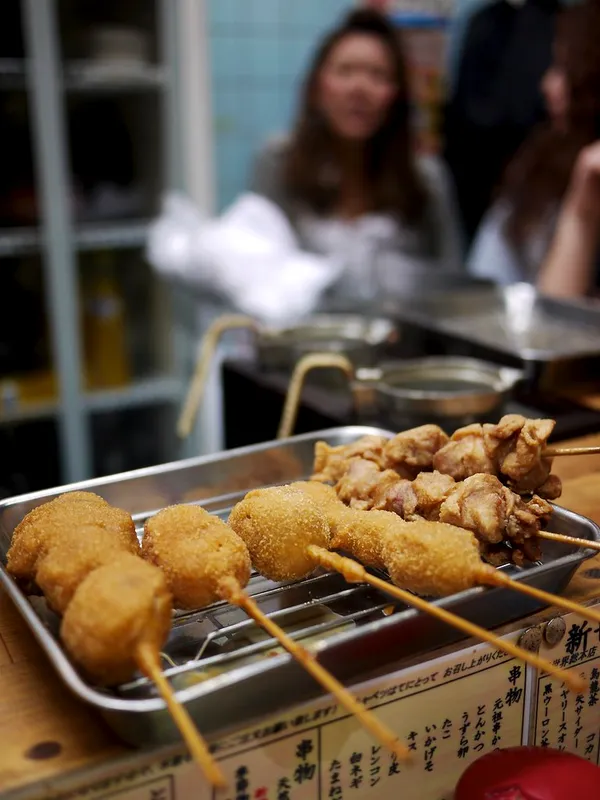
- Eating out: Osaka is Japan's food capital and cheap eating is a genuine way of life. A ramen or udon bowl runs $4.50-6.50, a chain lunch set $3-5, and a full izakaya dinner with drinks $13-25.
- Coworking hot desk: day passes $7-14; a full monthly membership commonly $125-250.
- Local transport: roughly $32-50 a month on the subway, less if you walk a lot.
- Utilities (electricity, gas, water): around $63-95.
All in, a comfortable single-person budget lands around $1,070-1,640 per month depending on how central you live and how often you eat out. Live a stop or two from the center and cook sometimes and you can hold the lower end easily.
Where to Work
Coworking is concentrated in three areas: Umeda (Kita) in the north, Namba and the Shinsaibashi area in the south, and Honmachi in between. WeWork operates several Osaka locations (including newer sites in Honmachi and Namba) with strong English support, fast internet, and a global membership you can carry between cities. For something more local and community-driven, look at The Deck, Osakan Space (which runs a foreigner-friendly Digital Nomad Plan, cash only), Common Room, .andwork, iioffice, and FUTRWORKS, a large international space a short walk from Umeda Station.
Cafe-work culture exists but is more reserved than in Southeast Asia. Chains like Doutor, Tully's, Starbucks, and Komeda tolerate laptops, and specialty coffee shops are plentiful, but many small independents are small and busy, so read the room and do not camp for hours at peak times. WiFi is genuinely good: fiber is standard in apartments, coworking spaces run fast connections, and station areas and convenience stores have usable free WiFi. Most nomads still pick up a local eSIM or SIM for reliable mobile data, since free public WiFi can be patchy once you leave the big hubs.
Getting Around
Osaka is compact and one of the easier Japanese cities to walk. The Osaka Metro subway plus JR loop and private lines (Hankyu, Hanshin, Nankai, Keihan) cover the city densely, and trains are clean, frequent, and punctual. Get an ICOCA card as soon as you arrive: it costs $13 (1,500 in stored value plus a 500 deposit you can reclaim), you tap in and out on every train, subway, and bus, and it works across most of Japan. You can now also load ICOCA or Suica into a phone wallet.
Osaka has two airports. Kansai International (KIX) handles international flights and sits on an artificial island south of the city. The JR Haruka express or the Nankai Rapi:t (around $7, roughly 45 minutes to Namba) are the fastest routes in; airport limousine buses are a comfortable alternative and accept IC cards. Itami (ITM) is the close-in domestic airport, best for hops within Japan, reached by the Osaka Monorail or an airport limousine bus (around $4, about 30 minutes) or a taxi (roughly $32).
Sorting transport? Book an airport transfer, or compare car rental on Auto Europe and QEEQ.
Visas and Staying Long-Term
Citizens of many countries (including the US, UK, Canada, Australia, and most of the EU) can enter visa-free for up to 90 days for tourism or short-term business. This is not a work permit, and repeatedly re-entering back to back to live in Japan is not a valid strategy: immigration officers can and do refuse entry if they think you are doing it.
For a longer legal stay, Japan launched a digital nomad visa in the spring of 2024. It lets you live in Japan for up to six months while working remotely for companies based outside Japan. The headline requirements are a proven annual income of at least ten million yen, about $63,080, private health insurance covering at least the same amount, and citizenship of an eligible country. It is not renewable: after it ends you must spend six consecutive months outside Japan before reapplying, and you cannot take a job with a Japanese employer while on it.
Best Time to Visit
The best windows for remote work are spring (mid-April to mid-May) and autumn (late October to mid-November), when temperatures sit in a mild 15-25C (59-77F), humidity drops, and rain is light. Cherry blossoms peak in early April and autumn foliage lands in November, so these are also the busiest and priciest seasons for accommodation.
Summer (June to August) is hot and sticky, with highs around 35C (95F), tropical nights, high humidity, a rainy season in June and July, and typhoon risk from late summer into early autumn. It is workable if you have good air conditioning, but it is not the season to arrive without a base sorted. Winter (December to February) is cool at 5-10C (41-50F), dry, rarely snowy in the center, and quiet, which makes it an underrated stretch for focused work if you do not mind the cold.
Pros and Cons
- Pro: Excellent value right now thanks to the weak yen, and clearly cheaper than Tokyo for rent and food.
- Pro: World-class food scene where eating out cheaply is normal, not a compromise.
- Pro: Fast, reliable transport and infrastructure, plus genuinely good internet everywhere.
- Pro: Compact, walkable, and very safe, with a friendlier, more relaxed feel than Tokyo.
- Con: Summers are brutally hot and humid, and typhoon season can disrupt plans.
- Con: Real language barrier away from tourist zones, and many landlords are reluctant to rent to foreigners.
- Con: Apartments are small, and long-term rentals often demand deposits, guarantors, and Japanese paperwork.
- Con: Still a partly cash culture, so carry yen and expect some places to reject cards.
Who Osaka Is Best For
Osaka suits nomads who want big-city Japan, world-class food, and top-tier safety and infrastructure without Tokyo prices, and who value a walkable, slightly warmer, more easygoing base. It rewards people earning in a strong foreign currency, since the weak yen makes a very comfortable life affordable right now. It also works well for anyone who qualifies for the digital nomad visa and wants a legal six-month stint.
Skip it if you need cheap, no-paperwork long-term housing on arrival, if you cannot tolerate humid heat and want to be here in July or August, or if you rely on an always-on cafe-hopping, card-only, English-everywhere setup. It is also a poor fit if your income falls well below the nomad visa threshold and you are hoping to stay legally past 90 days, since visa-free re-entry is not a substitute for proper status.