Cost of Living in Fukuoka
Real market data
Source: Numbeo · August 2026
$1,100/moSolo nomad1-bed centre + living costs
$1,600/moCoupleshared 1-bed + costs
$920/moLean / localcheaper area + costs
- 1-bed rent, city centre$480¥75,591
- 1-bed rent, outside centre$300¥47,930
- Monthly costs excl. rent (1 person)$620¥98,635
- Meal, inexpensive restaurant$7¥1,100
- Monthly transit pass$41¥6,500
- Buy price, per m² (centre)$6,400¥1,013,867
Prices are from Numbeo (August 2026), converted to USD at $1 = ¥158.54 (01 Aug 2026). The monthly living-costs figure is our transparent one-person basket, groceries, a few meals out, utilities, phone, internet, transport and essentials, priced from those figures. Solo adds central rent; couple and lean are estimates from the same numbers.
Fukuoka is one of the most affordable major cities in Japan. A comfortable solo nomad life typically costs between $945 and $1,260 per month, depending on your habits.
- Rent (central Tenjin or Hakata): about $480/month for a central one-bedroom on Numbeo's data, about $300 outside the center
- Rent (outer areas like Ohashi, Nishijin, or Kasuga): $250-345/month, still well connected by subway
- Groceries: $160-250/month at local supermarkets like Nishitetsu Store or MaxValu
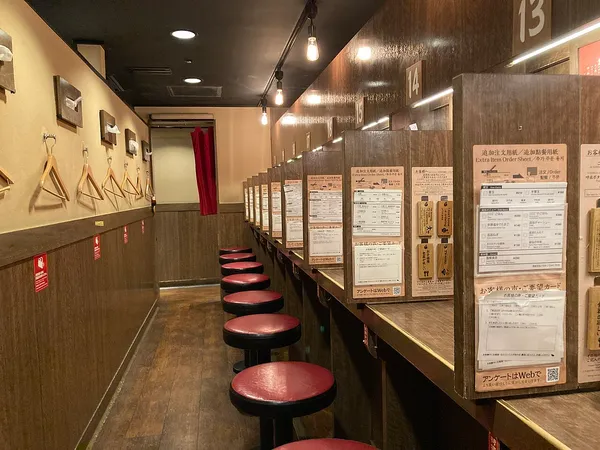
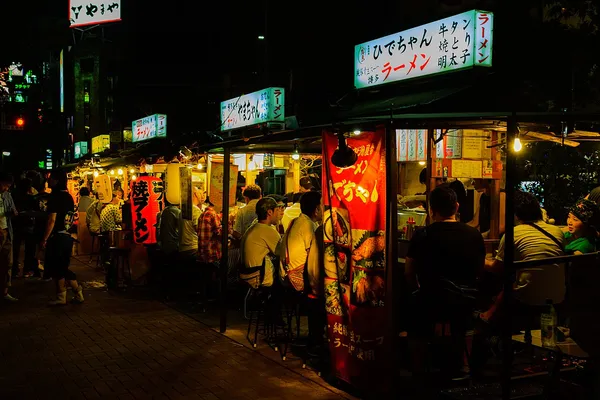
- Eating out: $5-7.50 for a solid lunch set; yatai street stalls run $9.50-16 for ramen and drinks at night
- Coworking hot desk: $63-125/month; government-backed spaces like Engineer Cafe are free
- Local transport: Subway fares are $1.50 for most city trips; a monthly commuter pass costs roughly $50-76
- Total range: about $1,100/month solo on our Numbeo-based budget, or about $920 living lean
Tokyo is roughly 30-40% more expensive for equivalent accommodation. Fukuoka gives you the infrastructure of a major Japanese city at a noticeably lower cost.
Where to Work
Fukuoka has a well-developed remote work infrastructure, partly because the city government has actively courted startups and nomads since the mid-2010s.
Coworking Spaces
Engineer Cafe in the historic Fukuoka Red Brick Culture Center near Tenjin is free, open to all, and comes with external monitors, meeting rooms, and 3D printers. You need to register online first. The Company has multiple branches (Parco, Nakasu, Canal City) with day passes from $3.50-10 and a Digital Nomad Plan with 24/7 access for about $62/month. Co-working and Co-learning Space Q sits directly under Hakata Station, charges $3.50/hour (max $14/day), and offers solid ergonomic chairs and desks. WeWork Tenjin Brick Cross has fast WiFi and is the most international-feeling option if you want a polished environment.
Cafes and WiFi
Fukuoka's cafe culture is genuinely nomad-friendly. Many specialty coffee shops in Yakuin, Daimyo, and Tenjin have power outlets and expect laptop workers. Manu Coffee (Yakuin), White Glass Coffee (Hakata), and Coffee County (Yakuin) are well-regarded options with reliable WiFi. Dedicated coworking spaces are the faster option; cafes run slower but are adequate for calls and uploads. Japan's general internet reliability is excellent. Free WiFi at convenience stores and train stations is also widespread.
Getting Around
Fukuoka is compact and easy to navigate. The city's three subway lines cover most areas you will actually use, with trains running every 3-8 minutes during the day. Fares are flat at around $1.50 for most inner-city trips, and the stations accept contactless credit cards directly at the gate.
Airport access is the best of any major Japanese city. Fukuoka Airport's domestic terminal connects directly to the subway: two stops to Hakata Station (5 minutes, $1.50) and five stops to Tenjin (12 minutes, $1.50). International flights use a separate terminal, a short bus ride away, with frequent Nishitetsu buses to Hakata Station for $2.
Tenjin and Hakata are walkable on their own. Most errands, shops, and restaurants are reachable on foot within either hub, and the 15-minute walk between the two is flat and easy. Cycling is practical in lower-traffic neighborhoods, and rental bikes are available via the Mellow Bikes city share scheme. Taxis exist but are rarely necessary.
Sorting transport? Book an airport transfer, or compare car rental on Auto Europe and QEEQ.
Visas and Staying Long-Term
Citizens of around 68 countries can enter Japan visa-free for tourist stays. The length depends on your nationality: most Western passports receive 90 days (US, UK, EU, Australia, Canada, New Zealand). Some nationalities receive 15 or 30 days.
Japan launched a Digital Nomad Visa in 2024, formally a "Designated Activities" status of residence. It allows a 6-month stay for remote workers who earn at least ten million yen, about $63,080, a year from overseas employers or clients, hold a passport from one of 51 eligible countries and regions, and maintain private health insurance. The visa cannot be extended beyond 6 months, and after it expires you must leave Japan for at least 6 months before reapplying.
There is no visa-run loophole. Japan does not allow chained tourist entries for long-term stays, and border officers are increasingly alert to this.
Best Time to Visit
Spring (late March to mid-May) is the most popular window and arguably the best for remote workers. Temperatures range from 14-22°C (57-72°F), cherry blossoms peak in late March and early April at Maizuru Park and along the Naka River, and rain is relatively infrequent.
Autumn (October to mid-November) is a close second. Humidity drops sharply after summer, skies are clear, and temperatures are comfortable at 15-24°C (59-75°F). Foliage color appears in November across city parks and nearby Itoshima.
Summer (mid-June to September) is hot and humid, with the rainy season (tsuyu) running from mid-June through mid-July, followed by typhoon risk in August and September. Temperatures regularly hit 33-35°C (91-95°F) with high humidity. It is manageable, but not pleasant for walking between venues.
Winter (December to February) is mild by Japanese standards. Fukuoka rarely sees snow, and temperatures stay around 5-12°C (41-54°F). It is a quieter, cheaper time to visit, though gray skies and cold winds off the Korea Strait can be persistent.
Pros and Cons
- Pro: Lower cost than Tokyo, Osaka, or Kyoto with equivalent modern infrastructure
- Pro: Fukuoka Airport is the most accessible major international airport in Japan from the city center
- Pro: Strong government support for startups and remote workers, including free coworking and business consulting
- Pro: Exceptional food culture: Hakata ramen, motsu nabe, fresh seafood from Genkai Sea, and a unique yatai street stall scene
- Pro: Compact and walkable, with flat terrain and good cycling infrastructure in residential areas
- Pro: Proximity to Seoul (about 90 minutes by plane), Busan (a ferry crossing or a short flight), Nagasaki, Beppu, and Yakushima for weekend escapes
- Con: English fluency among locals is lower than in Tokyo; navigating landlords, hospitals, or government offices without Japanese is genuinely difficult
- Con: Long-term housing is hard to secure as a foreigner without a guarantor or agency that handles foreigner applications
- Con: The Digital Nomad Visa income threshold ($63,080/year) excludes most early-career nomads
- Con: Summer heat and humidity can make outdoor time uncomfortable for 2-3 months
- Con: International flight connections are more limited than Tokyo; long-haul routes often require a connection
Who Fukuoka Is Best For
Fukuoka works well for nomads who want a full-service Japanese city without Tokyo's cost or crowds. If you value excellent food, clean streets, a genuine local culture, and reliable infrastructure at a price point that lets you stay longer, Fukuoka consistently delivers. It suits people who have at least some Japanese language ability or are willing to adapt to a lower-English environment, and those who can secure housing before arrival through a Japan-specialist agency or coliving arrangement.
Tech workers and startup founders benefit most from the city's free government coworking, active international networking events, and the Fukuoka City Startup Visa program for those looking to register a company.
Fukuoka is a harder fit if you need extensive English-language services day-to-day, rely on a wide selection of direct long-haul flights, or want a large Western expat community. Budget travelers on very short stays may also find that sorting housing for under 4 weeks is logistically awkward compared to cities with more established short-stay options.