Cost of Living in Kobe
Real market data
Source: Numbeo · August 2026
$1,410/moSolo nomad1-bed centre + living costs
$1,990/moCoupleshared 1-bed + costs
$1,190/moLean / localcheaper area + costs
- 1-bed rent, city centre$690¥108,667
- 1-bed rent, outside centre$460¥73,333
- Monthly costs excl. rent (1 person)$730¥115,103
- Meal, inexpensive restaurant$8¥1,200
- Monthly transit pass$63¥10,000
- Buy price, per m² (centre)$4,320¥684,286
Prices are from Numbeo (August 2026), converted to USD at $1 = ¥158.54 (01 Aug 2026). The monthly living-costs figure is our transparent one-person basket, groceries, a few meals out, utilities, phone, internet, transport and essentials, priced from those figures. Solo adds central rent; couple and lean are estimates from the same numbers.
Kobe offers noticeably better value than Tokyo while keeping big-city polish, with most nomads spending roughly $1,400 to $1,900 a month. Rent is the swing factor: a compact furnished flat near Sannomiya costs more than an equivalent place a few train stops out toward Nada or the residential hills. Everyday costs feel gentle, thanks to cheap, excellent set lunches, convenient supermarkets and a transport network you rarely need a car for. Kobe beef and craft coffee can push a splurge budget higher, but daily eating stays affordable. These are editorial estimates and shift with the yen, your neighbourhood and how often you dine out. Ask when the building went up, because hardly anybody thinks to and it matters more here than elsewhere. The 1995 earthquake destroyed or damaged a very large part of this city, the building code was tightened again afterwards, and a block from the 1970s is a different proposition from one built since. Estate agents expect the question. The other local pattern is vertical: rent falls as the ground rises, because the hillside neighbourhoods mean a climb or a bus, and the difference between a flat on the level and one five minutes up the slope is substantial.
- Furnished one-bed near the centre: roughly $700 to $1,050 a month
- Set lunch at a local diner: about $7 to $10
- Monthly local transport pass: around $80 to $110
- Coffee in an independent cafe: roughly $3.50 to $5
Where to Work in Kobe
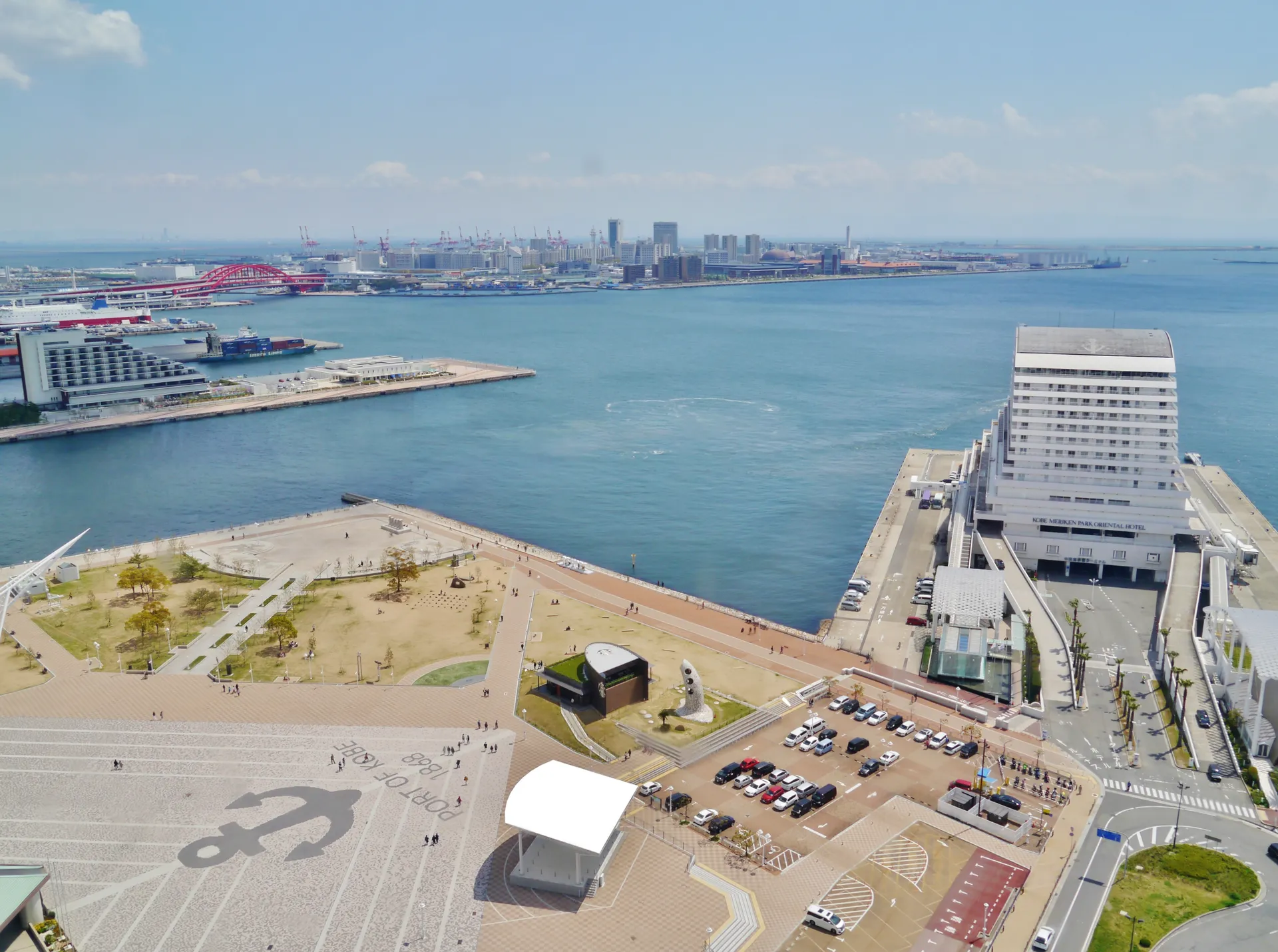
Sannomiya and the adjacent Motomachi arcades form the natural work base, packed with coworking spaces, chain cafes and quieter independents happy to host laptops for a couple of hours. Several coworking operators cluster near Sannomiya and Kobe stations, offering day passes, meeting rooms and reliable fibre. Harborland and the Kitano slopes suit a change of scenery, with waterfront cafes and terraced coffee houses looking back at the city. Public libraries and hotel lobbies fill gaps, and konbini are everywhere for printing or a quick snack. Home broadband is fast and easy to arrange, though short-stay flats may share a building connection. Worth knowing what the earthquake did to the working geography, because it explains the layout. The port and the districts along it were rebuilt from scratch after 1995, which is why the waterfront is modern and open where an old port city would be dense, and why the cafes and shared offices cluster inland around the stations rather than by the water. The other practical note is the wind: the gap between the mountains and the sea funnels it along the flat, and a terrace that looks idyllic in a photograph is unusable on a winter afternoon.
Getting Around Kobe
Kobe is wonderfully walkable through its flat central strip, and the rest is stitched together by trains. The city subway, plus the JR, Hankyu and Hanshin lines, run east to west along the coast, while the Portliner monorail reaches the airport and Port Island. A rechargeable ICOCA card taps you through almost everything, including buses up into the Rokko foothills. Osaka is about 30 minutes away and Kyoto under an hour, making day trips effortless. The layout is intuitive: mountains sit to the north, sea to the south, so you rarely lose your bearings. Cycling works on the flats, though the steep northern slopes reward good legs or the bus. A detail that saves money and confusion: three separate private railway companies plus the national one run parallel lines along this coast, and the fare, the journey time and the station you end up at all differ between them. The stored-value card works on all of them, so the useful habit is to check which line a destination is actually on rather than defaulting to one. The cable cars and the funicular up the mountain behind the city are public transport in the sense that they run to a timetable.
Sorting transport? Book an airport transfer, or compare car rental on Auto Europe and QEEQ.
Visas for Kobe
Japan grants visa-free short stays to many nationalities, typically up to 90 days for tourism, which covers a lot of remote-work trial runs. In 2024 the country launched a dedicated digital nomad visa for eligible nationalities, allowing a longer stay of up to six months for qualifying remote workers who meet an income threshold and hold private health insurance. Longer or repeat stays usually mean a work, spouse or other status-of-residence visa arranged in advance. Kobe itself adds no separate local permit beyond national immigration rules. A tax detail catches people on any status longer than a visit. Local residence tax is assessed on the previous year's income and billed the following June, which means a first year looks cheap and a second year arrives with a bill for a year you may no longer be earning in; people who leave after eighteen months are frequently surprised by it. Anyone on a residence status is also enrolled in the national health and pension systems, which is good value and is not optional. None of that applies to a short visit, which is the simplest way to test the place.
Best Time to Visit Kobe
Kobe has a humid subtropical climate with four distinct seasons. Spring, from late March into May, is the sweet spot: mild days, cherry blossom along the hills and comfortable evenings for exploring Kitano. Autumn, roughly October and November, is equally lovely, with crisp air and colour on Mount Rokko. Summer runs hot and sticky from June, with a rainy spell in early summer and the odd typhoon threat into September, so the sea breeze and air-conditioned cafes earn their keep. Winters are cool rather than harsh and rarely snow at sea level. For the famous sparkling night view from Rokko or Maya, clear autumn and winter evenings are hard to beat. The local calendar has two dates that belong on it. In January the city marks the anniversary of the earthquake with lanterns arranged into a date in one of the central parks before dawn, and it is a quiet, genuinely moving thing rather than a spectacle for visitors. In December the same streets carry an illumination built from the arches donated by Italy after that disaster, which draws very large crowds for a fortnight. Both are about the same event thirty years apart, which tells you more about this city than any weather chart will.
Pros and Cons of Kobe
Kobe rewards nomads who want a relaxed, good-looking city with an outward-facing history and easy access to the wider Kansai region. It feels calmer and more spacious than Osaka yet sits right on its doorstep, and the mix of port, mountains and cosmopolitan quarters keeps daily life interesting. The trade-offs are practical rather than dramatic: it is smaller, so the specialist nomad community is thin, and English support tails off outside the centre. Weigh these against your priorities before settling in. The event that shaped this city is worth stating plainly, because everything about the place refers back to it. In January 1995 an earthquake killed more than six thousand people here, destroyed something like a hundred thousand buildings and burned out whole districts, and the city you walk through is the one rebuilt afterwards. That is why the port is modern and why there is a memorial park and an annual observance that is not for tourists. Alongside that sits the older identity: this was the port opened to foreign trade when the rest of the country was closed, which is why there is a foreign quarter on the hillside, why the food is what it is, and why the place looks outward in a way its larger neighbour never has.
- Pros: excellent safety and cleanliness, walkable centre, mountains-and-sea setting, superb food, fast trains to Osaka and Kyoto
- Cons: small dedicated nomad scene, limited English away from the centre, hot humid summers, higher rents near Sannomiya, Japan's visa hurdles for longer stays
Who Kobe Is For
Kobe suits independent remote workers who value calm, quality of life and a strong sense of place over a buzzing coworking crowd. It is a natural fit for repeat visitors to Japan who already know the rhythm and want a base that is quieter than Osaka but still connected to it, and for anyone drawn to hills, harbour walks and serious food culture. Solo travellers and couples who enjoy self-directed days will thrive here, as will longer-stay nomads on the digital nomad visa. Those who need a ready-made social scene, constant English or the cheapest possible costs may find better matches elsewhere in the region. The practical case for choosing here over the bigger city next door is that you get the same region for less money and more air. A flat here costs noticeably less than the equivalent one stop further east, the trains make that city a half-hour commute, and the mountains behind you are a genuine wilderness rather than a park. Three to six months is the natural first stay, arriving in spring or autumn. And take the walk up the mountain in the first week rather than the last, because it reorders your sense of the place and most visitors leave it too late.