Cost of Living in Bilbao
Real market data
Source: Numbeo · August 2026
$2,030/moSolo nomad1-bed centre + living costs
$2,620/moCoupleshared 1-bed + costs
$1,810/moLean / localcheaper area + costs
- 1-bed rent, city centre$1,300€1,125
- 1-bed rent, outside centre$1,070€931
- Monthly costs excl. rent (1 person)$730€638
- Meal, inexpensive restaurant$21€18
- Monthly transit pass$52€45
- Buy price, per m² (centre)$5,930€5,151
Prices are from Numbeo (August 2026), converted to USD at $1 = €0.87 (01 Aug 2026). The monthly living-costs figure is our transparent one-person basket, groceries, a few meals out, utilities, phone, internet, transport and essentials, priced from those figures. Solo adds central rent; couple and lean are estimates from the same numbers. The guide below quotes its own monthly range, which is a different measurement rather than a competing one: this table prices a defined basket at the figures above, while that range is a judgement about how somebody actually lives here.
Bilbao sits at the pricier end of the Spanish spectrum. As the financial capital of the Basque Country, it costs noticeably more than cities like Valencia or Seville, but less than Barcelona or Madrid for comparable quality.
A realistic monthly budget in US dollars:
- Rent, 1-bedroom central (Abando, Indautxu): $1,040-1,380
- Rent, 1-bedroom cheaper area (San Francisco, Rekalde): $750-980
- Groceries (cooking most meals): $230-345
- Eating out (mix of pintxos bars and sit-down meals): $230-405
- Coworking hot desk: $230-460
- Local transport (monthly metro/bus card): $63-75
- Utilities + home internet: $150-205
Total monthly range: $1,610-2,650 for a comfortable nomad lifestyle. Budget travelers sharing a flat and skipping coworking can get by closer to $1,270-1,500. The city rewards those who lean into pintxos culture: grazing on bar snacks at $1-2.50 each is genuinely excellent and cheap.
Where to Work
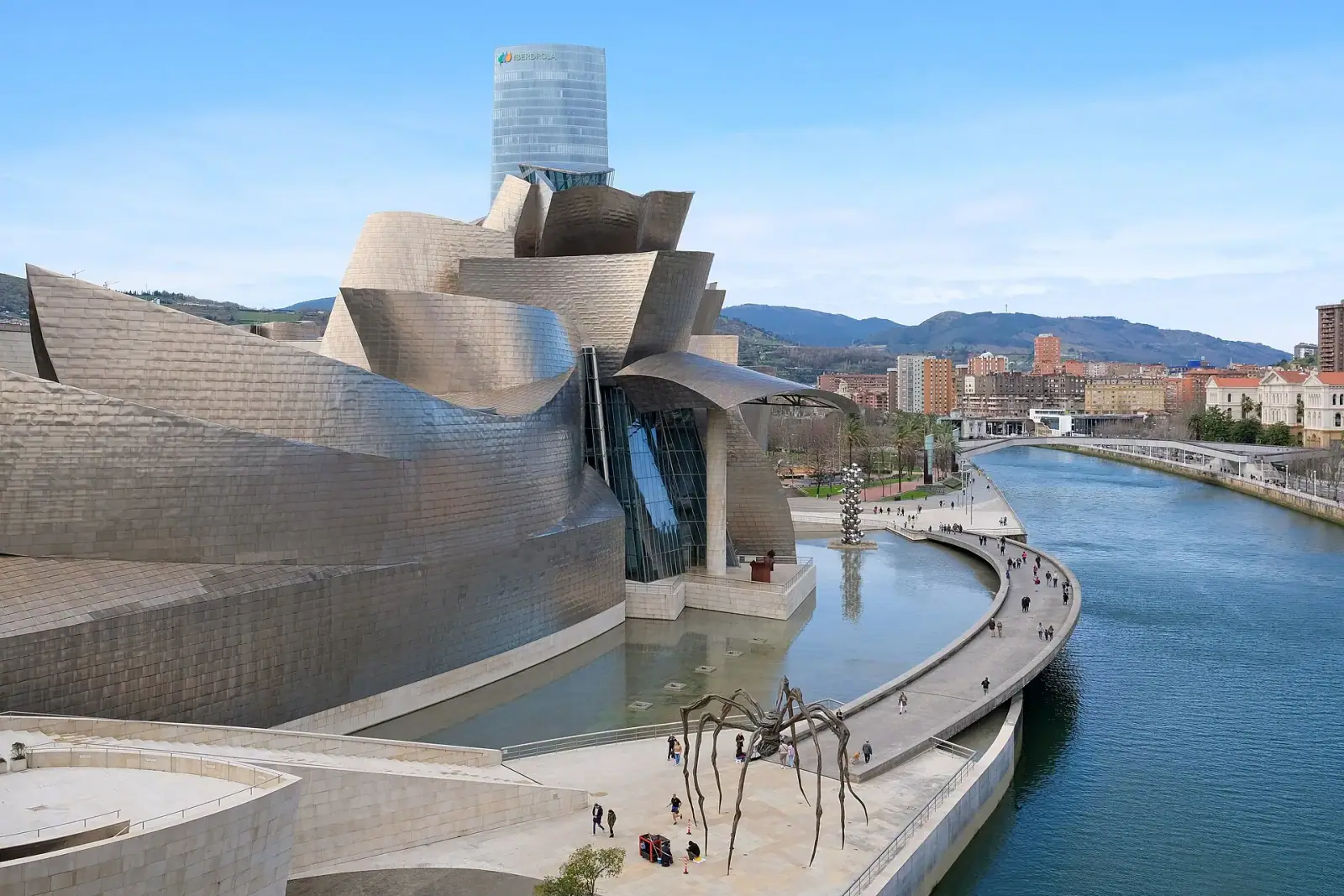
Bilbao has a small but functional coworking scene concentrated around the central Abando district and near the Guggenheim. Spaces Bilbao Abando (Calle Buenos Aires 12) is the most polished option, a nine-floor flex workspace in a sandstone building with fast Wi-Fi, meeting rooms, and a community atmosphere. Bilbao Lab Coworking (Alameda de Mazarredo 25) caters to creative and tech professionals with 24/7 access, free coffee, and phone booths. ICAZA Coworking (Mazarredo Zumarkalea) is smaller and highly rated, with a boutique feel near the Guggenheim. Ehub (Plaza del Gas 4) offers hot desks from around $310/month in the Ibaiondo area.
Cafe work culture exists but is limited. Bilbao locals linger over coffee but do not work on laptops in bars the way you see in Lisbon or Berlin. Genuine laptop-friendly cafes are fewer than you might expect. Cafe Iruña, the historic 1903 Moorish-decorated institution near Jardines de Albia, tolerates laptops during off-peak hours. Specialty coffee shops in Indautxu tend to be more laptop-tolerant than pintxos bars in Casco Viejo.
Home and coworking Wi-Fi is reliable. Modern fixed-line connections are fast, and mobile data via Movistar, Vodafone, or Orange is strong throughout the city center. Public Wi-Fi in the old town is patchy; do not count on it for calls.
Getting Around
Bilbao is compact and highly walkable. The city center stretches maybe 3 km across, and you can walk from Casco Viejo to the Guggenheim in about 20 minutes along the river. A walkability score around 79/100 means most daily errands happen on foot.
The metro (designed by Norman Foster) connects the main neighborhoods efficiently. A single trip costs around $1.50 with a Barik card (the reloadable transit card); monthly passes run $63-75. Trams and buses fill the gaps. Bilbao is flat enough along the river but hilly toward Artxanda, where you can take the funicular instead.
The airport (BIO, in Loiu) sits 12 km north of the city center. Take the Bizkaibus A3247 express bus from outside arrivals to Moyua Plaza in about 25 minutes for around $3.50. Taxis cost $29-40 and take 15 minutes. There is no metro link to the airport.
Car ownership in the city is impractical and unnecessary. Parking is expensive and traffic in the center is restricted.
Sorting transport? Book an airport transfer, or compare car rental on Auto Europe and QEEQ.
Visas and Staying Long-Term
Citizens of the US, UK, Canada, Australia, and most EU countries enter Spain visa-free for up to 90 days within any 180-day period under the Schengen rules. That limits uninterrupted stays to three months at a time.
Spain's Digital Nomad Visa (under the 2023 Startup Act) offers a legal path to stay longer. You apply for an initial one-year visa via a Spanish consulate abroad, or a three-year residence permit if you apply from within Spain during a visa-free stay. Income requirements as of 2026 sit at $3,280/month (200% of Spain's minimum wage) for the main applicant. You must work remotely for a foreign company or clients, with no more than 20% of income coming from Spanish sources. The permit is renewable up to five years, after which long-term residency becomes an option. Processing takes 15-45 business days. Holders can opt into the Beckham Law flat 24% income tax rate on earnings up to $690,690.
Best Time to Visit
Bilbao sits in the Basque Country on Spain's northern Atlantic coast, which means it does not behave like the rest of Spain. The climate is oceanic: mild, green, and frequently rainy year-round. Summers are warm but not hot (peaks around 25-26C), winters are mild (4-13C), and rain is spread across most months with November and April being the wettest.
May and June are the sweet spot for remote work: comfortable temperatures, longer daylight, manageable tourist numbers, and lower accommodation prices than August. July and early August bring the warmest weather but also Aste Nagusia (the city's giant summer festival in mid-August), which fills the streets with concerts and fireworks. It is lively and worth experiencing, but expect noise, crowds, and higher prices.
September and October are excellent: the summer crowds thin out, the weather stays mild, and the Basque countryside turns beautiful. Winter is quiet and budget-friendly but grey and rainy. If you plan to focus on work and skip sightseeing, winter passes fine as long as you do not mind overcast skies.
Avoid expectations of a sunny south-Spain experience; Bilbao gets about 1,600 hours of sun per year compared to Malaga's 3,000. Pack layers and a waterproof jacket regardless of when you visit.
Pros and Cons
- Outstanding food culture: pintxos bars, Michelin-starred restaurants, and the Mercado de La Ribera all within walking distance
- Safe and clean city: consistently low crime, well-maintained public spaces, good air quality
- Compact and walkable: everything you need fits into a small, navigable area
- Strong infrastructure: reliable fast internet, excellent public transport within the city
- Rich culture: the Guggenheim, Basque identity, architecture, and nearby countryside and coastline
- Mild summers: no brutal heat, unlike most of Spain in July and August
- Pricey by Spanish standards: rents and services cost more here than in most other Spanish cities
- Limited English: outside tourist zones and a few international workplaces, daily life runs in Spanish and Basque
- Small nomad community: a fraction of the critical mass you find in Barcelona or Lisbon
- Rainy and grey: overcast skies dominate much of the year, which affects mood for some people
- Limited coworking options: the scene is functional but thin compared to larger tech hubs
- Nightlife is modest: Bilbao closes earlier than Madrid or Barcelona; it is a dining city more than a clubbing city
Who Bilbao Is Best For
Bilbao suits remote workers who prioritize quality of life over quantity of nomad social life. If you care deeply about eating well, living safely, and working in a city with genuine cultural depth, Bilbao delivers. It works well for solo professionals or couples who are comfortable in Spanish or willing to pick it up, and who want a base in northern Spain without the chaos and cost of Barcelona. It is a strong choice for extended stays under Spain's Digital Nomad Visa, particularly for those drawn to Basque architecture, the Guggenheim, surf day trips to Zarautz, or hiking in the green hills nearby.
Skip Bilbao if you need a large English-speaking nomad community to hit the ground running, want sun and beach within city limits, or are on a tight budget below $1,380/month. It is also a poor fit if you plan to build a social life primarily around late-night bars and clubs. Bilbao rewards patience and curiosity; it does not hand you easy connections the way larger nomad hubs do.